



Gasgoo Munich- On March 10, 2026, NIO released its financial results for the fourth quarter and full year of 2025: an operating profit of 807 million yuan, and under non-GAAP standards, an adjusted operating profit of 1.251 billion yuan. It marked the company's first profitable quarter. For NIO, founded eleven years ago, this is a milestone destined for the history books—one that rewrites the market’s long-held perception of the automaker as a cash burner with no path to profit.
The news triggered an immediate response from capital markets, which voted with their wallets. The following day, NIO's Hong Kong shares closed more than 16% higher than pre-earnings levels, pushing its market capitalization back above the 100 billion Hong Kong dollar mark. Yet for a company perpetually in the spotlight, the questions that matter more than the profit itself are these: Where did it come from? And where does NIO go from here?
Profitability: From Scale to Structural Optimization
How did NIO achieve profitability in the fourth quarter of 2025? The financial data provides a clear answer: it is the combined result of sales growth, optimized product mix, and tighter cost controls.
In terms of delivery volume, NIO handed over 124,800 new vehicles in the fourth quarter of 2025—a 71.7% year-over-year surge and a 43.3% quarterly jump, setting a new quarterly record. Revenue over the same period climbed to 34.65 billion yuan, up 75.9% from a year earlier and 59.0% from the prior quarter, also reaching an all-time high.
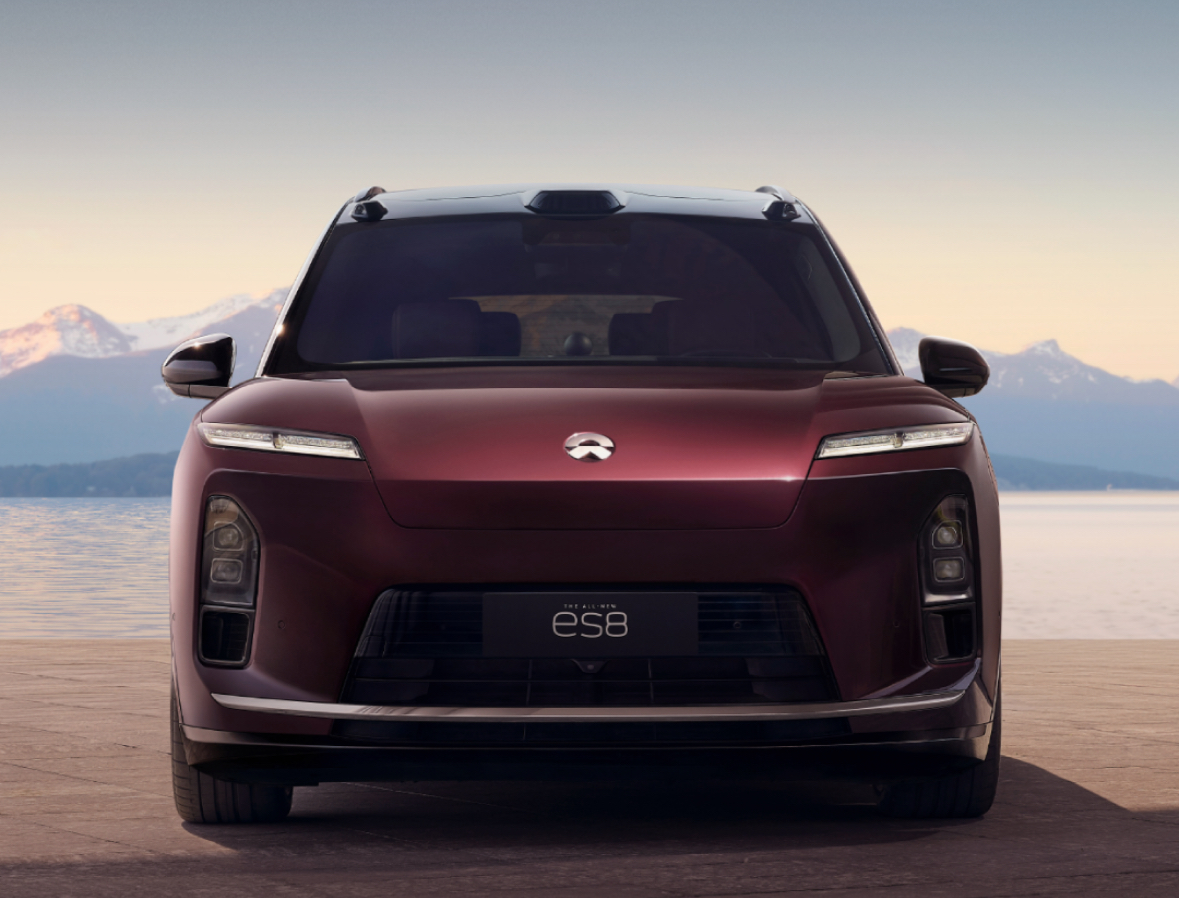
Image Source: NIO
Even more noteworthy is the shift in product structure. Information from the earnings call reveals that the ES8 accounted for a significant 32% of deliveries in the fourth quarter, up from just 2% to 5% in the previous three quarters. This drove NIO's average selling price per vehicle to soar from 221,000 yuan in the third quarter to 253,000 yuan in the fourth, lifting vehicle gross margin to 18.1%—the highest in nearly three years. This flagship model, priced over 400,000 yuan with a gross margin exceeding 20%, single-handedly bolstered the company’s financial performance.
Beyond optimizing sales and margins, cost reductions on the expense side played a crucial role. Announcements show that in the fourth quarter of 2025, R&D expenses fell 44.3% year-over-year and 15.3% quarter-over-quarter to 2.026 billion yuan. Selling, general, and administrative expenses dropped 27.5% year-over-year and 15.5% quarter-over-quarter to 3.537 billion yuan. Analysts noted that both R&D and SG&A expenses came in below expectations, a primary driver of the better-than-expected overall performance.
This marked shift in expenses is closely tied to NIO’s CBU (Core Business Unit) mechanism. NIO CFO Qu Yu stated on the call that the company will continue leveraging the CBU framework to boost R&D efficiency, avoiding ineffective spending and maximizing output for every yuan invested.
It is worth noting that not all profit contributions came from vehicle sales. The report shows other sales revenue reached 3.044 billion yuan in the fourth quarter of 2025, up 36.6% year-over-year. This revenue stems primarily from used car sales, technical R&D services, and growth in parts, accessories, and after-sales services as the installed base expands. Over the same period, the gross margin for other sales rose to 11.9%, with related businesses remaining profitable for three consecutive quarters.
For the full year, NIO delivered 326,000 new vehicles in 2025, a 46.9% increase and a record high. Revenue hit 87.488 billion yuan, up 33.1%, also marking the best annual performance on record. Although the company did not achieve full-year profitability, its net loss narrowed significantly to 14.943 billion yuan—a 33.3% reduction from the previous year.
Simply put, NIO's profit this time came down to a few key factors: strong ES8 sales lifted the average price, necessary costs were cut, and services beyond vehicle sales started turning a profit. NIO has proven it can not just spend money, but earn it back. Yet a single profitable quarter is just passing the first hurdle; the real test is sustainability.
Engine: Product Offensive and Market Positioning
Building on its 2025 performance, NIO has set a target of 40% to 50% sales growth for 2026. To achieve this, what is the company relying on? On the earnings call, William Li offered a clear answer: aligning product cadence with industry trends.
At the market level, consumer acceptance of premium pure electric vehicles is taking root. Li analyzed on the call: "In 2025, in the premium market above 300,000 yuan, pure electric model sales rose 58% year-over-year, while extended-range models fell 4%. The penetration rate of battery electric vehicles (BEVs) in the premium market climbed from 14% in the fourth quarter of 2024 to 27% in the fourth quarter of 2025."
The large three-row and large five-seat SUV segments stood out in particular. Li added: "Since September 2025, sales of pure electric three-row models have led all powertrain types for five consecutive months. In the second half of 2025, sales of pure electric three-row SUVs surged over 350% year-over-year, while extended-range models slipped 6%."
Based on these trends, NIO has mapped out a clear product plan. For 2026, it will launch three new models: the ES9, a tech-focused flagship SUV, will be unveiled on April 9 and launch in the second quarter; the Onvo L80, positioned as a key volume driver this year, will also launch in the second quarter; and a large five-seat SUV based on the ES8 platform will arrive in the third quarter.
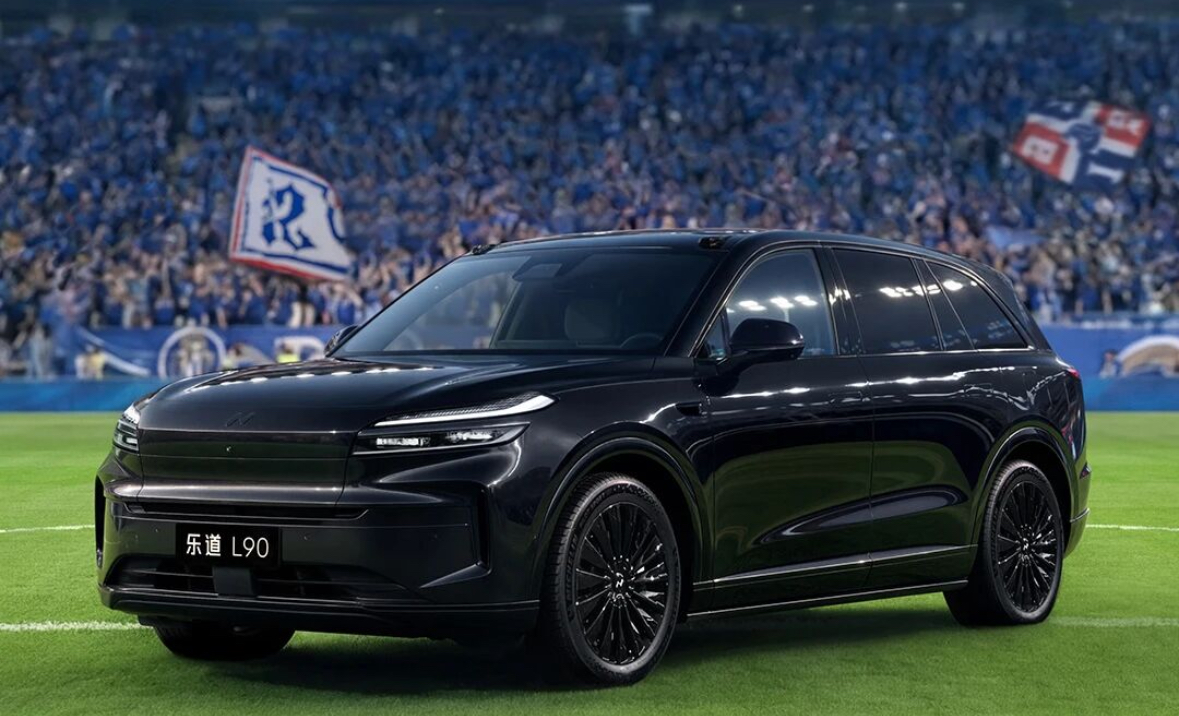
Image Source: Onvo
These three new arrivals, alongside the already-launched Onvo L90 and the popular all-new ES8, will form a lineup of five mid-to-large-size or larger SUVs. "With the previously released Onvo L90 and the popular all-new ES8, we now have five large SUVs, completing our comprehensive layout in the premium and large SUV market," Li stated.
Regarding NIO’s bet on this direction, Zhang Xiang, Secretary-General of the International Intelligent Transport Technology Association, shared his views with Gasgoo: "Three-row models don't cost much more than two-row ones, and the cost increase is limited, but the functionality expands—you can seat more people. Many consumers want one car for multiple uses. Plus, three-row models used to be scarce and expensive; now, pure electric three-rowers offer high value, making them a natural hotspot."
Dong Jing, an analyst at the Gasgoo Automotive Research Institute, analyzed from a product strategy perspective: "Based on disclosed information, the ES9 primarily carries the mission of elevating the brand further. The L80 is positioned as a large five-seat SUV targeting the 200,000 to 300,000 yuan market, shouldering the volume task with a focus on cost-performance and family practicality. The large five-seat SUV based on the ES8 platform should fill the price gap between the ES8 and Onvo L80, catering to users who want the NIO brand experience but don't need a six-seat layout."
On brand differentiation, Dong Jing further noted that while the positioning of NIO and Onvo is clear, "avoiding resource fragmentation requires further sharing of technology platforms, deep integration of sales channels, and quickly forming a healthy pyramid from flagship models to volume sellers."
Regarding existing models, the ET5, ET5T, ES6, and EC6 continue to hold sales advantages in their respective segments with steady demand; the L60 also ranks in the top three of its segment. Firefly has secured a high market share in the premium small car sector.
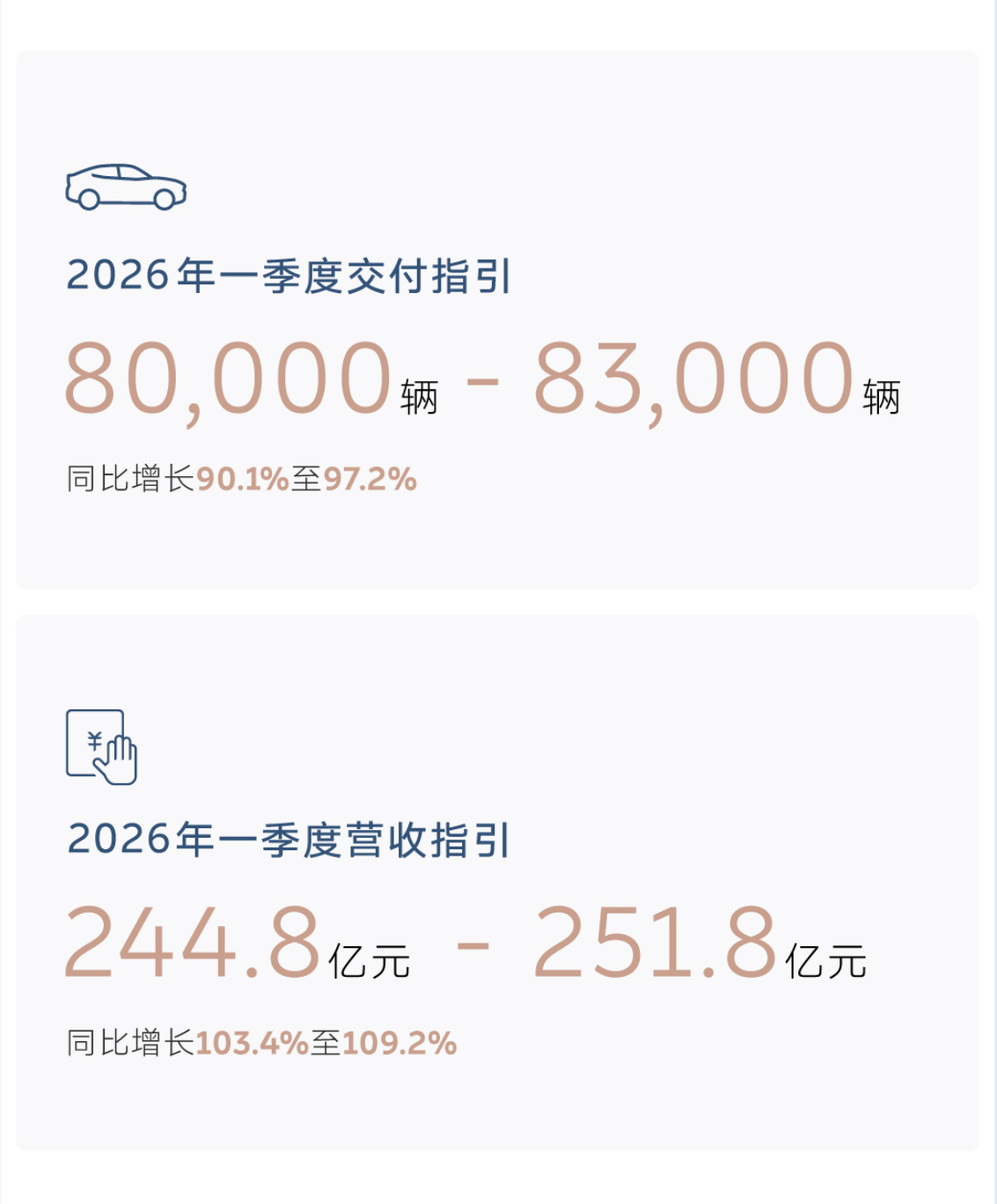
Image Source: NIO
Based on this product layout, NIO issued clear growth expectations: first-quarter 2026 deliveries are projected between 80,000 and 83,000 units, a year-over-year increase of 90.1% to 97.2%. Revenue guidance is set between 24.48 billion and 25.18 billion yuan, up 103.4% to 109.2% from a year ago.
For the full year, Li expressed confidence: "We remain very confident in achieving 40% to 50% sales growth this year. January and February are traditionally slow seasons for the industry, yet we still maintained year-over-year growth. Our guidance for the first quarter also indicates growth of over 90%. Overall, we are highly confident in meeting our annual sales target."
However, concerns linger, and the track is getting crowded. XPENG, Xiaomi, and ZEEKR have all planned premium large SUVs for 2026, meaning competition will shift rapidly from blue ocean to red. Additionally, battery specifications across NIO’s three brands are not yet unified, which will undoubtedly increase the complexity of R&D, inventory, and operations, leading to some resource duplication. More notably, the update cycle for the "5566 series" (ET5/ET5T, ES6/EC6) on the 3.0 platform has been slow. Although Li revealed that the "5566 lineup" will receive a minor refresh this year—adding features like auxiliary driving indicator lights and zero-gravity seats—this poses a challenge for NIO in the face of its total growth targets.
Some analysts have raised cost concerns regarding NIO’s strategy of densely launching medium-to-large models. Zhang Xiang believes that while multi-model coverage helps expand market share, it also brings pressure: "Every car requires R&D, marketing, production, and management costs—it's expensive. Pushing so many models to market intensively carries risk, reflecting the fierce competition and the rapid pace of product updates."
Moat: Battery Swapping, Chips, and Batteries
As the industry races toward ultra-fast charging—BYD, for instance, is touting "9-minute flash charging"—an age-old question resurfaces: Is NIO’s battery swapping model still attractive?
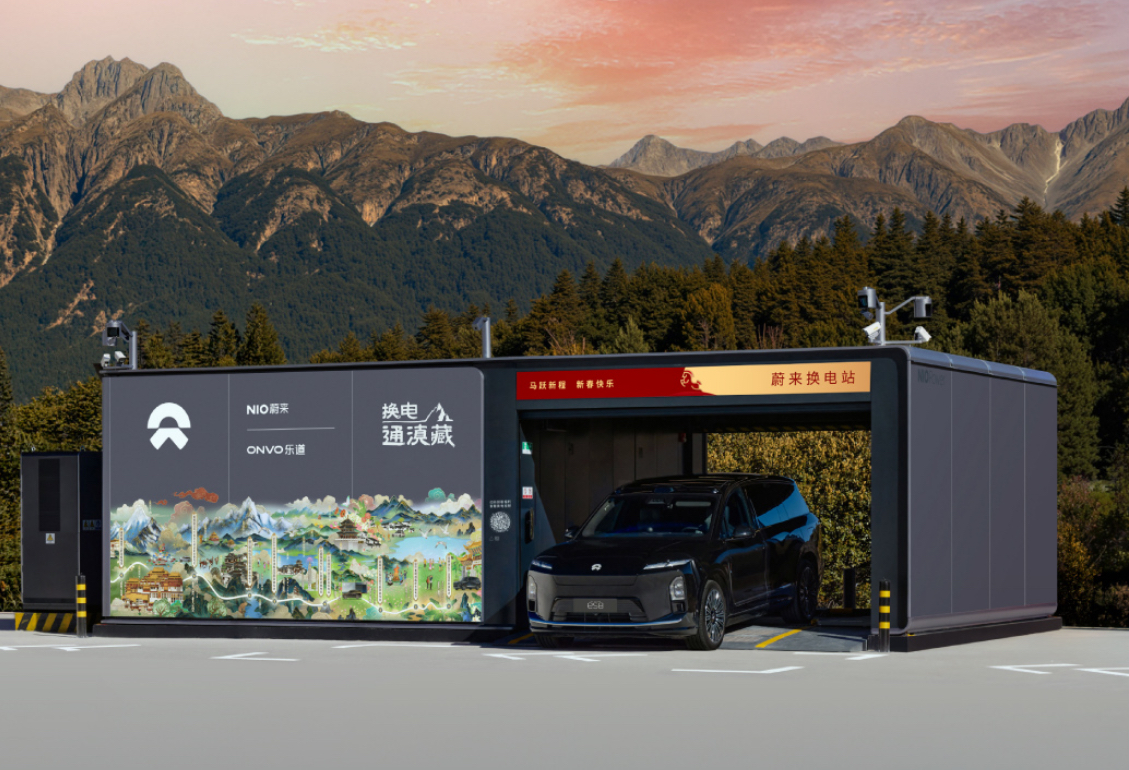
Image Source: NIO
As of February 6, 2026, cumulative NIO battery swaps surpassed 100 million. Daily swap volume exceeded 177,000 during the Lunar New Year holiday, setting a new high. On the call, Li addressed the relationship between ultra-fast charging and swapping, stating they are not contradictory. NIO has built over 28,000 ultra-fast charging and destination piles, making it one of the most aggressive domestic automakers in charging infrastructure. It operates a complete system of "charge, swap, and upgrade" designed to meet user needs across different scenarios.
He also emphasized: "In the foreseeable future, the speed and experience of swapping will remain superior to charging." More importantly, the business model of this capital-intensive model—once criticized as a burden—is starting to work. Data shows that a swapping station breaks even when daily service hits 60 to 70 times; currently, the overall utilization rate of NIO’s stations has climbed significantly.
Yet even as swapping advantages emerge, external competitive pressure cannot be ignored. Zhang Xiang noted: "Before, swapping took five minutes while charging took an hour or two—the advantage was huge. Now ultra-fast charging can reach 80% in just over ten minutes, shrinking swapping's edge. That is unfavorable for NIO."
This means NIO must accelerate the excavation of deep value beyond the swapping experience—such as battery asset management and energy storage services—to continuously solidify its moat.
Regarding battery lifespan, Li pointed out: "The current industry standard for EV battery warranties is 8 years, 160,000 kilometers, and 70% state of health, while private cars have a service life of 15 years or longer. If the vehicle and battery are deeply coupled, this becomes a major pain point for users a decade down the road." Swapping enables vehicle-battery separation. Combined with long-life battery design, scientific charging strategies, and full-cycle battery health monitoring and maintenance, it enhances safety and extends battery life to a certain extent.
In terms of energy storage value, the nearly 3,800 NIO swapping stations, when fully equipped with batteries, already represent a storage capacity of 6–7 GWh. As the station network expands, its long-term commercial value will become increasingly apparent.
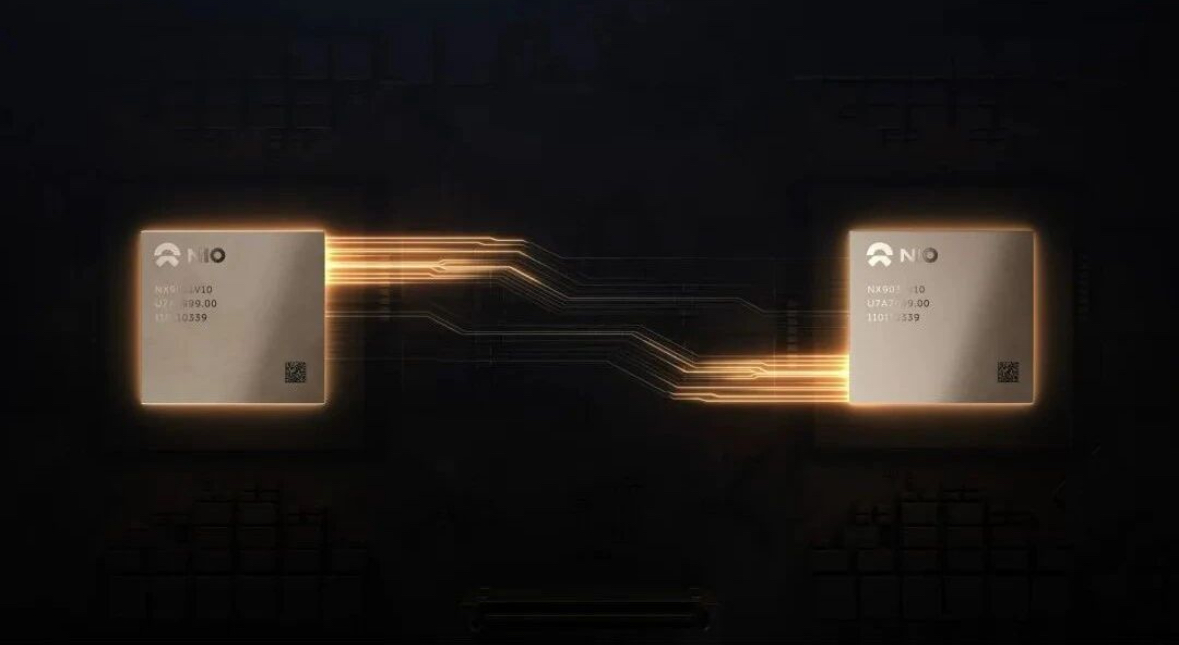
Image Source: NIO
Beyond energy infrastructure, NIO is also making strides in chips. On February 26, 2026, NIO announced that its chip subsidiary, Anhui Shenji Technology Co., Ltd., completed its first round of equity financing, raising 2.257 billion yuan at a post-investment valuation approaching 10 billion yuan. The round was participated in by Hefei State Investment, Hefei Haiheng, IDG Capital, SMIC Juyuan, and other institutions.
On the call, Li revealed the next steps for the chip business: "In addition to developing the next-generation chip, NIO will also develop products for relatively mid-range chips to serve a broader customer base. We are also paying attention to market opportunities in Robotaxis and embodied intelligence."
More notably, a second chip targeting a wider customer base has successfully taped out and is currently in the mass production process. Li introduced: "Our second chip still uses automotive-grade 5-nanometer process technology. Its performance is equivalent to three Orin X chips, but the cost is significantly lower than the Shenji NX9031 chip. It has broad applications in assisted driving and embodied intelligence." The company has already initiated preliminary testing with select external enterprises.
Meanwhile, NIO’s layout in the battery sector is advancing in parallel. On February 26, 2026, NIO Battery Technology (Shanghai) Co., Ltd. was established. According to Qichacha, the legal representative is Zeng Shizhe, NIO’s VP of Battery Systems, with a registered capital of 100 million yuan, wholly owned by Shanghai NIO Automobile Co., Ltd. This move forms a "Shanghai R&D + Anhui Manufacturing" dual-platform structure with NIO Battery Technology (Anhui) Co., Ltd., established in 2022. The Shanghai entity will focus on R&D for next-generation power batteries, such as solid-state batteries.
Boundaries: The Real Test of Profit Sustainability
After a single profitable quarter, how far is NIO from "sustained profitability"? Based on disclosed information, challenges remain.
Pressure from rising raw material prices is already surfacing. CFO Qu Yu noted on the call that due to AI computing demands and geopolitical factors, chips, copper, lithium carbonate, and other bulk materials are showing trends of price increases and cost volatility. This undoubtedly places significant pressure on NIO’s costs and margins this year.
Qu Yu revealed that these cost pressures began appearing in the first quarter, but since they are just starting, the negative impact can still be controlled within a reasonable range. The full-year picture, however, remains unclear. "The impact for the full year is not yet clear, but NIO will work with the supply chain to minimize negative effects on gross margins."
In terms of strategy, NIO is collaborating with the supply chain to boost efficiency while relying on the mix of high-margin models to safeguard overall profitability. "This year, we will have five large SUVs on sale, so the share of large vehicles in our total sales will be high. Large vehicles have relatively higher gross margins than lower-priced models and stronger anti-risk capabilities," Qu Yu stated.
On the expense side, NIO has clarified its investment anchor for 2026. Qu Yu stated: "R&D investment in 2026 will be maintained at a level of 2 to 2.5 billion yuan per quarter, with the total annual volume roughly matching 2025." Simultaneously, NIO will continue to improve R&D efficiency based on the CBU mechanism to avoid ineffective spending.
Despite cost pressures, NIO is maintaining its full-year profitability goal for 2026. Qu Yu confirmed: "For the full year of 2026, we continue to maintain our target for annual operating profit (on a non-GAAP basis)."
Examining financial stability, NIO still faces pressure. As of December 31, 2025, the company’s cash, cash equivalents, restricted cash, short-term investments, and long-term time deposits totaled 45.9 billion yuan. The announcement noted that although the company generated positive operating cash flow in the third and fourth quarters of 2025, current liabilities still exceeded current assets at the end of 2025. The company assesses that, combining existing cash reserves, operating cash flow, credit lines, and other financing channels, current resources are sufficient to support operations for the next 12 months.
In March 2026, NIO announced the grant of 248 million restricted shares to William Li and others. The vesting conditions are tied to metrics such as market capitalization and net profit, including phased goals like a market cap exceeding 120 billion USD and net profit exceeding 6 billion USD. The announcement clarified this as a long-term incentive arrangement.
Conclusion
The fourth-quarter 2025 profit marks another new milestone for NIO, proving the viability of the formula "long-termism + economies of scale + efficiency reform."
In the short term, whether NIO can meet its first-quarter 2026 delivery guidance will be a touchstone for testing its multi-brand synergy capabilities. Over a longer horizon, the market feedback following the launches of the NIO ES9, ES7, and Onvo L80 will further test the quality of NIO’s "large vehicle strategy."
Additionally, progress on key initiatives—such as the battery swapping network, the rollout of chip R&D, and solid-state battery development—will all influence NIO's capacity for sustained profitability.


