



Gasgoo Munich- As the Chinese New Year glow faded, February 2026 sales figures offered a sobering snapshot of China's auto market. Rather than delivering the customary post-holiday surge, the month functioned more as a stress test. The aftershocks of subsidy rollbacks and cautious consumer sentiment weighed on demand, leaving most automakers with month-on-month declines. Yet beneath the headline slowdown, strategic divergence became increasingly apparent. Some manufacturers opted to consolidate and conserve momentum ahead of a potential spring rebound, while others pressed the accelerator in a bid to seize share during the off-season. The result was less about fluctuating volumes and more about how companies navigated uncertainty.
Two contrasting playbooks emerged among the industry's front-runners.
To gauge the market's true temperature, observers often begin with BYD and Geely, brands that have become barometers for broader trends.
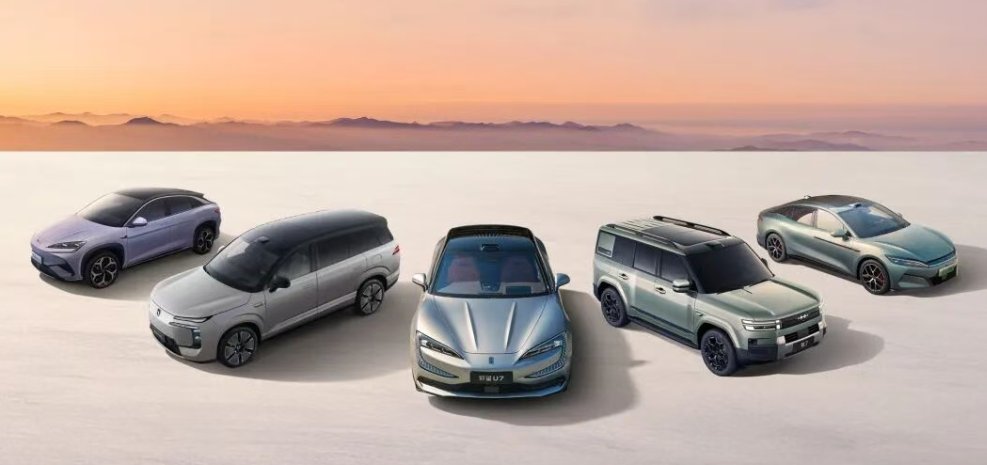
Image source: BYD
BYD reported February sales of 190,190 vehicles, including 187,782 passenger vehicles split between battery-electric (79,539 units) and plug-in hybrid models (108,243 units). Overseas sales exceeded 100,000 units in the month, and cumulative sales for the first two months of the year comfortably topped 400,000 units.
For a manufacturer of BYD's scale, modest seasonal fluctuations are hardly alarming. More revealing is the depth of its product architecture. From its mass-market Ocean and Dynasty lineups to premium marques such as DENZA, FANGCHENGBAO and YANGWANG, BYD has constructed a brand matrix spanning nearly every price band. That breadth provides both pricing power and supply chain leverage, allowing the company to treat short-term softness as a strategic pause rather than a setback.
Geely Automobile, by contrast, leaned into expansion. The group posted February sales of 206,160 vehicles, with new energy vehicles accounting for nearly 57% of the total, a sign that its transition toward electrification has largely taken hold. Its premium EV arm ZEEKR delivered 23,867 units, achieving both year-on-year and month-on-month growth despite the seasonal lull, while the Galaxy series contributed 73,125 vehicles, anchoring overall performance.
By deploying a multi-brand strategy as well, Geely is seeking to offset cyclical weakness in any single model line and reinforce its presence in the core family-car segment. Rather than retreat, it is pushing forward.
Beyond the domestic rivalry, other survival strategies are also taking shape.
While competition intensifies at home, some automakers are insulating themselves through globalization or ecosystem building.
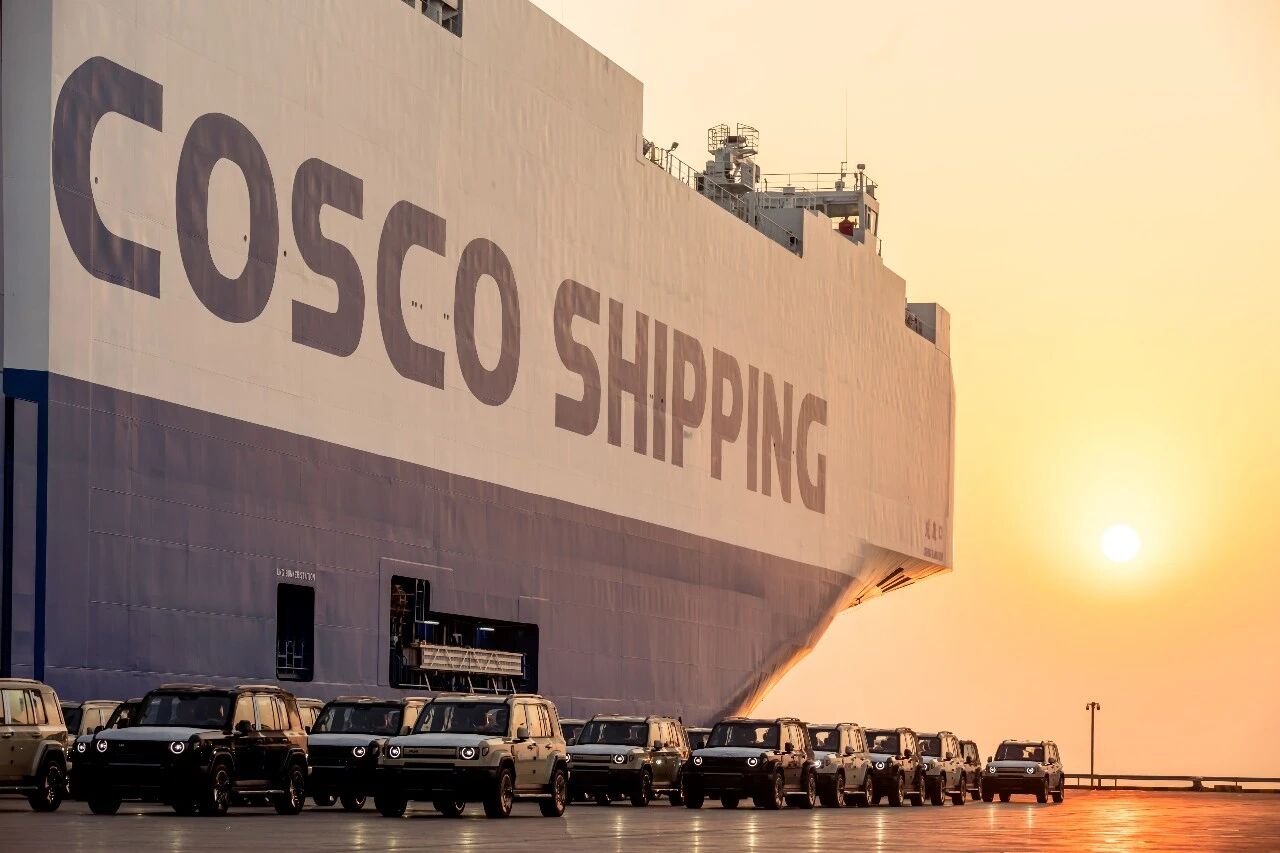
Image source: Chery
For Chery, overseas markets have become a stabilizing force. Of its 160,765 vehicles sold in February, 124,929 were exported, marking a 41.5% surge from a year earlier. Exports have now exceeded 100,000 units for ten consecutive months, underscoring how international demand has evolved from a supplementary channel into a structural pillar. This dual-engine approach cushions Chery against domestic cyclicality and policy shifts, enabling steadier progress even when the home market cools.
Meanwhile, Harmony lntelligent Mobility Alliance, backed heavily by Huawei, is betting on technology-driven differentiation. Deliveries of 28,212 vehicles may appear modest in absolute terms, but its strength in the premium segment is notable. The AITO M9 has secured a foothold in the 500,000-yuan-plus bracket, signaling strong brand recognition among high-end buyers. With additional marques expanding across segments, the alliance is building an ecosystem centered on its HarmonySpace cockpit and advanced driver-assistance systems. By anchoring competitiveness in software and intelligent driving architecture, it is erecting barriers that compel rivals to rethink their own technical roadmaps and product definitions.
Divided fortunes set the stage for China's spring auto showdown.
In an industry where scale often determines survival, February's sales split offers a revealing snapshot of who is better positioned for the months ahead. The gap between camps is widening, hinting at which automakers may find momentum first as the traditional spring selling season approaches.
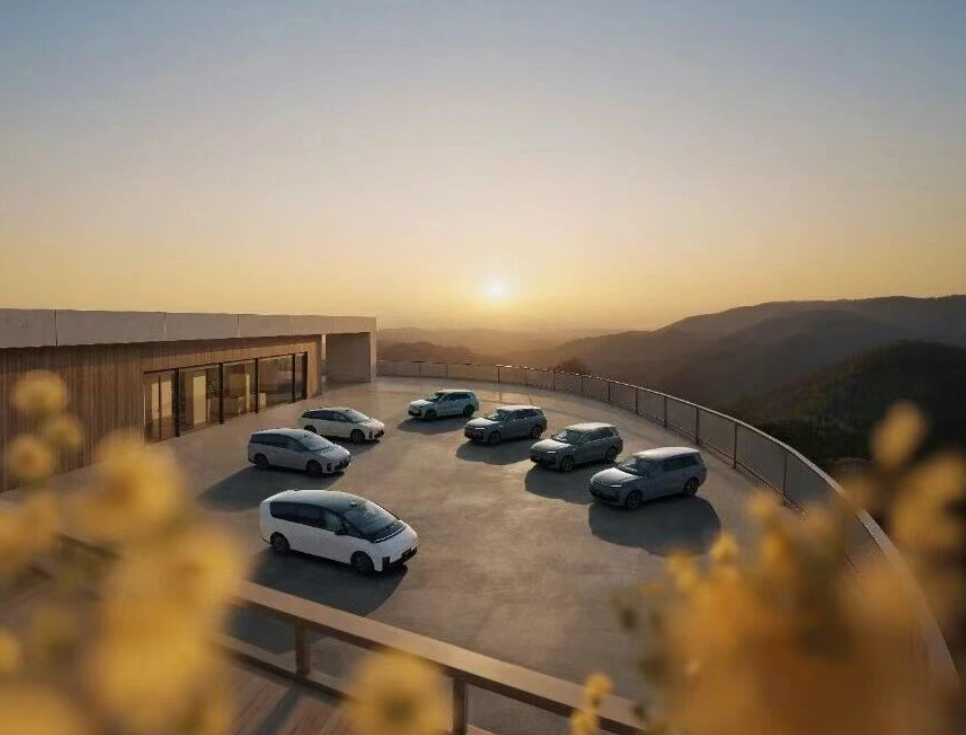
Image source: Li Auto
Among the relative steadiness are Li Auto and Leapmotor, both demonstrating a balance between defense and expansion. Li Auto delivered 26,421 vehicles in February, a modest month-on-month dip but underpinned by a cumulative total approaching 1.6 million units. That installed base in the premium family SUV segment gives the company room to hold pricing discipline during slower months.
Notably, the introduction of the 559,800-yuan Li L9 Livis variant appears aimed at probing consumers' willingness to pay for incremental technology upgrades, while quietly preparing for a broader product refresh cycle later this year.
Leapmotor, which surged last year, maintained deliveries of 28,067 units in February, up 11% year on year. Its strategy of in-house development and pushing advanced features into lower price brackets continues to resonate. By equipping the A10 with LiDAR to democratize intelligent driving, while positioning the D19 as a flagship contender, the company is stretching both downward and upward. Maintaining current volumes will be critical to funding an aggressive rollout of new models in the coming quarters.
Others are under more visible strain. XPENG saw February deliveries fall to 15,256 units, nearly halving from a year earlier. With an ambitious annual target of 550,000 to 600,000 vehicles, the subdued start raises pressure.
However, the recently launched 2026 X9 BEV model is expected to anchor its presence in the upper-tier EV segment, and performance during the peak March–April sales window could prove decisive for its full-year trajectory.
NIO delivered 20,797 vehicles in February, posting year-on-year growth largely due to a low base in 2025. The company's multi-brand expansion and willingness to trade margins for volume signal a clear ambition to approach 500,000-unit annual sales. Yet that strategy also heightens financial strain, leaving little margin for operational missteps in a competitive environment.
February's lull resembles the quiet before a larger confrontation.
Xiaomi EV reported deliveries of more than 20,000 vehicles, down roughly 49% from January, reflecting production adjustments and buyers waiting for updated versions. The challenge now lies in aligning capacity and demand during a sensitive product transition phase.
Among legacy-backed startups, Dongfeng Motor's eπ brand is emerging as a dark horse. With 14,464 units sold in February, it outpaced VOYAH and leveraged competitive pricing alongside established manufacturing capabilities to carve space in the crowded mainstream new-energy vehicle segment, adding competitive pressure on China's local new energy vehicle startups.
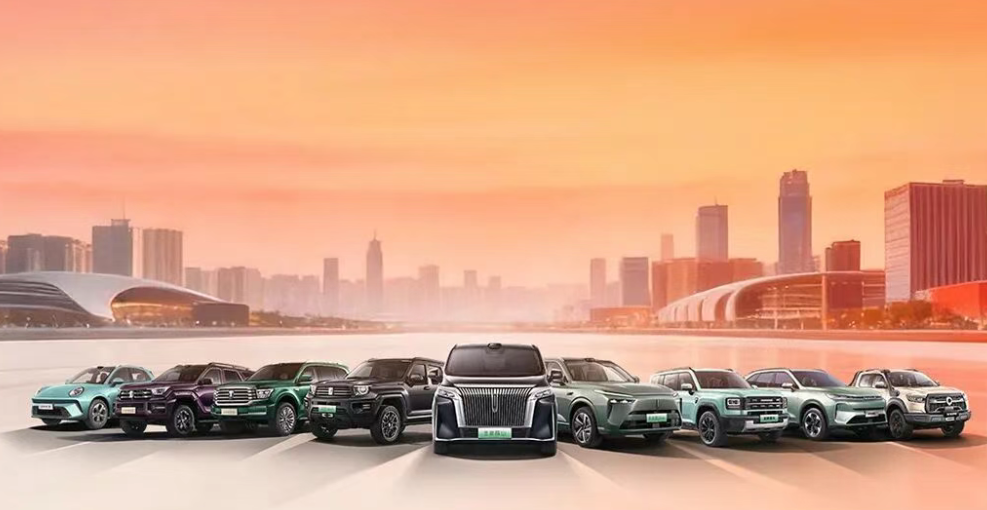
Image source: Great Wall Motor
Elsewhere, established groups also reported softer numbers. Great Wall Motor sold 72,594 vehicles in February, down 6.79% year on year, with new energy vehicles accounting for 12,744 units and overseas markets contributing 42,675. SAIC Motor posted sales of 269,465 vehicles, a decline of 8.64%, while Changan Automobile sold 151,922 vehicles, down 5.89% year on year but up 12.8% month on month. GAC Group recorded 86,452 units, a 12.43% year-on-year drop.
Final thoughts
Taken together, February's results resemble a diagnostic check rather than a verdict. Stripped of peak-season exuberance, the figures reveal each company's resilience to volatility and depth of strategic reserves.
As March unfolds, the first major sales push of 2026 looms. The coming contest is unlikely to hinge solely on pricing, but instead on delivery execution, speed of technological iteration, capital strength and managerial agility. In an increasingly unforgiving elimination round, few can afford to stumble when demand rebounds. February's restraint and recalibration may ultimately prove to be preparation for a far more decisive battle ahead.


