Gasgoo Munich-On April 21, 2026, CATL took the stage in Beijing for its "Super Tech Day," unveiling a sweeping lineup that includes the third-generation Shenxing ultra-fast charging battery, the third-generation Kirin battery, a Kirin condensed matter battery, the second-generation Xiaoyao super range-extended battery, and a new sodium-ion offering. Beyond the hardware, the company also laid out plans for an integrated super-swap charging network. From material science to infrastructure, CATL is aiming to raise the bar across the board—setting higher standards for both battery technology and the user charging experience.
A Fresh Battery Lineup Resets Performance Benchmarks
CATL Chief Scientist Wu Kai offered a systematic breakdown of the company’s material strategy at the event. Lithium iron phosphate (LFP) is nearing its theoretical energy density limits, making it ideal for a balanced approach centered on ultra-fast charging. Ternary materials, meanwhile, remain the battleground for maximum energy density. Sodium-ion batteries carve out their niche with distinct advantages in extreme cold, high heat, and energy storage scenarios. "The lithium battery industry must develop through the synergy of multiple chemical systems," Wu emphasized.
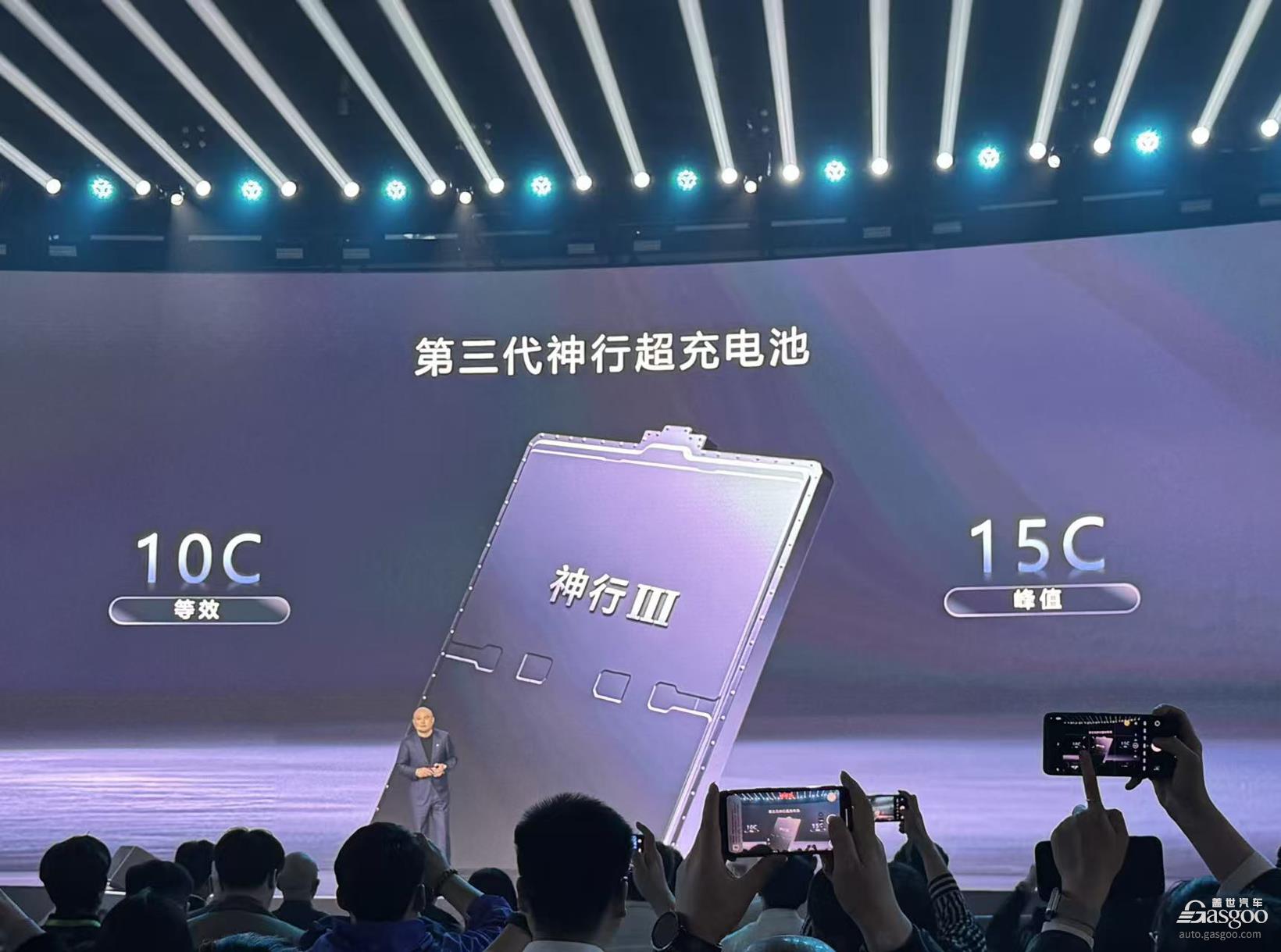
The third-generation Shenxing ultra-fast charging battery pushes charging speeds to a new frontier. At room temperature, a charge from 10% to 98% state of charge (SOC) takes just 6 minutes and 27 seconds—equivalent to 10C rates with a peak of 15C, setting a new global record. Its performance in the cold is just as striking: in temperatures as low as -30°C, charging from 20% to 98% takes roughly 9 minutes. By reducing heat generation, boosting thermal dissipation, and enhancing precision, CATL ensures the battery retains over 90% of its capacity after 1,000 full cycles.
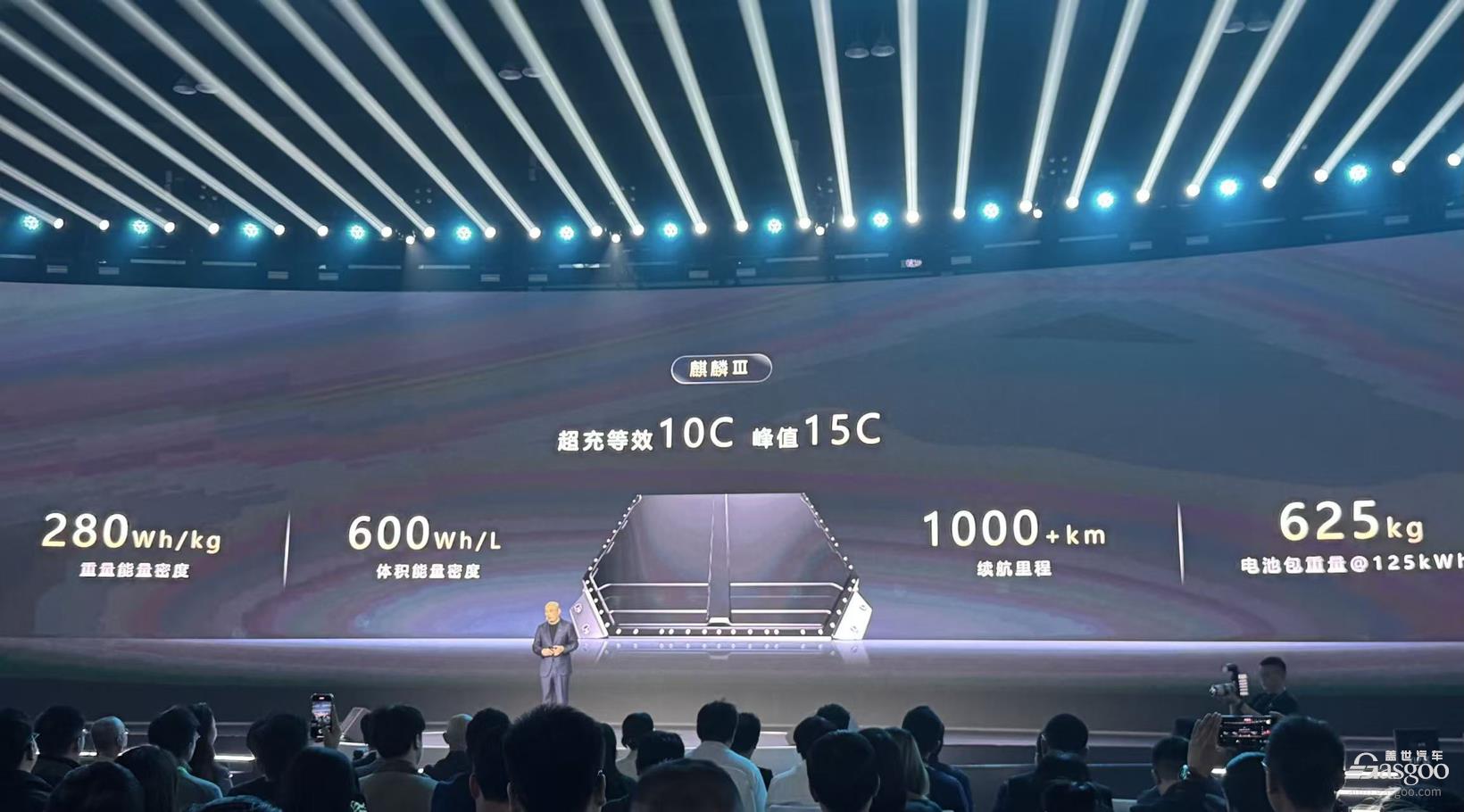
The third-generation Kirin battery is pitched as "lighter, stronger, and more premium." It boasts an energy density of 280Wh/kg and delivers 1,000 kilometers of range with standard 10C ultra-fast charging, all while keeping the pack weight down to 625kg. Compared to LFP rivals offering similar range, it sheds 255kg and frees up 112 liters of space. The benefits of that weight loss are tangible: energy consumption per 100 kilometers falls by 6%, the 0-100 km/h sprint improves by roughly 0.6 seconds, moose test speeds rise by 8%, and braking distance shortens by about 1.44 meters. Even chassis components see a 40% boost in lifespan, while tire life extends by 30%.
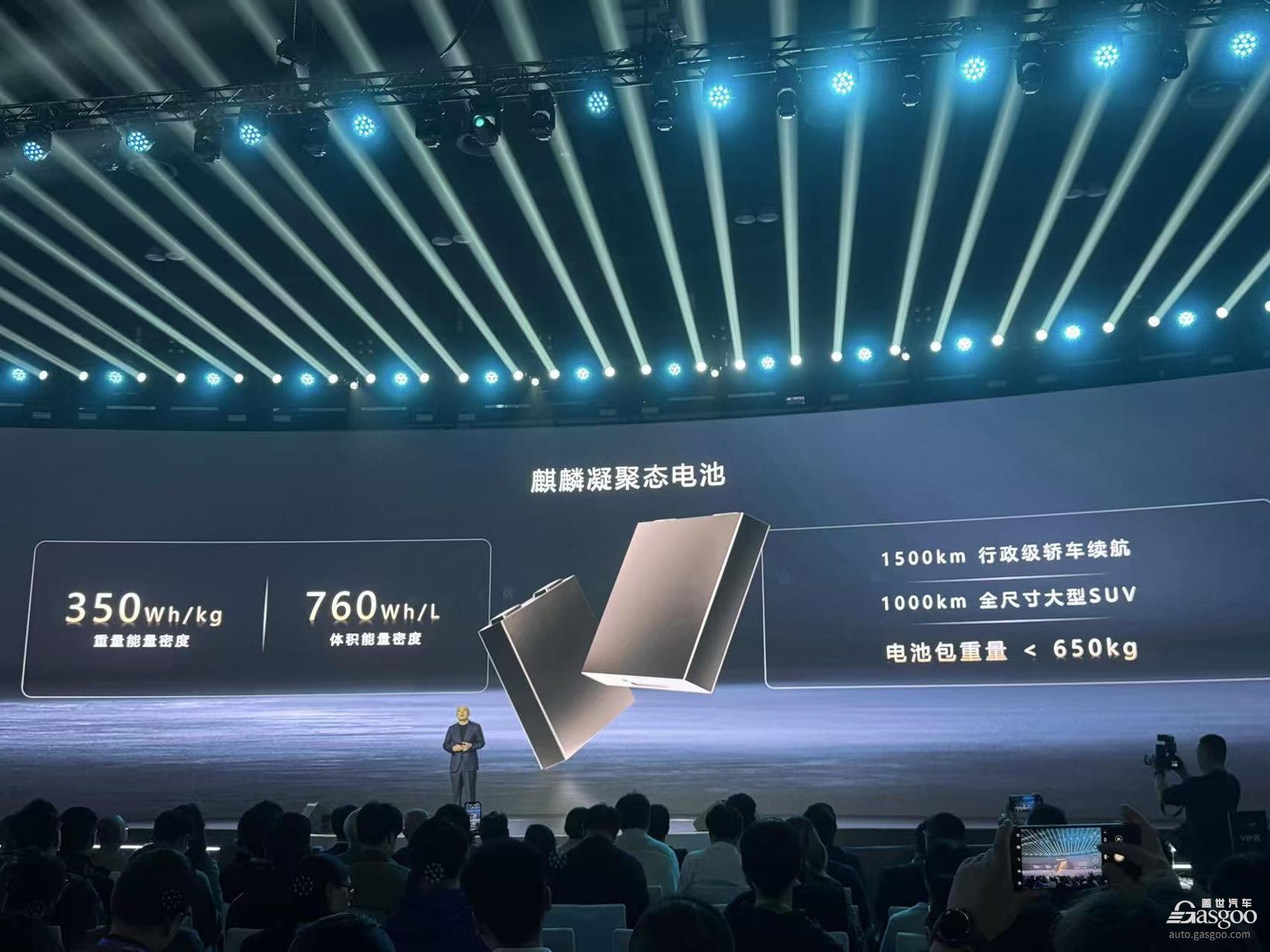
The Kirin condensed matter battery marks the first time aviation-grade condensed matter technology has been adapted for passenger vehicles. With a cell energy density of 350Wh/kg, it sets a record for mass-produced batteries—a technology already proven in the maiden flight of a 4-ton commercial aircraft. Volumetric energy density hits 760Wh/L, enabling a range of 1,500 kilometers for sedans and pushing full-size SUVs past the 1,000-kilometer mark. On the safety front, the condensed matter electrolyte eliminates risk at the source, ensuring there is "no liquid to leak and no liquid to burn."
The second-generation Xiaoyao super range-extended battery pushes pure electric range for plug-in hybrids to 600 kilometers—500 kilometers for the LFP version and 600 for the ternary variant—both featuring standard 10C ultra-fast charging. Its proprietary "super hybrid system" blends ternary and LFP materials at the particle level, achieving an energy density of 230Wh/kg.
The new sodium-ion battery signals the shift from technological breakthrough to mass production. This year, CATL overcame four critical challenges: extreme moisture control, gas generation in hard carbon, aluminum foil bonding, and the scaling of self-generated anodes. Mass production is scheduled to begin by the end of 2026.
Integrated Charging-Swap Network: 4,000 Stations by End of 2026, 100,000 Targeted for 2028
CATL envisions a future energy landscape divided into thirds: home charging, public charging, and battery swapping. The company argues that an integrated "super-swap" model represents the optimal solution.
At the event, CATL announced that its passenger car "Chocolate" swap stations and heavy-duty "Qiji" swap stations will come standard with Shenxing ultra-fast charging piles, enabling a model where vehicles can either swap or charge. These integrated stations share box transformers and charging modules, cutting comprehensive power loss by more than 13 percentage points compared to market-standard storage-backed stations. In emergencies, batteries from the swap station can discharge to power the charging piles, pushing equipment utilization above 85%. A single parking spot serves three times as many vehicles as a conventional storage station, while the capital investment for the ultra-fast charging hardware is just one-fifth of the cost.
On the product front, CATL unveiled the "Chocolate" swap block No. 26, built on an 800V high-voltage architecture. The initial rollout features a 75 kWh version, with larger capacities to follow, fully compatible with B- and C-segment 800V models. With this addition, the Chocolate swap ecosystem now covers the full spectrum from A0- to C-segment vehicles.
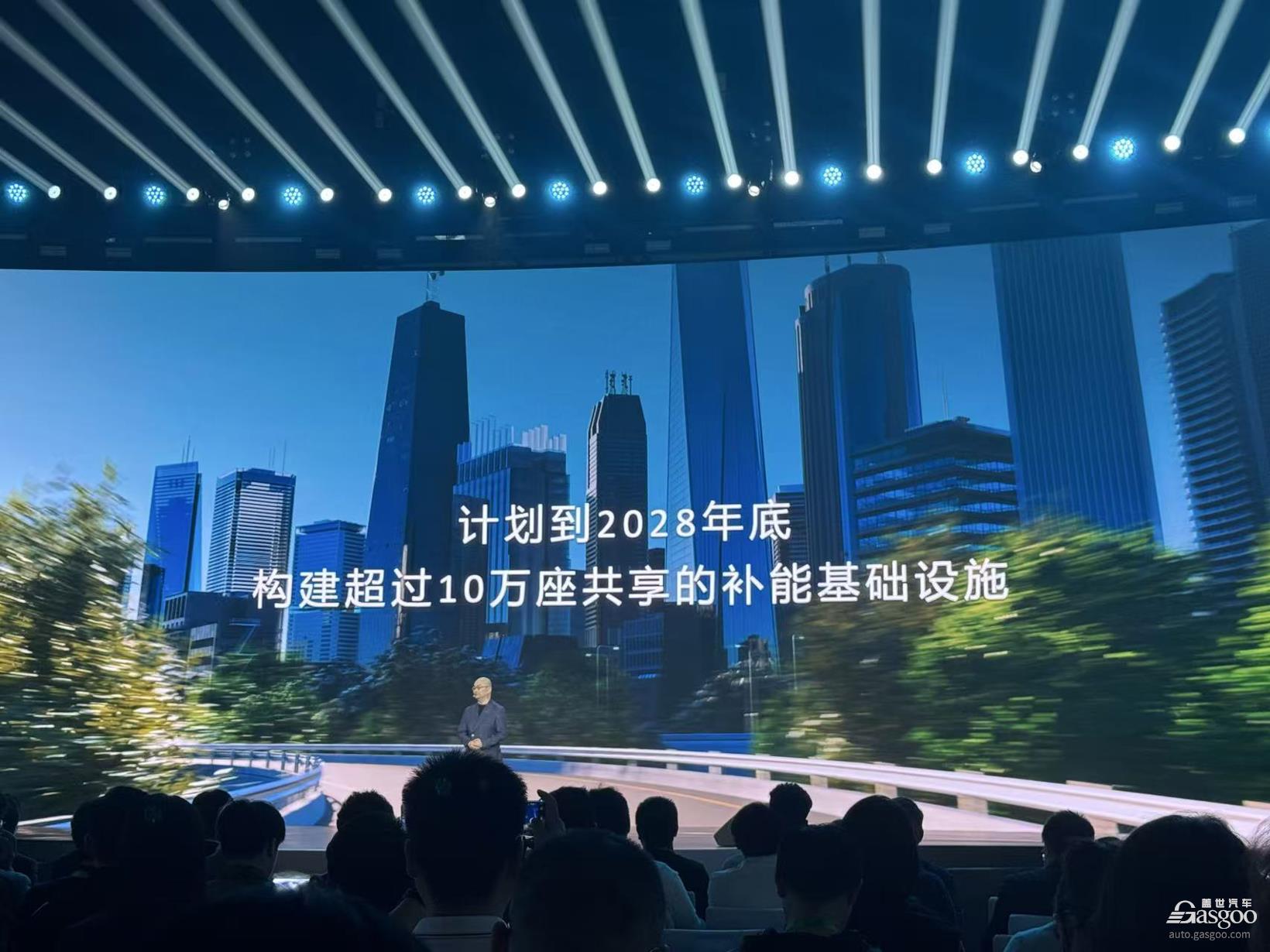
CATL has set a clear timeline for its network rollout: 4,000 integrated stations are targeted by the end of 2026, spanning roughly 190 cities and a highway network of 12 vertical and 11 horizontal routes. The company is partnering with Changan, Chery, GAC, Seres, SAIC-GM-Wuling, and BAIC to build this "super-swap sharing network," with a goal of constructing over 100,000 shared charging and swapping infrastructure points by the end of 2028.
"Industrial innovation must be grounded in rigorous scientific spirit," CATL Chairman Robin Zeng told the gathering. "For Chinese technology to go global, it relies not just on speed and scale, but on the quality of innovation, the capability for verification, and the credibility of the brand."
From a battery portfolio covering every scenario to a concrete timeline for its charging network, CATL’s Super Tech Day outlined a full-chain strategy spanning from the cell to the plug. Different batteries for different scenarios, different charging methods for different needs—the logic is clear. Yet, whether this "full-scenario coverage" strategy can truly deliver the optimal solution for every type of travel will ultimately depend on the execution of mass production and network construction in the months ahead.