



Gasgoo Munich- "As a foreign company, it's a bit embarrassing to still be talking about 'In China, For China' today. Why? Because China doesn't have much patience for foreign enterprises like us anymore."
At a recent automotive industry gathering, an executive from a foreign supplier put it bluntly in front of his peers.
It may have been self-deprecating, but the pressure is real. With price war after price war, domestic brands gaining strength, and the local supply chain maturing fast, foreign suppliers are finding life in the Chinese market far less comfortable than before.
Yet even as that door closes, another is opening. Chinese automakers are expanding overseas—and fast. That is why the same executive quickly added that when it comes to "In China, For the World," foreign companies "certainly have the credentials."
Xu Jie, president of MANN+HUMMEL's global passenger car division and its China region, told Gasgoo in an interview that there is a time lag between automakers expanding overseas and parts suppliers doing the same. For global companies already established abroad, that gap presents a prime opportunity.
In his view, this window lasts about two to three years.

Image Source: 699pic
Where does this lag come from?
Consider the numbers first.
Data from the China Association of Automobile Manufacturers (CAAM) and the General Administration of Customs shows that China exported 5.10 million vehicles in the first half of this year—a 65.3% surge from a year earlier. Various forecasts suggest hitting the 10 million mark for the full year is all but certain.
Gu Jianmin, CTO of Valeo China, also cited a figure at the Global New Energy Vehicle Cooperation and Development Forum (GNEV2026): today, one in every three cars globally is produced in China, giving the country a market share of over 30%.
Just because the cars are selling doesn't mean the model is sustainable.
Countries are raising the bar on localization rates. The USMCA trade agreement is already discussing higher local content requirements; once those thresholds rise, a vast number of parts must be sourced locally. Relying solely on shipping finished vehicles from China will create cost and compliance headaches.
Yang Xiaoming, president of Aptiv China and Asia Pacific, noted at the forum that looking back at the history of the global auto industry, export booms in some economies were eventually met with trade protection measures by mature markets acting in their own industrial interests—measures that eroded their export advantages.
"Those economies went through multiple cycles: a surge in exports, followed by a shift to local production overseas, and finally, overseas production and sales overtaking direct exports," he observed. Based on this, he predicts that "the cycle of rapid growth in China's auto exports may not last long. The window of export dividends could hit an inflection point soon, so accelerating the layout of local production overseas is critical."
Automakers know this too. Going global has shifted from simply "selling cars abroad" to "embedding into local industrial chains and ecosystems." As Xu Jie puts it, it is a transition from mere cross-border product sales to integrating into local culture, laws, and social structures. The truly successful companies, he notes, are those that deeply embed themselves in local life and supply chains.
Parts suppliers are moving out as well. The fastest movers are already capable of meeting demand, but for many others, truly keeping pace will take time.
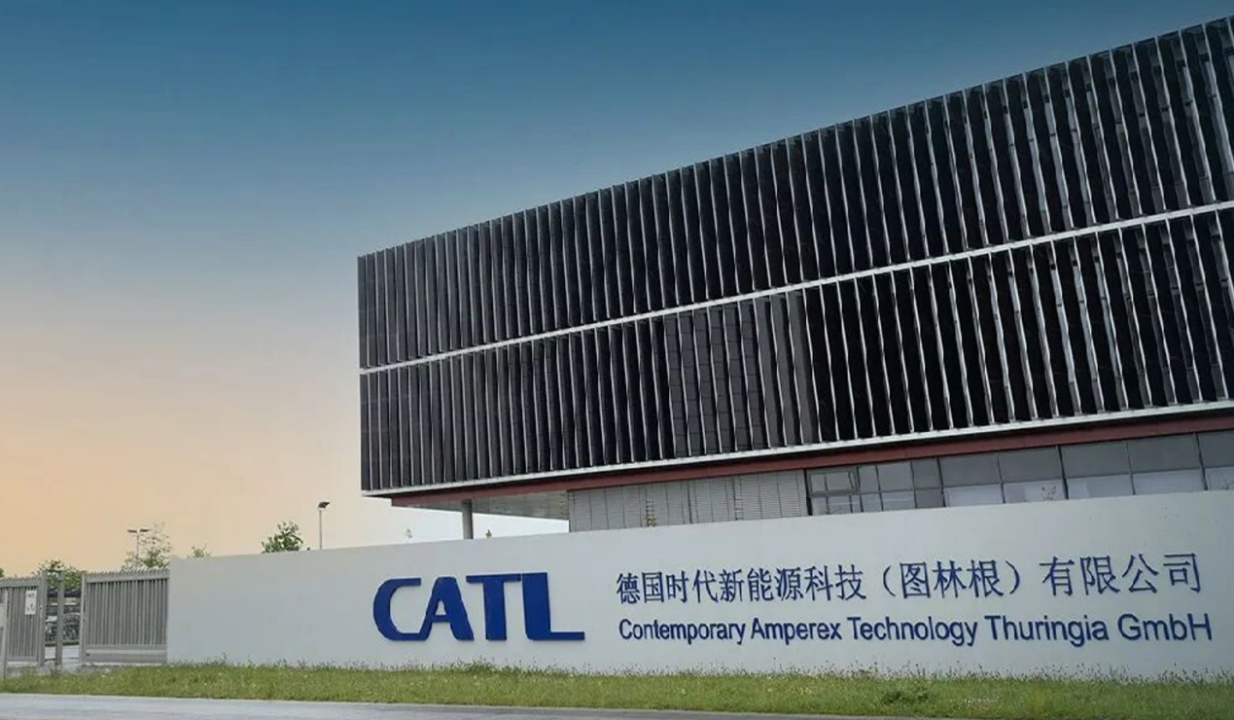
Image Source: CATL
If an automaker wants to sell cars overseas, it can find distributors, ship knock-down kits, or negotiate contract manufacturing—fast movers can get vehicles on the road quickly. But building a complete local parts supply chain involves capacity construction, system certification, local teams, logistics warehousing, and after-sales service. None of these are easy feats.
Li Yaxu, president of Magna China, noted in an interview that Chinese automakers have little international experience. Those that have already expanded overseas and built their own factories have encountered numerous pitfalls—cultural clashes, environmental issues, and mismatches between investment plans and reality. "Costs rise significantly, and the entire construction cycle gets stretched out," he said.
With vehicles already on the road up front and the supply chain still being built at the back, that gap is the window of opportunity.
Xu Jie highlighted a pain point that is easily overlooked: OEMs' KPIs are still fixated on vehicle sales, yet the demand for after-sales parts is already surfacing.
There are two problems. First, parts supply isn't timely; the cycle from request and procurement by local teams to shipping from China is long and volatile. Second, service networks in many countries are not yet robust, making it hard for vehicles to get genuine parts quickly. Many owners turn to aftermarket or alternative parts, which hurts the user experience and future maintenance prospects.
Add to that the vast differences between regional markets. "By 2030, new energy vehicles might only account for about 10% of the U.S. market—internal combustion engines will be around for a long time. Europe is faster, averaging 20% to 30%. Southeast Asia varies but is generally slower, while China is marching ahead with a high share." Xu personally predicts that globally, new energy vehicles will account for about 40% by 2030, with internal combustion engines making up the remaining 60%.
This means Chinese automakers are not facing a single unified market, but rather several distinct markets with completely different energy structures, regulatory standards, and consumption habits. Every time they enter a new region, the supply chain often needs to be readapted.
Automakers can't afford to wait, and most local suppliers can't keep up immediately. That two-to-three-year gap in the middle is the opportunity for globalized foreign suppliers.
What cards do they hold?
The window is open, but capitalizing on it requires real capability.
Foreign suppliers still have a strong technological foundation, and Chinese local suppliers are catching up fast, having already closed the gap in many areas. What is truly difficult to replicate is the global operational network they have spent decades building. That network is precisely what Chinese automakers lack most as they go global—and what they cannot build themselves in the short term.
MANN+HUMMEL is a prime example. Founded in 1941, this German family-owned business now operates over 80 branches worldwide.
Xu Jie noted that in regions like South America, Mexico, the Middle East, and parts of Africa—where Chinese automakers are currently focusing—MANN+HUMMEL has been deeply rooted for years. It already has the warehousing, logistics, and aftermarket understanding in place. The after-sales parts pain point mentioned earlier? For MANN+HUMMEL, that is an existing capability.
Among parts giants, Magna possesses a relatively rare capability: contract manufacturing of complete vehicles. Li Yaxu revealed that several models from XPENG and GAC are already being produced and launched at Magna's European factories.
When an automaker first enters a new market and sales volume hasn't yet ramped up, the pressure on return on investment for building its own factory is immense. At that stage, finding a capable partner for flexible contract manufacturing offers better risk management and efficiency. Li Yaxu believes this model will persist for a considerable time.
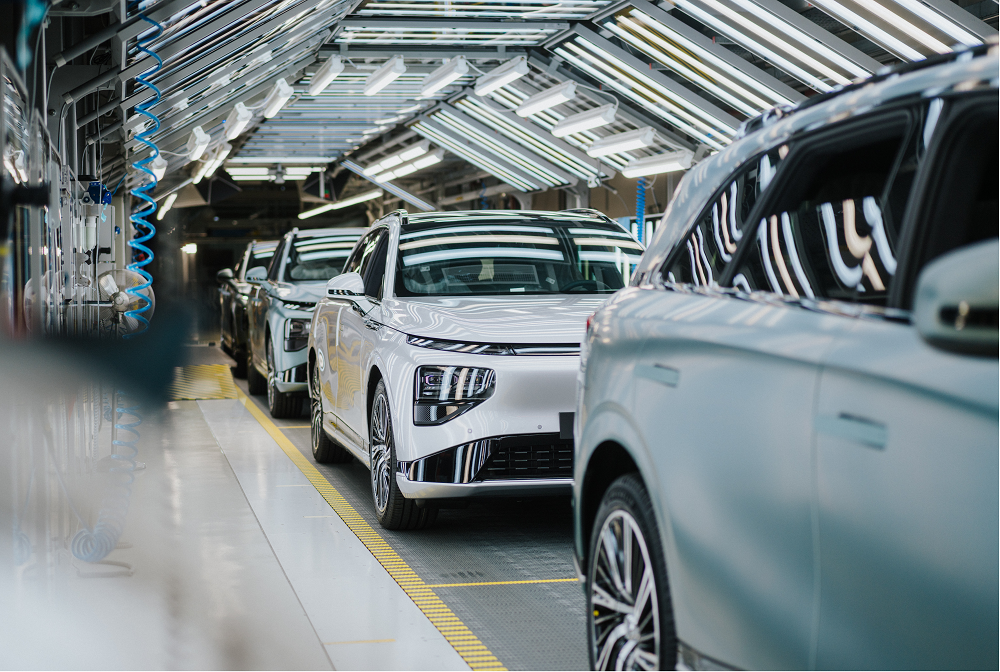
Image Source: Magna
He also mentioned that landing through cooperation or acquiring existing capacity is much faster than building from scratch, and it avoids a pile of regulatory hurdles involved in construction.
The balance of their global layout and their compliance capabilities represent another common advantage for foreign suppliers. Take Valeo: it operates in 31 countries, with R&D, production, and compliance teams across Europe, the Americas, and Asia Pacific.
In Gu Jianmin's view, Chinese automakers need to prepare in four areas for their global expansion: innovation, brand reputation, global resources, and compliance practices. Innovation and brand reputation are easy to grasp, but global resources and compliance practices are often things automakers didn't anticipate at home and are underprepared for.
"We have seen or heard of certain automakers facing challenges from local judicial departments during their expansion, sometimes amounting to deliberate obstruction." Such situations are impossible to predict domestically, yet foreign suppliers, having operated locally for decades, have already navigated these pitfalls and possess the experience.
These global networks are now connecting with "In China" capabilities. Xu Jie spoke of "HQ-to-HQ" alignment. Since Chinese customers' headquarters are in China, foreign companies' headquarters need to interface directly with them there. Decision-making mechanisms, capabilities, response speeds, and strategic coordination must be anchored in China. Together, they define which markets to enter, which products to use, and which paths to take, before relying on global branches to execute.
MANN+HUMMEL moved its global passenger car division headquarters from Germany to China in 2024. Aptiv's 4D imaging radar follows a path of "developed in China, launched domestically first, then feeding back to the global market." Last year, Valeo's China team applied for 287 global patents—technologies developed by the Chinese team to serve customers in China first.
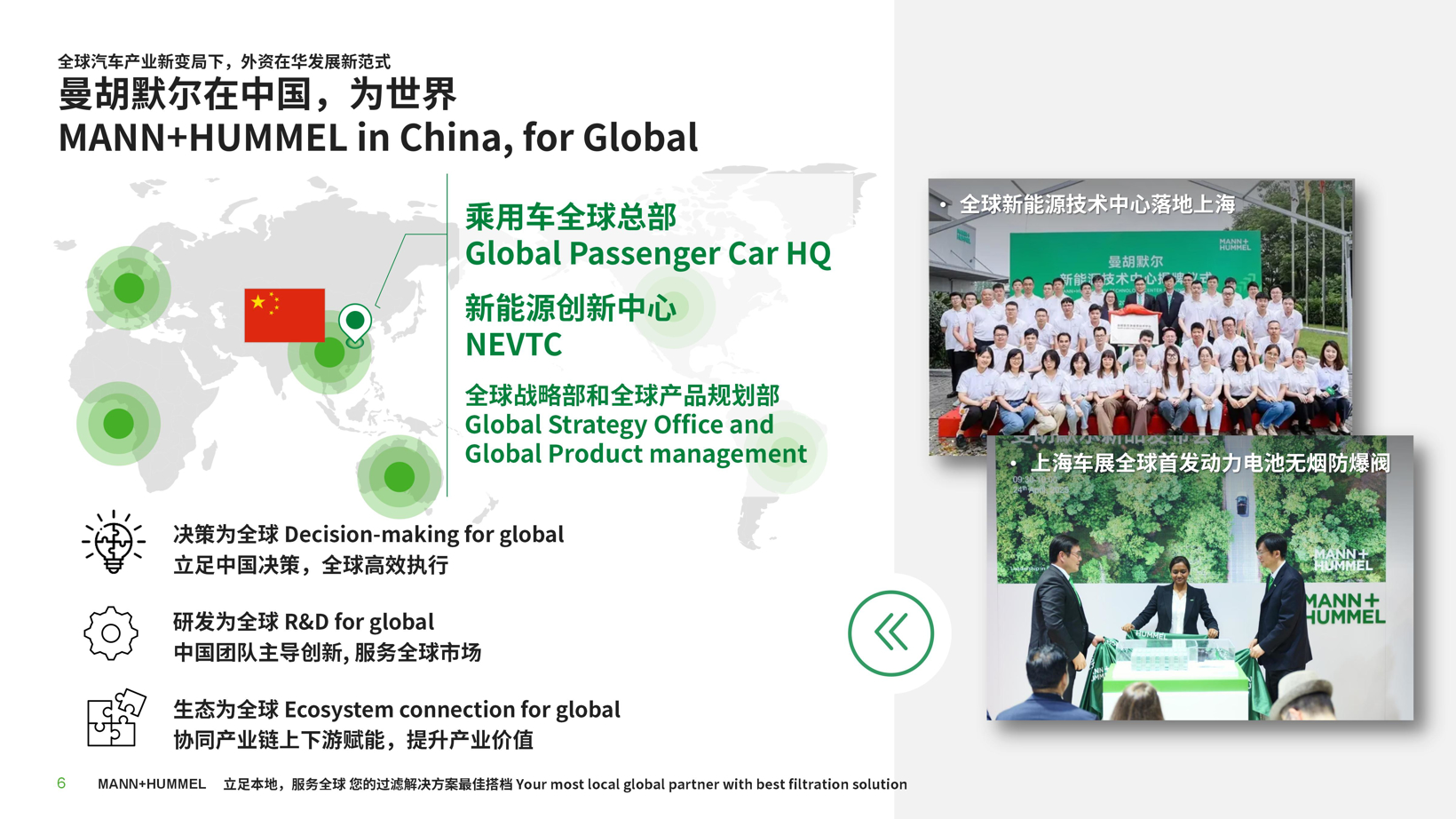
Image Source: MANN+HUMMEL
Yang Xiaoming put it plainly: "Joint ventures and foreign enterprises must recognize their positioning and leverage their unique advantages. They need to balance Chinese market demands while adapting to diverse regional environments globally, utilizing their experience in overseas layout and cross-regional operations. At the same time, they must help bring China's supply chain system abroad to support Chinese automakers. Only then can they establish their own competitiveness."
The global network is the foundation; Chinese capabilities are the growth engine. Only if the two connect can the opportunities of this window truly be seized.
How to play a winning hand?
The window won't wait for anyone.
In two to three years, Chinese local suppliers' overseas production capacity will come online, and automakers' local supply chains will gradually take shape. The first-mover advantage of foreign suppliers may then begin to narrow.
So this period is not for making quick profits.
Xu Jie emphasized that companies must seize the opportunity to deliver tangible competitiveness, response speed, and on-the-ground support to Chinese automakers—rather than just quoting prices to make money. How different companies respond to China's export needs will determine their success or failure.
So what counts as delivering "tangible competitiveness"? Several points emerge from the remarks of these executives.
The first is co-creation. Xu Jie noted that in the past, parts suppliers would mature their technology before presenting it to automakers. Now, both sides work together starting from the product definition phase. "This co-creation model is difficult for other global automotive supply chains to replicate; it is a unique advantage of China."
Applied to the context of going global, co-creation takes on a more specific meaning: it is not about transplanting domestic models as-is, but rather defining products and roadmaps with automakers based on the target market's regulations, user habits, and supply chain conditions. Required tests and validations cannot be skipped, but by doing them together from the start, the time spent on later rework is eliminated.
He specifically emphasized that shortening the development cycle does not come from reducing testing, but from increased co-creation, making vehicle development faster and better.

Image Source: 699pic
The second is combining speed with reliability. At GNEV2026, Li Yaxu cited the example of Magna and Chery jointly developing the DHD Duo hybrid system, which went from design to mass production in 18 months.
Eighteen months may not be considered top-tier compared to "China speed," but the development team, leveraging Magna's massive accumulated data, identified hundreds of potential risks in advance. There were no repeated design changes due to test failures during the A-sample and B-sample phases.
This "first-pass success rate" is particularly valuable in overseas markets, where the cost of trial and error is much higher than domestically. A single quality issue inflicts far greater damage on a brand abroad than it would at home.
The third is taking the Chinese supply chain along. Yang Xiaoming emphasized that foreign companies cannot just focus on securing orders for themselves; they must "help bring China's supply chain system overseas."
The supply chain for Chinese automakers is highly localized, with a vast number of Tier 2 and Tier 3 suppliers based domestically. If foreign suppliers can help these local companies establish operations abroad, they effectively embed themselves into the entire export supply chain rather than standing on the sidelines. In Yang Xiaoming's view, this is the only way "to establish their own competitiveness."
What happens after the window closes?
Xu Jie spoke of "co-opetition." In his view, competition is inevitable. Since China accounts for one-third of global auto production, it is reasonable that the local supply chain should eventually claim the lion's share. The competition in different regions will come down to understanding of the local market, execution, and competitiveness.
MANN+HUMMEL has 85 years of history and has accumulated significant experience, but he noted that experience is meaningless if it cannot be converted into competitiveness. Li Yaxu also responded, "We place greater importance on improving our own capabilities."
The premise of co-opetition is to solidify one's value during the window period. For foreign suppliers that have operated overseas for decades, this is not about starting from scratch, but about transforming what they already have into what Chinese automakers truly need.
Two to three years—it is neither long nor short. For some companies, it is enough time to stage a turnaround; for others, it may not be enough time to even react. The window will not stay open forever.


