



Gasgoo Munich- What major events shook the global auto industry this week?
European Parliament Agrees to Hike Steel Import Tariffs to 50%
According to foreign media reports, on May 19, the European Parliament gave final approval to raise import tariffs on steel, aiming to prop up a struggling domestic steel industry.
With 606 votes in favor and 16 against, the Parliament agreed to lift steel import duties to 50%, while also slashing tariff-free import quotas by 47%.
The plan stems from a European Commission proposal for 2025. Under the new rules, the annual tariff-free steel import quota will drop to 18.3 million tons — a figure equal to the EU's total steel imports in 2013.
The EU argues that the supply-demand balance has been off-kilter since 2013, with overcapacity as the root cause. China's heavy support for local steelmakers has pushed its output to over half the global total.
Karin Karlsbro, the EU lawmaker driving the legislation, said Europe's steel industry needs trade, innovation, and fair competition to thrive. Mitigating the negative trade impacts of global overcapacity, she insisted, is essential.
The European steel industry welcomed the move. Axel Eggert, director general of the European Steel Association, noted that with geopolitical instability and market disorder, the tax hike shows the EU's determination to protect its industrial base and secure autonomous development.
The bill takes effect after final approval by member states and officially enters into force on July 1.
Gasgoo Take: Less about defending fairness, more about building walls to prop up inefficient local industries.
China to Invest $1.1 Billion in Serbia, Targeting AI, Robotics, and Autos
Gasgoo News: Citing a Bloomberg report, Serbian President Aleksandar Vucic announced that Chinese companies will add 940 million euros (about $1.1 billion) in investment, expanding their footprint in Serbia and injecting strong momentum into the country's economy.
In a May 27 post on his official website, Vucic said the funds will flow into auto parts manufacturing, humanoid robots, energy, and artificial intelligence. The capital is expected to arrive starting this July.

Image Credit: Zhiyuan Robotics
The agreements involve more than 20 Chinese firms, including Minth Group, Linglong Tire, XYL, Shanghai Zhiyuan Robotics, Weichai Power, Zhejiang Fute Technology, Jiangsu Ruien New Energy, and China Construction Fourth Engineering Division.
Serbia is actively seeking EU membership, and under Vucic's leadership, the scale of Chinese investment there has surged.
Over the past decade, Serbia has attracted roughly 8 billion euros in direct Chinese investment, along with a similar volume of loans for infrastructure projects. Notably, this includes the Belgrade-Budapest railway under China's Belt and Road Initiative. A free trade agreement between the two nations formally took effect in 2024.
Gasgoo Take: Anchoring high-end manufacturing in an EU outpost is a preemptive move in the geo-economic chess game.
Huawei Unveils "Tau (τ) Law"
On May 25, Gasgoo learned that at the 2026 International Symposium on Circuits and Systems, He Tingbo — a Huawei director and president of its semiconductor business — formally proposed the "Tau (τ) Law" during a keynote titled "Exploration and Practice of New Semiconductor Paths."
Notably, this marks the first time China has put forward a new principle to guide industrial development in the global semiconductor arena.
The Tau (τ) Law proposes replacing "geometric scaling" with "time scaling" as the new guiding principle for semiconductor and electronic system evolution. By using innovations like logic folding to continuously compress signal propagation delay and boost transistor density, the industry can achieve sustained progress.
Moore's Law, which has dominated the sector for over half a century, is now facing severe physical and economic headwinds. With geometric scaling slowing and cost benefits fading, finding a new sustainable path to meet exponential computing demands has become a global challenge. The Tau (τ) Law offers a viable solution.
Huawei has introduced core technologies like "LogicFolding," building a multi-level optimization system spanning devices, circuits, chips, and systems. The system aims to systematically reduce the time constant τ, driving continuous gains in performance, energy efficiency, and transistor density.
From 2026 to 2035, Huawei plans to commercialize exploratory technologies, steadily increasing transistor density and operating frequency while rolling out high-performance mobile chips.
"Our solution works, and it goes the distance," He Tingbo said bluntly. "The performance of our new chips can absolutely hold its own against the other path."
Gasgoo Take: From chasing Moore's Law to defining "time scaling," China's semiconductor sector is trying to rewrite the rules of the game.
NIO CEO Li Bin: Raw Material Prices Rise, Vehicle Costs Up About 10,000 Yuan
On May 28, Gasgoo learned that at a media roundtable for the NIO ES9, CEO Li Bin noted that rising costs for raw materials — including nickel, cobalt, and lithium carbonate — have added more than 10,000 yuan to the cost of a single vehicle this year.

Image Credit: NIO
Li noted that commodities and memory chips affect not just automakers but also richer, faster-growing industries, leaving carmakers with little bargaining power. Memory prices haven't retreated since rising earlier this year, and raw material cost pressures aren't likely to ease soon — meaning companies have to absorb these costs themselves.
Gasgoo Take: The auto industry's battle has expanded beyond product definition to the grim reality of absorbing commodity cycle pressures.
Webasto Plans JV with Chinese Glass Manufacturer
On May 26, 2026, German auto supplier Webasto announced plans to sign an agreement with Zhejiang Fujia Technology (FJT) to form a joint venture. Webasto will hold a 30% stake, pending approval from China's antitrust regulators.
The JV will focus on Fixed Transparent Modules (FTM). The partners will co-develop and produce FTM products for the Chinese market, covering glass pre-processing and system integration.

Image Credit: Webasto
Webasto said the JV extends its value chain into glass processing, creating a more complete engineering capability from pre-treatment to roof system integration. FJT brings manufacturing expertise and local market resources, while Webasto contributes its system integration prowess in roof systems.
The duo plans to develop cost-competitive FTM solutions for domestic OEMs, integrating features like ambient lighting, smart sunshades, solar technology, and in-car entertainment.
Gasgoo Take: Giants are ceding control for local agility — supply chain power is shifting East.
ProLogium Announces U.S. IPO via SPAC; Solid-State Battery Race Enters Mass Production Sprint
Taiwanese solid-state battery maker ProLogium Technology announced it has reached a definitive agreement with SPAC Translational Development Acquisition Corp. (TDAC) to list on Nasdaq via a merger. The transaction values the company at $3.8 billion.
Under the agreement, the merged company will be named ProLogium Technology and trade under the ticker "PRLG." Both boards have approved the deal, which is expected to close in the second half of 2026, subject to shareholder and regulatory approvals.
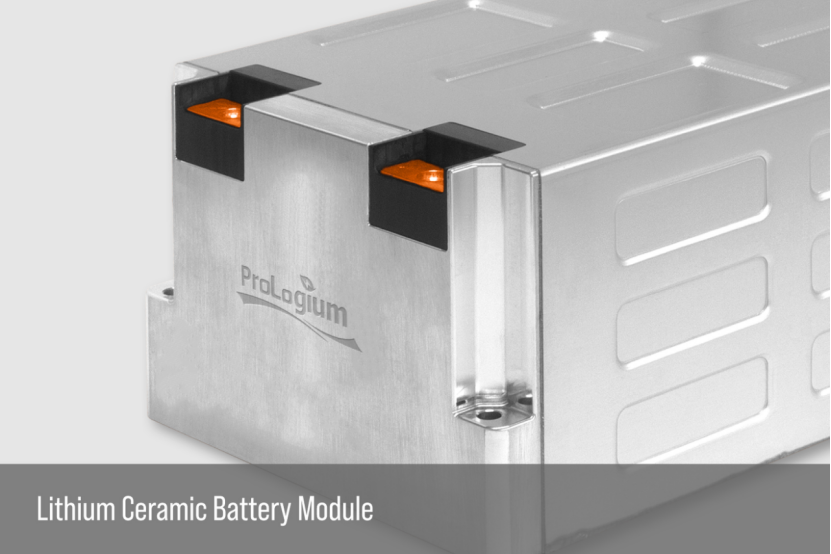
Image Credit: ProLogium Technology
The filing makes one goal clear: ProLogium's IPO is primarily about expansion.
The company plans to use proceeds to scale production of its fourth-generation solid-state batteries and push forward with its overseas gigafactory in Dunkirk, France. Construction is slated to begin in late 2026, with mass production and deliveries starting in the second quarter of 2029. By 2030, the plant aims to add 4 GWh of annual capacity. Meanwhile, ProLogium's Taiwan plant is set to triple its capacity to 3 GWh by 2035, up from 1 GWh today.
Unlike many peers still stuck in the sample validation phase, ProLogium has already amassed significant manufacturing experience. Data shows it has delivered over 2.4 million cells to customers since 2013.
Currently, most of ProLogium's batteries go to drone makers, defense contractors, and satellite companies. However, that mix is expected to shift as capacity grows and costs fall. By 2032, roughly 60% of its output could target the electric vehicle market.
Gasgoo Take: A pioneer with a track record is sprinting to the public markets via a SPAC, but the ultimate test for solid-state batteries remains automotive-grade costs.


