



Gasgoo Munich- On the evening of March 19, 2026, Xiaomi EV launched its next-generation SU7 to a room full of industry heavyweights. Wang Chuanfu, Li Xiang, and He Xiaopeng were all in attendance.
Two years ago, at the launch of the first-generation SU7, Li Bin, founder, chairman, and CEO of NIO Inc., had joined Li Xiang and He Xiaopeng to share the stage with Lei Jun, openly admitting that the SU7 was "formidable" and "putting significant pressure on us." This time, however, he was absent from the guest seats.
Xiaomi's CEO Lei Jun later offered an explanation during a livestream: "Mr. Li Bin had a scheduling conflict; he was in Shanghai attending a semiconductor industry summit." It was there that Li Bin revealed a key figure: cumulative production of NIO's self-developed chips has surpassed 550,000 units.
Was this absence a coincidence, or a signpost of a deeper shift? Li Bin once courted controversy with sharp remarks like "Why does anyone still buy internal combustion engine cars?" and "Porsche's factories can't compare to JAC's." Yet today, as the race for embodied intelligence heats up, Li Bin sounds notably more cautious, repeatedly stressing the need to "focus on making great automotive products."
First Ask "Has He Changed," Then Ask "Why"
Has Li Bin really changed over the past year? He believes so. "I have certainly become more pragmatic personally," he said.
Zhou Xiaoying, CEO and editor-in-chief of Gasgoo, views Li Bin's shift as a maturing process. "Compared to NIO's early days, he is much more mature now, and that hasn't hurt the brand's visibility," Zhou said. "The difference is that he used to make provocative remarks that sparked debate. Now, he highlights NIO's infrastructure investments, community building, and brand culture. That's actually more pragmatic and effective."
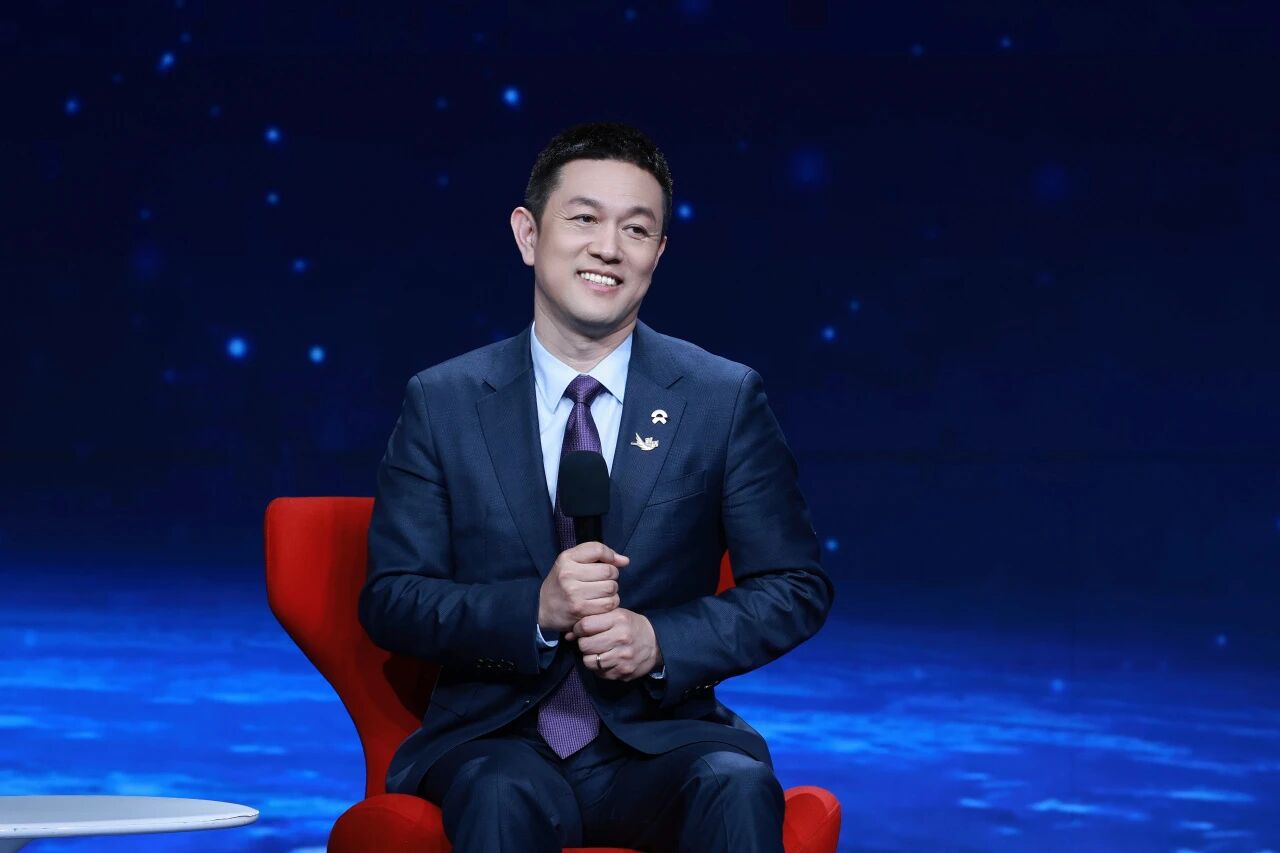
Image Source: NIO
During NIO's third-quarter 2025 earnings call, Li Bin offered a restrained response when asked about automakers piling into robotics. "For the foreseeable future, we will focus on making great automotive products. Robots undoubtedly have a future, but that doesn't mean we need to do it today."
"NIO did a lot of exploring in the past, and we learned a lesson through that process: In a Chinese market with 30 million annual sales, we hold just over 1% share. How can we afford to be distracted?" Li Bin told a private meeting. "For a long time to come, we will focus on making great cars, honestly building products, and honestly selling them."
This shift isn't just rhetoric; it's showing up in operational moves. In the second half of 2025, NIO implemented an internal mechanism called CBU (Cell Business Unit). The core logic: break down all operations into distinct "basic business units," each with clear targets for revenue, cost, and return on investment. "Every single penny must withstand serious financial scrutiny," Li Bin told staff. Once known for "spending whatever it takes" on user service, he now demands a return on every expenditure.
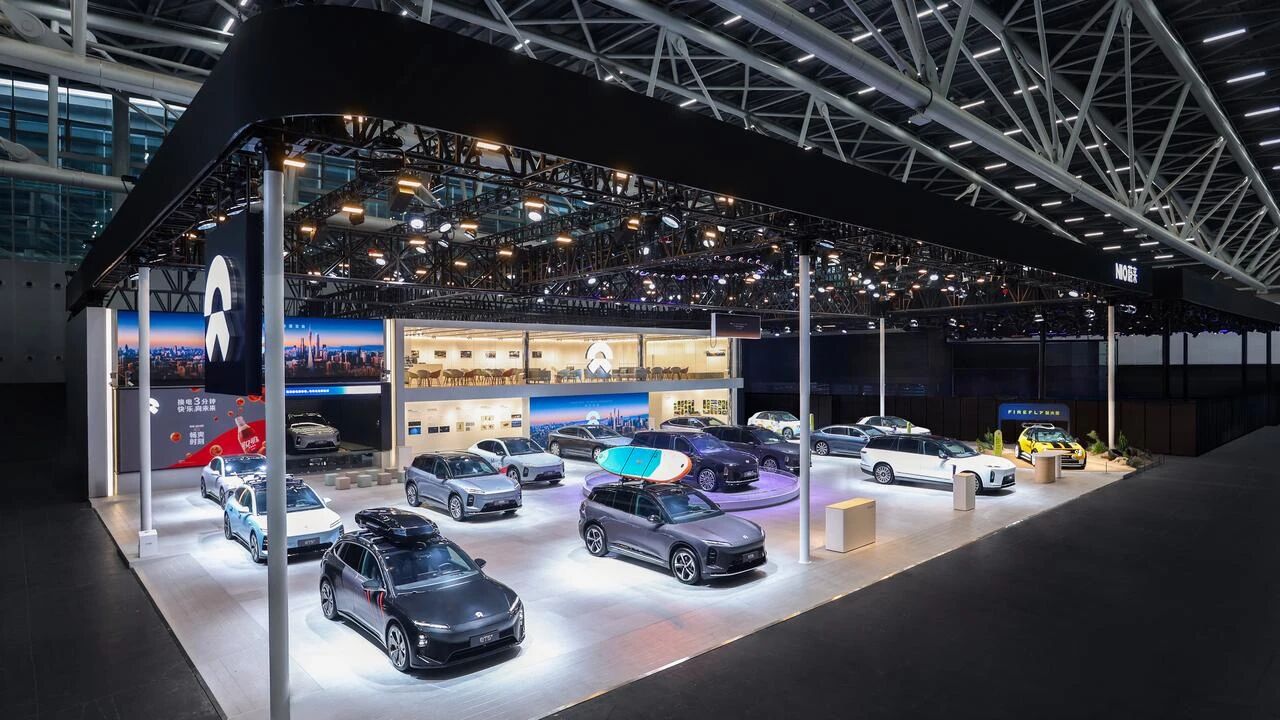
Image Source: NIO
A personal anecdote highlights this shift. At the Auto Guangzhou in November 2025, Li Bin told reporters a story: because the NIO and ONVO booths were in different venues, evening rehearsals would have required a 30,000-yuan "overtime fee" for each. To save that 30,000 yuan, he changed his flight schedule to arrive early. "30,000 yuan is still money! That would have been unimaginable at NIO in the past."
Has this penny-pinching hurt the user experience? One NIO owner, who is also a seNIOr automotive journalist, offered this feedback: "Daily usage hasn't changed much; battery swapping is still solid. The biggest shift is the NIO Service Worry-Free policy, which is now tiered. The overall value is just average. After routine maintenance, unlike in the past, there's no detailed car cleaning or full battery recharge."
Is this transformation an active choice, or one forced by reality?
Li Bin's words offer a clue. In an interview, he said: "The hardest thing for a manager is knowing what to hold onto and what to change. You must change decisively when necessary, and stand firm when required." Investments in R&D, user service, and community building continue. But for side ventures like mobile phones—criticized as distractions—NIO knows when to cut its losses.
But the other side of the coin is the pressure of reality. Since its founding, NIO has struggled with losses. According to the 2025 financial report released in March 2026, the full-year net loss still stood at 14.943 billion yuan. While that's a 33.3% improvement from the previous year, the red ink remains. With capital markets tightening, NIO faces significant headwinds. At the same time, industry competition has turned white-hot. Caught in a pincer movement, NIO's market share has been squeezed.
"We were certainly more optimistic in 2021," Li Bin admitted at a private meeting. "But falling short of expectations over the past few years has forced a lot of reflection."
The interplay between persistence and adjustment defined NIO's 2025, and that shift has yielded financial results. In March 2026, NIO released its full-year and fourth-quarter 2025 report: the company posted a net profit of 283 million yuan in the fourth quarter of 2025—its first quarterly profit since inception. Vehicle deliveries hit 124,800 units that quarter, a 71.7% year-on-year surge and a quarterly record. For the full year, NIO delivered 326,000 new cars, up 46.9% and another record high.
The significance of this report lies in what it proves: NIO's recent adjustments weren't just about cost-cutting for its own sake, but about moving onto a sustainable operational track. As Li Bin said on the earnings call, "NIO's product cadence is now aligned with market trends, and we are highly confident in achieving 40% to 50% growth for the full year."
Tina Zhou, CEO of Gasgoo, believes NIO still has a shot at a full-year profit in 2026. "The main challenge is whether demand can sustain momentum," she said. "With three brands, NIO has many models but too few hit models. It needs to focus on core models to gain scale advantages in the supply chain. At the same time, in areas like Europe where a commercial closed loop isn't possible in the short term, it should reduce investment and gradually pull back. That would effectively improve the fundamentals."
NIO Within the "NIO-XPENG-Li Auto" Axis
Between 2014 and 2015, Li Bin, Li Xiang, and He Xiaopeng successively entered the auto business, becoming the first wave of Chinese internet entrepreneurs to venture into the industry. Today, these three companies—starting from the same line—have charted distinctly different trajectories.
In the fourth quarter of 2025, NIO and XPENG both turned a quarterly profit. It marked the first time the trio of NIO, XPENG, and Li Auto—China's first-generation EV startups—have all achieved profitability in the same quarter. Yet a closer look at the financials reveals they took different paths to get there.
NIO posted its first quarterly profit of 283 million yuan, with vehicle gross margins hitting 18.1%—the highest in three years. The key driver was an optimized product mix. Deliveries of the new ES8, a high-priced model, reached roughly 39,700 units, accounting for 31.8% of total sales. With a per-vehicle margin nearing 25%, the ES8 was crucial to swinging the company to profitability.
Meanwhile, annual revenue from NIO's services and community business surpassed 10 billion yuan, making up more than 13% of total revenue, and turning an annual profit. Li Bin revealed on the earnings call that profits from non-automotive businesses—including after-sales service, NIO Life, and financial insurance—essentially cover the investment in battery swap stations.
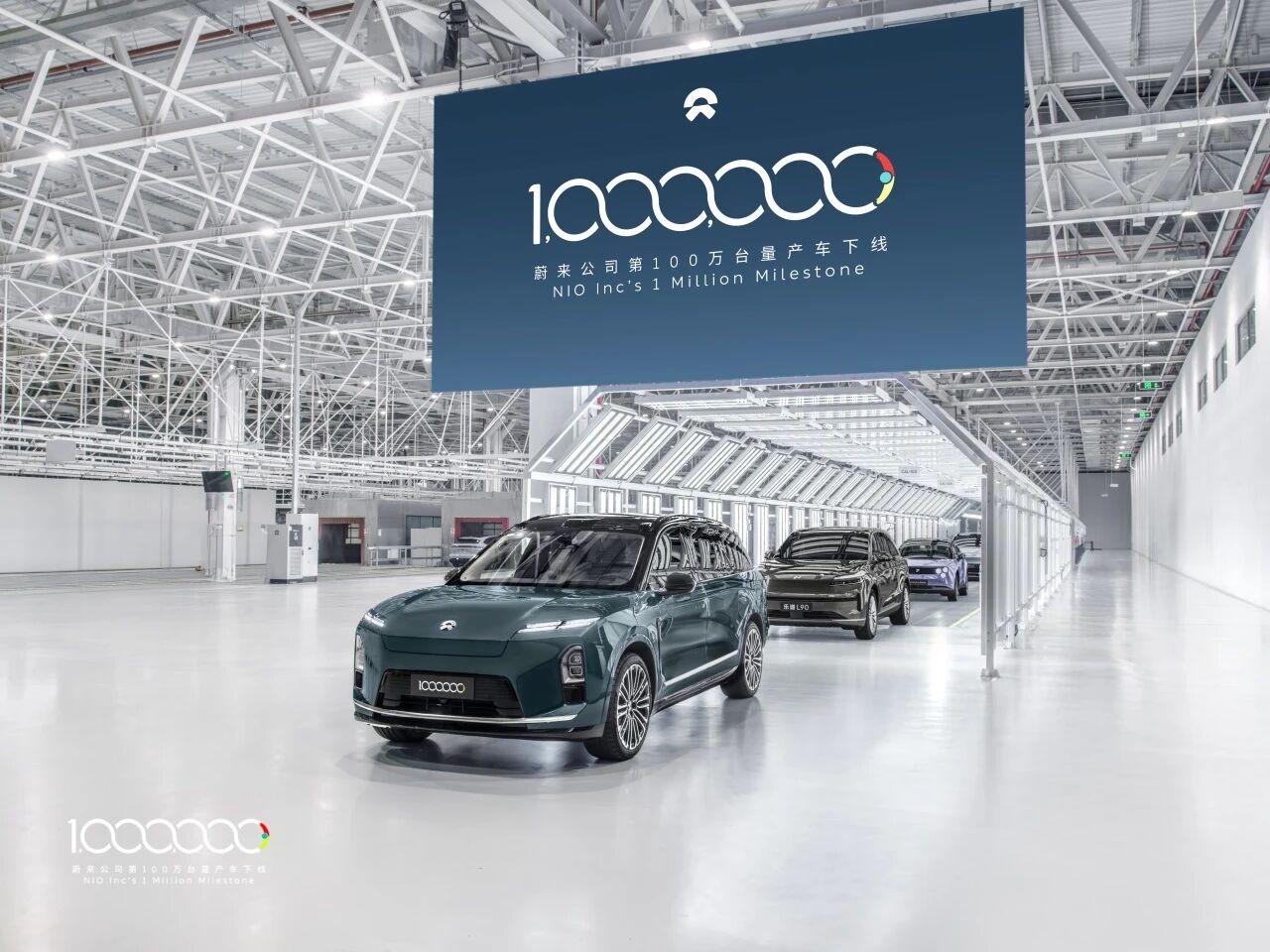
Image Source: NIO
Strategically, NIO has chosen focus. In January 2026, at a ceremony marking the production of its 1 millionth vehicle, Li Bin looked back: "We got carried away in the second cycle and did too many side projects." In the cycle ahead, he said, NIO aims to be the "most grounded company."
According to Li Auto's financial report, 2025 R&D spending hit a record 11.3 billion yuan, with AI-related costs accounting for about half. The company has repositioned itself from "creating a mobile home" to "building embodied intelligent products." In December 2025, it released AI glasses named Livis, branded as "wearable robots" and part of its embodied intelligence strategy. CEO Li Xiang made it clear: the new-generation L9, launching in the second quarter of 2026, will be the "pioneering work of embodied intelligent robots."
Financially, Li Auto reported 112.313 billion yuan in revenue for 2025—its third straight year above the 100-billion mark—and a net profit of 1.1 billion yuan. Notably, however, annual revenue fell 22.25% year-on-year, and deliveries slipped 18.81%. Vehicle gross margins dropped from 19.8% in 2024 to 17.9%. The growing pains of transitioning from range extenders to pure electrics, combined with heavy AI investment, squeezed short-term profits.
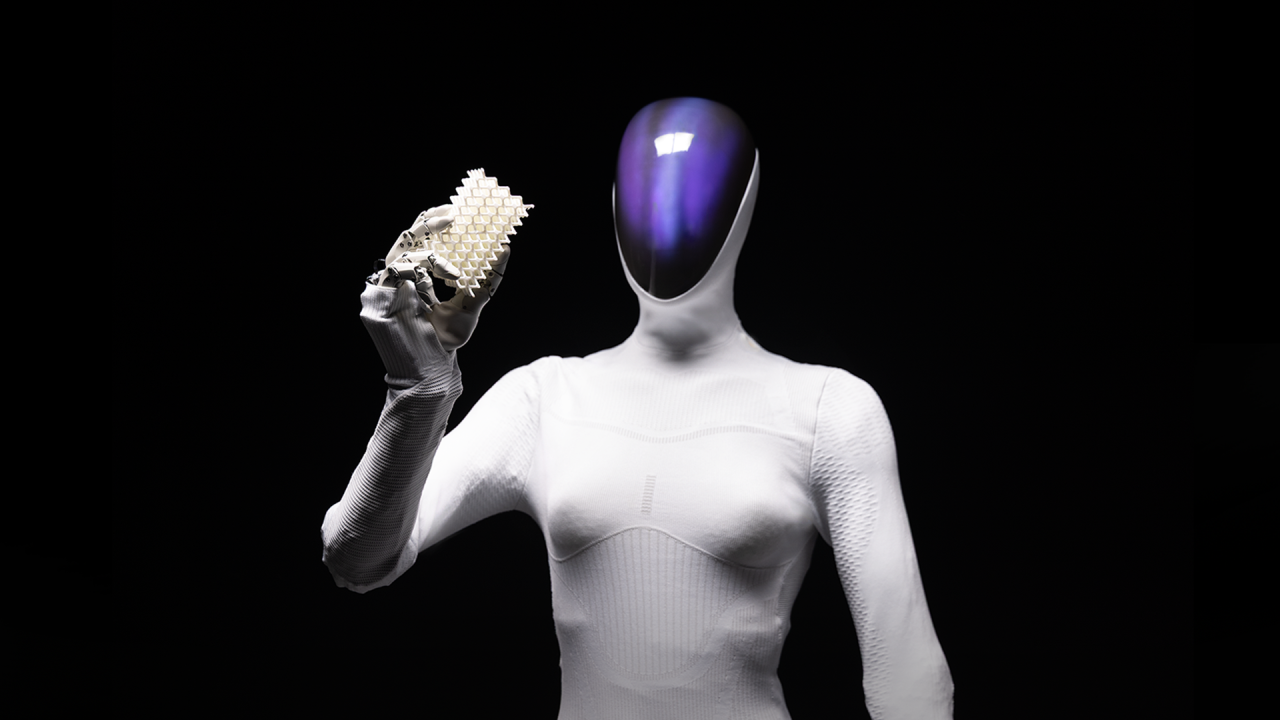
Image Source: XPENG
XPENG's transformation path is equally aggressive. In November 2025, He Xiaopeng announced an official rebranding as a "mobility explorer in the world of physical AI and a global embodied intelligence company." XPENG plans to lift R&D spending on physical AI to 7 billion yuan in 2026. The next-generation humanoid robot, IRON, is slated for mass production by the end of 2026, while its flying car, the "Land Carrier," has already secured over 7,000 orders.
On the financial front, XPENG's 2025 revenue jumped 87.7% to 76.72 billion yuan, while its net loss narrowed to 1.139 billion yuan. It posted a reported profit of 380 million yuan in the fourth quarter. Notably, XPENG's technical services and other income reached 8.34 billion yuan, a 65.6% increase. This revenue stems largely from technical R&D services, IP licensing, and Turing AI chip supplies for Volkswagen in areas like electronic-electric architecture (EEA) and smart driving. The market widely views these technical services to Volkswagen as a crucial profit booster for XPENG.
Viewing the three companies' choices together, distinct strategies emerge:
NIO has chosen to focus resources on its core automotive business, prioritizing profitability over new ventures. Concentrating resources helps turn a profit now. But from a longer-term perspective, as Li Auto and XPENG push into embodied intelligence and physical AI, NIO is lagging in those fields. If the industry evolves toward a fusion of AI and robotics, NIO may be late in building the necessary systemic capabilities. "What we need to do is survive, and take it slow," Li Bin said in January 2026. That may be the underlying logic behind NIO's path.
Li Auto is expanding into embodied intelligence alongside its auto business. That choice means higher R&D spending and pressure on short-term profits, but it could secure a first-mover advantage in future sectors. XPENG, meanwhile, is advancing with cars, robots, and flying cars all at once, building full-stack capabilities centered on physical AI. Fighting on multiple fronts places high demands on capital and organizational strength.
Regarding NIO's decision to "focus on the core business and hold off on chasing trends," Zhou said: "Strategic choices—whether specialization or related diversification—both have success stories. It comes down to the company itself. I personally agree with NIO's choice to focus. The automotive sector is the foundation; if you build that up strong, other opportunities will follow. The opportunity cost and risk right now might mean losing some valuation in the capital markets, since the hype is shifting from smart EVs to embodied intelligence. But I think 'not following' is the right strategy for now. The embodied intelligence industry is far from maturity, and spreading resources too thin would make NIO repeat the mistake of losing strategic focus."
Back to Business: What Is NIO Actually Doing?
If we look past the debate over whether Li Bin has changed and examine what NIO is actually doing, a clear outline emerges: the investments once criticized as distractions are becoming NIO's moat.
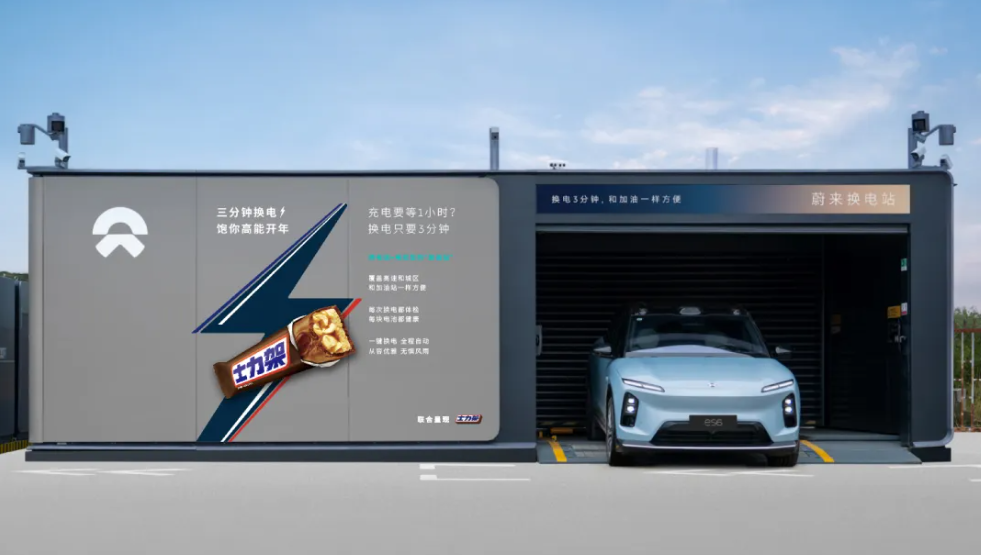
Image Source: NIO
First, battery swapping. By the end of 2025, NIO had built over 3,600 battery swap stations nationwide, along with a highway network spanning "9 vertical, 11 horizontal, and 16 major city clusters" connecting 550 cities. The first batch of 50 co-built charging and swapping stations from NIO Power and Zhongan Energy are now operational in Anhui province, signaling that NIO's "Power Partner" plan is moving from blueprint to scaled replication. Official data shows NIO has invested roughly 18 billion yuan in swapping technology and infrastructure, delivering nearly 95 million swap services to users.
Although progress on the battery swap alliance has lagged behind expectations—as of August 2025, no mass-produced models from alliance partners other than NIO had hit the market—NIO hasn't stopped investing. In January 2026, the Yunnan-Xizang swap route was fully connected. Spanning over 2,700 kilometers with 19 NIO stations along the way, it allows NIO drivers to swap their way all to the foot of Mount Everest.
Next, chips. In December 2023, NIO unveiled its first self-developed smart driving chip, the Shenji NX9031. Built on a 5-nanometer process with over 50 billion transistors, both the chip and its underlying software were designed in-house. The chip went into mass production in the NIO ET9 in April 2025. Li Bin has stated that the NX9031's computing power is equivalent to four Nvidia Orin-X chips. More importantly, the in-house chip has delivered tangible cost savings—roughly 10,000 yuan per vehicle, according to Li Bin.
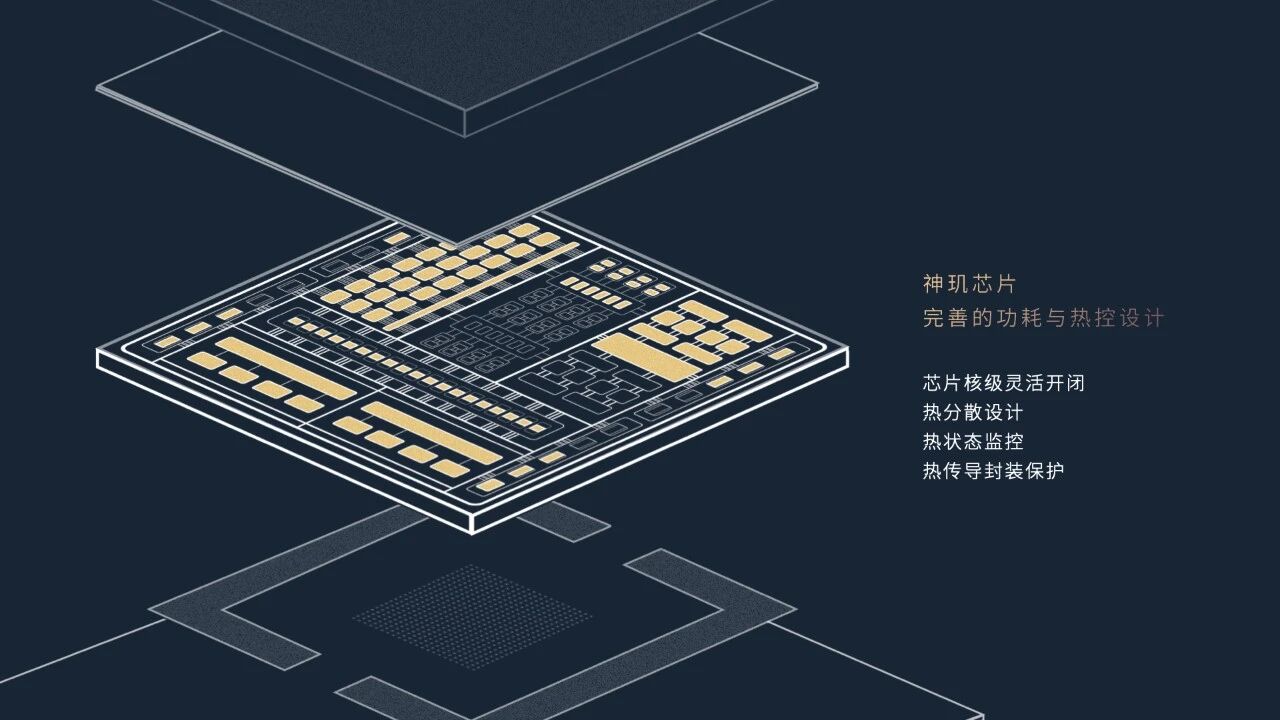
Image Source: NIO
In June 2025, NIO spun off its chip business into Anhui Shenji. That November, Anhui Shenji joined forces with Axera and OmniVision to form a joint venture called Chongqing Chuangyuan Zhihang Technology Co., Ltd., with 100 million yuan in registered capital, to offer external services. On the March 2026 earnings call, Li Bin revealed that Shenji's second advanced smart chip—designed for a broader customer base—had successfully taped out and was entering mass production. He hopes NIO's self-developed Shenji high-compute inference chips can reach more partners, including those in the automotive and embodied intelligence sectors.
That means chip development, once seen as a distraction, is shifting from a cost center to a profit center.
Then there is the multi-brand strategy. NIO realized long ago that it couldn't survive on high-end alone; it needed scale through multiple brands. And so, ONVO and FIREFLY arrived.
In 2025, the main NIO brand held the high end, ONVO targeted the mainstream family market, and FIREFLY aimed at the premium compact segment. Full-year deliveries reached 326,028 units—a record high and a 46.9% increase. In December 2025, the company delivered 48,135 units, another record, up 54.6%. NIO delivered 31,897 units, ONVO delivered 9,154, and FIREFLY delivered 7,084. The multi-brand strategy is starting to pay off.
As economies of scale continue to unlock, they will help NIO achieve a full-year profit.
Li Bin has noted that NIO's path to profitability isn't built on short-term price wars or cost-cutting, but on the economies of scale that come with higher sales volumes. As deliveries rise, fixed manufacturing costs per vehicle and R&D amortization drop significantly, optimizing cost control. Financial data shows NIO's R&D spending fell 44.3% year-on-year to 2.026 billion yuan in the fourth quarter of 2025, while sales, general, and administrative expenses dropped 27.5% to 3.537 billion yuan. Even as sales grew, NIO's expense structure improved.
Conclusion:
Returning to the opening question: Has Li Bin really become "pragmatic"?
Judging by the signs since 2025, the answer isn't a simple yes or no. Li Bin's shift involves both active strategic adjustment and pressure from reality. His restraint regarding the robotics sector may well be a rational judgment based on the current competitive landscape: with just over 1% market share and profits not yet secure, concentrating limited resources on the core automotive business is more urgent than chasing the next big trend.
"As for how long the final round lasts, the end is too far off," Li Bin said at the 2025 Guangzhou Auto Show. "I think it takes 10 years to reach a stable state, and five years to see the basic outline. What we need to do is survive, and take it slow."


