Gasgoo Munich- On April 22, BICV Technology ("BICV") and Horizon Robotics entered into a strategic partnership aimed at accelerating the transition of intelligent vehicles toward AI-driven physical agents. The collaboration will combine BICV's full-stack "AI + BeiDou" capabilities with Horizon Robotics' single-chip centralized computing architecture to develop next-generation solutions that emphasize high integration, strong performance, and cost efficiency.
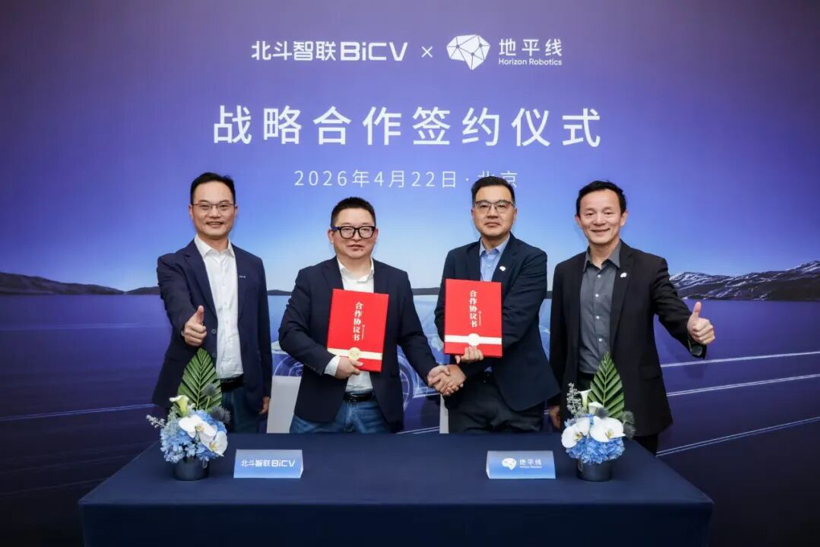
Image source: BICV
BICV is among the first strategic partners for Horizon Robotics' Starry integrated cockpit-driving chip platform. Through this collaboration, it will be an early adopter of the Starry architecture, which replaces the traditional separation between cockpit and driving domains with a unified, single-chip design. This approach consolidates computing resources while enabling deeper functional integration across vehicle systems.
BICV plans to leverage its strengths in high-precision BeiDou positioning, intelligent cockpit systems, AI agents, connected vehicle terminals, and automotive-grade system integration. By tightly coupling these capabilities with Starry's high-performance computing platform, the two companies will co-develop solutions focused on multimodal interaction, coordinated cockpit-driving control, and integrated cloud-edge services. The partnership will also offer a full delivery stack—from hardware adaptation and middleware development to application ecosystems—helping automakers significantly shorten development cycles and accelerate adoption of centralized computing architectures.
According to estimates, the Starry platform's unified computing pool and localized hardware design could reduce per-vehicle hardware costs by 1,500 to 4,000 yuan, potentially making advanced intelligent driving features more accessible across a broader range of vehicles.
In parallel, Horizon Robotics has also partnered with PATEO, making it one of the first customers to adopt the Horizon Starry® platform.
Under the agreement, PATEO and Horizon Robotics will collaborate across four key areas to expand the application of integrated vehicle intelligence.
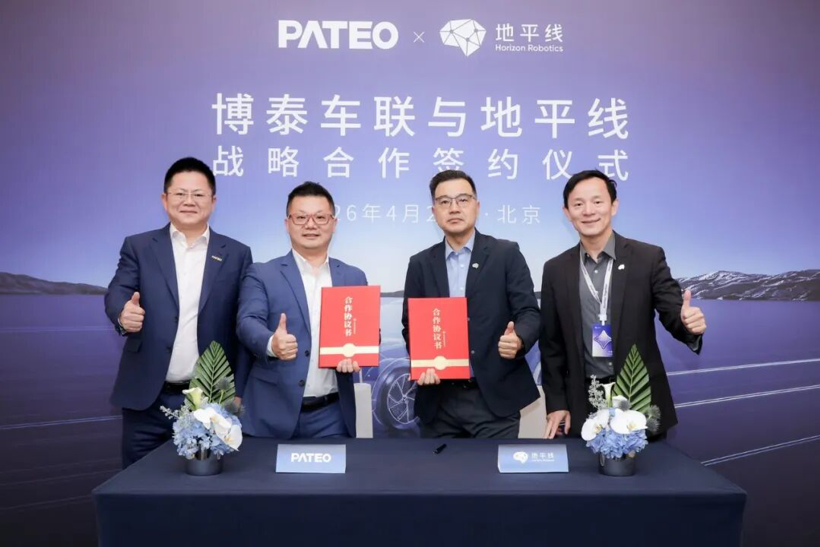
Image source: PATEO
In the cockpit-driving integration space, the two companies will jointly develop cost-effective domestic solutions, with a focus on deploying them in flagship models from mainstream automakers.
On the intelligent driving front, the partnership will focus on enabling deeper coordination between cockpit and driving systems. The goal is to equip vehicles with agent-like capabilities, including cross-modal perception, continuous planning, and adaptive behavior across complex scenarios. The companies also aim to bring these solutions into mass production for cost-sensitive models and expand their deployment into overseas markets.
Beyond automotive applications, the collaboration extends into robotics. The two sides plan to co-develop intelligent control systems characterized by high reliability, low latency, and strong coordination, supporting scalable deployment across mobility, home services, and commercial applications, while fostering convergence between smart vehicles and embodied AI systems.
In terms of global expansion, PATEO and Horizon Robotics will share customer resources across domestic and international markets, jointly developing localization strategies to support global automakers and broaden their presence in overseas supply chains.