



Gasgoo Munich-As the new energy vehicle industry crosses the threshold of 10 million units, power battery safety has evolved from a simple engineering challenge into a comprehensive proposition involving user trust, brand value, and industrial sustainability. Over the past few years, the industry has never stopped exploring battery safety—from continuous optimization of material systems to endless structural innovations. Every technological breakthrough has pushed the boundaries of power battery safety further.
With continuous progress in battery technology, a deeper proposition is emerging: in the era of high-end smart EVs, users expect more than a baseline guarantee of "nothing going wrong." They seek a perceivable, predictable, and reliable full-cycle safety experience. Building this requires companies to break free from traditional engineering thinking, elevating safety from a hardware metric to a system capability and extending protection from factory settings to full lifecycle guardianship.
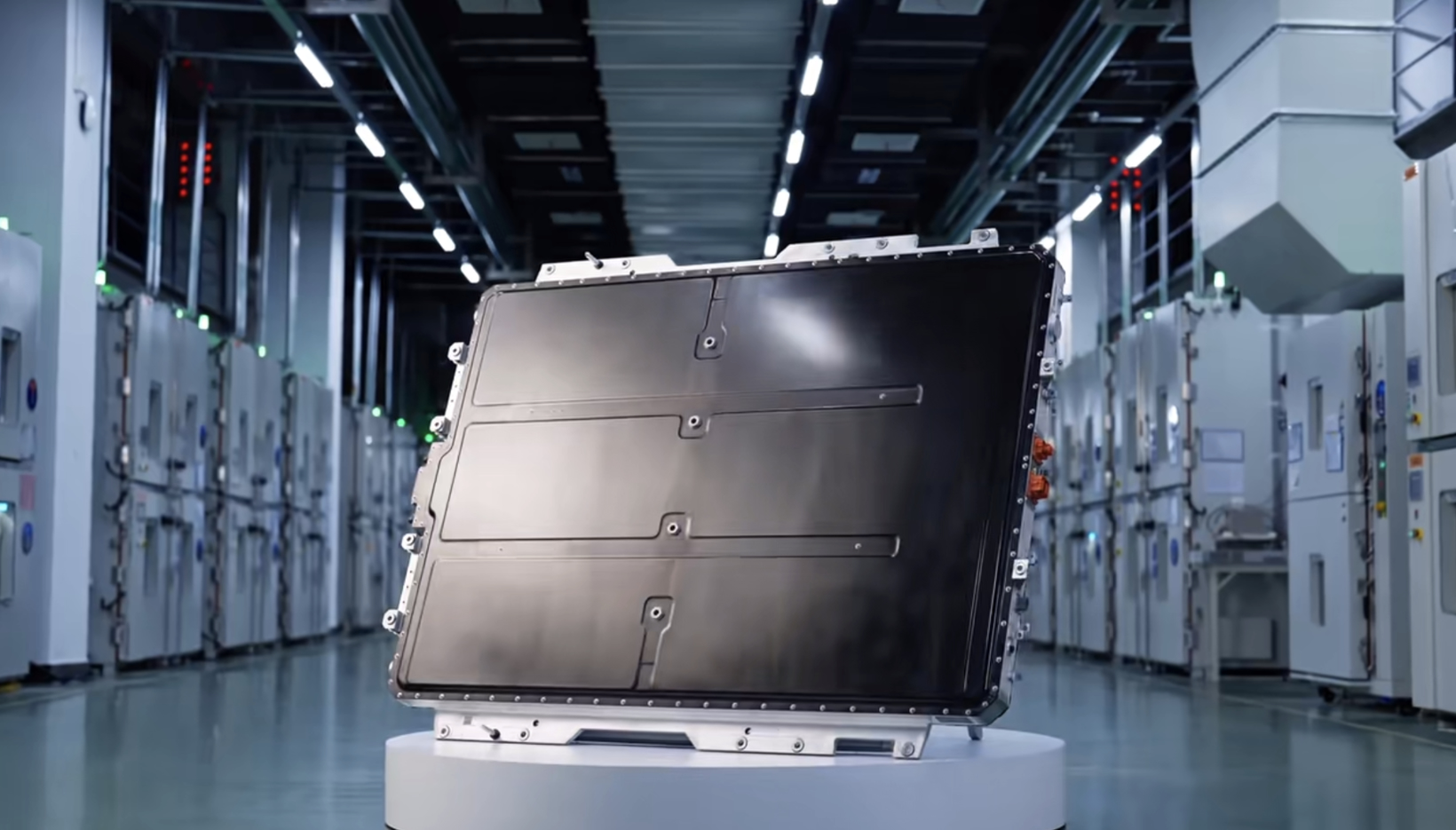
Image Credit: HarmonyOS Intelligent Mobility
On March 24, 2026, the Huawei Giant Whale Battery Platform 3.0, released by HarmonyOS Intelligent Mobility at TECH DAY, strikes at the core of this industry pain point.
This time, Huawei chose not to make incremental improvements to single material or structural parameters. Instead, it adopted a systematic approach, injecting "root technologies" accumulated over decades in communications, terminals, AI, materials, and energy directly into the traditional hardware of the battery.
The same battery, but with a different level of safety protection. From a data "black box" to an intelligent physical exoskeleton, from a "cooling patch" for temperature control to precise insulation diagnosis, the Huawei Giant Whale Battery Platform 3.0 presents a complete closed-loop safety technology group based on digital and intelligent capabilities. This is not only another self-transcendence for Huawei in the new energy technology field but also a systematic reconstruction of the industry's safety value anchor. It truly transforms the brand philosophy that "safety is the ultimate luxury" into a technological reality users can genuinely perceive.
Building a Digital Lifeline for Batteries with a "Black Box"
In traditional battery safety systems, a "disconnect" exists between data and hardware. While parameters are collected and uploaded to the cloud during normal driving, key data is often permanently lost when extreme accidents occur—such as severe collisions, underground garage fires, or high-voltage system power cuts—due to the severing of physical links. The result is that the moment most in need of analysis is precisely the one with the least data.
This "information breakpoint" not only makes it difficult to trace the exact cause of accidents but also leaves users without necessary information when facing risks.
The arrival of the Huawei Giant Whale Battery Platform 3.0 completely fills this technological void. Drawing on mature experience from the aviation sector, Huawei pioneered the installation of a "black box" for batteries. This "battery black box" is not merely a simple data recorder; its technical core reflects the deep integration of Huawei's expertise in communications and energy. It serves as both "evidence" for accident analysis and a "sentry" for safety warnings.
A design featuring triple communication redundancy and triple power redundancy ensures that data collection and transmission links remain stable under extreme conditions. This means that even in scenarios involving severe vehicle deformation or high-voltage power loss, the black box can still power itself and communicate independently, recording key data before and after the accident. The integration of StarFlash technology provides another technical underpinning for this capability. As a Huawei breakthrough in short-range communication, StarFlash's anti-interference capabilities, connection reliability, and low latency far surpass traditional Bluetooth solutions. Wang Li, General Manager of the Huawei Giant Whale Battery Platform, emphasized during a briefing: "We achieved the industry's first battery pack using a StarFlash communication solution." Behind this "industry first" lies nearly forty years of technological depth accumulated by Huawei in the communications field.
More notably, this solution serves not only post-event tracing but extends to pre-event prevention through linkage with Huawei Qiankun Intelligent Driving ADS. Wang Yanmin, President of Huawei's Smart Selection Vehicle Business, summarized the system: "Before an incident, 'clairvoyance' perception avoids scrapes and collisions; during an incident, timely power cuts prevent further harm; and in extreme situations, the black box can trace data to facilitate accident or problem location." This systematic thinking, integrating data safety with active and passive safety, reveals Huawei's unique understanding of battery safety: data is not a silent piece of evidence after an accident, but a digital asset running through the battery's entire lifecycle.
For users, the existence of the power battery black box means the vehicle possesses a "security sentinel" that never goes off duty. It silently guards in the background, achieving 24-hour uninterrupted monitoring through an ultra-low power solution. It converts potential risks into traceable, predictable, and certain information, truly completing the safety leap from information breakpoint to data closed loop.
Systemic Elevation: From Structural Reinforcement to Active Warning
If the "black box" solves the safety closed loop at the data level, the evolution of the Huawei Giant Whale Battery Platform 3.0 in physical protection reflects Huawei's ultimate pursuit of "safety margin" and the deep integration of material science and intelligent sensing.
As the "heart" of the vehicle, the battery pack's bottom protection capability has always been a key metric for safety performance. Traditional solutions mostly rely on increasing steel plate thickness, but this brings a double increase in product weight and cost, conflicting with industry trends toward vehicle lightweighting and energy efficiency optimization.
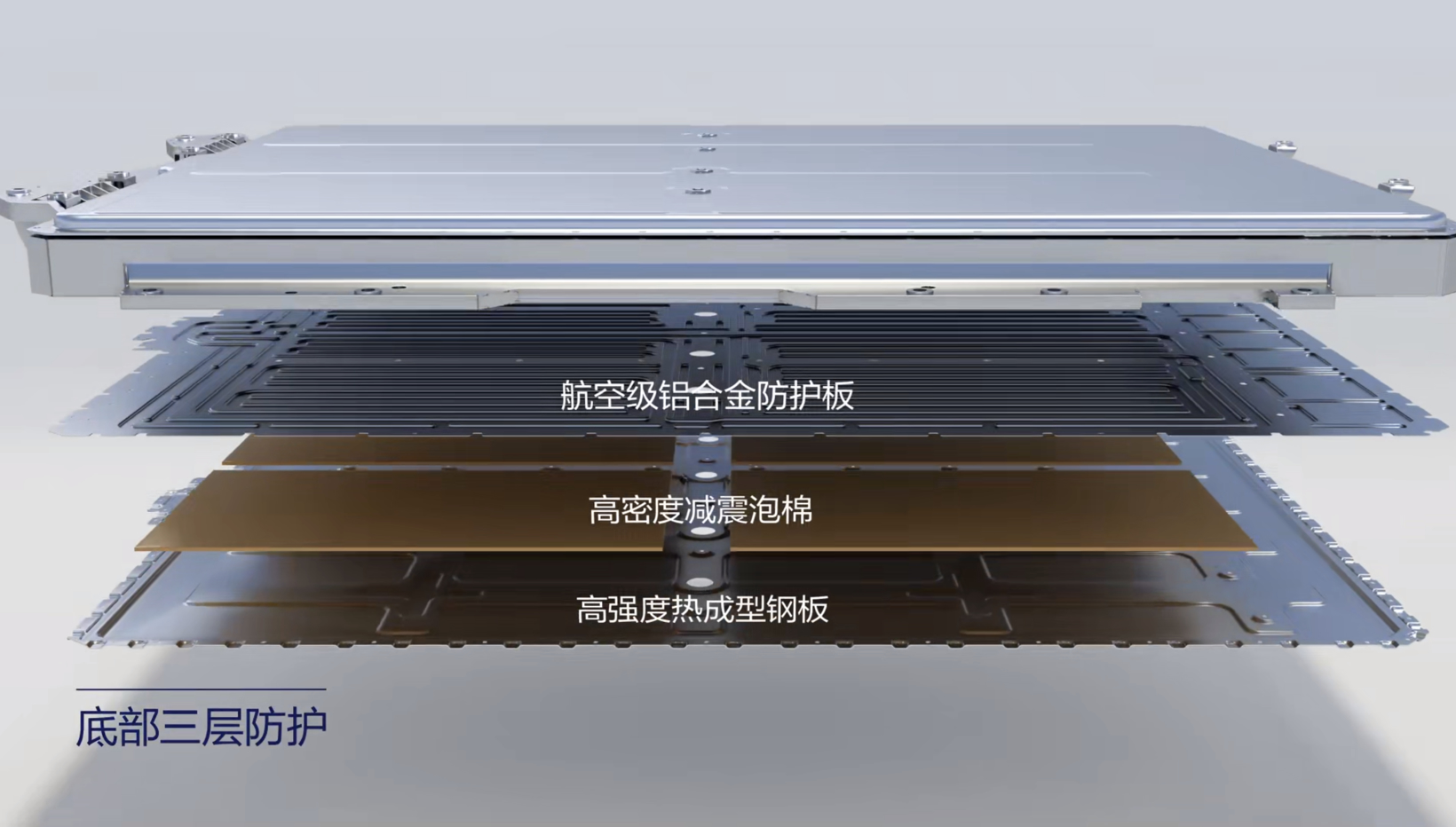
Image Credit: HarmonyOS Intelligent Mobility
Huawei's solution seeks breakthroughs in both material and structure dimensions. Wang Li used "running shoes" as an analogy: "Everyone likes wearing running shoes; they are both light and sturdy, suitable for marathons or mountain climbing." Bringing this concept into battery technology, Huawei delivers the hard-core metric of "100% improvement in bottom impact resistance," backed by the systematic synergy of hard-core protective materials and structural mechanics optimization.
Through frontier exploration in material science and innovative structural design, Huawei has achieved doubled safety gains for minimal weight cost, attaining the ideal protective effect of being "hard on the outside, soft on the inside." This is a typical Huawei-style innovation: not relying on the stacking of single materials, but achieving the optimal balance of performance and cost through multidisciplinary cross-integration.
What truly sets the Huawei Giant Whale Battery Platform 3.0 apart from traditional solutions is the leap from passive endurance to active sensing. Intelligent sensing of bottom impacts is equivalent to building a tactile nervous system for the battery pack. Wang Li described it as "giving our battery a bottom radar." The implantation of this sensing capability changes battery safety from post-event inspection to real-time monitoring. When a vehicle drives over gravel roads or experiences bottom scraping, users no longer need to wait until maintenance to lift the vehicle and check the battery pack; the system itself can provide precise warnings at the first moment, determining the location, force, and potential risk of the impact.
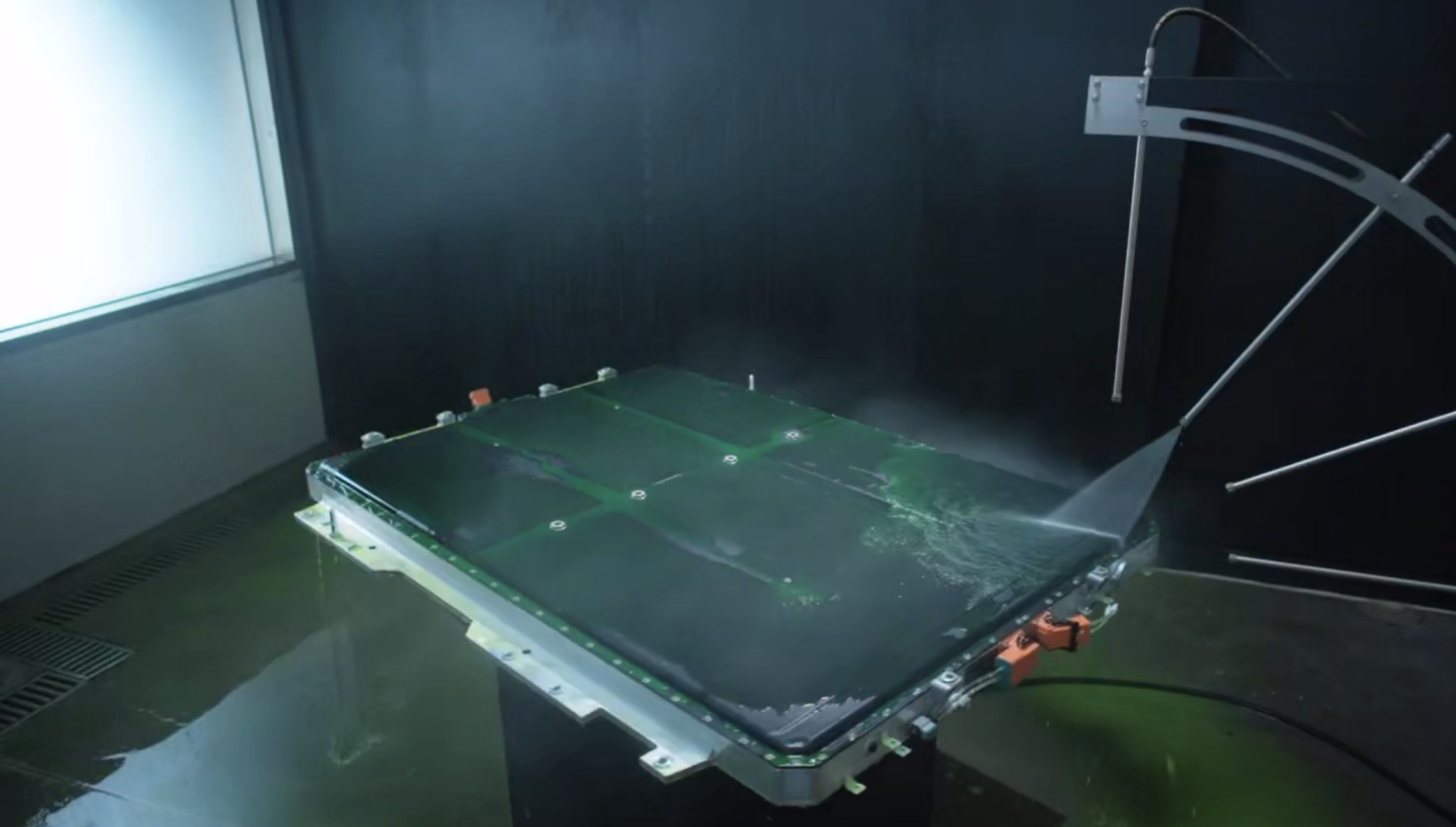
Image Credit: HarmonyOS Intelligent Mobility
In another critical dimension of physical protection—waterproof sealing—Huawei also demonstrated its systematic design thinking. Once water enters the battery pack, it can lead to insulation failure and functional abnormalities at best, or short circuits and even thermal runaway at worst, with unimaginable consequences. Addressing this long-standing industry challenge, the Huawei Giant Whale Battery Platform 3.0 introduced a breakwater sealing design.
The name for this design was inspired by the breakwater structures used in ocean engineering to resist wave intrusion. Specifically in terms of technical implementation, this design improves overall sealing and waterproofing capabilities by 200% by optimizing the sealing structure and adding protection layers, covering various complex scenarios including static wading and dynamic spraying.
Whether the vehicle is driving in heavy rain or passing through waterlogged sections where water flow creates dynamic impact, the breakwater design ensures the battery pack interior remains dry. Meanwhile, Huawei also built in a dual water ingress and leakage detection mechanism. Once liquid penetrates, the system can achieve intelligent warning in the early stages through insulation detection and leak sensors, truly preventing trouble before it happens.
The value of this battery pack physical perception capability is further amplified in its linkage with Huawei's Intelligent Driving System (ADS). The combination of Huawei ADS's "clairvoyance" and the battery's "tactile sense" forms a complete loop of avoiding and responding to impacts—identifying road obstacles in advance through the perception system to actively evade them, reducing the risk of impact from the source. Even if an unavoidable impact occurs, the system can react within milliseconds, cutting off the high-voltage circuit to prevent secondary injury.
Battery safety breaks through the boundaries of the hardware itself and integrates into the vehicle's intelligent perception and decision-making system. For users, with this "hard outside, soft inside" physical protection and active intelligent warning, there is no longer a need to make a choice between worrying about impacts and enjoying driving, because the vehicle itself already possesses the dual capabilities of active evasion and passive protection.
Guarding the Battery's Healthy Lifecycle with Precision Algorithms
Power battery safety lies not only in withstanding extreme external shocks but also in continuous, stable internal health management during daily use. For a long time, user concerns about accelerated degradation from fast charging and vague battery fault diagnosis have stemmed from the "bucket effect" at the micro cell level and the "information fog" at the system diagnosis level. In response, the Huawei Giant Whale Battery Platform 3.0 offers an answer: extending intelligent tentacles into the cell interior and using precision algorithms to achieve micro-control of thermal management and insulation systems.
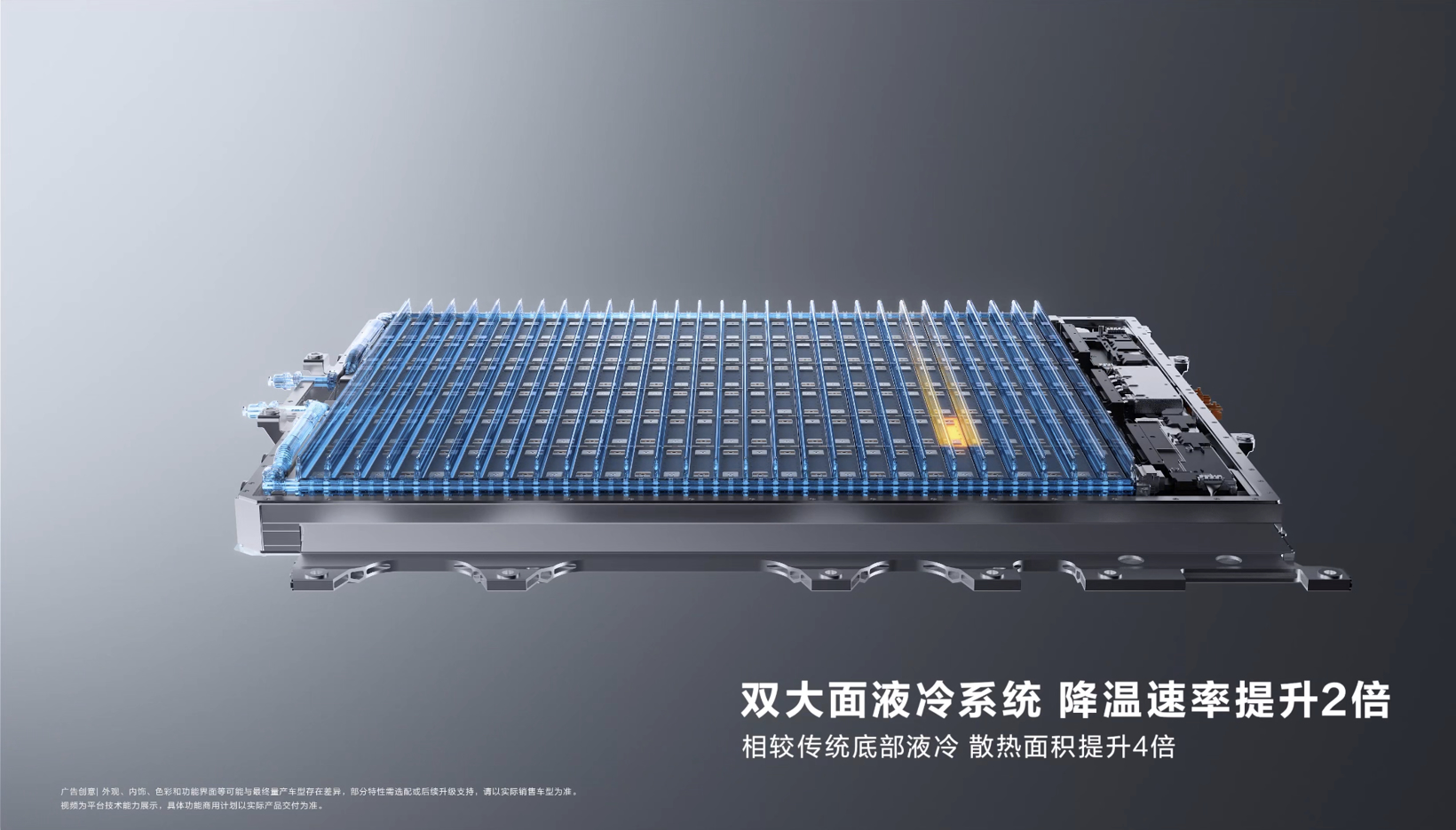
Image Credit: HarmonyOS Intelligent Mobility
Temperature difference between cells is a key factor affecting charging efficiency and lifespan. During fast charging, different cells generate temperature gradients due to differences in location and cooling conditions. Hotter cells bear greater thermal stress and age faster, becoming the "short board" of the entire battery pack. "If temperature is not controlled, the result may be varying battery degradation, and finally, due to the bucket effect, leading to battery lifespan aging issues," Wang Li stated. This is also the core concern many users have regarding the ultra-fast charging experience: is the increase in charging speed at the expense of battery life?
Addressing this contradiction, Huawei launched the gradient uniform temperature liquid cooling plate technology. Its core function is vividly likened to a "cooling patch." The ingenuity of this technology lies not in simply lowering the overall temperature, but in narrowing the temperature difference between cells during fast charging. By ensuring all cells operate within a relatively consistent temperature range, it effectively avoids accelerated aging caused by local overheating.
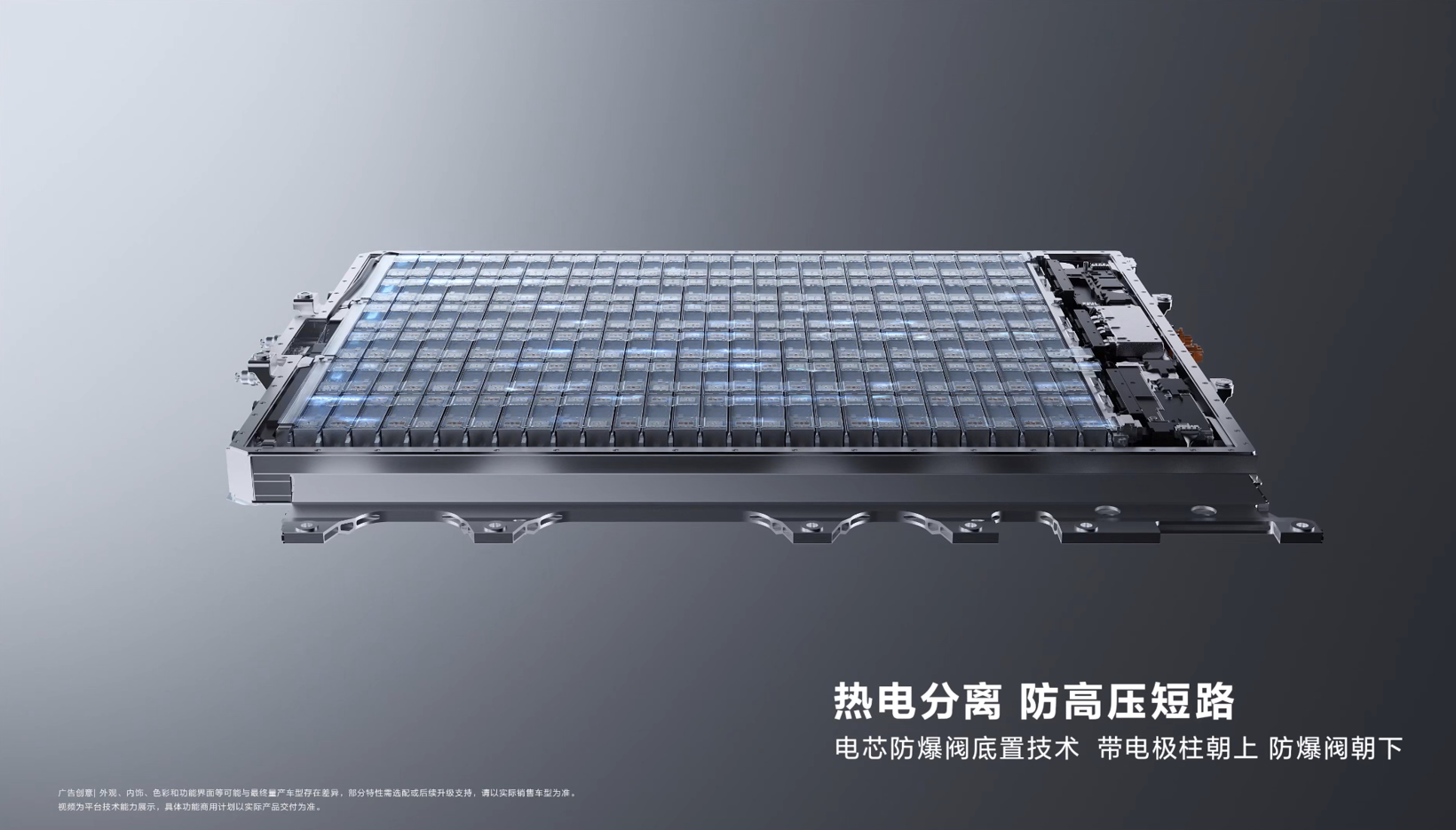
Image Credit: HarmonyOS Intelligent Mobility
Temperature control solves the "performance consistency" problem, while insulation detection solves the "safety certainty" problem. A major difficulty with traditional insulation detection technology lies in distinguishing between vehicle insulation faults and battery pack internal insulation faults. When a fault alarm sounds, users usually cannot determine the source of the risk at the first moment—is it from aging high-voltage harnesses or insulation failure inside the battery pack? This ambiguity not only increases troubleshooting difficulty but may also delay the best handling time. Huawei's innovatively developed BMS insulation detection technology precisely hits this point, turning vague fault diagnosis into something clear and distinguishable.
More notably, Huawei did not view this capability as an isolated hardware function but built an end-cloud collaborative intelligent warning network. The insulation warning algorithms deployed in Cloud BMS can combine 7x24-hour monitoring data to perform deep learning and pattern recognition, achieving full-scenario guardianship from a single point to the entire system.
Through technological innovation across multiple dimensions, the Huawei Giant Whale Battery Platform 3.0 has built a closed-loop intelligent safety technology group. This is not merely a simple stacking of technical parameters but a revolution in safety philosophy: it upgrades battery safety from a traditional hardware stacking model to an intelligent ecosystem featuring active prediction, real-time guardianship, traceability, and evolvability.
The construction of this system capability is inseparable from Huawei's unique industrial role and resource endowment. In his sharing, Wang Yanmin deeply analyzed Huawei's positioning in the automotive sector: "Since 2021, we have taken the ecosystem path, deeply participating in vehicle development, styling design, supply chain management, quality management, marketing, retail, and service, helping OEMs both build and sell good cars." It is precisely thanks to this deep participation that Huawei can systematically inject its full-stack technology in communications, terminals, AI, materials, and energy into the development of whole vehicle products. The birth of the Huawei Giant Whale Battery Platform 3.0 is a typical representative of this ecosystem model—it is not a single-point innovation from a battery supplier, but a systematic output of Huawei's platform capabilities.
"Huawei Terminal has broken the unwritten rule of the industry for many years: a great company cannot do well in both 2B and 2C businesses," Wang Yanmin noted, highlighting Huawei's unique advantage in fusing 2B and 2C businesses. It is this cross-boundary thinking that allows Huawei to stand from the user's perspective and use the most underlying root technology innovations to solve the most core safety pain points, ensuring that innovation in every technical dimension points to improvements in user experience that can be perceived in actual driving scenarios.
Conclusion:
The release of the Huawei Giant Whale Battery Platform 3.0 has found a quantifiable, perceptible, and evolvable technological anchor for the safety value of high-end new energy vehicles. When users know their vehicle possesses an uninterrupted "security guard," wears a pair of "intelligent running shoes" that are hard on the outside and soft on the inside, and is equipped with a "health butler" online 24 hours a day, their trust in high-end smart EVs gains a more solid foundation.
From an industry perspective, the Huawei Giant Whale Battery Platform 3.0 represents a brand-new safety technology paradigm. It elevates the competition in battery safety from a single dimension of materials and chemistry to a systematic, cross-dimensional comprehensive competition covering communications, algorithms, materials, structure, cloud, and AI. This elevation not only builds a solid moat for Huawei's own products but also establishes a new coordinate for safety value in the entire new energy vehicle industry. As Wang Li stated, Huawei's technological innovation in the safety field is "also a continuous contribution to the industry, helping more brands avoid the occurrence of safety accidents."
For users, the value of the Huawei Giant Whale Battery Platform 3.0 ultimately comes down to two words: trust. In the smart electric era, a user's trust in a car stems not only from how long its range is or how fast it accelerates, but more from whether it can provide a sense of certain safety during every trip. The Huawei Giant Whale Battery Platform 3.0 uses a complete set of systematic intelligent safety technologies to transform the uncertainty that once existed with traditional power batteries into a certain technological reality.
When batteries are endowed with perception and thinking capabilities, and safety becomes a traceable, predictable, and evolvable technological system, the fundamental trust in high-end smart electric mobility gains a solid cornerstone.


