



Gasgoo Munich- On the eve of the Auto China 2026, Hyundai Motor formally introduced its IONIQ electric vehicle brand to China at the Hyundai Motorstudio Beijing.
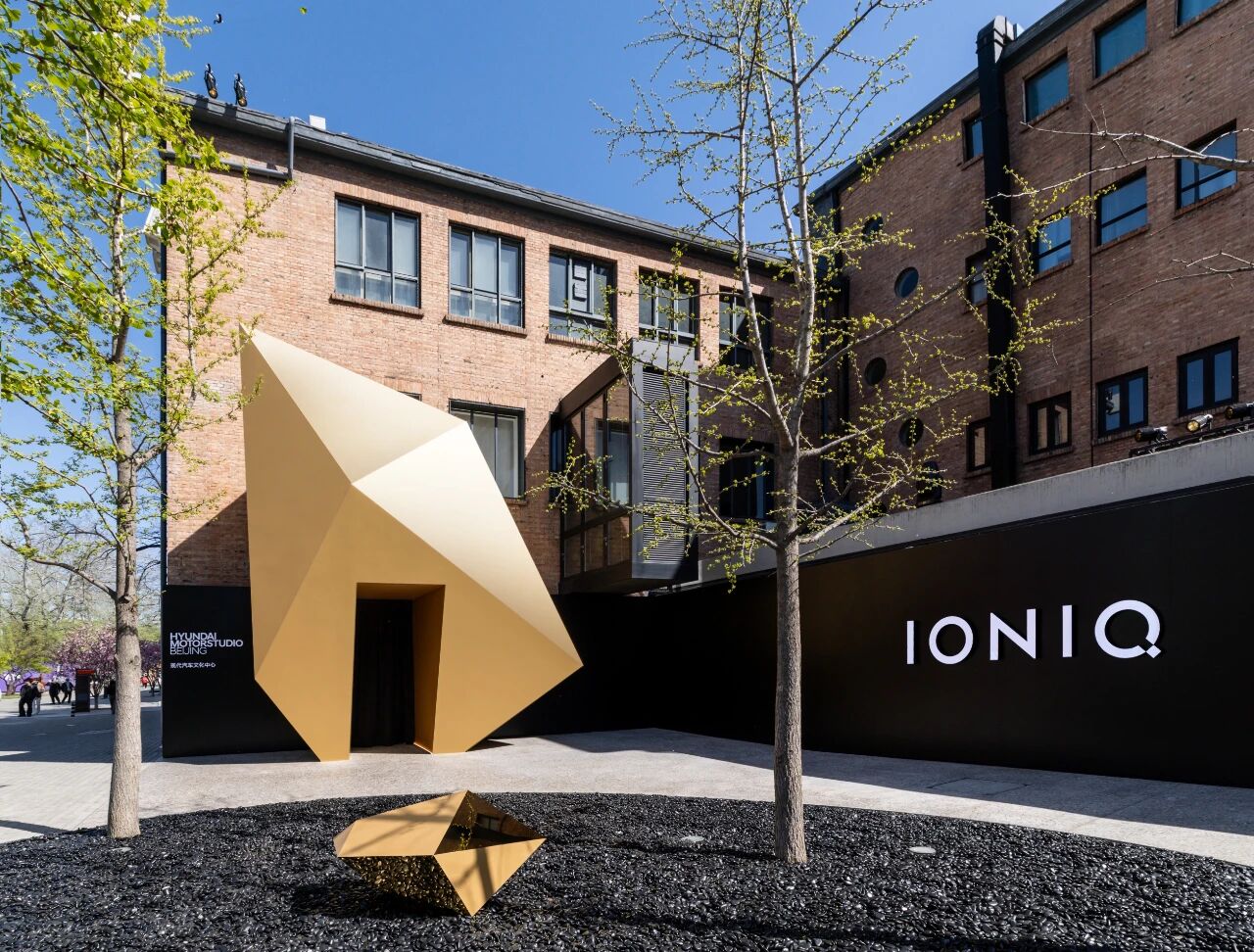
Image source: Hyundai Motor
The debut was accompanied by the global unveiling of two concept vehicles—the VENUS CONCEPT and EARTH CONCEPT—marking the official start of the company's next phase of electrification in the country. The move underscores Hyundai's commitment to expanding its footprint in China's new energy vehicle (NEV) market while advancing its "In China, For China, To Global" strategy.
Launched in 2016 alongside Hyundai Motor's first dedicated eco-friendly platform, the IONIQ lineup has evolved over a decade into a global EV portfolio built on the group's E-GMP architecture. Models such as the IONIQ 5, IONIQ 6 and IONIQ 9 have gained strong market reception, helping the brand surpass cumulative global sales of 550,000 units across multiple regions.
Hyundai Motor emphasized that its China strategy for IONIQ is not a simple replication of global standards. Instead, the brand is built around a human-centric philosophy, prioritizing localized development across technology, talent, and branding. By combining Hyundai's globally competitive manufacturing quality with China's advanced smart manufacturing capabilities, the company aims to deliver a differentiated NEV solution tailored specifically for Chinese consumers while maintaining global relevance.
To support this positioning, Hyundai is building a dedicated NEV ecosystem for China dubbed the "IONIQ Universe," spanning branding, retail channels, and product offerings. The automaker said within this framework, Chinese consumers are positioned as the central "sun," with all future vehicles and services designed to orbit around their needs.
Reflecting this concept, all IONIQ models in China will adopt planet-inspired naming conventions. The VENUS and EARTH concepts serve as the first "planets" in this universe, offering a preview of Hyundai's localized design direction and future production models.
Alongside product development, Hyundai Motor plans to overhaul the IONIQ customer experience in China, focusing on spatial design, user interaction, and service innovation. The goal is to create a smarter, more comfortable, and emotionally engaging NEV ownership experience.
For China, Hyundai Motor said it is leveraging its proven global EV technologies across three core systems: motors, batteries, and charging. The powertrain is engineered to deliver both strong acceleration and smooth performance. Battery packs sourced from CATL undergo more than 100 internal validation tests to ensure safety and durability, while advanced thermal management enables efficient charging performance across a wide range of temperatures.
Hyundai Motor is also localizing its intelligent driving strategy through partnerships with Chinese technology firms. It is working with Momenta to develop AI-enabled ADAS systems optimized for China's complex traffic environments. In addition to battery electric vehicles, the company will introduce extended-range EV (EREV) technology, combining internal combustion expertise with electrification to deliver segment-leading driving range.
Looking ahead, Hyundai outlined a technology roadmap through 2028 that includes the development of fully AI-driven vehicles capable of proactive decision-making and user interaction. The plan also features a new dedicated NEV platform, with a focus on a D-segment architecture, alongside deeper collaboration with leading Chinese tech companies.
The VENUS and EARTH concepts embody IONIQ's localized design philosophy. According to Simon Loasby, head of Hyundai Design Center, the brand's approach begins with the customer, with vehicles for China designed in China by Chinese designers, and ultimately intended for global markets.
The EARTH CONCEPT draws inspiration from the planet's resilience, reimagining the electric family SUV as a protective space that blends nature, technology, and strength. Its exterior features an "aurora shield" finish, sculpted lines, and rugged elements such as exposed bolts and rock-textured cladding, reinforcing its off-road character. A glass roof and transparent structural elements balance durability with lightness, while a distinctive lighting signature subtly forms Hyundai's "H" motif. Functional touches such as an integrated roof rack and dual-opening doors enhance usability, complemented by hidden design details inspired by planetary themes.
Inside, the concept centers on a "mini Earth" theme, creating a calm, protective cabin environment through an "air-based" design language. Air-supported seating systems aim to deliver comfort for occupants of all ages, while ambient lighting inspired by natural elements and discreetly integrated technology reinforce the human-centric approach. Subtle details, including hidden map motifs of Beijing, add a layer of localized storytelling to the interior.
Hyundai Motor's official launch of the IONIQ brand in China, alongside the debut of two concept vehicles, signals the start of a new chapter in its electrification strategy in the market. At the upcoming Auto China 2026, the brand will unveil its first China-focused production model globally, formally activating the consumer-centric IONIQ Universe. Over the next three years, the brand plans to roll out a range of mid- to large-size BEVs and EREVs across SUV and coupe segments tailored for Chinese buyers.


