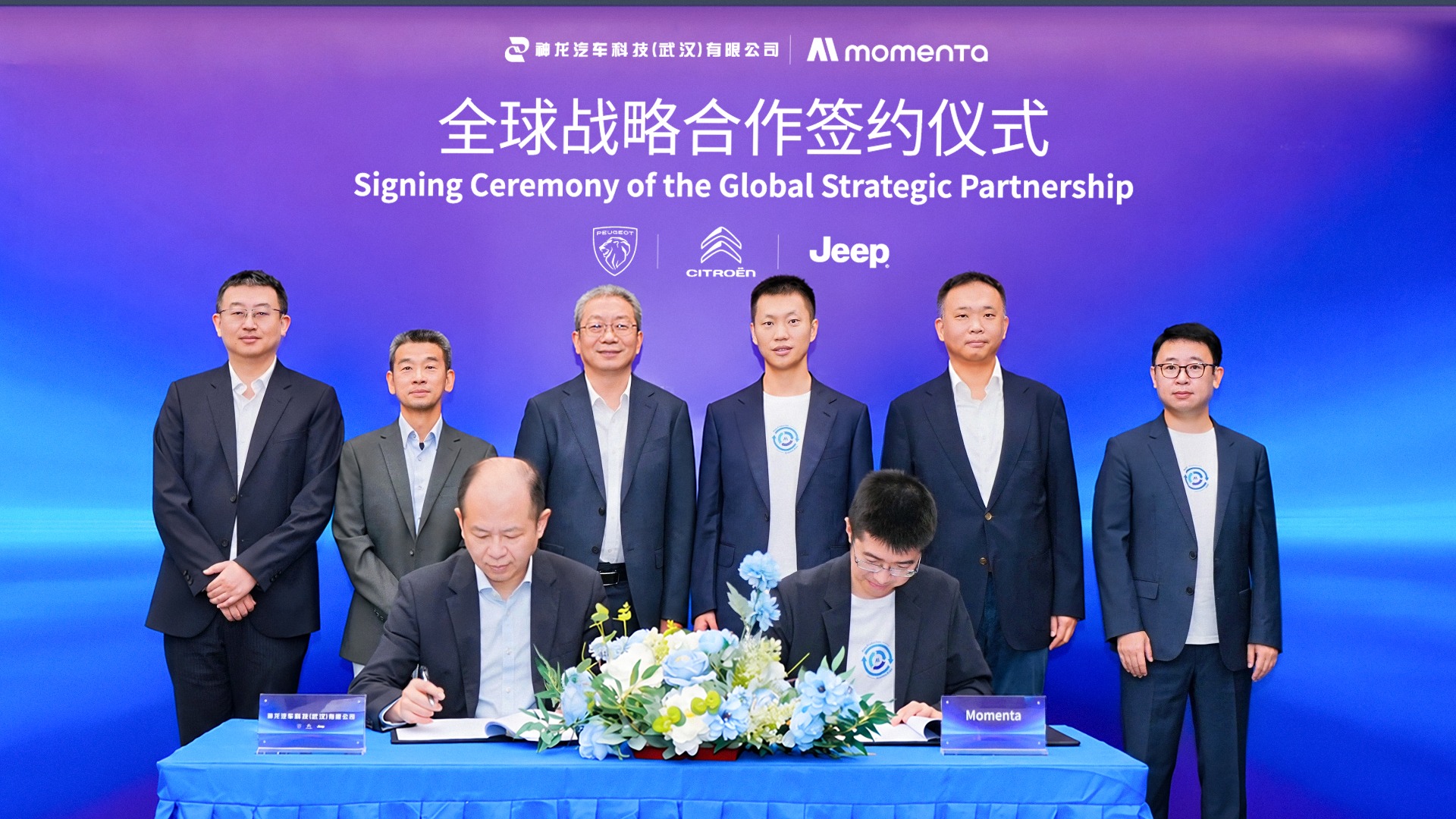
Gasgoo Munich- Data from Gasgoo Automotive Research Institute shows that from January to May 2026, the domestic passenger vehicle core components market maintained high-speed growth. Installation volumes across niche tracks climbed steadily, and the competitive landscape continued to evolve. In sectors such as air suspension, LiDAR, HD maps, and high-precision positioning, local enterprises have established absolute dominance. Head concentration increased further, while the share of foreign and small-to-medium manufacturers continued to shrink. In driving ADAS, forward-facing cameras, and automated parking, international giants still hold the lead, but independent suppliers and OEM in-house solutions are breaking through rapidly. Market share is climbing fast, with local faces becoming significantly more numerous in the top ten lists.
Looking at deep-seated industry trends, driven by the comprehensive penetration of vehicle intelligence and high-level autonomous driving, the domestic core components supply chain is undergoing a structural reshaping. Domestic replacement has shifted from "isolated breakthroughs" into a deepening cycle of "widespread rollout." Local firms have advanced comprehensively in technology iteration, cost control, mass production response, and scenario adaptation, gradually shifting from "followers" to "pacerunners" and even "leaders." Notably, in Automated Parking Assist (APA), an in-house camp represented by BYD, Leapmotor, Li Auto, NIO, Xiaomi, and Changan has collectively broken into the top ten, rewriting the original "Tier 1 oligopoly" supply landscape. This shift not only builds a more resilient local supply chain for the smart vehicle industry but also provides critical data support and forward-looking judgment for the large-scale implementation of high-level autonomous driving and the rewriting of component industry competition rules.
Air Suspension Supplier Installation Volume Rankings
Konghui Technology: From January to May 2026, air suspension installation volume in the domestic passenger vehicle market reached 219,660 sets, with a market share of 35.2%.
Tuopu Group: From January to May 2026, air suspension installation volume in the domestic passenger vehicle market reached 188,869 sets, with a market share of 30.3%.
Baolong Technology: From January to May 2026, air suspension installation volume in the domestic passenger vehicle market reached 157,818 sets, with a market share of 25.3%.
Vibro-System: From January to May 2026, air suspension installation volume in the domestic passenger vehicle market reached 22,325 sets, with a market share of 3.6%.
Amow: From January to May 2026, air suspension installation volume in the domestic passenger vehicle market reached 18,490 sets, with a market share of 3.0%.
Others: From January to May 2026, air suspension installation volume in the domestic passenger vehicle market reached 16,640 sets, with a market share of 2.6%.

From January to May 2026, the domestic air suspension market expanded rapidly, with domestic manufacturers entering a harvest period. Three local suppliers — Konghui Technology, Tuopu Group, and Baolong Technology — collectively command a massive 90.8% market share. Specifically, Konghui Technology took the top spot with 219,660 installations and a 35.2% share, driven largely by the volume surge of hit models from Leapmotor and ZEEKR. It continues to consolidate its market position through advantages in air spring control technology and customer coverage. Tuopu Group and Baolong Technology followed with 188,869 and 157,818 installations respectively, holding 30.3% and 25.3% of the market. Tuopu Group's growth came mainly from core customers like Xiaomi and AITO, while Baolong Technology benefited from increased volume in NIO models; new models like the XPENG G7 and NIO ES9 are expected to further boost installation numbers.
In contrast, suppliers like Vibro-System and Amow saw their market shares continue to slide, recording 22,325 and 18,490 installations respectively — together accounting for only about 6.6% of the market. Other suppliers combined for just 16,640 installations, a mere 2.6% share, making a breakout difficult. Overall, domestic suppliers have established a solid dominance in this sector. Future competition will shift from "domestic replacement" to a game of intense rivalry for market share among the top three. Production delivery capacity, cost control levels, and the R&D of next-generation smart chassis technologies will be the key variables determining the final rankings.
LiDAR Supplier Installation Volume Rankings
Hesai Technology: From January to May 2026, LiDAR installation volume in the domestic passenger vehicle market reached 595,373 units, with a market share of 34.2%.
Huawei Technologies: From January to May 2026, LiDAR installation volume in the domestic passenger vehicle market reached 533,509 units, with a market share of 30.6%.
Seyond: From January to May 2026, LiDAR installation volume in the domestic passenger vehicle market reached 259,747 units, with a market share of 14.9%.
RoboSense: From January to May 2026, LiDAR installation volume in the domestic passenger vehicle market reached 247,570 units, with a market share of 14.2%.
Others: From January to May 2026, LiDAR installation volume in the domestic passenger vehicle market reached 107,042 units, with a market share of 6.1%.

From January to May 2026, the domestic LiDAR market saw strong growth, forming a competitive pattern where two leaders sprint ahead while a second tier steadily follows. Hesai Technology claimed the top spot with a 34.2% share and 595,373 units installed, driven primarily by increased installations of main LiDARs. Thanks to volume from customers like Li Auto and Xiaomi, it ranks at the forefront of the industry. Hesai's products, with their advantages in perception accuracy, cost control, and automotive-grade reliability, have become a core choice for many OEMs' high-end autonomous driving solutions. Huawei Technologies followed closely with 533,509 units and a 30.6% share. Huawei's growth was contributed by both main LiDARs and blind-spot fill-in radars, with the "Four Realms" models under Harmony Intelligent Mobility Alliance contributing significantly. These two local giants together hold 64.8% of the market, forming a dominant force.
Seyond and RoboSense ranked third and fourth with 259,747 and 247,570 units respectively, corresponding to 14.9% and 14.2% shares, jointly forming the market's second camp. For Seyond, the installation volume of blind-spot LiDARs was slightly higher than its main LiDARs, with NIO's main models being a key source of installation growth. RoboSense radars have been equipped on models from ZEEKR, Denza, Galaxy, and others; upcoming models like the Buick Zhijing and ZEEKR 8X are expected to bring significant increments. These two companies focus on different niche applications — long-distance detection and blind-spot supplementation — creating a landscape of differentiated development and complementary synergy with the top two. Tail-end suppliers hold a combined share of 6.1%, indicating resources are accelerating toward the leaders. Overall, domestic LiDAR manufacturers have established a complete layout in technology and capacity. As high-level autonomous driving features spread to vehicles across wider price ranges, shipments from top enterprises are expected to climb with the volume of equipped models, and industry concentration is set to increase further.
Driving ADAS Supplier Installation Volume Rankings
Bosch: From January to May 2026, driving ADAS installation volume in the domestic passenger vehicle market reached 545,945 sets, with a market share of 10.4%.
Denso: From January to May 2026, driving ADAS installation volume in the domestic passenger vehicle market reached 495,412 sets, with a market share of 9.4%.
BYD: From January to May 2026, driving ADAS installation volume in the domestic passenger vehicle market reached 478,120 sets, with a market share of 9.1%.
ZF: From January to May 2026, driving ADAS installation volume in the domestic passenger vehicle market reached 382,442 sets, with a market share of 7.3%.
Freetech: From January to May 2026, driving ADAS installation volume in the domestic passenger vehicle market reached 302,955 sets, with a market share of 5.8%.
Huawei: From January to May 2026, driving ADAS installation volume in the domestic passenger vehicle market reached 276,736 sets, with a market share of 5.3%.
Valeo: From January to May 2026, driving ADAS installation volume in the domestic passenger vehicle market reached 238,733 sets, with a market share of 4.5%.
Jingwei Hirain: From January to May 2026, driving ADAS installation volume in the domestic passenger vehicle market reached 206,528 sets, with a market share of 3.9%.
Momenta: From January to May 2026, driving ADAS installation volume in the domestic passenger vehicle market reached 192,779 sets, with a market share of 3.7%.
Tesla: From January to May 2026, driving ADAS installation volume in the domestic passenger vehicle market reached 186,700 sets, with a market share of 3.5%.

From January to May 2026, the domestic passenger vehicle driving ADAS market presented a pattern of "foreign dominance with rising local share." Bosch retained the top spot with 545,945 installations and a 10.4% share. Denso followed with 495,412 installations and a 9.4% share. BYD ranked third with 478,120 installations and a 9.1% share, demonstrating the strong strength of vertical integration.
ZF, Freetech, Huawei, and Valeo occupied the fourth to seventh spots, with shares ranging from 7.3% to 4.5%, locked in tight competition. Among them, Freetech and Huawei, as local Tier 1 suppliers, have gradually joined the mainstream camp, showing the continuously improving competitiveness of domestic ADAS solutions. Jingwei Hirain, Momenta, and Tesla ranked eighth to tenth with shares of 3.9%, 3.7%, and 3.5% respectively, forming the market's third tier together.
Overall, the January to May driving ADAS market showed a clear trend of foreign firms holding their ground while domestic players break through. Relying on algorithm iteration, vertical integration, and cost-performance advantages, local manufacturers are accelerating the rewrite of the industry supply landscape, speeding up the process of supply chain autonomy and controllability.
Forward-facing Camera Supplier Installation Volume Rankings
Bosch: From January to May 2026, forward-facing camera installation volume in the domestic passenger vehicle market reached 549,422 sets, with a market share of 10.4%.
Sunny SmartLead: From January to May 2026, forward-facing camera installation volume in the domestic passenger vehicle market reached 524,876 sets, with a market share of 10.0%.
Denso: From January to May 2026, forward-facing camera installation volume in the domestic passenger vehicle market reached 493,271 sets, with a market share of 9.4%.
ZF: From January to May 2026, forward-facing camera installation volume in the domestic passenger vehicle market reached 386,782 sets, with a market share of 9.0%.
BYD Semiconductor: From January to May 2026, forward-facing camera installation volume in the domestic passenger vehicle market reached 275,112 sets, with a market share of 5.2%.
Freetech: From January to May 2026, forward-facing camera installation volume in the domestic passenger vehicle market reached 259,257 sets, with a market share of 4.9%.
O-film Automotive: From January to May 2026, forward-facing camera installation volume in the domestic passenger vehicle market reached 254,290 sets, with a market share of 4.8%.
Baolong Technology: From January to May 2026, forward-facing camera installation volume in the domestic passenger vehicle market reached 236,264 sets, with a market share of 4.5%.
Valeo: From January to May 2026, forward-facing camera installation volume in the domestic passenger vehicle market reached 233,628 sets, with a market share of 4.4%.
Jingwei Hirain: From January to May 2026, forward-facing camera installation volume in the domestic passenger vehicle market reached 206,525 sets, with a market share of 3.9%.

From January to May 2026, the domestic passenger vehicle forward-facing camera market showed a distinct feature: "local manufacturers' share continues to rise, gradually becoming the main force." Bosch held the top spot temporarily with 549,422 installations and a 10.4% share. Sunny SmartLead followed closely with 524,876 installations and a 10.0% share, trailing the leader by only 0.4 percentage points, demonstrating the strong momentum of domestic suppliers. Denso ranked third with 493,271 installations and a 9.4% share, as traditional foreign giants maintained strong competitiveness.
ZF, BYD Semiconductor, Freetech, O-film Automotive, Baolong Technology, Valeo, and Jingwei Hirain ranked fourth to tenth, with shares ranging from 9.0% to 3.9%. Among them, four local manufacturers — BYD Semiconductor (5.2%), Freetech (4.9%), O-film Automotive (4.8%), and Baolong Technology (4.5%) — formed a tight group in the middle reaches, combining for a share of nearly 20%, becoming a market force that cannot be ignored.
Notably, local manufacturers occupy six of the top ten spots in the forward-facing camera rankings (Sunny SmartLead, BYD Semiconductor, Freetech, O-film Automotive, Baolong Technology, Jingwei Hirain), with a combined share of about 33.3%. This indicates that at the perception hardware level, the penetration speed of the domestic supply chain is faster and its foundation is more stable. Overall, leveraging cost advantages, rapid response capabilities, and advantages in collaborative vehicle development, local manufacturers are shifting from "replacements" to "main forces," accelerating the implementation of autonomous control over core smart driving components. As high-level autonomous driving moves down to mid-to-low-end models, domestic forward-facing camera suppliers are expected to further expand their market.
Automated Parking Assist (APA) Supplier Installation Volume Rankings
BYD: From January to May 2026, automated parking APA installation volume in the domestic passenger vehicle market reached 477,675 sets, with a market share of 15.7%.
Bosch: From January to May 2026, automated parking APA installation volume in the domestic passenger vehicle market reached 416,738 sets, with a market share of 13.7%.
Huawei: From January to May 2026, automated parking APA installation volume in the domestic passenger vehicle market reached 276,736 sets, with a market share of 9.1%.
Momenta: From January to May 2026, automated parking APA installation volume in the domestic passenger vehicle market reached 187,200 sets, with a market share of 6.2%.
Leapmotor: From January to May 2026, automated parking APA installation volume in the domestic passenger vehicle market reached 184,637 sets, with a market share of 6.1%.
Li Auto: From January to May 2026, automated parking APA installation volume in the domestic passenger vehicle market reached 160,158 sets, with a market share of 5.3%.
Valeo: From January to May 2026, automated parking APA installation volume in the domestic passenger vehicle market reached 157,919 sets, with a market share of 5.2%.
NIO: From January to May 2026, automated parking APA installation volume in the domestic passenger vehicle market reached 154,124 sets, with a market share of 5.1%.
Xiaomi: From January to May 2026, automated parking APA installation volume in the domestic passenger vehicle market reached 151,234 sets, with a market share of 5.0%.
Changan: From January to May 2026, automated parking APA installation volume in the domestic passenger vehicle market reached 123,547 sets, with a market share of 4.1%.

From January to May 2026, the domestic passenger vehicle automated parking APA market presented a distinct feature: "rising market share for domestic manufacturers and the sudden emergence of the OEM in-house camp." BYD dominated the list with 477,675 installations and a 15.7% share. Bosch followed with 416,738 installations and a 13.7% share. Huawei ranked third with 276,736 installations and a 9.1% share, demonstrating its strong competitiveness in the integrated software and hardware of intelligent driving.
Momenta, Leapmotor, Li Auto, Valeo, NIO, Xiaomi, and Changan ranked fourth to tenth, with market shares between 4% and 6.2%. Among them, Leapmotor achieved a rapid increase in installation volume and jumped to 5th place, driven by the hot sales of models like the Leapmotor A10 and D19. Notably, the OEM in-house camp occupies six spots in the top ten — BYD, Leapmotor, Li Auto, NIO, Xiaomi, and Changan — with a combined share as high as 41.3%, far exceeding the total share of traditional Tier 1 suppliers. This reflects that as a parking assist function, APA has relatively low technical barriers and fixed scenarios, making it easier for OEMs to achieve software-hardware integration and differentiated experiences through in-house development, thereby accelerating the restructuring of the supply chain.
Overall, local manufacturers have established absolute dominance. Aside from Bosch and Valeo, traditional foreign suppliers have basically exited mainstream competition. As automated parking functions become deeply integrated with high-level autonomous driving packages, and solutions like cabin-parking integration and cabin-driving integration gradually land, OEMs with full-stack in-house capabilities are expected to further expand their advantage in the APA track, pushing parking functions from "optional" to "standard" and accelerating the final establishment of the industry competitive landscape.
HD Map Supplier Installation Volume Rankings
Amap: From January to May 2026, HD map installation volume in the domestic passenger vehicle market reached 445,619 sets, with a market share of 43.5%.
Tencent: From January to May 2026, HD map installation volume in the domestic passenger vehicle market reached 153,515 sets, with a market share of 15.0%.
Langge Technology: From January to May 2026, HD map installation volume in the domestic passenger vehicle market reached 153,387 sets, with a market share of 15.0%.
NavInfo: From January to May 2026, HD map installation volume in the domestic passenger vehicle market reached 75,779 sets, with a market share of 7.4%.
Others: From January to May 2026, HD map installation volume in the domestic passenger vehicle market reached 197,057 sets, with a market share of 15.6%.

From January to May 2026, the domestic HD map market presented a competitive pattern of "Amap leading, two rivals vying for second, and continuously increasing head concentration." Amap held the top spot securely with 445,619 installations and a 43.5% share. Relying on data update capabilities, OEM adaptation ecosystems, and mature implementation cases, it continues to monopolize the supply of mainstream high-end and intelligent driving models, a leading position that remains unshakable.
Tencent and Langge Technology had highly close shares, ranking second and third with 15.0% and 15.0% respectively; the gap in their installation volumes was only 128 sets, signaling competition has entered a white-hot stage. NavInfo ranked fourth with 75,779 installations and a 7.4% share. The four mainstream map providers combined hold an 81.4% share, maintaining market concentration at a high level. Other suppliers accounted for 15.6% combined, shrinking further from 18.4% in January-April, indicating resources are accelerating toward the head of the pack.
Overall, the HD map market from January to May continued the pattern where the strong get stronger. Amap continues to lead with its first-mover advantage and ecological barriers, while the battle for second place between Tencent and Langge Technology has become the biggest current variable. As high-level autonomous driving accelerates in popularity, the industry's reliance on HD maps is declining; "map-free" and "light-map" approaches have become the mainstream direction. The focus of competition for map providers has also shifted from simple map freshness to comprehensive capabilities including basic map data, lane-level navigation, light-weight map priors, crowdsourced updates, and on-board adaptation efficiency. If small and medium-sized map providers cannot achieve breakthroughs in data closed-loops and cost control, their room for survival will further narrow.
High-precision Positioning Supplier Installation Volume Rankings
Asensing: From January to May 2026, high-precision positioning installation volume in the domestic passenger vehicle market reached 769,554 sets, with a market share of 35.3%.
Huawei: From January to May 2026, high-precision positioning installation volume in the domestic passenger vehicle market reached 276,476 sets, with a market share of 12.7%.
Geespace: From January to May 2026, high-precision positioning installation volume in the domestic passenger vehicle market reached 143,269 sets, with a market share of 6.6%.
Haoli Intelligent: From January to May 2026, high-precision positioning installation volume in the domestic passenger vehicle market reached 138,876 sets, with a market share of 6.4%.
XPENG: From January to May 2026, high-precision positioning installation volume in the domestic passenger vehicle market reached 94,576 sets, with a market share of 4.3%.
Others: From January to May 2026, high-precision positioning installation volume in the domestic passenger vehicle market reached 669,365 sets, with a market share of 34.7%.

From January to May 2026, the domestic passenger vehicle high-precision positioning market presented a pattern of "one superpower, many strong players, and a significant long tail." Asensing led by a wide margin with 769,554 installations and a 35.3% share, continuously consolidating its industry leader position. Huawei ranked second with 276,476 installations and a 12.7% share. Geespace and Haoli Intelligent ranked third and fourth with 6.6% and 6.4% shares respectively; the gap in their installation volumes was less than 5,000, indicating a tight race.
Notably, XPENG, as a representative of the OEM in-house camp, broke into the top five with 94,576 installations and a 4.3% share. Its growth was mainly driven by the continued hot sales of popular models like the MONA M03. The "Others" category accounted for a massive 34.7% share, indicating the current market is far from set, with a large number of small and medium manufacturers and in-house solutions still fighting for the remaining space; industry concentration is far lower than in adjacent tracks like HD maps.
Overall, the high-precision positioning market from January to May showed a trend of accelerated adoption of integrated positioning solutions. Asensing sits firmly in the top seat with its first-mover advantage and mass production capabilities, while Huawei is rapidly catching up relying on its intelligent driving ecosystem. Emerging players like Geespace and Haoli Intelligent are also striving to break through. In the long run, industry competition will focus on three directions: multi-source perception fusion, low-cost mass production, and full-scenario reliability adaptation. Local enterprises have completely dominated the domestic high-precision positioning supply market, but the long-tail pattern means the final rankings are far from settled.
Data Source: Gasgoo Automotive Research Institute ADAS Configuration Database
Scan the QR code below to sign up and get free configuration data samples
—— Recommended Content ——
(Click image for details)