



Gasgoo Munich- Standing at the "last mile" of the EV revolution, the charging sector finds itself at a crossroads. With EV penetration rates climbing relentlessly, the industry is facing an urgent pivot.
A recent CCTV report, Charging Market Survey: From Expansion to Price Wars, struck a nerve by highlighting the sector's core struggle:
Despite boasting the world's largest charging network, the influx of new players has trapped the sector in a brutal cycle of "involution" — a cutthroat competition where there are no real winners.
"Running charging stations just isn't a profitable business," many industry insiders lament. Today, the sector faces an urgent imperative: shift the battleground from price slashing to service quality.
Players Flood In, Profits Fade Away
In 2024, sales of new energy vehicles in China hit 12.87 million, pushing the penetration rate past 40%. By 2025, that figure had climbed above 50%.
Latest joint data from the China Passenger Car Association (CPCA) and the China Association of Automobile Manufacturers (CAAM) shows cumulative sales reached 1.02 million in the first two months of 2026. Market penetration rose to 45.2%, an increase of 8.6 percentage points year-over-year.
This signals a definitive shift: what was once a niche choice is now the market mainstream. China's NEV industry is pivoting from sheer scale to quality, leading a transformation of the global automotive landscape.
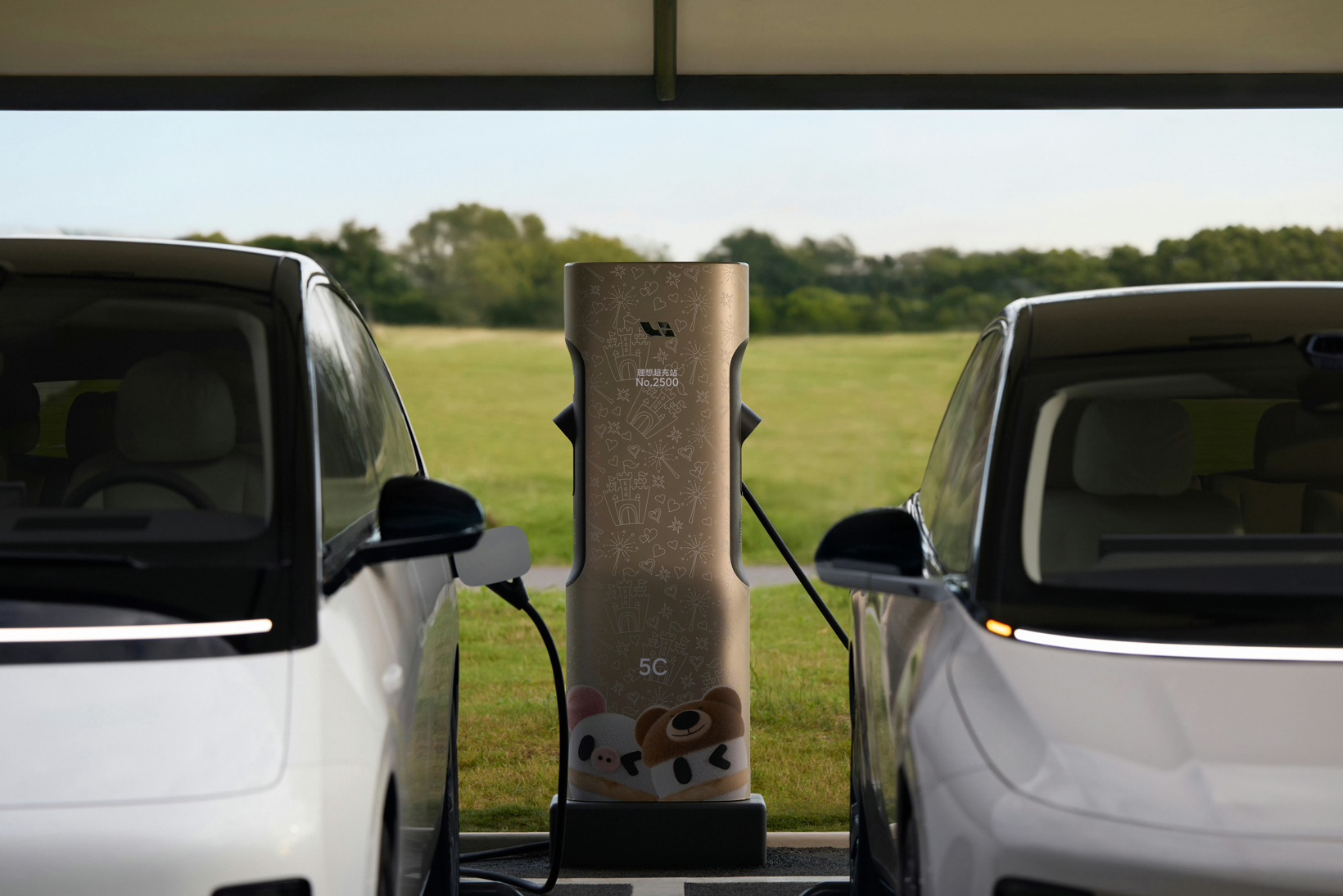
Image Source: Li Auto
Yet, this explosive growth in the EV market has triggered a corresponding surge in demand for charging infrastructure.
The market was once dominated by state-owned giants like the State Grid and China Southern Power Grid. Now, a flood of new entrants has arrived. Traditional energy titans like PetroChina and Sinopec are pivoting to the space, internet platforms like Xiaoju Charging are leveraging their user traffic, and tens of thousands of small and medium-sized operators have joined the fray, chasing the dream of controlling a critical "energy gateway."
The industry has changed beyond recognition. Gone are the golden days when a single charger could deliver 300 kWh of electricity daily. Today, stations are everywhere, severely fragmenting the customer base in a saturated red ocean.
With services largely homogenized and few barriers to entry, many stations are locked in a desperate scramble for customers. Newer sites, lacking a loyal user base, have little choice but to lure drivers with cut-rate prices. For operators, the revenue model is painfully simple: they rely almost entirely on service fees — tacked onto electricity costs — to cover operations and turn a profit.
As charging stations pop up like mushrooms, operators are racing to the bottom on service fees to capture a limited pool of drivers. It is a vicious cycle: the more they build, the less they earn.
Just how brutal is this price war? The data tells a stark story: in some regions, service fees have fallen off a cliff in just a single year.
According to industry data, fees dropped from roughly 0.23 yuan per kWh at the start of 2024 to nearly 0.17 yuan today. Do the math, and that is a lifeline for many operators. Between electricity losses — around 0.05 yuan per kWh — and land rent, which runs between 0.08 and 0.12 yuan per kWh, these two hard costs alone are bumping up against that 0.17 yuan red line.
Without even factoring in equipment depreciation, maintenance staff, or capital costs, many charging stations are essentially operating at a loss just to stay visible.
Breaking the Deadlock: From Price Wars to Service Wars
Alarmingly, this price war is spreading upstream through the supply chain.
As margins are squeezed for equipment manufacturers and component suppliers, there is a rising risk that cost-cutting will compromise quality — a case of bad money driving out good that could cripple the industry's long-term competitiveness.
From small operators to industry leaders, from internet platforms to state-owned enterprises, almost no one is emerging as a true winner in this chaotic price battle. The pace of new station deployments is slowing noticeably, raising the risk of a growth stall.
Facing this gridlock, industry veterans are calling for a return to rationality.
The customer base is shifting. Where ride-hailing and commercial fleets once dominated, private consumers now take the lead. These drivers are far more discerning about the experience; they care about more than just the price. They want speed, cleanliness, and reliable equipment.
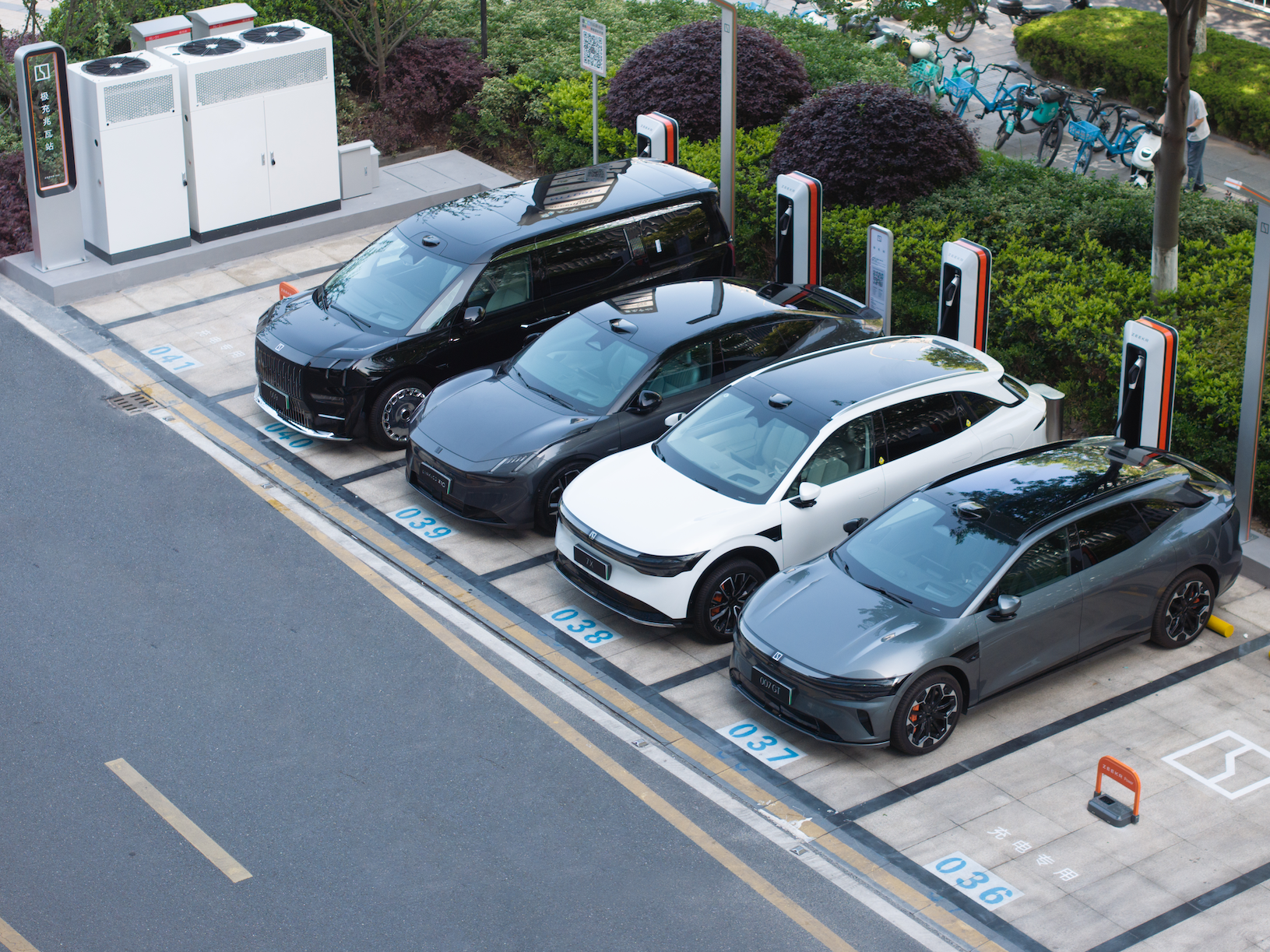
Image Source: ZEEKR
In other words, rising demand is driving a necessary diversification on the supply side.
Under the clear and urgent pressure to evolve, a new battle focused on service quality has begun.
Take Zhejiang Province, for instance. This January, the region held its 2025 star-rated charging station awards. Six sites, including the Haomiao New Energy Experience Center, received five-star ratings, while four others, such as a PetroChina station in Yongkang, earned four stars.
This star-rating system acts as both a detailed "health check" and a strategic guide. It establishes safety and compliance as non-negotiable baselines — a single violation disqualifies a station. Beyond that, stations are evaluated across three dimensions: operational efficiency, service convenience, and green, low-carbon performance. To ensure lasting results, the program ties ratings to personnel training, securing service quality at its source.
As experts promoting the rating system emphasized: "We want to see the charging and swapping supply chain shift focus from competing on price to competing on service."
As the "last mile" of EV development, charging infrastructure is about more than just alleviating range anxiety for drivers. It is integral to the broader national energy strategy.
Only by moving beyond short-sighted infighting and returning to rational competition can the industry restore investor confidence, motivate operators, and guarantee user security. That is the only way to pivot from a price war to a service war — steering the sector from a bloody red ocean toward a sustainable blue ocean.


