



Gasgoo Munich- On March 16, Hesai Technology announced a strategic partnership with Neolix. Hesai will serve as the primary LiDAR supplier for Neolix’s next-generation L4 RoboVan lineup, delivering an automotive-grade perception solution that combines its long-range ATX LiDAR with the short-range FTX LiDAR.
This partnership extends beyond a simple hardware purchase; it represents a deep integration of autonomous delivery scenarios with core perception technology. The move not only strengthens the perceptual foundation for Neolix's global, large-scale operations but also reinforces Hesai's position in the autonomous delivery LiDAR sector—marking a critical step for China's industry as it shifts from pilot demonstrations to mass commercialization.
Image Source: Hesai Technology
Deep Integration of Technical Fit and Industrial Synergy
At its core, the agreement covers the entire fleet of Neolix’s mass-produced and operational autonomous delivery vehicles. The solution centers on the high-performance, long-range ATX LiDAR, paired with the FTX fill-in LiDAR to create a comprehensive, automotive-grade perception package.
This configuration was not chosen arbitrarily. It is designed for the complex urban environments L4 RoboVans must navigate—dealing with mixed traffic, busy intersections, sudden obstacles, and rain or fog. These scenarios place stringent demands on ranging accuracy, anti-interference capabilities, and reliability, demands that Hesai's product combination is built to meet.
Hesai’s technical capabilities underpin this collaboration. Its long-range ATX LiDAR, powered by a proprietary fourth-generation chip platform, can precisely detect small obstacles up to 200 meters away, giving the vehicle ample distance for safe braking and decision-making. It also features patented "photon isolation" technology to suppress noise caused by rain, fog, or dust, ensuring stable perception in adverse weather and supporting 24/7 autonomous operations.
The FTX fill-in LiDAR addresses the blind spots in close-range perception. Designed for the low-speed, high-density nature of city driving, it works in tandem with the ATX to provide seamless, complementary coverage from near to far.
Backed by this stable performance and automotive-grade quality, Hesai topped the 2025 rankings for designated LiDAR customers in China’s autonomous delivery sector, making it one of the most trusted suppliers among top-tier players.
Neolix brings the industrial foundation needed to absorb such a large-scale partnership. A pioneer in the field, the company launched the world’s first mass-producible L4 autonomous vehicle in 2018 and secured China’s first road license for unmanned delivery vehicles in 2021. It has since built full-stack capabilities spanning software R&D, vehicle manufacturing, and smart dispatch.
Operations expanded in 2025. Neolix took the lead in advancing "map-free" L4 autonomous driving, eliminating reliance on high-definition maps to cut deployment costs and time. It also surpassed 100 million kilometers of accumulated autonomous driving—the first unmanned delivery company globally to reach this milestone. Its operational network now spans 17 countries and more than 300 cities, having been validated across diverse climates and complex road conditions.
At CES 2026, Neolix unveiled its next-generation AI autonomous logistics solution. Featuring a dual-engine architecture that fuses global intelligent dispatching with map-free autonomous driving, the system provides a technical foundation for large-scale operations. This technical complementarity and resource synergy make the long-term success of the partnership highly feasible.
Mutual Empowerment of Autonomous Delivery Scaling and the LiDAR Industry
This strategic alliance is more than a commercial handshake; it generates positive value for the autonomous delivery sector, the LiDAR industry, and the broader upgrade of smart logistics, driving the co-evolution of both tracks.
First, the partnership tackles the core bottleneck of scaling autonomous delivery, accelerating the shift from "pilot" to "mass adoption." Commercialization has long been constrained by the reliability and cost of perception hardware, and automotive-grade LiDAR serves as the critical sensory entry point for safe L4 autonomous driving.
As Neolix moves toward global large-scale operations, it requires perception hardware that remains stable during continuous use, in complex environments, and across different regions. Hesai’s automotive-grade products meet this exact need.
The ATX’s long-range perception and anti-interference capabilities allow vehicles to anticipate sudden hazards on city roads, while the FTX’s fill-in capabilities eliminate close-range blind spots—ideal for last-mile delivery scenarios in parks, residential communities, and streets.
Together, they enable autonomous vehicles to independently navigate complex road conditions. This supports Neolix in establishing regular operations in more cities worldwide, positioning unmanned delivery as a standard component of urban logistics.
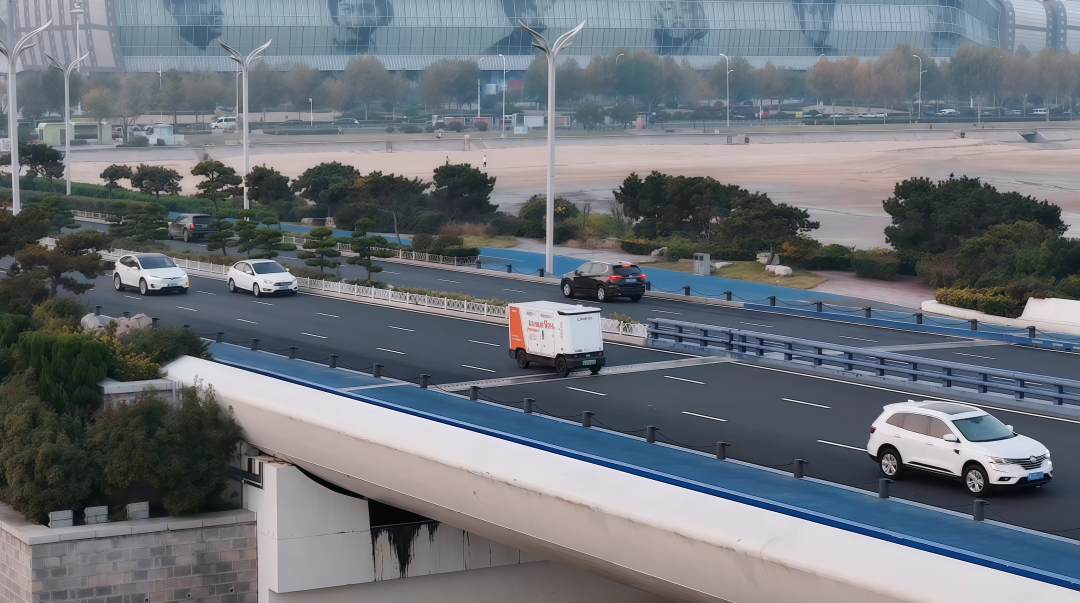
Image Source: Hesai Technology
Second, the deal solidifies Hesai’s position in the autonomous delivery LiDAR space and drives the domestic industry toward scenario-specific upgrades.
Autonomous delivery is a key application for LiDAR beyond passenger vehicles and Robotaxis, characterized by large volumes, standardized scenarios, and a fast commercial pace. By deeply aligning with Neolix, Hesai has secured coverage of top-tier clients in this sector, merging LiDAR technology with the specific needs of unmanned logistics and evolving products from "performance-focused" to "scenario-specific."
Collaboration among leading players also promotes standardization and scaling within the LiDAR industry, accelerating cost optimization and technical iteration. This enhances the global competitiveness of domestic LiDAR in the unmanned delivery market, creating a positive cycle: "technological leadership, customer recognition, mass deployment, and renewed technological upgrades."
Finally, the partnership helps export Chinese intelligent manufacturing and upgrades the smart logistics industry. Neolix, a representative of China’s unmanned delivery sector, has entered markets in the Middle East, Japan, South Korea, Australia, and Europe, serving as an example for the global export of Chinese autonomous driving technology. Hesai Technology, a global LiDAR leader, brings its own robust technological and supply chain capabilities to the table.
Their synergy packages China’s leading autonomous driving and LiDAR perception technologies for export, offering efficient, low-cost unmanned solutions for global urban logistics. This elevates China’s influence in the fields of intelligent driving and smart logistics.
Moreover, the widespread adoption of unmanned delivery will optimize urban logistics efficiency, reduce labor costs and traffic congestion, and drive the transformation of traditional logistics toward a smarter, greener, and more efficient model.
Li Yifan, co-founder and CEO of Hesai Technology, said that Neolix’s 100 million kilometers of operational data is a valuable industry asset, adding that Hesai will leverage the ATX to enable even more precise perception and decision-making. Yu Enyuan, founder and CEO of Neolix, stated that selecting Hesai is a critical step in handling complex road conditions and boosting operational efficiency. The commitment from these two industry leaders confirms the long-term value of the partnership.
In summary, the deepened strategic partnership between Hesai and Neolix uses core LiDAR technology as a bond, connecting the scenario demands of unmanned delivery with industrial implementation. It provides solid support for the large-scale operations of L4 RoboVans and drives the deep penetration of domestic LiDAR into vertical scenarios.
As this partnership moves forward, unmanned delivery will integrate into daily urban life more quickly, while the collaborative advantages of China's intelligent driving supply chain continue to make their mark on the global stage.


