



Gasgoo Munich- On April 11, Ouyang Minggao, an academician at the Chinese Academy of Sciences, stated at the Intelligent Electric Vehicle Development Forum that the new energy vehicle industry is shifting from "price competition" to "value competition."
He argues that the center of industry competition has moved to a "three-value coupling" system spanning the entire value chain, anchored by functional, emotional, and asset value.
To survive, the sector must build competitiveness across this entire chain: using functional value as a cornerstone, emotional value to build brand moats, and asset value to forge a long-term loop of trust.
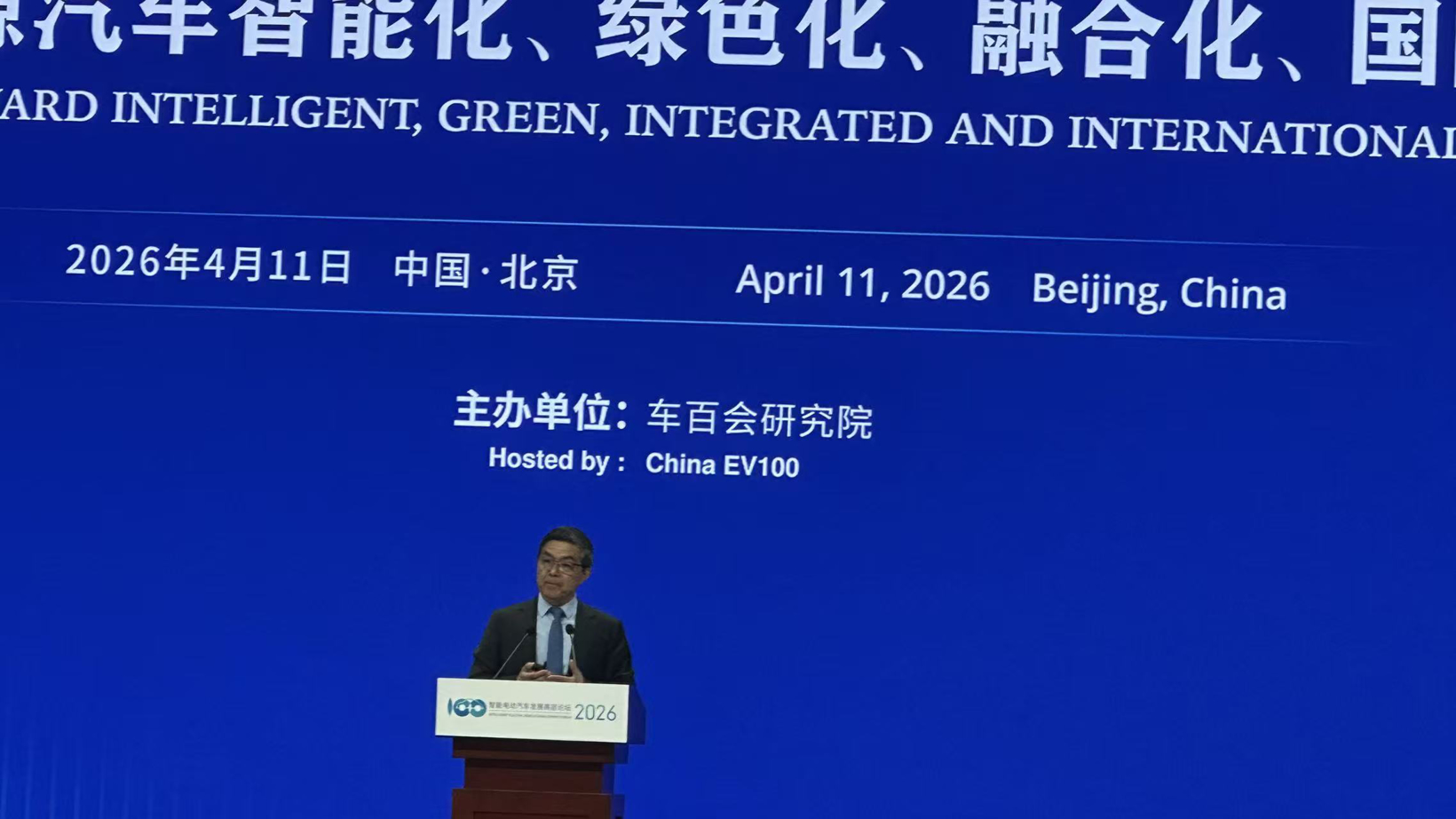
Image source: Gasgoo on-site photography
1. Functional Value: From "Spec Leadership" to "Zero-Anxiety Experience"
• Safety functions: Vehicle thermal safety, electrical safety, autonomous driving safety, information security, collision safety, and escape safety.
• Electric functions: Battery life and range; speed and convenience of charging; electric drive efficiency; and stability of electric functions across all climates, conditions, and processes.
• Smart functions: Autonomous driving, smart cockpits, vehicle OTA and V2X capabilities, and vehicle dynamics control.
2. Emotional Value: From "Mobility Tool" to "Lifestyle Brand"
• Design aesthetics and personalization: Offer high-degree customization services. Maintain unique recognition within family designs to satisfy users' needs to express individuality.
• Building "empathetic" communities: Moving beyond simple rewards programs. Through owner charity events, track days, and outdoor groups, let the brand become an extension of user identity.
• Warmth in human-machine interaction: Create anthropomorphic smart assistants. Use emotional voice and seamless interaction to reduce the coldness of the machine and increase the sense of companionship.
3. Asset Value: From "Residual Value Management" to "Full Lifecycle Profitability"
• Authoritative used car system: Establish a strict official system for buybacks, refurbishment, and sales. Stabilize brand used car prices to support new car prices.
• Innovative energy services: Utilize surplus battery cycles for V2G functions, turning vehicles from consumer goods into flexible energy storage assets.
• Flexible ownership models: Introduce lifetime battery warranties to underwrite asset depreciation risks for users, eliminating fears of rapid technological iteration and value loss.
4. Three-Value Coupling: Three Values Mutually Supporting to Build an Experience Loop
• Function supports emotion: Extreme camping mode functions (V2L, on-board kitchens) derive emotional value from an "outdoor lifestyle."
• Emotion feeds back to assets: Highly engaged brand communities and brand identity form a "fan economy" that supports residual value.
• Asset guarantees function: Vehicle warranty follows the car, not the owner, lowering maintenance costs (asset value) and allowing users to dare to deeply use core functions (functional value).
Ouyang Minggao noted that according to the theory of innovation diffusion, once the penetration rate of new energy vehicles exceeds 50%, the market officially transitions from the early majority to the late majority stage. At that point, the pace of market share growth will slow, while the total fleet size will accelerate. The industry is entering a new cycle of high-quality development.


