



Gasgoo Munich- China's passenger vehicle market slumped into a cyclical trough in February 2026, weighed down by a mix of policy and seasonal factors. Data from the China Passenger Car Association (CPCA) shows retail sales dropped 25.4% year-on-year and 33.1% month-on-month to 1.034 million units. Cumulative retail sales for the year so far reached 2.578 million, down 18.9% from a year earlier.

Image source: CPCA
Cui Dongshu, secretary-general of the CPCA, attributed the performance to complex market forces, noting a distinct "low start, high finish" pattern in annual sales in recent years. Disrupted by the Lunar New Year holiday, February retail figures have historically swung wildly—down 19% in 2019, plunging 79% in 2020, surging 373% in 2021, up 5% in 2022, up 10% in 2023, down 21% in 2024, and up 26% in 2025. "Therefore, the 25.4% decline in 2026 sits in the lower-middle range of these historical February fluctuations," Cui said.
Domestic Brands' Share Rebounds Month-on-Month
Domestic and joint-venture brands delivered divergent performances in February, a contrast to previous trends.
Domestic brands underwent a period of adjustment, with retail sales under pressure. Data shows retail sales for these brands fell 30% year-on-year and 29% month-on-month to 630,000 units. Their domestic retail share stood at 61.2%—a rebound from 57.5% in January, though still 4.3 percentage points lower than a year ago.

The decline stems largely from domestic brands' heavier exposure to the new energy vehicle (NEV) market, which felt the direct impact of the purchase tax incentive phase-out. The policy bonanza at the end of 2025 pulled demand forward, hitting short-term sales. This was compounded by a traditional pre-holiday preference for internal combustion engine (ICE) vehicles, which amplified the sales drop.
Mainstream joint-venture brands, meanwhile, showed signs of resilience. Retail sales for these brands totaled 270,000 units in February, down 19% year-on-year. While the month-on-month drop was steep at 43%, their annual performance outpaced domestic brands. German brands captured 18.2% of retail share, up 1.2 percentage points; Japanese brands took 12.1%, up 1.5 points; and US brands held 6.8%, up 1.8 points. Korean brands also saw a slight increase.
That resilience stems from their continued reliance on ICE vehicles as their foundation. The traditional pre-Lunar New Year buying spree for combustion cars provided crucial support, temporarily masking their deeper structural shortcomings.
The luxury car market demonstrated notable stability. Retail sales reached 130,000 units, down 12% year-on-year and 27% month-on-month—a decline far milder than that of domestic or mainstream joint-venture brands. Their retail share grew 2 percentage points to 12.7%. Luxury consumers are generally less sensitive to price shifts and policy changes, insulating the sector from short-term volatility. Strong product portfolios and brand premiums helped these brands hold their ground during the market adjustment.
Yet short-term share fluctuations haven't eroded the long-term competitive edge of domestic brands, as evidenced by wholesale and export figures. Domestic automakers' wholesale sales came in at 1.074 million units in February—down 14% year-on-year and 19% month-on-month, a significantly smaller drop than the 20% annual decline seen by mainstream joint ventures. Exports remain a critical battlefield: domestic brands shipped 478,000 units overseas in February, a 52% surge, accounting for 86.1% of total passenger vehicle exports. While joint-venture and luxury brand exports jumped 85% to 77,000 units, their smaller base leaves the dominance of domestic challengers unchallenged.
The manufacturer rankings further underscore the core position of domestic brands. In the top 10 for both passenger car retail and wholesale sales in February, Geely, BYD, Changan, and Chery held their ground at the forefront.
Penetration rates in February laid bare the core disparity between joint-venture and domestic brands. The wholesale NEV penetration for domestic brands hit 58.9%, with retail penetration at 64.5%. Luxury brands followed at 48.2% and 32.6%, respectively. In stark contrast, mainstream joint-venture brands managed just 4.6% wholesale and 4.5% retail penetration. This chasm suggests joint-venture brands are severely lagging in NEV product layout. Their current resilience is merely a short-term prop from their ICE base; as NEVs continue to penetrate the market, pressure on joint-venture share will only intensify.
NEV Market: "Cool at Home, Hot Abroad"
The NEV market in February displayed a clear "cool at home, hot abroad" dynamic: domestic sales slumped under the weight of policy phase-outs and demand pull-forward, while overseas exports exploded, becoming the primary engine for sector growth.
Cui noted that the NEV purchase tax exemption, in place since September 2014, officially expired at the end of December 2025, leaving the 2026 market in a period of adjustment. Some consumers rushed to buy in 2025 to capture the policy benefits, leading to a pull-forward effect in the first two months of this year. This anticipated short-term volatility, Cui argued, does not reflect the market's long-term trajectory.
Data reveals NEV retail sales fell 32% year-on-year and 22.1% month-on-month to 464,000 units in February. Cumulative sales for January and February reached 1.06 million, a 25.7% decline. Battery electric, plug-in hybrid, and extended-range vehicles all saw drops of varying degrees: BEV retail sales fell 34.9% to 278,000 units; PHEVs dropped 31% to 134,000; and EREVs declined 15.6% to 52,000.

Image source: CPCA
The historical trend of ICE vehicles outperforming NEVs ahead of the Lunar New Year further exacerbated the domestic NEV decline. Domestic retail sales of combustion cars fell 19% in February—a drop far less severe than that seen in NEVs.
In sharp contrast to the domestic adjustment, the NEV export market surged in February, becoming the sector's brightest spot and a testament to the global competitiveness of Chinese vehicles. NEV exports jumped 124.7% year-on-year to 269,000 units, with a modest 7% monthly decline. NEVs now account for 48.5% of total passenger vehicle exports, up 14.8 percentage points from last year, solidifying their role as the core growth driver for China's auto exports.
The rational structure of these exports suggests sustainable growth overseas. Battery electrics made up 58% of NEV exports, with A00- and A0-segment models comprising 55% of that total. These value-focused models remain the main force in exports, aligning well with demand in emerging markets. Plug-in hybrids accounted for 38% of exports; despite facing some external headwinds, they are growing rapidly in developing nations, where domestic brands' technological advantages and product fit promise a bright future.
Domestic brands are the undisputed engine of NEV exports, with top automakers seeing significant returns from their global strategies. In the manufacturer rankings for February, BYD led with 98,700 units, followed by Geely at 40,900, Chery at 28,300, and Tesla China at 20,400. Domestic brands dominated the top of the list.
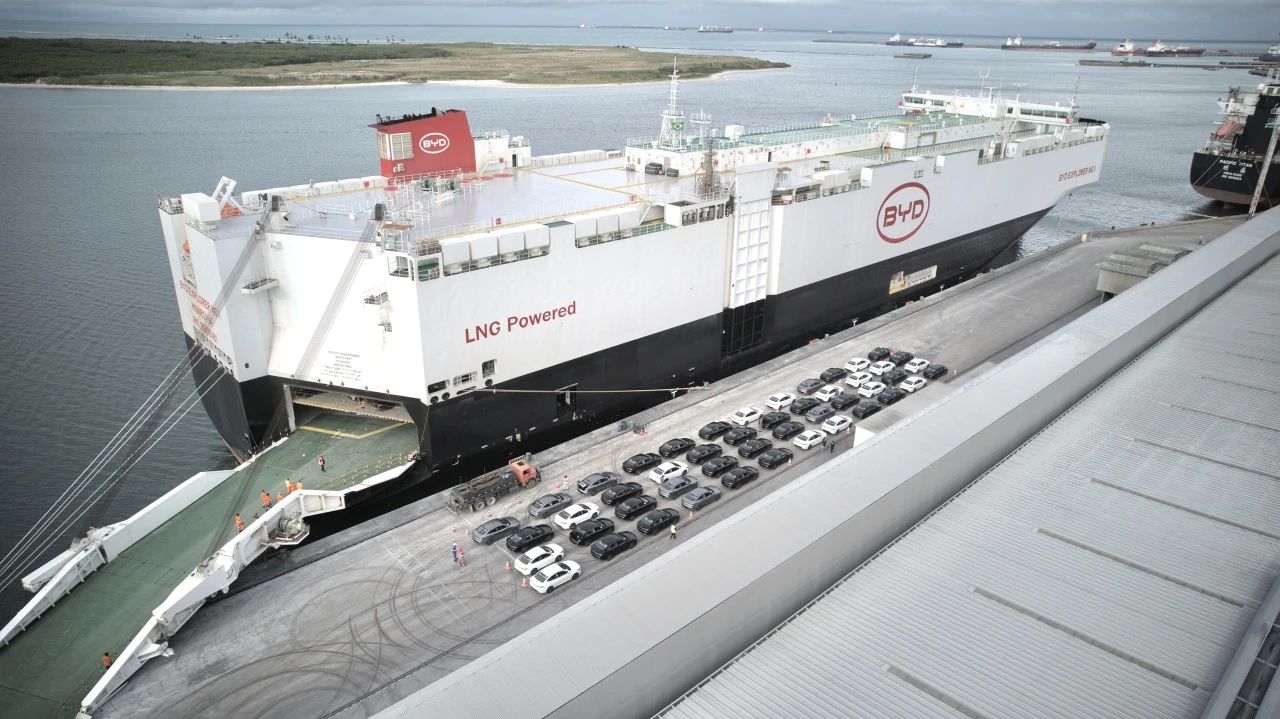
Image source: BYD
Meanwhile, several domestic automakers are deepening their overseas infrastructure. Great Wall Motor's CKD exports accounted for 52% of its total, while SAIC-GM-Wuling sat at 35%. With overseas ICE production estimated at over 500,000 units, combined with KD exports of NEVs, total overseas vehicle sales are projected to exceed 9 million units.
New EV startups and independent brands spun off from traditional automakers have become key growth drivers, injecting vitality into the market. New forces captured 27.3% of retail share in February, an increase of 7 percentage points, with Leapmotor, Li Auto, and NIO leading the charge. This growth is underpinned by deeper market logic.
"The growth in new forces' share comes down to two core factors," Cui told Gasgoo. "First, the market share of major domestic automakers slipped noticeably, falling from 70% to the 60% range. Some headliners faced pressure on domestic retail sales as the market shifted from plug-in hybrids to standard hybrids, causing traditional automakers to lose NEV ground. That left a vacuum for competitive new forces to fill. Second, new forces are developing comprehensively. Battery swapping and flash charging technologies are advancing, Li Auto has successfully pivoted from range-extended to pure electric, and brands like XPENG and Leapmotor have delivered standout performances. Overall, their strong competitiveness and excellent product marketing have driven solid growth."
Also noteworthy are the "second-generation" startups—independent NEV brands incubated by traditional automakers—which turned in a stellar performance with a 17.1% share, up 3 percentage points. Brands like Deepal, eπ, ZEEKR, and Arcfox, with their strong product offerings, have become crucial pillars supporting the NEV transition of domestic brands.
March Market Poised for Steady Recovery
After the trough of January and February, March marks a critical window for the passenger vehicle market to stabilize and rebound. With the Lunar New Year holiday in the past, work and production have fully resumed across industries. Automakers' capacity is returning to normal levels. Supported by trade-in policies and intensified local consumption incentives, March is set for a significant month-on-month increase. However, high raw material prices and lingering demand pull-forward effects mean an explosive boom is unlikely; a steady recovery will be the main theme.
As March begins, the holiday impact has fully faded and production is back to normal, ensuring ample vehicle supply at the terminal end. Additionally, March offers 22 working days—one more than March 2025—providing a solid foundation for increased production and sales.
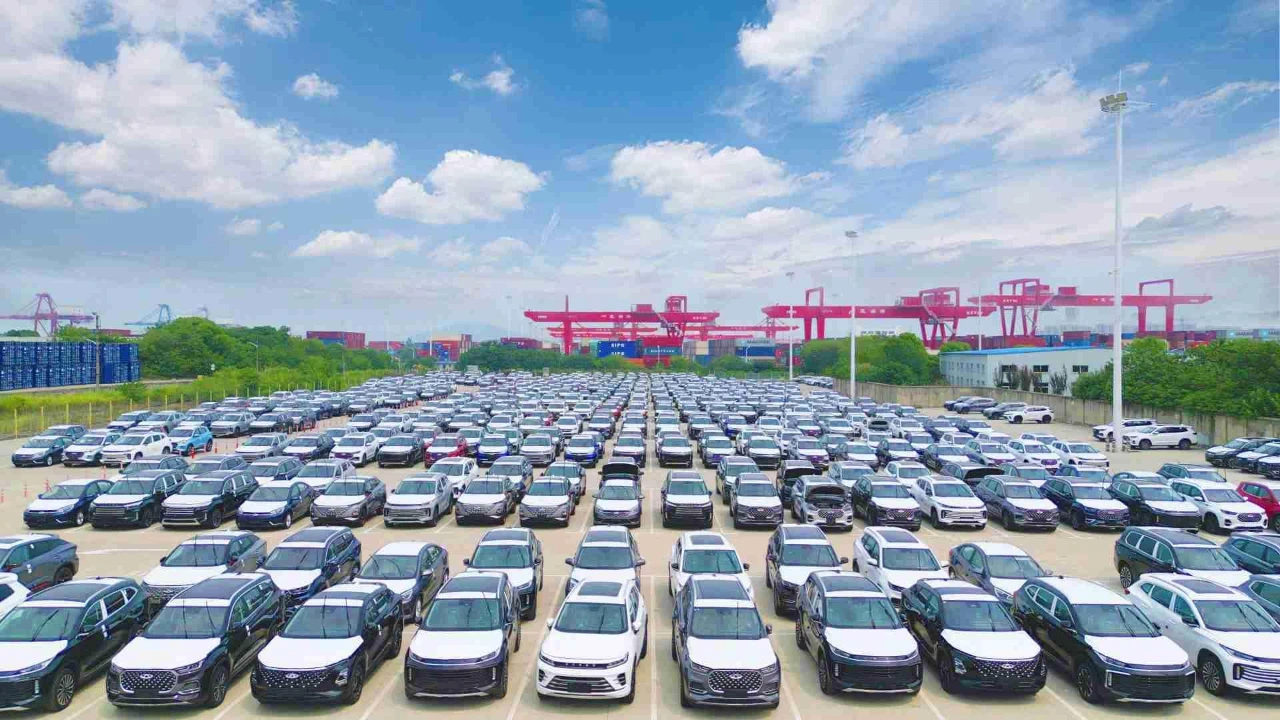
Image source: Chery Automobile
Cui also pointed out that the post-holiday period is prime time for new product launches. "Many manufacturers are rolling out new models. Driven by national policies, various provinces and cities have issued their own incentives, and the full recovery of offline events like auto shows is drawing crowds," he said. Local policies are actively boosting consumption, and the rapid revival of offline scenarios is driving steady growth in foot traffic and orders at dealerships.
The concentrated release of policy dividends is the primary engine for March's market rebound. The nationwide vehicle trade-in policy is now fully in effect, serving as a key lever for consumption.
Although the 250 billion yuan subsidy fund for consumer trade-ins in 2026 is 50 billion yuan less than in 2025, Cui noted that a "special 100 billion yuan fund for fiscal and financial coordination to boost domestic demand will help lower costs for residents buying cars and for automakers financing operations through interest subsidies and financing guarantees. This will effectively stimulate inherent consumption power and expand domestic demand."
At the same time, many regions are ramping up local incentives, such as new car purchase subsidies, creating a synergy between national and local policies. This continues to unleash consumption potential for vehicle scrapping and replacement, driving the market to strengthen through March.
A dense wave of new model launches is injecting fresh energy into the market. Debuts featuring cutting-edge technology not only broaden consumer choice but also accelerate the clearance of older inventory, lifting overall market activity.
However, Cui acknowledged that "with lithium carbonate and copper prices remaining elevated, and the industry trend against cutthroat competition, manufacturers are unlikely to launch many new NEV models with unexpectedly high value-for-money." High raw material costs and the pushback against price wars are making automakers cautious on pricing and value positioning, to some degree dampening the rapid release of consumer demand.
Addressing potential export disruptions from the Middle East crisis, Cui offered a clear assessment: "While recent Middle East tensions have caused some transport interference, Chinese automakers have shifted from 'chartering ships and waiting for space' to 'building ships and controlling logistics.' With a rapidly expanding owned fleet, autonomous capacity, and optimized costs and efficiency, our sales guarantee capability is stronger than other international automakers. If the crisis is short-lived, export transport won't be significantly impacted." This suggests the NEV export engine will continue to fire, providing robust support for March's stabilization.
Overall, driven by policy, capacity, and new products, the passenger vehicle market is set to climb steadily out of the January-February trough in March, entering a recovery phase that lays a stable foundation for the full year.


