



While snow fell on northern cities during the first lunar month, Shenzhen—on the southern coast—rode a powerful "cyber current" into the Year of the Horse Spring Festival.
Pony.ai's latest figures show robotaxi operations climbing steadily across Beijing, Shanghai, Guangzhou, and Shenzhen during the recent Spring Festival break (Feb 15–23). A symbolic milestone arrived on Lunar New Year's Eve: by Feb 16, paid orders completed in Shenzhen for 2026 had already surpassed the city's total for the entirety of 2025.
This isn't just a year-over-year statistic; it's a starting gun signaling that the commercialization of autonomous driving in China has officially entered an acceleration phase in 2026.
As driverless cars cure the traditional holiday headache of hailing a cab, and tech experiences become must-dos for tourists, we're witnessing more than just technological maturity—we're seeing the quiet rise of a new travel culture.
The Tipping Point Behind the Data
Surpassing an entire year's volume in under two months. Behind this seemingly explosive growth lies the industry's shift from quantitative accumulation to qualitative transformation.
To grasp the significance of these numbers, one must view them through the lens of the Spring Festival rush.
The massive migration of millions during the travel rush slashed ride-hailing supplies in top-tier cities. Yet demand—particularly for trips to airports, border crossings, and shopping districts—surged, fueled by the "reverse travel rush" and a boom in tourism.
That traditional supply-demand balance broke, leaving a massive vacuum in transport capacity. Pony.ai's performance in Shenzhen stepped in to fill that void.
According to the company, its driverless fleet took no holiday, operating 24/7 to act as a stabilizer for city traffic. That high efficiency during the festive period proves robotaxis are now capable of handling large-scale public transport demands.
From an industry perspective, this strong start to 2026 suggests the business model for autonomous driving is finally gaining traction.
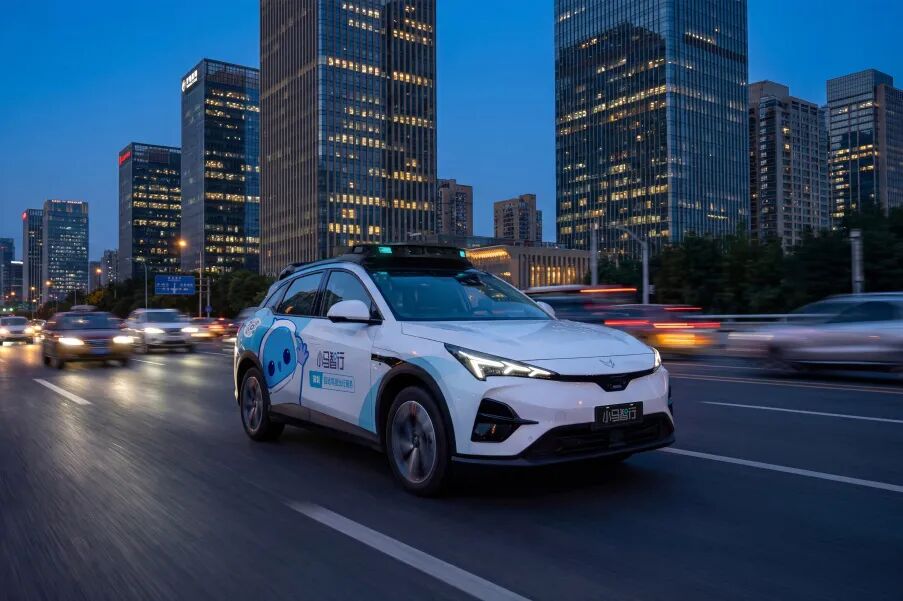
Image Source: Pony.ai
Skeptics once questioned whether paid orders could ever cover high operating costs. But the Shenzhen data—surpassing last year's total in under two months—indicates that as fleet size and efficiency grow, daily revenue per vehicle is nearing or even surpassing the break-even point for traditional ride-hailing.
This is no longer a laboratory demo; it is a commercial entity with the potential for self-sustaining growth.
Scenario Reconstruction: When Driverless Cars Become the Yardstick of City Warmth
Pony.ai's surge in Shenzhen represents more than a victory in operational metrics; it is a deep reconstruction of urban mobility scenarios. In this shift, driverless cars have evolved from cold machines into emotional carriers connecting people with the city.
A company executive noted that riders in Shenzhen favor Pony.ai for trips between major shopping districts, landmarks, and transport hubs like Window of the World, The MixC Shenzhen Bay, Nantou Ancient City, and Shenzhen Bay Port. The service is also drawing international visitors: during the holiday, user numbers from Hong Kong and Taiwan saw significant growth.
These routes trace a microcosm of contemporary urban life: tourists moving between sights and cuisine, and travelers crossing the Shenzhen-Hong Kong border.
Meanwhile, driverless cars are redefining the flavor of the Lunar New Year.
Shenzhen often felt like a ghost town during past holidays, but this year, the "reverse travel rush" took hold. Elderly parents flocked from hometowns to join their children working in the city.
Data from Qunar shows hotel stays by those over 60 in Shenzhen jumped 56% year-on-year. For these seniors, a driverless ride is more than transport—it is a "mobile window" where children showcase their world and express their care.
On a deeper level, Pony.ai's rise reflects a shift in urban mobility from "functional supply" to "experiential consumption." When tourists add a robotaxi ride to their packed itineraries, the service transcends simple A-to-B transport, becoming a cultural attraction akin to a sightseeing cable car.
That shift opens new valuation frontiers for autonomous driving: it is both transport capacity and a traffic portal, serving as a calling card for the city's image.
The holiday bustle has faded, yet the robotaxis shuttling through Shenzhen's streets remain busy.
For Pony.ai, surpassing last year's total so early in 2026 is both an incentive and a test. Once users grow accustomed to summoning an empty car on demand, there is no turning back. The "Shenzhen Speed" of autonomous driving is rewriting the competitive landscape of the global mobility industry.


