



Gasgoo Munich- On April 8, Chery Auto unveiled three compact SUVs simultaneously: the Tiggo 7L, the all-new Tiggo 7, and the Tiggo 5 Sport. This triple launch is more than just stacking new products; it represents a calculated maneuver to systematically dominate the 70,000 to 100,000 yuan gasoline SUV segment.
The pricing strategy draws clear lines: the all-new Tiggo 7 targets the 80,000 yuan bracket, the Tiggo 5 Sport lowers the entry barrier to the 70,000 yuan range, while the Tiggo 7L pushes upward into the 80,000 to 100,000 yuan tier.
Chery's Strategy for Differentiation
For a long time, the buying logic for gasoline SUVs priced between 70,000 and 100,000 yuan was simple: you get what you pay for. A tight budget meant compromising on space, settling for mediocre specs, and accepting lower build quality. Chery is looking to shatter that equation. The automaker is building to global standards, then pricing the vehicles aggressively to win over buyers.
Specifically, the trio targets three distinct demographics. The all-new Tiggo 7 focuses on safety and reliability for worry-free family use. The Tiggo 7L emphasizes spacious interiors, advanced intelligence, and robust power. Meanwhile, the Tiggo 5 Sport aims at young first-time buyers with its trendy styling and accessible price point.
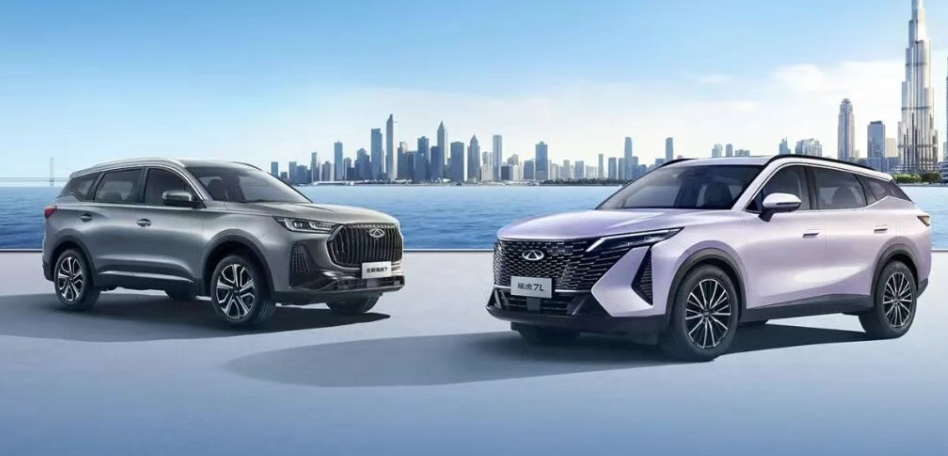
Image Source: Chery
Backing this strategy is a critical foundation: the Tiggo family's accumulated global sales. The Tiggo 7 series has sold over 1.63 million units worldwide, ranking as the top export among Chinese-brand A-segment SUVs for four consecutive years. The Tiggo 5 series has surpassed 1.763 million in sales across more than 80 countries, also securing the export crown in its segment.
This means the three new arrivals are not "domestic-only" models starting from scratch; they are genuine global vehicles developed and validated through international systems. With overseas prices significantly higher than domestic ones, Chery is leveraging its global scale to subsidize pricing at home, allowing Chinese buyers to access international-grade quality at a lower cost.
The pricing structure reflects a straightforward "global car, mass-market price" philosophy. The Tiggo 7L comes in four variants, with an official guide price of 91,900 to 106,900 yuan. A limited-time offer drops this to 84,900 to 99,900 yuan, while an additional trade-in discount brings the entry point down to 77,900 to 89,900 yuan.
The all-new Tiggo 7 launches in three versions priced between 79,900 and 91,900 yuan, with a limited-time offer starting at 69,900 yuan. The Tiggo 5 Sport also offers three models ranging from 79,900 to 89,900 yuan, with a trade-in discount driving the lowest price down to 67,900 yuan.
The pricing bands of the three models connect almost seamlessly, spanning from the 60,000 yuan range to just over 100,000 yuan. Buyers can now step up through the Tiggo family lineup based on their specific budget and needs.
How Do the Three Models Stack Up?
Of the trio, the Tiggo 7L is the most ambitious. It crams features typically found in higher-priced vehicles into an SUV costing around 80,000 yuan.
The standout feature is a 15.6-inch 2.5K "love sliding" screen. It supports four-finger gestures to toggle between the central display and the passenger side, allowing the driver to view navigation while the passenger streams content without interruption.
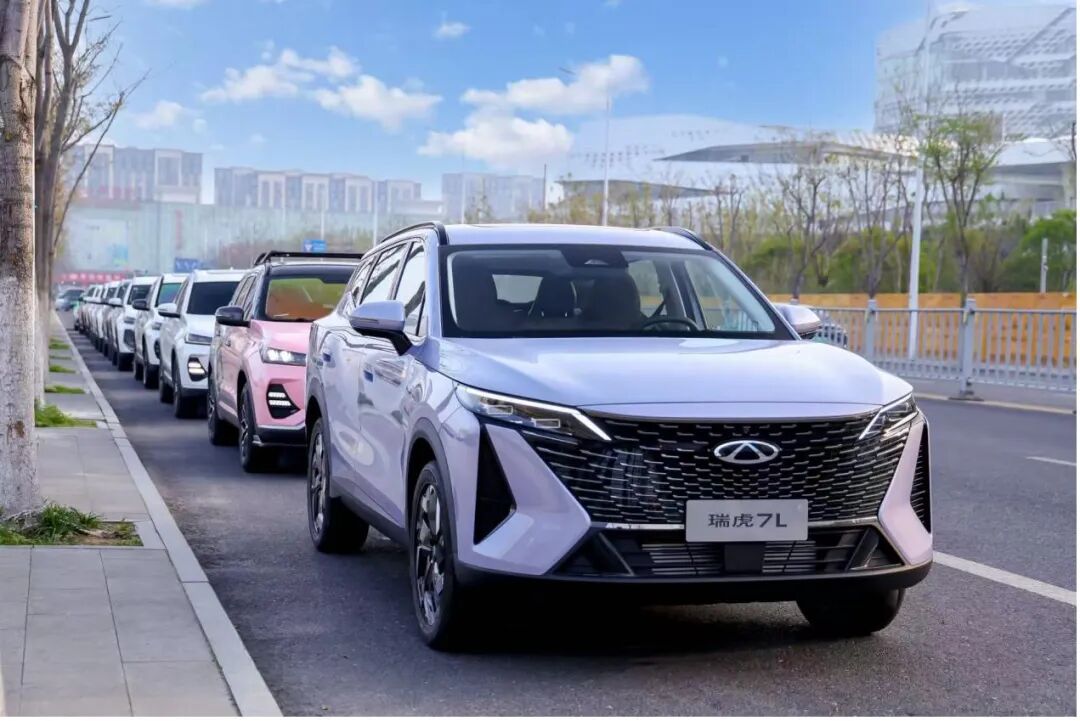
Image Source: Chery
The cabin also includes a "Queen's" front passenger seat—complete with heating, ventilation, massage functions, and an electric leg rest. The ten-layer "cloud-sense" structure offers impressive support.
Thanks to a segment-leading 2,720mm wheelbase, rear legroom reaches 911mm. Trunk capacity ranges from 639 liters to 1,417 liters; with the seats folded flat, it creates a nearly two-meter-long bed—perfect for camping or resting on long trips.
The L2-level driver assistance system includes 19 functions, with AEB capable of active braking at speeds up to 130 km/h. Powertrain options include a 1.5T engine paired with a 6DCT or a 1.6T engine with a 7DCT. The 1.6T Kunpeng power unit delivers a maximum output of 147 kW and a peak torque of 310 N·m.
If the Tiggo 7L is about "segment-crossing experience," the all-new Tiggo 7 plays the "reliability" card. The body uses high-strength steel combined with a "Shotgun" frame structure. Even in a 50 km/h frontal overlap crash test, the A-pillar resists bending, keeping the passenger compartment intact.
Inside, the all-new Tiggo 7 features a 24.6-inch curved surround screen powered by the Lion Smart Cloud system, supporting both CarPlay and HiCar smartphone connectivity.
Over 30 comfort and convenience features come standard, including ventilated and heated seats, a heated steering wheel, and an electric tailgate. The vehicle and engine are backed by a lifetime warranty.
Power comes from a 1.5T engine producing 115 kW and 230 N·m, paired with a CVT that simulates nine speeds or an Aisin 6MT. WLTC combined fuel consumption is approximately 6.5 liters per 100 km.
The Tiggo 5 Sport is the most affordable of the three, yet Chery hasn't cut corners on core specifications. It is the only model in its price range to standardize the 8155 chip and AI-powered voice recognition, supporting dialect recognition and continuous command dialogue. The system's responsiveness leads its class.
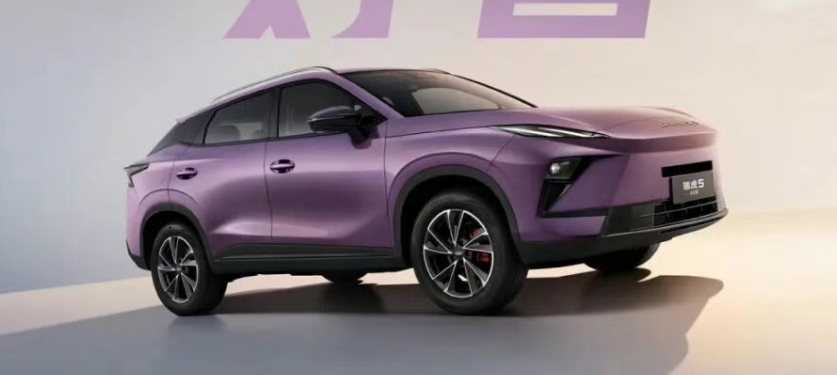
Image Source: Chery
Safety is uncompromised as well: the vehicle features a body structure with 80% high-strength steel, six airbags, L2-level driver assistance, and a 540-degree panoramic camera system.
The exterior follows a youthful design language, with a closed front grille and split headlights. A sloping roof and a dual-layer progressive rear wing create a distinctly sporty profile. Measuring 4,540 × 1,835 × 1,515 mm, the car is offered in five trendy color options.
With the simultaneous launch of these three models, the Chery Tiggo family now offers full-line coverage in the 70,000 to 100,000 yuan gasoline SUV market, spanning from entry-level to high-quality family vehicles. For consumers, this means no longer having to compromise between space, intelligence, and safety when choosing an SUV in this price bracket.
For the broader gasoline SUV market, this strategy sends a clear signal. As the price war fades and value-based competition takes center stage—projected to be the norm by 2026—simply piling up specifications won't work. True competitiveness lies in creating products at every price point that make consumers feel their money was well spent.


