



Gasgoo Munich-"People used to ask me under what conditions Horizon might consider charging for HSD via a subscription model. In my view, once the share of smart driving mileage breaches the 50% tipping point—meaning machine-driven miles exceed human-driven ones—user reliance on the software becomes irreversible. That high stickiness sets the stage for us to eventually roll out a SaaS subscription model."
On the evening of March 19, 2026, Horizon Robotics founder Yu Kai offered a clear timeline for a question that had long puzzled the industry, speaking during the company's 2025 earnings call.
Just last year, Wu Yongqiao, president Bosch Cross-Domain Computing Solutions division in China, found himself at the center of a social media firestorm. At the 2025 World Artificial Intelligence Conference, he declared that high-level autonomous driving "must absolutely not be given away for free," warning that bundling it with every vehicle would spell disaster for China's driver-assistance industry.
On one side are automakers championing "smart driving equality," pushing advanced features down to the 100,000 yuan or even 60,000 yuan price bracket. On the other are Tier 1 giants arguing that "charging is a baseline for survival." With Yu Kai now pinpointing a specific threshold—when smart driving accounts for more than half of all miles—it raises a pressing question: Amid the grand narrative of accessibility, is the era of free autonomous driving really drawing to a close?
The 50% Tipping Point and a Business Model in Flux
Yu Kai shared a strategically significant figure on the call: during this year's Spring Festival holiday, models equipped with Horizon's HSD saw smart driving account for 41% of total mileage. That puts the software nearly on par with human drivers.
"Once the share of smart driving mileage breaches the 50% tipping point... user reliance on the software becomes irreversible." Behind Yu Kai's observation lies a psychological phenomenon often overlooked: the inertia of habit.
Think about how inseparable we've become from smartphone map navigation, even for trips to a familiar corner store. Once you get used to city NOA handling rush-hour cut-ins or confidently choosing lanes at complex intersections, that hands-off ease becomes a physiological need.
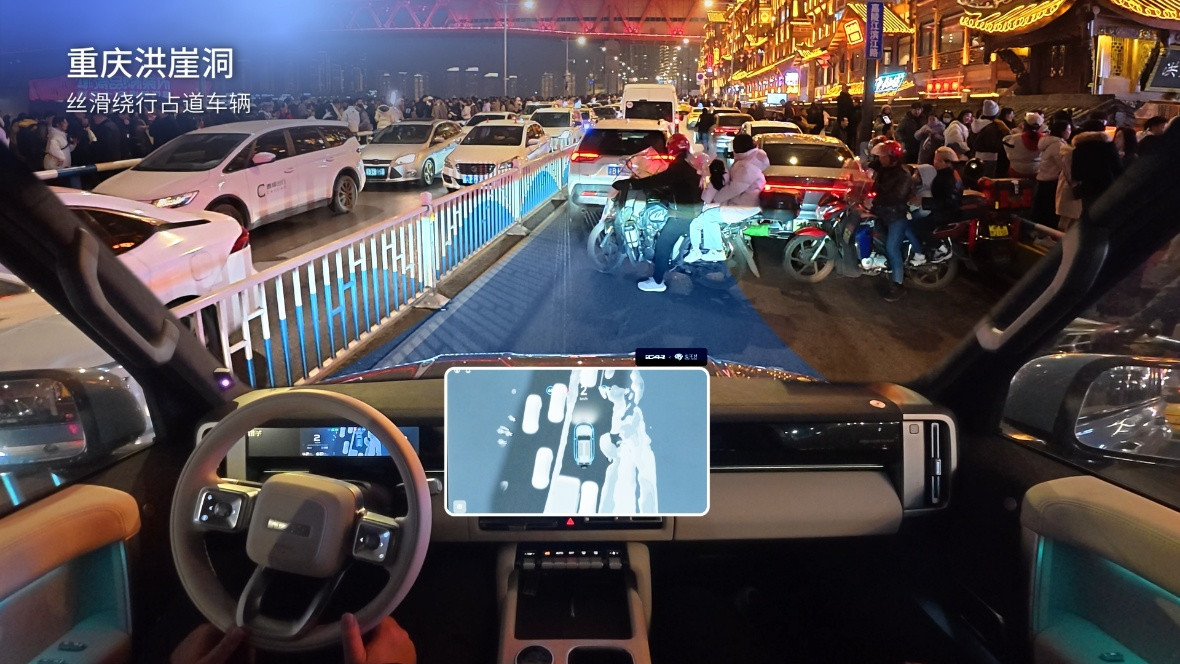
Image Source: Horizon Robotics
HSD's market performance over the past year has given Yu Kai ample confidence to make that claim. He revealed that on 2025 models debuting with HSD, top-trim versions featuring the software accounted for 83% of sales—completely dismantling the auto industry's traditional "low-spec moves volume" pyramid structure.
Consumers aren't just paying for the experience today; they're voting with their wallets for a future dependency.
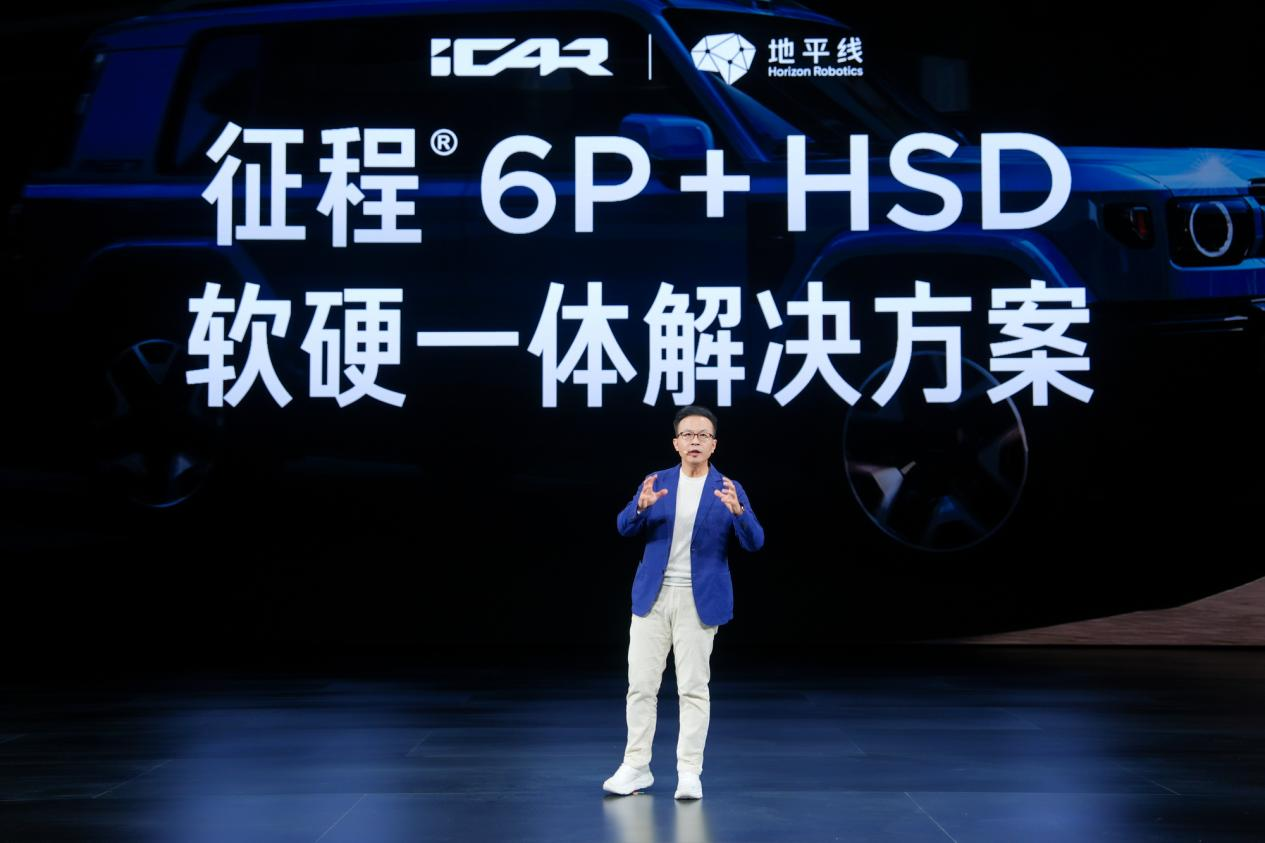
Image Source: Horizon Robotics
When that reliance becomes irreversible, a SaaS subscription model gains its most solid foundation. "Revenue is currently driven by new vehicle sales carrying our products," Yu Kai said. "Looking ahead, we aim to leverage the massive installed base of HSD-equipped vehicles to generate subscription revenue throughout their full lifecycle."
This isn't just about charging fees; it's about transforming a one-time hardware sale into a continuous value exchange rooted in deep user engagement.
Who's Footing the Bill for the Autonomy Party?
Rewind to July 2025. Wu Yongqiao's "disaster theory" sparked outrage largely because he pointed out an uncomfortable truth: autonomous driving is expensive—very expensive.
NIO's William Li has done the math: if an automaker commits to providing autonomous driving for life, it must set aside reserves for annual connectivity and data costs, much like a warranty fund. "You'd need to accrue at least a few thousand yuan per vehicle," he noted. Zhao Changjiang, former general manager of BYD's Denza and Fang Cheng Bao direct sales division, revealed that BYD's 4,000-person autonomous driving team alone generates 1 billion yuan in monthly labor costs.
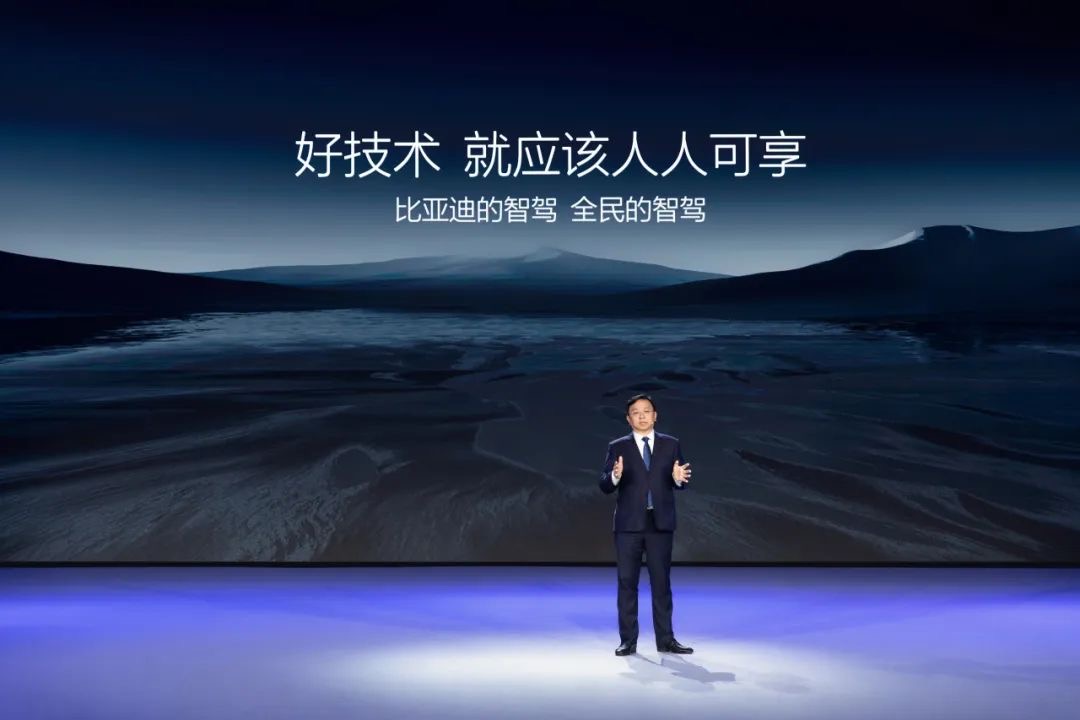
Image Source: BYD Auto
Horizon's 2025 earnings confirm this squeeze. The company reported 3.76 billion yuan in revenue last year, up 57.7% year-over-year, with a gross margin of 57.7%. Yet it posted an adjusted operating loss of 23.7%. "We further ramped up R&D spending in 2025," Yu Kai explained.
As some automakers shout about "smart driving equality" and "free standard features across the lineup," have they truly cracked the code on profitability? The answer is likely no.
Today's "free" offerings are largely a form of "destructive competition" amid a brutal price war. Desperate for user data to train their algorithms, automakers are absorbing hardware losses to bundle autonomous driving as a giveaway. While this has rapidly boosted adoption rates, it has also planted a dangerous mindset in the consumer psyche: smart driving should be free.
The result is a vicious cycle: free services erode industry profits, leaving companies unable to fund the next generation of R&D. As technology stagnates, consumers become even less willing to pay.
Ultimately, "smart driving equality" risks becoming "smart driving mediocrity."
This is precisely Wu Yongqiao's fear. He noted that with the exception of a few players like Huawei, most suppliers—including Bosch—are mired in brutal price wars. If high-end autonomous driving becomes universally free, it will be the straw that breaks the industry's back. After all, no one can run a marathon while bleeding cash.
"Free" Is the Most Expensive Trap of All
On January 14 of this year, Tesla CEO Elon Musk announced on social media that starting February 14, 2026, the company will cease one-time sales of its Full Self-Driving (FSD) package globally, shifting entirely to a monthly subscription model.
Musk's logic aligns perfectly with Yu Kai's. As the technology stack shifts from "local rule-based code" to "cloud-based large model training plus on-board inference," every algorithm iteration and model training cycle incurs massive backend computing costs. A one-time purchase cannot cover years of cloud service expenses. Subscription, at its core, legitimatizes the continuous service nature of the technology.
This raises a deeper question: What kind of autonomous driving do we actually want?
Do we want a static "free lunch" frozen at 2025 capabilities, or a "paid partner" that evolves with large models, handles more edge cases, and gets smarter every year?
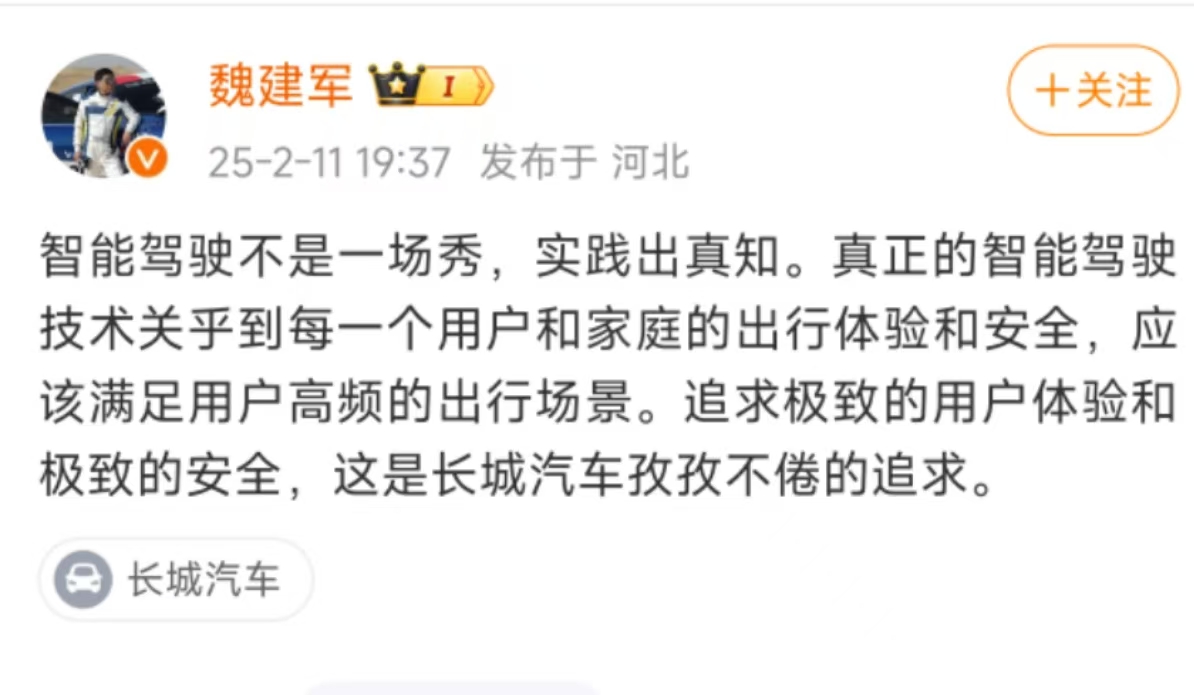
Image Source: Wei Jianjun's Weibo
In March 2026, XPENG's He Xiaopeng also declared that monthly payments will be the norm once the industry reaches Level 4 autonomy. He argued that a monthly fee model provides stable cash flow to cover the high costs of L4 development and iteration, while funding continuous algorithm optimization—a virtuous cycle of "tech upgrade, user payment, repeat."
Yu Kai outlined a similar, though more specific, roadmap on the call. He revealed that the Journey 7 series chip, based on the new "Riemann Architecture," is in development and slated for release next year, with performance metrics targeting Tesla's next-generation chip. Even more significant, Horizon plans to launch China's first "Agentic CAR SoC" for cockpit-driving fusion this year.
This chip can simultaneously run Agent software and HSD city driving systems, transforming the vehicle into a "super intelligent mobility assistant." Yu Kai offered a vivid scenario: you tell the car you want to see a new movie, and the vehicle's agent automatically handles everything—selecting the film, reserving a seat, planning the route, avoiding traffic, adjusting driving modes, auto-parking and paying, and even ordering popcorn.
That kind of revolutionary experience clearly cannot be sustained by static, free software. It demands robust cloud computing, continuous data feedback, and relentless model iteration.
Paying for the service is the price of admission for that kind of continuous evolution.
Zhu Xichan, a professor at Tongji University, added that a true subscription model must be built on Level 3 autonomy or higher. When the system fully liberates humans from the steering wheel—becoming a genuine "electronic chauffeur"—charging becomes entirely rational. At that point, automakers are assuming real driving liability, not just providing an assistive function.
Conclusion:
Returning to Yu Kai's tipping point: once machines dominate the mileage on a vehicle and user reliance becomes irreversible, the debate over free versus paid will naturally dissolve. By then, consumers are no longer buying a feature—they are subscribing to an indispensable digital service and a continuously evolving safety guarantee.
The true meaning of "smart driving equality" shouldn't be dragging the technology down into a race to the bottom; it should be giving ordinary people the opportunity—and the willingness—to pay for excellence that keeps getting better.
As Horizon is demonstrating, you can push advanced autonomous driving into the "mainstream market under 200,000 yuan" while exploring a lifecycle-based SaaS model through flagship products like HSD. This isn't about exploiting customers; it's about paving a sustainable "technology highway" for the entire industry.
Wu Yongqiao's "disaster theory" is not alarmist, and Yu Kai's "50% tipping point" is forward-looking. In the second half of this intelligent transformation, "free" is indeed the most expensive trap. Only when we are accustomed to handing control to the machines—and paying for that convenience—will the curtain truly rise on a healthy, innovation-driven era of smart mobility.


