Gasgoo Munich-The industry has reached an inflection point in the era of "Physical AI," shifting from conversational robots to action-oriented machines, according to Lu Peng, vice president at Horizon Robotics. Speaking at the Smart EV Development Forum (2026) on April 12, Lu argued that building a super platform for this new era requires clearing four major hurdles: achieving true software-hardware synergy, ensuring genuine openness, validating across scenarios at scale, and extending capabilities across domains.
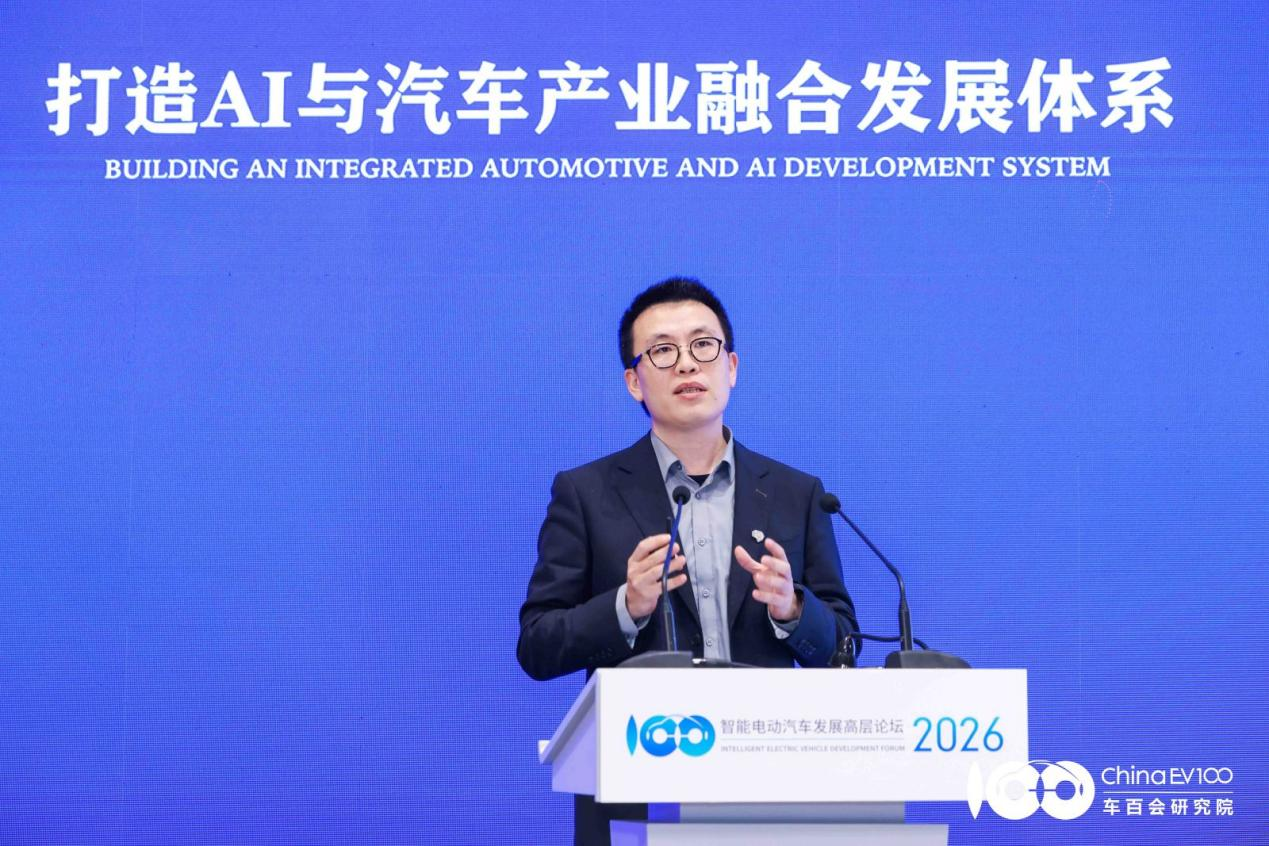
Cars represent the first large-scale commercial deployment of Physical AI with high reliability requirements, Lu noted, making them the optimal environment for gathering high-quality data. Leveraging its software-hardware integration, Horizon Robotics has introduced the Journey 6P domestic high-compute chip and its HSD end-to-end system. These solutions have been installed in millions of vehicles across more than 40 automakers. Additionally, the company's core computing platform, the BPU, has expanded into embodied fields such as robotic vacuums and quadruped robots.
Lu revealed that Horizon Robotics is set to launch China’s first cabin-driving fusion intelligent agent chip, the "Starry Series," on April 22. This single chip integrates autonomous driving, smart cockpit, and agent capabilities, accelerating the vehicle's evolution from a functional machine to a holistic intelligent agent. The platform enables vehicles to possess personality, skills, memory, and the capacity for continuous learning—achieving a deep integration of Physical AI and Digital AI. In Lu's view, true progress toward Artificial General Intelligence (AGI) depends on fusing these two elements.