



Gasgoo Munich- Large vehicles are shifting from playthings for the few to the choice of the many.
China's new car market in 2026 is defined by one clear trend: vehicles are getting bigger. From established models like the Li Auto L9, NIO ES8, and AITO M9 to newcomers like the SAIC Volkswagen ID.ERA 9X, Voyah Taishan, and Leapmotor D19, large SUVs are flooding the market at an unprecedented density.
Yet the path for these giants is far from smooth. While owners relish the spaciousness and the status symbol, they also struggle with mechanical parking spots in older residential districts. Consumer enthusiasm remains high, but daily inconveniences pile up. Is this "big-car wave" an inevitable upgrade, or a collective detour driven by fierce competition?
Have Large Cars Gone Mainstream?
The segment for mid-to-large and large SUVs is no longer a one-man show for Li Auto. Between early 2025 and early 2026, the market saw an explosion of new models: the AITO M9, ZEEKR 9X, Denza N9, NIO ES8, Onvo L90, Galaxy M9, IM LS9, and Voyah Taishan all vying for attention.
Even smart, once synonymous with compact city cars, has joined the trend. Its #5 model stretches nearly 4.7 meters with a 2.9-meter wheelbase—a brand that once defined urban micro-mobility has fundamentally altered its DNA in the rush to go big.
Traditional joint ventures are restless too. Volkswagen unveiled its largest SUV ever—the ID.ERA 9X. Measuring 5,207 mm in length with a 3,070 mm wheelbase, it was built specifically for China. Meanwhile, Leapmotor is targeting the full-size flagship market with the D19, which spans 5,252 mm.
Incomplete statistics show at least 10 large SUV models appeared in Ministry of Industry and Information Technology filings in just the first two months of 2026. The Beijing Auto Show in April will kick off a wave of intensive SUV launches.
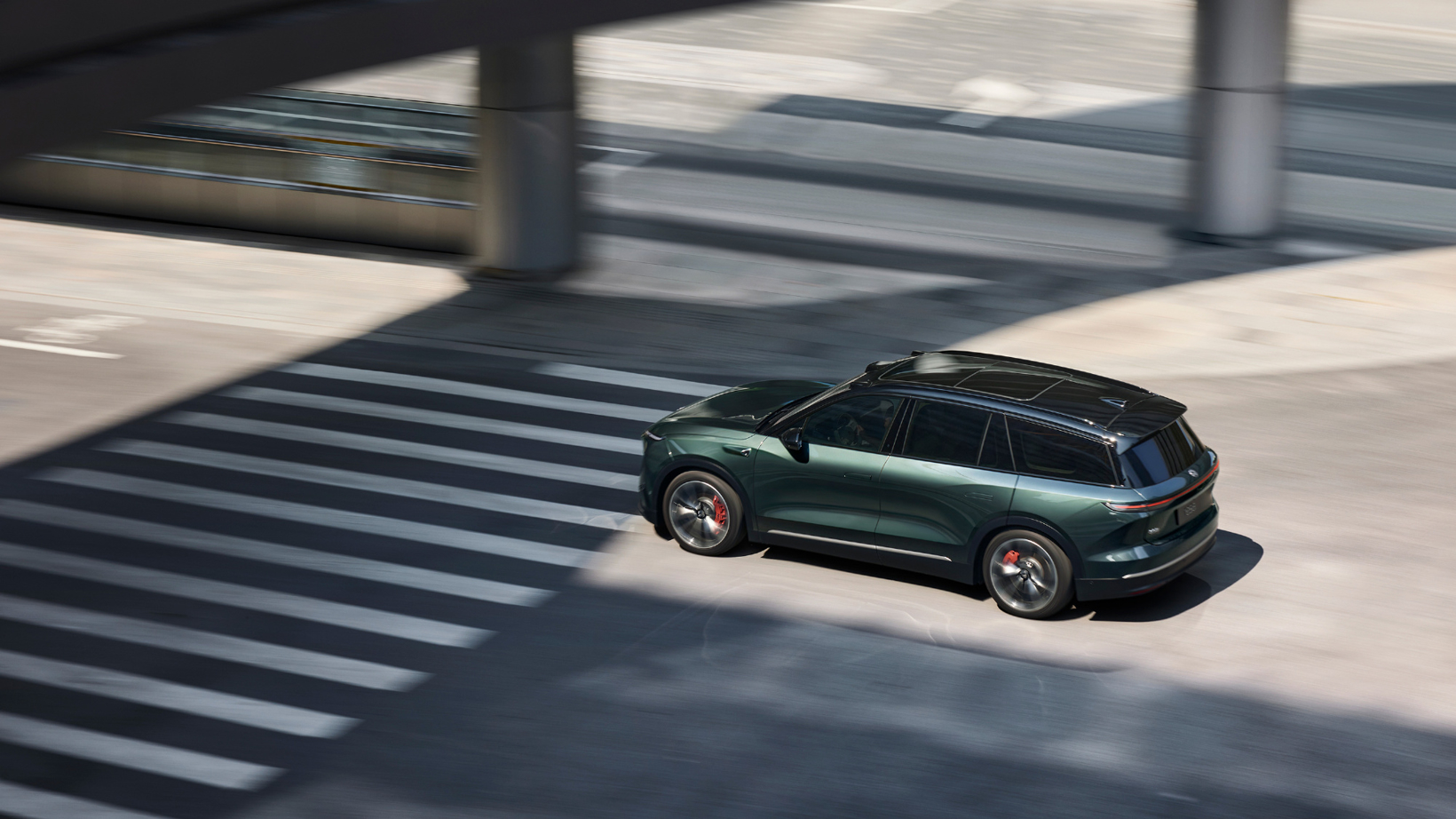
Image Source: NIO
Market data confirms this is no niche enthusiasm. Domestic SUV sales climbed to 11.88 million units in 2025, up from 11.52 million the year before, overtaking sedans to become the single largest segment by passenger vehicle sales volume.
New-energy models now account for over 70% of the core mid-to-large SUV segment. Pure electric and range-extender vehicles from brands like Fangchengbao, AITO, and Li Auto have become the market standard, severely squeezing the share of traditional internal combustion engine vehicles. The market is no longer an oligopoly; it has become a battleground where only serious players survive.
Price barriers are collapsing fast, bringing large vehicles within reach of ordinary households. Where full-size SUVs were once priced at 500,000 yuan or higher—reserved for the wealthy—mature new-energy technology and intense competition have drastically lowered the entry barrier. Large six-seater new-energy family SUVs now dip below 200,000 yuan, a price point accessible to average working families.
The high-end market is equally active. The AITO M9 has consistently sold over 10,000 units monthly, and the ZEEKR 9X joined the 10,000-unit club in early 2026. In the 300,000 to 500,000 yuan price brackets, domestic brands now command at least half the market share against traditional luxury automakers, often leading significantly.
Even the definition of "large" is being upgraded. Conventionally, mid-to-large SUVs range from 4.8 to 5 meters in length with a 2.8 to 3-meter wheelbase, while large SUVs exceed 5 meters and 3 meters respectively. Today, newly launched large SUVs routinely surpass 5.2 meters in length, with wheelbases stretching beyond 3.1 meters.
The market scale is expanding rapidly. Sales of large six- and seven-seater SUVs topped 1 million units in 2025, shifting the perception of large SUVs from niche vehicles in the internal combustion era to mainstream players. This year, dozens more are expected to launch. The competition has shifted from simply having a large SUV to having a *good* one.
The Big-Car Dilemma
The appeal of large vehicles starts with the ease that comes with extra space. For families with two or three children, or those living with elderly parents, a five-seater often falls short. Full-size SUVs offer a genuinely usable third row—complete with cup holders, charging ports, independent climate control, and even heated seats.
On weekend family outings, there’s no need to spend hours strategizing how to pack strollers, folding carts, picnic mats, scooters, or wheelchairs. Even after loading the trunk, there's room for snacks and water. That sense of freedom—"no planning required"—is something small cars simply cannot match.
One owner of a "Series 9" new-energy vehicle put it vividly in a forum post: "When I drove a sedan, I had to calculate the volume of everything I took. Now? I pack whatever I want before leaving, and I still have room to bring back a carload of local specialties."
Moreover, many Chinese families still rely on a single vehicle. That car must handle daily commutes, school runs, weekend getaways, and long-distance road trips. A spacious SUV strikes a perfect balance: less utilitarian than an MPV but far more versatile than a sedan. It hits that sweet spot of "having it all."
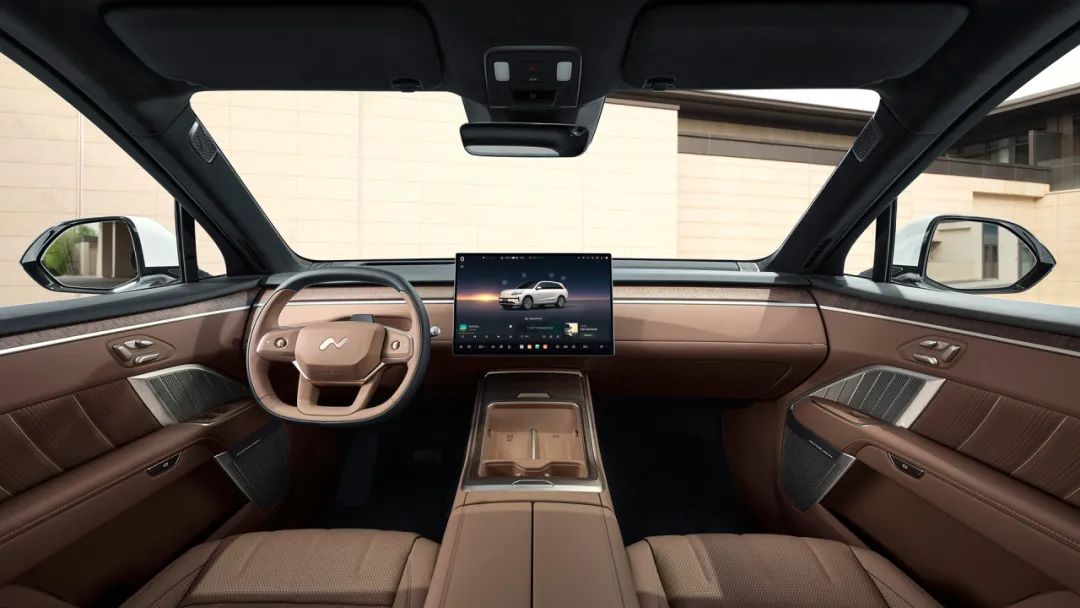
Image Source: Onvo
The six-seat layout is particularly popular—more comfortable than a seven-seater yet more practical than a five-seater, striking a balance between carrying people and cargo. For many families, this isn't just about choosing a car; it's about choosing a lifestyle.
Cultural inertia regarding status also plays a role. There is a clear preference for size. To many, big implies expensive, and expensive implies status. Taking the whole family out in a small car can feel inadequate; arriving at a gathering in a large vehicle seems to boost confidence. This mindset isn't unique to China, but it is particularly pronounced in the Chinese auto market.
Wang Fengying, former president of Great Wall Motor, once noted that a preference for buying big over small is a defining characteristic of Chinese consumers globally. Large vehicles are more than just transportation; they carry social signals. Picking up a client in a full-size SUV sends a very different message than arriving in a compact sedan.
Yet, the benefits come with very real practical headaches. Parking is the biggest pain point. Standard parking spots in China are typically 2.4 to 2.5 meters wide, while full-size SUVs often exceed 2 meters in width. Once parked, there's little room to open doors; drivers and passengers must squeeze out sideways.
Length is an issue too. Standard spots are 5.3 meters long, but the Li Auto L9 spans 5.218 meters and the AITO M9 stretches 5.23 meters. Parked squarely, the front or rear inevitably overhangs the lines, obstructing traffic.
Mechanical multi-level garages are practically no-go zones. Most have limits of 1.9 meters in width, 1.55 meters in height, and 2 tons in weight. Full-size SUVs routinely exceed 2 meters in width, 1.8 meters in height, and 2.5 tons in weight, failing on all three counts. Effectively, owners of large vehicles are barred from many underground parking lots in commercial centers and older residential complexes.
Driving burdens and safety risks follow. Large internal combustion vehicles over 5.2 meters long typically have wide turning radii. Navigating narrow streets in older districts or the spiral ramps of underground garages demands high skill; a momentary lapse can easily result in a collision.
Furthermore, the high center of gravity and increased body roll of large SUVs raise the risks of slipping on wet or snowy roads, fishtailing around corners, and losing stability during emergency maneuvers.
It is worth noting, however, that new-energy automakers are using technology to mitigate these issues. Some new-energy models can achieve a turning radius as tight as 4.65 meters—smaller than some A00-class city cars.
Operating and maintenance costs also warrant serious consideration. Weighing in at over 2.5 tons, even pure electric models consume more than 20 kWh per 100 kilometers. Hybrids running with a depleted battery often exceed 10 liters per 100 kilometers, making daily commuting expensive.
Take a pure electric SUV consuming 22 kWh per 100 kilometers. With home electricity at 0.5 yuan per kWh, the cost is roughly 0.11 yuan per kilometer. That doesn't sound like much, but it is double the 0.05 yuan per kilometer cost of running a smaller EV.
The fuel consumption of hybrids with a low battery is even harder to ignore. Consumption exceeding 10 liters per 100 kilometers means a 50-kilometer daily commute costs about 40 yuan in fuel—totaling over 1,000 yuan a month.
Tires and brake pads also wear out faster, and replacement costs are significantly higher. A single tire for a full-size SUV usually costs over 1,500 yuan, while a set of brake pads can run between 2,000 and 3,000 yuan. The long-term financial pressure is not negligible. These hidden costs are often overlooked at purchase but become apparent after a few years of ownership.
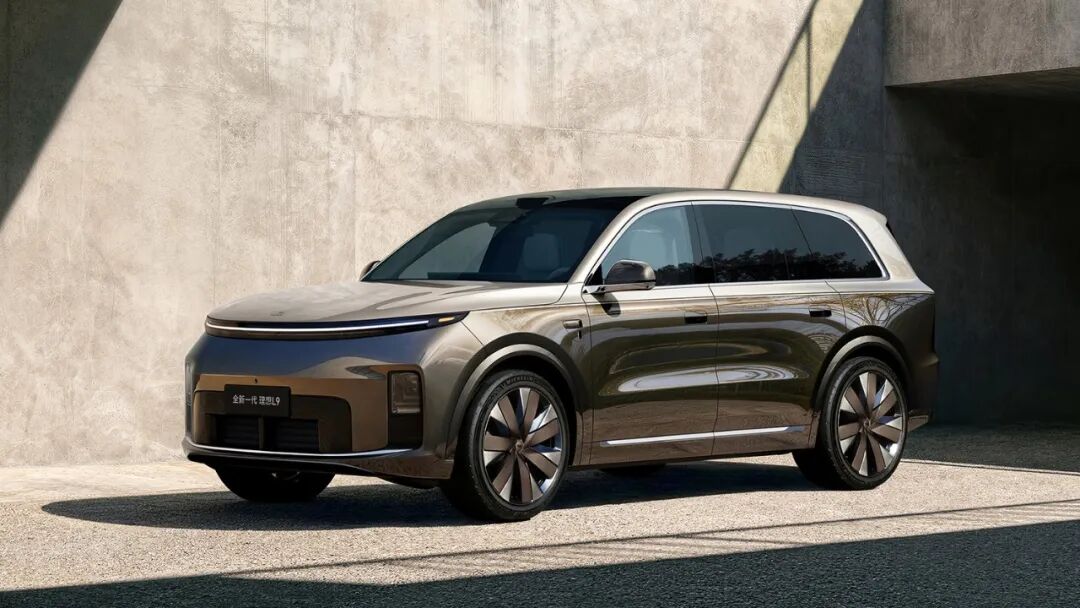
Image Source: Li Auto
A deeper issue is the zero-sum game over public resources. When a 5-meter vehicle cannot fit into a spot or blocks a lane, it infringes on the parking and passage rights of other drivers.
The labeling and attacks on "big car owners" on social media, while emotionally charged, reflect a genuine public grievance: you pursue personal comfort, but society bears the cost of congestion and parking scarcity.
Cao Guangping, a partner at Chedu Consulting, noted in an interview with Gasgoo that China has only recently entered an automotive society. The demand for large vehicles stems from a mix of user preference and the need to transport multiple generations. However, these products conflict with parking shortages and high energy consumption. This paradox both drives sales and, to a certain extent, caps them.
Cao added that as automakers flood a market with limited space, homogenization is inevitable. The only way out is innovation. This could mean maximizing interior space efficiency without increasing the vehicle's footprint—essentially reducing the volume of unnecessary internal components. It could also mean using automated parking to ease the burden of maneuvering, or adopting hybrid systems to improve fuel economy. Automakers that master these innovations and product strategies will be the ones to survive the competition.
Why Are Automakers Racing to Build Big?
To understand the surge in large vehicles, we must look at the underlying logic of the automakers. Profit is the most direct driver. "In China, the policy incentives for making large vehicles are the same, and it doesn't cost much more to build them, but the gross margin is much higher. In this cycle, we definitely prioritize large vehicles—large vehicles make money." William Li, founder of NIO, succinctly captured the core reason automakers are betting big.
Full-size SUVs are generally priced above 300,000 yuan, with high-end models reaching 500,000 to 600,000 yuan. The profit per vehicle far exceeds that of compact SUVs and sedans.
The industry consensus is clear: the profit from selling one full-size SUV can equal that of three or four small commuter cars. Furthermore, consumers are more accepting of price premiums for large vehicles, giving automakers greater pricing power.
The math is simple. Stretching a car from 4.8 meters to 5.2 meters adds cost mainly in steel, glass, and a bit more battery—marginal costs are low. Yet the price tag can easily rise. Consumers are willing to pay extra for "big," and that extra payment translates largely into pure profit.
From a financial perspective, this is an extremely rational choice. Against the backdrop of shrinking profit margins across the auto industry, large SUVs remain one of the few product categories capable of sustaining high gross margins.
Changes in family structure provide a genuine foundation for this demand. The sustained impact of the two- and three-child policies, combined with the rise of camping and road trips, have reshaped perceptions of interior space.
A typical trade-in scenario involves a young couple who previously drove a compact sedan. After a second child arrives, grandparents move in to help, and suddenly a five-seater isn't enough. A large six-seat SUV becomes a necessity.
Automakers are simply riding the tide, converting demand into product. Viewed this way, the big-car wave is not an artificial creation but a shift supported by real social foundations.
The pressure of market competition cannot be ignored either. The small and mid-size car segments have been fought to a standstill—price wars have decimated profits.
The large vehicle market is different. Buyers prioritize space, status, and cargo capacity over price sensitivity, and they are more tolerant of parking difficulties. Competitors constantly try to outdo each other: if you launch a 5-meter car, I launch a 5.1-meter one; if your wheelbase is 3 meters, mine is 3.1 meters. In this comparison game, being "small" implies stinginess and can lead to being dismissed by potential buyers.
It is a classic arms race dynamic. No automaker dares to fall behind on size, because when consumers compare spec sheets, dimensions are the most intuitive and easily perceived metric. When every competitor exceeds 5 meters, a 4.9-meter vehicle is automatically categorized by the market as "mid-size" or even "compact," losing its pricing power.
Elevating brand image is also a key consideration. As flagship models, full-size SUVs concentrate a brand's most advanced technology and design resources. A successful large vehicle can quickly elevate a brand's premium image, in turn driving sales of the rest of the lineup.
The success of the Li Auto L9 directly boosted sales of the L8 and L7, just as the AITO M9 provided a brand halo that lifted sales of the M7 and M5. This "flagship lifts the fleet" effect is a common phenomenon in the automotive industry.
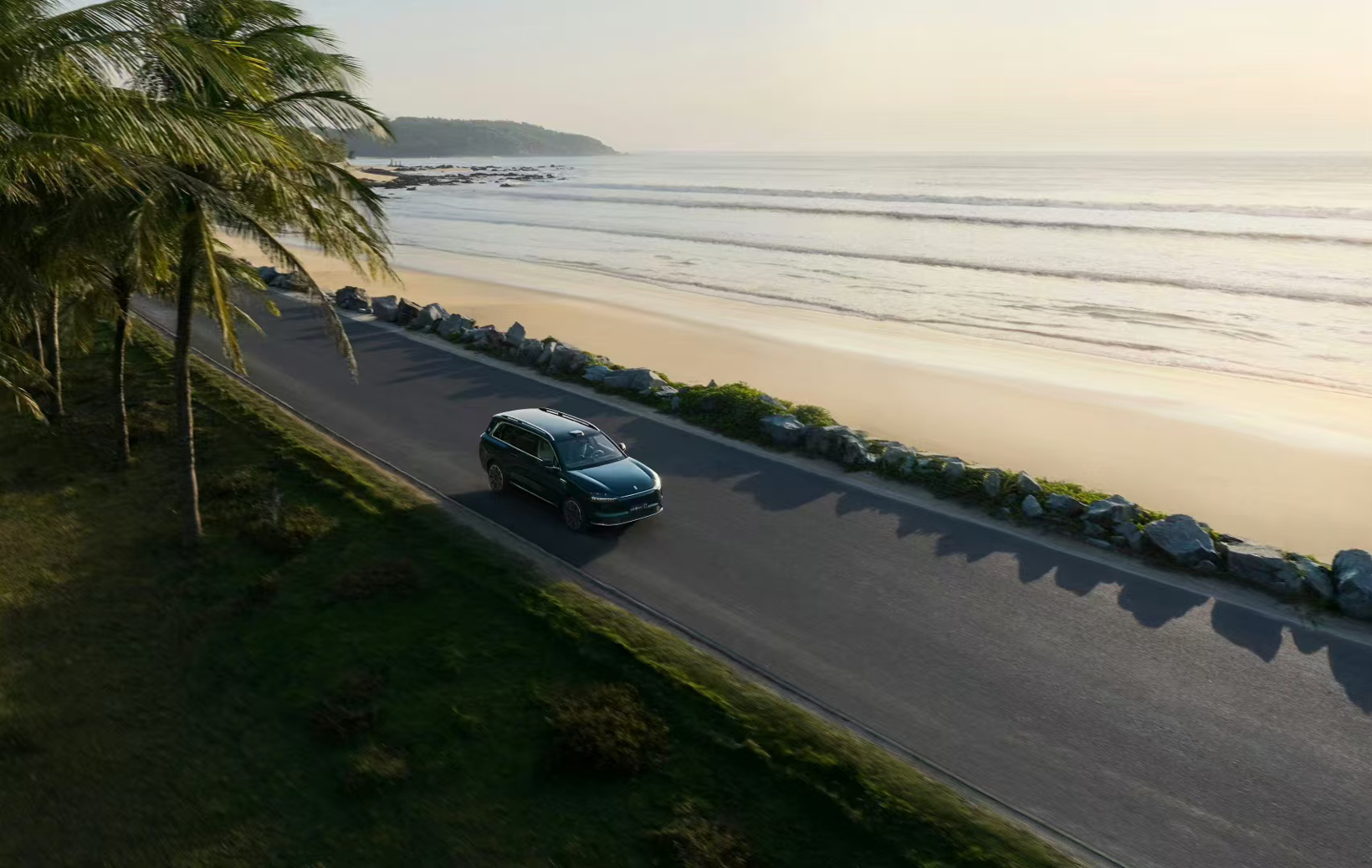
Image Source: AITO
Finally, new-energy technology has objectively removed the traditional burdens of large vehicles. In the era of internal combustion, large SUVs meant high fuel consumption, high prices, and heavy operating costs—putting them out of reach for ordinary families. But electric propulsion means they no longer "drink fuel like water," low-slung batteries improve handling stability, and intelligent features lower the barrier to driving them.
There is another technical reason often overlooked: to accommodate heavier battery packs, increasing vehicle size has become, to some extent, a "forced choice."
Battery packs on pure-electric platforms are typically 12 to 15 centimeters thick. Combined with the chassis structure and cabin floor, the overall vertical height of the vehicle inevitably increases. To prevent the interior from feeling cramped, lengthening the body and increasing the wheelbase have become almost inevitable trends. In other words, electrification itself is driving the growth in vehicle size.


