



Gasgoo Munich-Ten years ago, few could have foreseen the current landscape: China has evolved from a regional growth market for multinational automakers into a key global export base for finished vehicles and a manufacturing hub for electrification.
The turning point arrived around 2021. As the domestic new energy industry hit an inflection point and domestic brands rose rapidly, foreign automakers—lagging in their electrification transition—saw their "In China, For China" business model come under increasing pressure.
Second- and third-tier foreign brands were the first to adjust. Kia, Hyundai, and Ford moved early to revive idle capacity, using exports to absorb domestic overcapacity. As the cost advantages of China's new energy supply chain became increasingly pronounced, top-tier players like Volkswagen, Nissan, and Honda joined the fray. Today, most joint ventures have elevated overseas expansion to a core group strategy.
Data from the China Association of Automobile Manufacturers shows that domestic vehicle exports reached 4.059 million units in the first five months of 2026—a 63% surge year-on-year. Exports of passenger vehicles from joint ventures and luxury brands have accelerated significantly over the past two years, with the pace of outbound expansion quickening markedly.
From Clearing Inventory to Core Strategy
Cast your mind back to around 2016, the tail end of the golden age for internal combustion engines. For top joint venture brands like Volkswagen, Toyota, and Nissan, demand for popular models consistently outstripped supply. Paying premiums for models like the Toyota Highlander or Alphard was common.
Before that, the primary goal for nearly every multinational building plants in China was to tap into the local market's dividends. Capacity layouts, localized R&D, and parts supply chains were all designed with one primary logic: matching domestic consumer demand.
At the time, export operations were largely marginal. With the exception of a few companies like BMW that launched global export strategies for new models, most automakers exported older internal combustion models—mainly to clear excess domestic inventory and smooth factory utilization rates. Destinations were typically low-end markets in the Middle East, South America, and Southeast Asia.
These export operations contributed little to profitability and were not part of mid- to long-term global strategic planning; they served merely as a backstop for imbalances in domestic production and sales.
Between 2021 and 2022, the new energy industry hit an inflection point. Domestic brands rose rapidly, while foreign automakers—lagging in their electrification transition—faced mounting pressure and were forced to change. Going global became a strategic choice. By 2025, joint venture exports reached a structural turning point. Multinationals began upgrading their China-based export businesses from marginal activities to core group strategies.
From early movers like BMW and General Motors, to Tesla, Kia, Hyundai, and BMW again, and then to Nissan, Volkswagen, and Honda, the list includes nearly every major multinational in China. Electrified exports, in particular, have become a top priority in their strategic layouts.
The reason is straightforward: China boasts a highly complete new energy supply chain. From battery raw materials and core components for batteries, motors, and electronics to vehicle manufacturing, the advantage of a complete industrial cluster is something Europe, the U.S., Japan, and South Korea cannot ignore. After recalculating the returns of their global layouts, multinationals found an imperative they could not ignore. Reviving China's surplus capacity and relying on its supply chain to serve global markets is the optimal solution for all top brands.
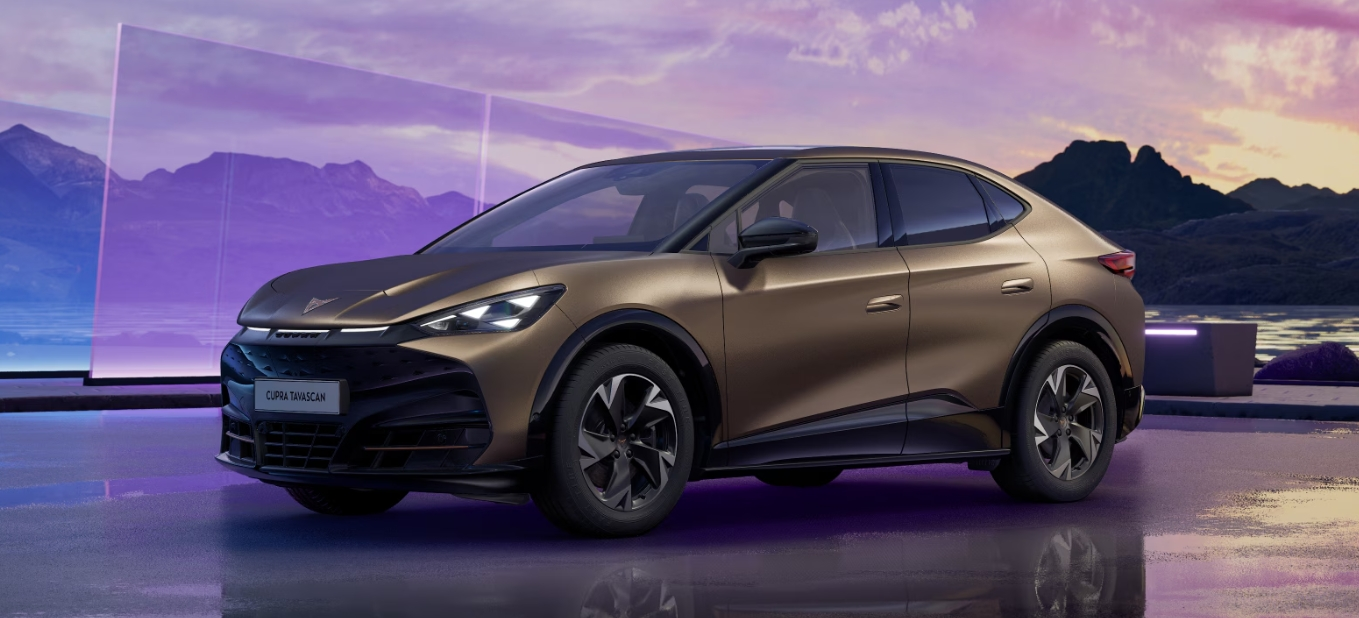
Cupra Tavascan: Image Source: Cupra
Naturally, strategies vary slightly by company. The CUPRA Tavascan pure electric SUV produced at Volkswagen's Anhui plant is built specifically for the European Union—100% made in China, 100% sold overseas. The model has successfully secured an exemption from anti-subsidy tariffs, becoming the first case of policy exemption in the China-EU new energy trade landscape.
Honda, meanwhile, is rebranding the Dongfeng Honda e:NS2 pure electric model as the Insight for export back to Japan in bulk. This marks the first time a Japanese automaker has shipped a new energy vehicle developed and manufactured in China back to its home market, signaling that Chinese new energy manufacturing quality has met or even exceeded domestic Japanese standards.
Nissan's export strategy is equally clear. A representative from Nissan China told Gasgoo that, according to Nissan's global long-term vision "Intelligent Mobility Lights Up Life" released in April, the Chinese market has been given a "dual role"—both a pillar of performance and a core engine driving global competitiveness. Nissan aims to build China into a global innovation and export base.
Nissan China is moving quickly to execute this. In 2025, Nissan Import & Export (Guangzhou) Co., Ltd. was established. In June of this year, the Primera pure electric sedan and Navara Pro plug-in hybrid pickup made simultaneous appearances at the Philippines Auto Show. Selected export models are developed using China's R&D system, mass-produced domestically, and launched globally. Nissan has already upgraded some of its Chinese bases into core supply hubs for regions like Southeast Asia and Latin America.

Image Source: Nissan China
Then there are Ford and Kia. They were the first foreign automakers in this round of transformation to benefit from exports, with export business accounting for a far higher share of their total sales than other brands.
Ford has seen its exports from China surge 265% over the past four years. In 2025, it exported over 180,000 vehicles from China to the world, with the domestically produced Lincoln Nautilus and Corsair successfully entering the North American market. Export business has become Ford China's most important profit source, generating over 4.4 billion yuan in profit in 2024. Ford CEO Jim Farley has also admitted that using China as an export base is "very profitable."
Yueda Kia has fully transformed its Yancheng plant into an export hub. By the end of 2025, cumulative exports exceeded 580,000 units, with products sold to 90 countries and regions. In 2025, it achieved revenue of 26.1 billion yuan and a net profit of 840 million yuan in China, successfully reversing years of losses.
Beyond that, BMW Brilliance's iX3 has consistently shipped back to Europe; SAIC GM continues to export multiple products to North America and Latin America; and Tesla's Shanghai plant shoulders nearly half of the brand's global production capacity.
The picture is clear: today, most mainstream foreign brands have finalized their global export strategies, and Chinese capacity is now embedded in the core global map of multinational automakers.
New Energy Vehicles Dominate Export Structures
The essence of foreign automakers' overseas push from China is no longer just about shipping vehicles abroad. Instead, it is a distinct iteration of the export structure dominated by new energy vehicles.
While internal combustion engine vehicles are still being shipped, most—aside from a few brands like Lincoln—are concentrated in affordable models. They supply price-sensitive markets in Africa, Southeast Asia, and Latin America, where profit margins are limited, continuous product planning is lacking, and strategic weight is low.
Multinationals are shifting their export focus from internal combustion to new energy for several reasons: global emission regulations are tightening, carbon tariff barriers are emerging, and the premium for fuel vehicles in mature markets is being squeezed. At the same time, their traditional fuel models face competition from Chinese domestic hybrid products in the mid-to-low-end market, compressing profits further.
To match the intensity of competition from Chinese firms while avoiding internal friction with their own fuel vehicles, new energy products have become a crucial direction for multinationals to rebuild global competitiveness. In this process, China is gradually becoming the core production base for multinational new energy exports.

Image Source: BMW China
Currently, the main new energy models exported by foreign firms are largely developed using domestic supply chains. The localization rate for core components like battery, motor, and electronic control systems, smart cockpits, and perception devices is high. Domestic suppliers like CATL, Momenta, and Gotion High-Tech have entered the core supply system for joint venture export models.
Multinationals are anchoring parts of their global new energy R&D and mass production functions in China because the country holds relative advantages in scaled manufacturing, industrial cluster support, technology iteration efficiency, and cost control.
A representative from Nissan China noted that the advantage of China's supply chain is systemic. From batteries, motors, and electronic controls to smart cockpits and autonomous driving chips, the efficiency and cost advantages brought by the industrial cluster are hard for overseas markets to replicate in the short term.
Building on this, Nissan is advancing a "GLOCAL" model—integrating Nissan's global technical standards and manufacturing quality with China's local R&D and supply chain advantages to accelerate the smart electric transition. The core logic of this model is: while adhering to global quality standards, let the Chinese team lead development to shorten the R&D cycle to the shortest possible time.
Nissan China's actions are merely a microcosm of what is happening among multinationals in China. After all, the overseas new energy industry chain started late and its layout is scattered, making it difficult to form equivalent comprehensive capabilities in the short term. Based on this, the current round of foreign exports is no longer limited to the single model of "vehicle export" but is gradually evolving toward the coordinated output of core components, manufacturing processes, quality control standards, and industrial supporting capabilities.

Image Source: Nissan China
Against this backdrop, the global new energy products being shipped by foreign firms generally fall into two tiers: mid-to-low-end models cover emerging incremental markets like Southeast Asia and Latin America, while high-end pure electrics target mature strongholds like Europe and the U.S.
For emerging markets, Nissan plans for the N7 to target Latin America and Southeast Asia, while the Frontier Pro covers Latin America, Southeast Asia, and the Middle East, with multiple new energy models like the NX8 following. It will also simultaneously build a comprehensive overseas after-sales service system to fully guarantee spare parts supply and customer experience.
Underpinning this strategy is a clear judgment: the core value of China as an export base lies in using efficient local R&D and supply chains to quickly launch competitive products, forming synergy with overseas local plants rather than internal friction.
Internally, Nissan summarizes this as a "diversified power strategy"—pure electric, plug-in hybrid, and internal combustion engines each have their own markets. The key is delivering the right technology to the right region at the right time.
On the European and American front, models like the SAIC Volkswagen ID.ERA 9X and Tesla Model 3/Y rely on the quality control and cost performance of Chinese manufacturing to compete with European local electric models in the high-end market of 300,000 yuan and above.
Meanwhile, several initiatives reflect the extension of China's auto industry from product export to systemic output. FAW-Volkswagen supplies HEV battery packs to plants in Europe and Brazil. A Chinese team is developing Renault's European affordable electric vehicles using China's supply chain system. BMW's China-based core electric component manufacturing system is also participating in global project allocations.
Chinese Technology Sets the Stage for Competition Between Foreign and Domestic Firms
Multinationals exporting Chinese new energy technology globally and Chinese brands going abroad have created a competitive trajectory that appears to share the same origin but actually results in a collision.
Both sides share the same supply chain ecosystem, similar R&D philosophies, and comparable smart technology foundations. This means the cost advantages Chinese automakers have accumulated in the new energy chain are gradually being "borrowed" by multinationals.
That is because the hardware gap between the two in overseas markets is narrowing rapidly. The same batteries, the same chips, the same autonomous driving solutions—foreign models can also acquire them at similar costs. As the scale of foreign new energy exports gradually expands, the gap in price and technology is likely to be compressed further. The path Chinese brands once took to expand globally through cost-performance will face greater pressure in the future.

Image Source: Nissan China
The logic of competition is shifting accordingly. The real barrier will turn to global operations—local plant construction, channel establishment, after-sales maintenance, cross-regional capacity allocation, and compliance with regulations in multiple countries. These capabilities are the key to avoiding the price war.
Moving up the value chain, software capability is carrying more weight. Batteries, chassis, and sensors can all be sourced globally; it is hard to make them exclusive. But autonomous driving algorithms, OTA upgrade systems, energy management strategies, and operating system ecosystems—these rely on massive data and long-term iteration to polish, and they are precisely the true source of brand premium.
Viewed on a longer timeline, the ability to coordinate global supply chains and manage risk cannot be ignored. Uncertainties like trade friction, tariff barriers, and raw material price fluctuations are increasing, making the risk of relying on a single region for supply ever greater. Capabilities such as multi-base capacity coordination, cross-region supply assurance, and commodity cost control are becoming key variables determining a company's resilience.
When it comes to specific regional markets, refined localized operations are the foundation for long-term survival. Consumer preferences, driving habits, and regulatory standards vary by country; simply selling domestic models abroad won't get you far. The automakers that truly succeed are those that can customize products, services, and ecosystems for different markets, genuinely integrating into the lives of local users.
But ultimately, all these capabilities share a common premise: the product itself must be competitive. In this regard, Chinese cars have accumulated some confidence. Auto analyst Sun Xiaohong told Gasgoo that the comprehensive competitive advantage of Chinese automobiles is irreplaceable, with strengths in technology, design, brand, and price.
For foreign enterprises, the strategy of "In China, For China, For the World" essentially leverages China's overall competitive advantages to amplify their brand influence. Their strength lies in marketing, service, and financial support systems formed over the long term.

Image Source: BYD
Sun believes that foreign firms participating in China's export business can effectively accelerate the global electrification process. The competition they form with Chinese brands is benign and conducive to improving the overseas ecosystem construction capabilities of Chinese brands.
However, in his view, turning this benign competition into growth momentum requires Chinese brands to confront their weaknesses first. The biggest shortcoming for Chinese brands currently lies in the formation and perfection of internationalization concepts and management systems.
Specifically, the absence of overseas service systems and financial support is particularly pronounced, with the root cause being a shortage of international talent. Building a long-term overseas service network and establishing local user trust in the brand requires long-term, continuous investment—it is a systematic project.
Shortcomings certainly exist, but the window of opportunity for Chinese brands has not closed. Because the global new energy market is still expanding rapidly.
BloombergNEF estimates that global sales of new energy passenger vehicles will exceed 23 million in 2026, accounting for about 30% of new car sales, whereas five years ago it was less than 10%. It predicts that by 2040, the share of electric vehicles in global passenger car sales will rise to 66%.
In this expanding incremental market, foreign and Chinese brands are betting on electrified exports in tandem—it is not a zero-sum game. The market is expanding, and the direct competition between the two sides may not be as intense as imagined. Instead, they can learn from each other and push one another in competition, constituting the driving force for the overall rise of China's auto industry.
For Chinese automakers, the first-mover advantage in hardware is being gradually diluted by the joint venture strategy of "sharing the supply chain." The true barrier lies in the long-term accumulation of systemic capabilities. This reshaping of the competitive landscape, triggered by technological homology, has only just begun.
Whether joint ventures or domestic brands, they are collectively underscoring one reality: the global auto industry's technological high ground and manufacturing hub are shifting irreversibly toward China.


