



Gasgoo Munich- UBTECH has turned in a substantial report card for 2025: annual revenue reached 2.01 billion yuan, up 53.3% year-on-year; gross margin climbed to 37.7%, a significant 9-percentage-point increase from 28.7% in 2024; and the net loss for the year narrowed by 31.9% to 790 million yuan. Excluding share-based payments, the adjusted net loss stood at 691 million yuan, a 24.5% reduction from the previous year.
Notably, revenue from UBTECH's full-size embodied AI humanoid robot products and solutions skyrocketed from 35.6 million yuan in 2024 to 821 million yuan — a more than 22-fold jump — making it the company's largest revenue stream.
Behind these figures lies a profound industry signal: humanoid robots are moving out of laboratories in batches and stepping into the core of industrial manufacturing.
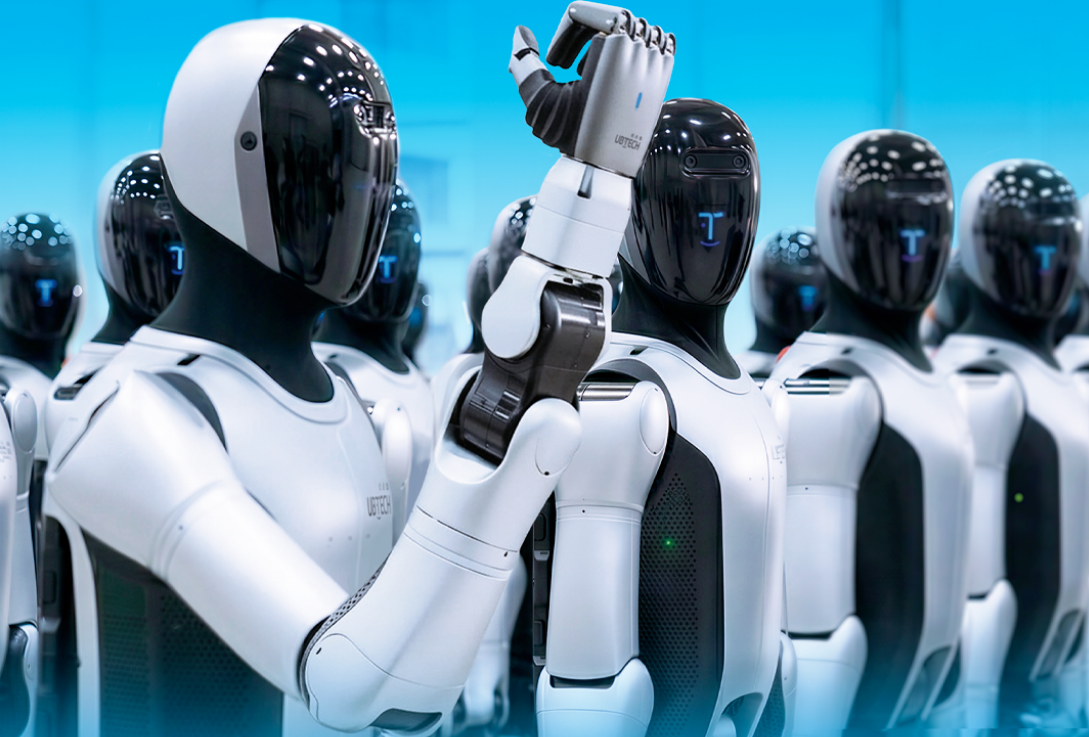
Image Source: UBTECH
Delivering 1,000 Units: Closing the Commercial Loop
In 2025, UBTECH's revenue mix shifted significantly. Full-size embodied AI humanoid robots and solutions generated 821 million yuan, surging 2,203.7% year-on-year. Their share of total revenue jumped from 2.7% in 2024 to 41.1%, becoming the company's primary income source.
This data marks a milestone: the Walker S series has transitioned from technical verification to large-scale delivery.
In 2025, cumulative sales of UBTECH's full-size embodied AI humanoid robots reached 1,079 units — a staggering 35,866.7% year-on-year surge.
Designed as embodied AI carriers to address real-world industrial needs, the Walker S series includes three models: Walker S, Walker S1, and Walker S2. The third-generation Walker S2 began mass delivery at the end of 2025 and is now deployed across multiple scenarios.
Specifically in industrial manufacturing—covering automotive, 3C electronics, and new energy batteries—the Walker S series focuses on three core tasks: material handling, sorting, and quality inspection. It tackles critical pain points like high labor turnover, difficult management, and repetitive work.
UBTECH notes that with the support of the Thinker embodied AI foundation model—a "human-like brain"—the Walker S2 is increasingly capable of replacing humans in specific roles.
In handling scenarios, the Walker S2 can autonomously decide on palletizing tasks, manage bins of various heights via full-body control, and navigate narrow spaces. In sorting, it grasps stacked materials in constrained environments and handles flexible objects. For inspection, it offers visual and operational capabilities, covering tasks like SPS material kit verification, charging gun connection checks, and air conditioner leak detection—all while interfacing with manufacturing systems.
Additionally, UBTECH is actively promoting embodied AI humanoid robots in universities as teaching and research platforms. In logistics and warehousing, it uses an integrated model of bipedal humanoids and wheeled dual-arm robots to perform sorting and handling tasks in real-world settings.
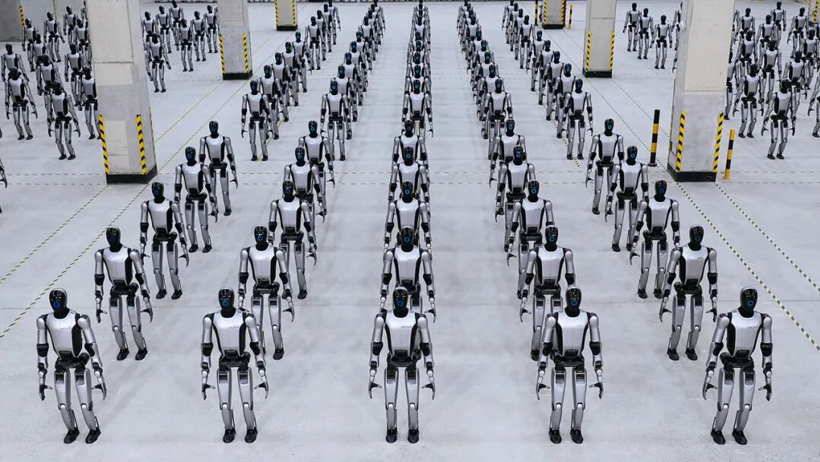
Image Source: UBTECH
By the end of 2025, the Walker S series reportedly achieved an annual production capacity exceeding 6,000 units.
Building on this, UBTECH has launched R&D for a new generation of full-size humanoids targeting the broader commercial and education markets, leveraging mature technologies from the Walker S series.
During the same period, logistics smart robots and solutions contributed 629 million yuan, or 31.4% of revenue. Consumer smart hardware revenue rose 6.4% to 499 million yuan, accounting for 24.9%. Non-embodied AI humanoid robot products and solutions generated 48 million yuan (2.4%), with sales of 12,759 units.
However, while revenue from UBTECH's education robotics business has contracted, its strategic value remains significant. The Yanshee robot is transitioning from a "programming tool" to an "embodied AI research base," laying the groundwork for a long-term talent ecosystem.
In other words, the focus on education may seem like a "slow business," but it is effectively cultivating a future developer ecosystem for the entire industry.
Driven by the surge in embodied AI humanoid robot shipments, UBTECH's profitability improved significantly in 2025.
Overall gross margin jumped 9 percentage points to 37.7%, up from 28.7%. This leap stems largely from a shift in revenue mix: high-margin full-size embodied AI humanoids became the top revenue source.
This reveals a straightforward business logic: when UBTECH's core products shifted from "selling hardware" to "selling high-value technical solutions," a qualitative leap in profitability naturally followed.
Notably, the rapid iteration and deployment of UBTECH's embodied AI humanoids are underpinned by its full-stack technology.
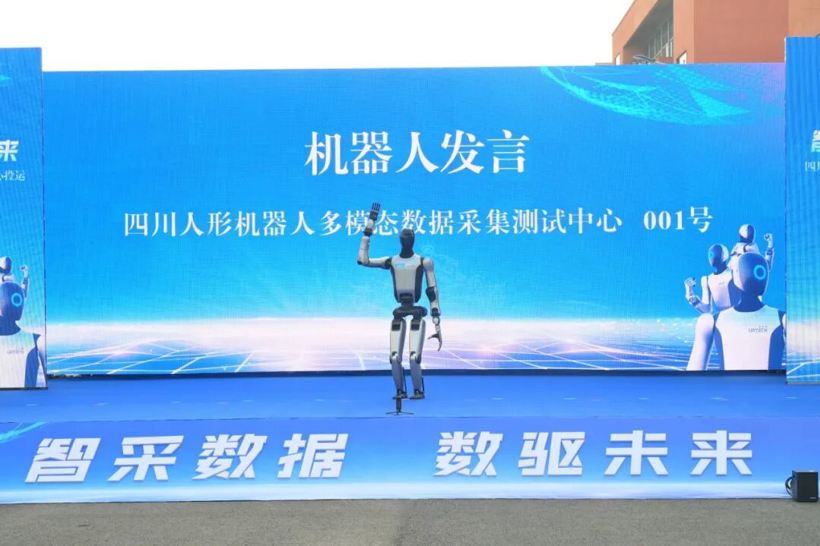
Image Source: UBTECH
UBTECH has long focused on developing key technology clusters, including the human-like brain, cerebellum, and high-performance limbs. This covers high-performance servo drivers, large models, semantic VSLAM, learning-based motion control, visual perception, and multimodal interaction. By combining BrainNet 2.0 with Co-Agent technology, it has built an industrial-grade AI dual loop for embodied AI, enabling the spiral evolution of individual autonomy and group collaboration.
In 2025 alone, UBTECH released fourth- and fifth-generation dexterous hands. It explored domain control schemes merging the "big and small brains" of humanoids, upgraded BrainNet 2.0, and self-developed the Thinker-WM world model for industrial use, alongside head-mounted pure binocular vision technology.
Furthermore, UBTECH has built and operated humanoid robot data collection and testing centers in Wuxi, Sichuan, and other regions. It established a one-stop embodied AI data platform, creating a "data flywheel"—a virtuous cycle where more data leads to better models, wider applications, and even more data—accelerating deployment in industrial and commercial settings.
As of December 31, 2025, UBTECH held 2,985 authorized patents, up 11.4% from the end of 2024. Of these, 508 were authorized overseas.
Multiple Strategies to Anchor the Next Decade
Looking ahead, UBTECH's strategic path is clear and firm: centering on full-size humanoids to build a "platform + ecosystem" landscape, pushing technology from "single-point breakthroughs" to "comprehensive penetration."
For embodied AI humanoids, UBTECH will continue investing in the R&D and mass production of new Walker S industrial models. It aims to improve lightweight design and integration using new materials and processes, while deeply iterating on the generalization and stability of autonomous operation algorithms.
At the same time, UBTECH plans to release a new generation of commercial and educational embodied AI humanoids that are smarter, more approachable, and more open. These are targeted at commercial scenarios like guided reception, corporate branding, and interactive events, as well as educational settings such as university research, system integration, and AI teaching assistance.
The deeper significance of this layout lies in the roles each sector plays: industrial scenarios are the "training ground" for refining technology, while commercial and educational sectors act as "magnifiers" for scale. Only by covering all scenarios can humanoid robots truly move from "niche" to "mainstream."
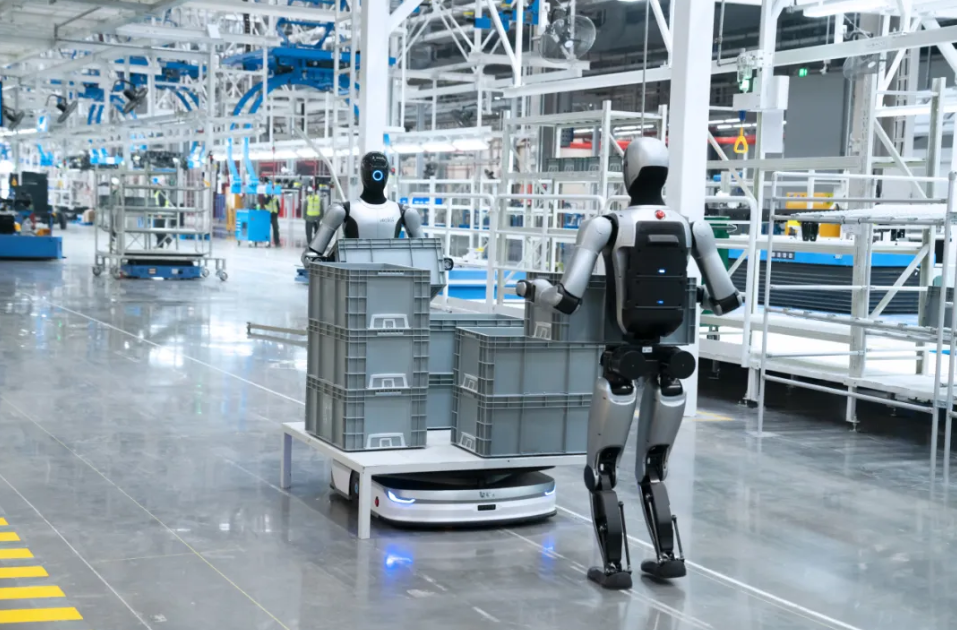
Image Source: UBTECH
Yet, moving from industry to commerce and education isn't just simple product replication—it requires the horizontal migration capability of a technology platform.
To this end, UBTECH will continue iterating its full-stack technology, tackling key embodied AI challenges like integrated joints, anthropomorphic five-finger dexterous hands, the BrainNet architecture, Co-Agent, foundation models, world models, learning-based motion control, spatial intelligence, and the ROSA system. It will also push to platform common technologies.
Relying on its network of multimodal data centers, UBTECH is focusing on high-potential industrial scenarios like handling, sorting, and loading, as well as typical commercial settings. It aims to accumulate diverse, high-quality training data for industrial use, projecting the collection of over 10 million industry-specific data points annually.
Building on real-machine teleoperation data collection, UBTECH is also laying out "body-less" data schemes. By using world models to generate high-quality simulation data, it plans to expand embodied AI data sources through multiple routes.
Beyond deep in-house R&D, UBTECH plans to build a robot developer community and an open ecosystem platform. This aims to attract more partners to join the ecosystem construction, accelerating the "penetration" of embodied AI humanoids from single to multiple scenarios.
Conclusion
The 2025 financial report is both a realization of UBTECH's technical accumulation over the past decade and a vivid footnote to the humanoid robot industry's shift from "technology-driven" to "demand-driven."
As 1,079 Walker S units begin moving bins, sorting materials, and inspecting quality on automotive production lines, a profound industrial transformation has begun. Humanoid robots are no longer a distant "future fantasy," but a tangible new quality productive force.
But for UBTECH, this means the real test is just beginning. Scaling from 1,000 to 10,000 units, moving from single scenarios to full coverage, and expanding from industry to commerce, education, and even the home—every future leap will require a synchronized upgrade in technology, supply chain, and ecosystem capabilities.


