



Gasgoo Munich- By 2026, China's luxury car market is fracturing. Tier-1 brands are trading price for volume, domestic startups are attacking from below, and the Tier-2 players caught in the middle face a dilemma: lag in electrification and lose market share, or accelerate and risk running out of product reserves and brand equity.
A 17% year-on-year drop in first-quarter sales for Volvo's Greater China region captures this struggle perfectly. Recently, the Nordic brand—faithful to its "safety" creed—unveiled two pure-electric flagships, the EX90 and ES90, at the Greater Bay Area Auto Show, hoping to launch a fresh offensive in the high-end EV sector. Yet with market reshuffling accelerating, a price war raging, and the window for electrification narrowing, whether these new models can hold their ground in such a fierce contest remains to be seen.
Tier-2 Luxury Brands Are Losing Their Final "Safe Zone"
Final data from the China Passenger Car Association (CPCA) shows that in April 2026, the retail penetration rate of new-energy passenger vehicles in China topped 60% for the first time, reaching 61.4%. Domestic brands led the charge with an 80.1% penetration rate.
Foreign luxury brands hold an awkward position in this wave. CPCA data indicates luxury car retail sales hit 140,000 units in April, down 16% year-on-year and 33% month-on-month, with a new-energy penetration rate of just 26.1%—far below the market average. As the industry shifts from combustion to electric, foreign luxury players are collectively being forced to reassess their pricing power.
Viewed through the lens of traditional luxury as a whole, Volvo's current predicament is not just its own problem—it is a symptom of a profound adjustment sweeping the entire foreign luxury camp.
In 2025, Mercedes-Benz delivered 575,000 vehicles in China, down 19% from the previous year; BMW delivered 625,500, a decline of 12.5%; and Audi delivered 617,500, down roughly 5%. Together, the three surrendered about 260,000 units of market share, pushing overall sales back to levels last seen in 2017–2018. The slide continued into the first quarter of 2026: Mercedes sold 111,600 units in China, down 27%; BMW delivered 144,000, down 10%; and Audi delivered 127,100, down 12%.
As volumes slipped, those Tier-1 brands banking on discounts to defend share pushed prices even lower. The entry-level Mercedes GLB was adjusted by dealers to 144,900 yuan; the base BMW i3 briefly dipped below 190,000 yuan; and select Audi A6L models saw discounts exceeding 150,000 yuan. As the "BBA" (Mercedes, BMW, Audi) actively recalibrate their pricing strategies, the competitive space for Tier-2 luxury brands is being squeezed further.

Image Source: Volvo Cars
Market performance shows brands like Cadillac, Volvo, and Jaguar Land Rover facing multiple pressures: transaction prices increasingly overlap with the BBA, shrinking brand premiums; a cadence for EV product launches that lags behind leading startups; and the struggle to balance gross margins against market share during price adjustments.
At the retail level, domestic models from Jaguar Land Rover and Infiniti are seeing steep discounts. Even Lexus, which long commanded premiums over sticker price, has seen the entry price for its flagship ES model slide to around 200,000 yuan ahead of a generational refresh. Industry observers note that first-quarter 2026 sales data reflect a stark reality: "Survival space for Tier-2 luxury brands in the Chinese market is narrowing rapidly."
Analyzing the cause, Li Yanwei, an expert committee member at the China Automobile Dealers Association, points to uneconomical R&D investment. "Lagging electrification and falling behind in intelligence are the results of smaller-volume automakers being unable to bear high R&D costs," he says.
Facing this collective survival challenge, Tier-2 luxury brands are adopting different strategies: Volvo is betting on its SMA super-hybrid architecture, Lexus is pushing localization, Jaguar Land Rover is leveraging Chery's electric platform, and Cadillac is accelerating its electrification.
Industry consensus holds that relying solely on price cuts or launching simple electric models won't solve the root problem. Only by comprehensively reconstructing product and organizational systems and deeply integrating into China's electric and intelligent ecosystem can they hope to survive the shakeout.
All Three Tech Lines Bet, Then What?
Amid this encirclement, Volvo has chosen the path of heaviest technological investment and resource consumption: maintaining three separate technical architecture lines simultaneously.
Volvo's operations in China are strategically supporting three independent technology platforms: the SPA platform underpins the internal combustion and plug-in hybrid base; the SMA super-hybrid architecture uses the XC70 to lift the share of new-energy sales; and the SPA2 pure-electric platform uses the EX90 and ES90 to stake a claim in the high-end flagship segment. At the 2026 Beijing Auto Show, Volvo displayed eight models covering "oil, electric, and hybrid" lines, with prices stretching from the S60's 159,900 yuan to the EM90's 598,000 yuan.
In May 2025, Volvo officially launched the SMA super-hybrid architecture and unveiled the XC70, the first model built on it. This mid-to-large plug-in hybrid SUV boasts a CLTC pure-electric range of up to 212 kilometers and a combined range exceeding 1,200 kilometers. It is powered by a 1.5T dedicated hybrid engine and a three-motor plug-in system, delivering a combined output of 340 kW.
Since its launch in September 2025, the XC70 has accumulated sales of over 20,000 units in six months, with monthly sales hitting 5,354 units in November. Notably, more than 90% of users chose the all-wheel-drive version priced above 300,000 yuan, suggesting Volvo still holds appeal in terms of luxury premium.
As the core carrier of Volvo's pure-electric strategy, the SPA2 native electric architecture features a full 800V high-voltage platform with a maximum charging power of 350 kW—charging from 10% to 80% takes just 20 minutes. It also introduces a centralized electronic/electrical architecture, emphasizing in-house third-generation electric drive systems, an all-aluminum chassis, and intelligent dual-chamber air suspension. The goal is to differentiate through solid driving dynamics rather than simply stacking specifications.

Image Source: Volvo Cars
SPA2 is Volvo's native luxury pure-electric architecture built for the electric age. On April 15, 2026, the first pair of pure-electric flagships based on this architecture—the EX90 and ES90—made their official debut. On May 29, 2026, the EX90 and ES90 officially went on market, marking the entry of the SPA2 platform into mass production.
It simultaneously introduces a centralized electronic/electrical architecture supporting over-the-air (OTA) iterations throughout the vehicle's lifecycle. Body torsional stiffness has increased by 50–60% compared to SPA1, and a steel-aluminum mix with a pure-electric cage structure further reinforces Volvo's signature safety performance.
Yet the flip side of such high-intensity investment is mounting financial pressure. In 2025, Volvo's global net loss reached 2.968 billion Swedish kronor—the first annual loss in a decade. Global revenue was 357.3 billion kronor, down 11%, while operating profit was 300 million kronor, a 99% drop from 2024. In the same year, Volvo sold 149,500 vehicles in China, a slight 4% decline, but revenue in the region fell 23% to 49.3 billion kronor, making it the market with the steepest decline globally. This contrast—"sales slightly down, revenue sharply down"—highlights how much the Chinese market environment is squeezing luxury brand profits. Volvo's situation is not unique; Tier-2 luxury brands universally face the dilemma of "cutting prices to keep volume" versus "holding price and losing volume."
In 2025, Cadillac sold approximately 100,000 units in China, essentially half of its peak. Jaguar Land Rover moved just 26,500 units, down over 20%. Lincoln sold around 49,000, down 13.6%. Infiniti moved only 1,406 units all year, nearing market exit.
On the revenue side, while most brands do not disclose China-specific figures, parent company reports from General Motors and Ford both mention significant profit declines in China. The entire Tier-2 luxury camp has fallen into the predicament of "declining volume and falling prices."
In the first quarter of 2026, Volvo's global sales were 153,300 units, down 11%; sales in the Greater China region were 28,300 units, down 17%. Despite overall pressure, sales of electrified models in Greater China reached 7,604 units, up 116% year-on-year, with plug-in hybrid deliveries jumping 146%. The signal between the rise and fall is clear: in China, Volvo's internal combustion base is shrinking while new energy is climbing, but the latter's absolute scale is not yet large enough to fully fill the gap left by the former.

Image Source: Volvo Cars
On the brand level, grounded in "safety," Volvo has introduced a new expression of "intellectual superiority." By selecting value-driven public figures like diver Guo Jingjing and legal scholar Luo Xiang as brand friends, it aims to extend "safety" from physical passive protection to psychological and value-based identification.
Industry analysis suggests Volvo's dilemma is a typical portrait of Tier-2 luxury brands: lacking the deep brand equity of the BBA, yet unable to replicate the agility of new startups, they have become the middle layer squeezed from both sides.
In 2025, sales for Mercedes, BMW, and Audi all declined in China, and the drops widened further in the first quarter of 2026. Universally facing loosening price structures and electric models failing to take the baton in time—if the transition pressure is this great for the BBA, it is even more acute for Tier-2 brands.
Against this backdrop, how will the luxury market landscape evolve over the next two years? Li Yanwei offers this judgment: "Whether the BBA can stabilize depends on the EV products they launch—reasonable pricing and strong product strength are needed to break out first. For Tier-2 luxury brands, having a parent company with the strength to support them helps, such as Toyota for Lexus or the Volkswagen Group for Porsche." For Volvo, finding a breakthrough in this contest is an unanswered question.
In May 2026, Volvo completed a management adjustment for its Greater China president and CEO, with Duan Jianjun officially taking over. From a comprehensive bet on technical architecture to a reshuffle of core management, this Nordic luxury brand is undergoing a systemic reconstruction from the inside out. So, what changes can the new leader, who spent 13 years deep in the Mercedes system, bring to Volvo?
Volvo Leadership Change: How Much 13 Years of Mercedes Experience Helps?
On May 11, 2026, following Yuan Xiaolin's 16-year tenure in China, Duan Jianjun officially succeeded him as President and CEO of Volvo Greater China, taking full charge of the end-to-end value chain from R&D to sales, and joining the group's global core management team.
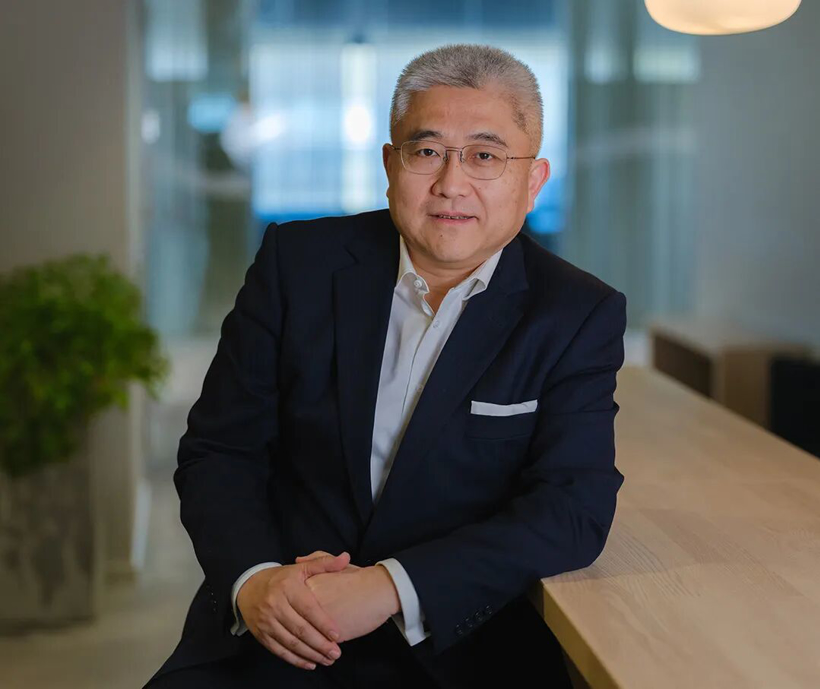
Image Source: Volvo Cars
Duan Jianjun brings over 30 years of automotive industry experience. His career began at Volvo, where he worked as a maintenance technician in after-sales service; his return is viewed by the industry as a "homecoming." He subsequently held senior management roles within the BMW and Mercedes-Benz systems.
Duan's most notable tenure was his 13 years at Mercedes. He joined Beijing Mercedes-Benz Sales Service Co. in 2013 and became its first Chinese president and CEO in 2023. During his time there, he helped make China Mercedes' largest single market globally, achieving the "Double 5 Million" milestone. He spearheaded 14 localized models, established the long-wheelbase sedan family as a segment benchmark, and built long-term stable relationships with dealer networks while gaining experience in navigating market fluctuations.
Public data shows Mercedes' sales in China entered an adjustment period starting in 2024—falling 6.7% to 714,000 units that year, and dropping another 19.3% to 575,000 units in 2025. In 2025, Mercedes became the brand with the steepest decline among the BBA trio.
Financially, Mercedes China's 2025 revenue fell to 16.52 billion yuan, with the year-on-year decline widening to 28.6%. Responding to the 2025 performance, Duan said the keyword for the year was "trade-offs," noting that Mercedes adjusted its targets eight times that year.
Duan's move to Volvo involves a significant shift in authority. At Mercedes, he led the sales and service division, focusing on marketing and channel management. At Volvo, he has been given full authority to manage the end-to-end business in Greater China, responsible for the entire industrial and commercial operations of the value chain, covering R&D, production, supply chain, and sales.
This elevation in authority means he will no longer merely execute localized marketing plans based on headquarters' instructions; he now has the capacity to intervene across the entire chain, from product definition and R&D to production.

Image Source: Volvo Cars
As analysis points out, Duan's 13 years at Mercedes saw him through the complete cycle of luxury brands in China: from high-speed growth to stock-market competition, and from brand-energy-driven to product-and-technology-driven. His experience in balancing brand tone with sales volume and managing a massive dealer network during a market downturn is exactly the capability Volvo needs right now.
In this appointment, Volvo has given Duan dual seats on the group's global core management and global sales management, reporting directly to the China board—a sign of the strategic repositioning of the China business.
The upgrade in responsibilities also means he must face a series of immediate challenges: the internal combustion base is shrinking rapidly while new energy has not yet fully taken the baton; first-quarter Greater China sales fell 17% in 2026; the price war continues to squeeze profits, with 2025 revenue in China down 23%; and "safety," the core brand asset, needs to be retold for the electric and intelligent age.
These are not challenges unique to Volvo, but they are the "exam paper" he must answer first.
Duan's dual mission is relatively clear: on one hand, he needs to stabilize Volvo's pricing system and dealer network health in a market environment of sustained price wars and pressured brand premiums; on the other, he needs to push the electrification transition from "quantitative change" to "qualitative change," scaling the momentum built by the XC70 series into a larger market penetration. His experience with "trade-offs" at Mercedes may give him a more mature understanding of transition rhythm and resource allocation.
Conclusion:
Tier-1 brands trading price for volume, Tier-2 brands attacked on both sides, and a narrowing window for electrification—this is the reality of China's luxury car market in 2026. For Volvo and similarly positioned Tier-2 luxury brands, adjustment is not easy: they must hold the line on their internal combustion base, accelerate electrification, and preserve brand premiums amidst a price war.
Duan Jianjun's appointment introduces a variable for Volvo, but solving this puzzle requires more than just a manager who understands the Chinese market—it demands a systemic answer from the entire organization regarding transition rhythm, resource allocation, and brand reshaping. What Duan needs to answer for Volvo is not just "how to sell more cars," but "in the Chinese market, as a Tier-2 luxury brand, why should Volvo still be chosen?"
This is his personal exam paper, and it is also the answer the entire traditional luxury camp is waiting for.


