



The competitive landscape of China's new energy vehicle industry is undergoing a fundamental shift. The first half—defined by electrification adoption and range—is drawing to a close. In its place comes the second half: a fierce battle marked by deep intelligence, user experience innovation, brand value reshaping, and full ecosystem integration.
During this transition, product planning and strategic layout are no longer just reflections of market strategy. They are a collective declaration of how each automaker envisions the industry's endgame—based on a calculation of their own resource endowments and core competencies.
As 2026 begins, numerous brands have started unveiling their product roadmaps. VOYAH, too, is striking a confident posture. As the vanguard of Dongfeng Group's push into high-end intelligent mobility, VOYAH recently announced a "Three Kings, One Bomb" product matrix. The plan calls for four new models in 2026: the VOYAH Titan Ultra, the VOYAH Titan X8, the VOYAH FE (internal code), and a new MPV codenamed "Everest."
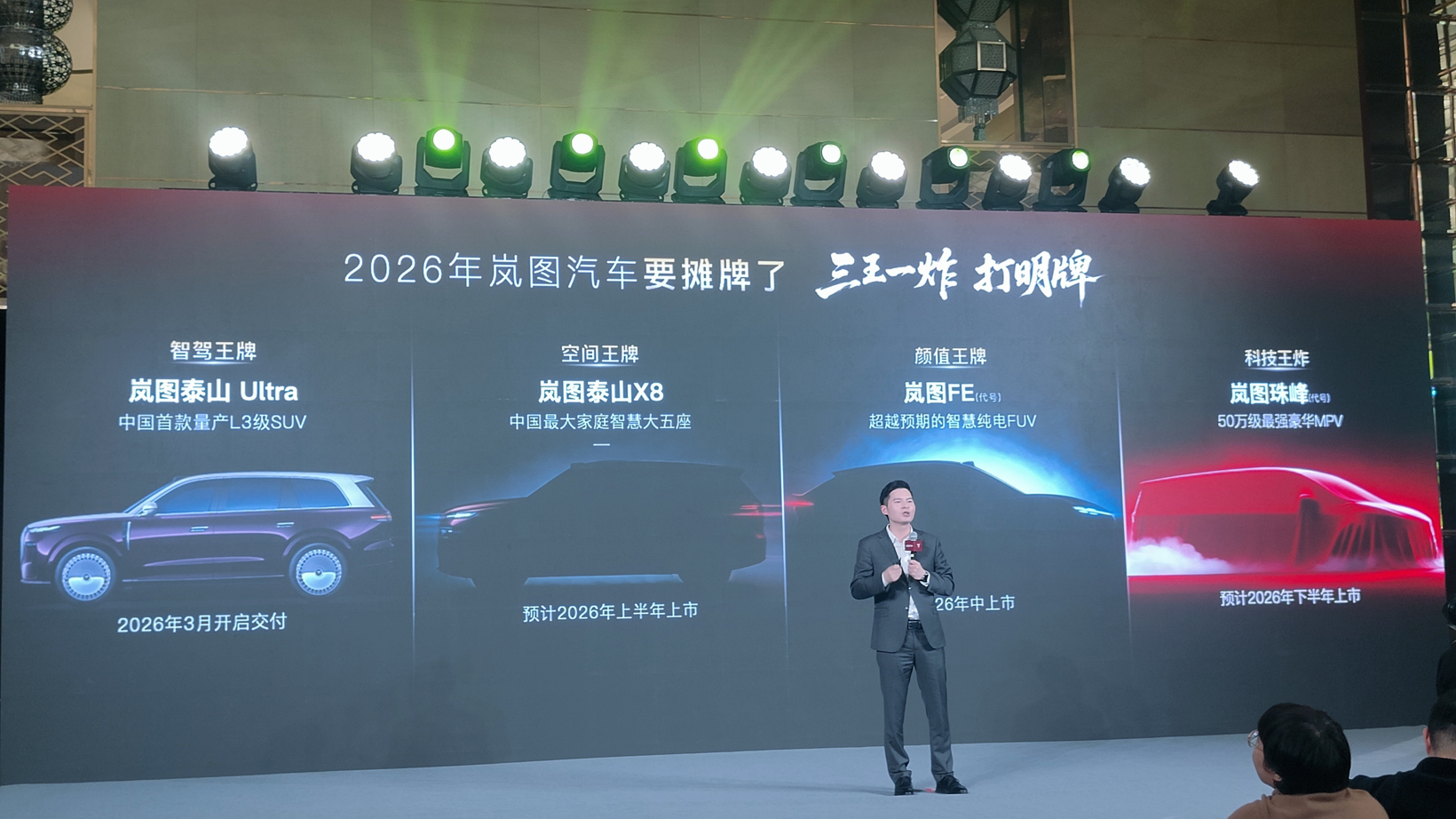
Image source: Gasgoo Auto
Among these, the VOYAH Titan Ultra will kick off deliveries in March, which officials describe as China's first mass-produced L3 SUV. The Titan X8 is expected to launch in the first half, while the FE—its internal code—will likely hit the market mid-year. The Everest MPV, targeting the 500,000-yuan segment, is slated for release in the second half.
This intense product offensive signals VOYAH's intent to launch a strategic offensive on the high-end market this year. The question worth digging into is this: With the Dreamer MPV having successfully cracked the market and built a solid reputation, why is VOYAH building another high-end MPV codenamed Everest?
VOYAH's Product Layout and Market Positioning
To understand VOYAH's aggressive 2026 roadmap, one must first examine its actual performance composition and the competitive pressure it faces. Its performance profile shows flashes of brilliance, yet lacks a comprehensive advantage; it has achieved breakthroughs, but its foundation remains to be consolidated.
In terms of product lineup, VOYAH has initially built a matrix covering the mainstream high-end EV market through the launch of the Dreamer, FREE, Courage, Passion series, and Titan models. Among them, the new VOYAH FREE and the VOYAH Dreamer are currently the absolute market heavyweights.
As the brand's first luxury electric MPV, the VOYAH Dreamer has carved out a niche in a market dominated by traditional fuel heavyweights like the Buick GL8 and Toyota Sienna, as well as electric newcomers like the Denza D9 and Zeekr 009. It achieved this through a differentiated "New Chinese" luxury design language, a powertrain balancing pure electric and range-extended options, and solid execution of the core MPV attributes: space and comfort.
The Dreamer's relative success has provided VOYAH with crucial sales support, cash flow, and perhaps more importantly, market confidence. It proved that the VOYAH team is capable of precise product definition in specific high-end segments and winning user recognition.
However, when zooming out to the entire high-end new energy market spanning the 300,000 to 500,000 yuan bracket, the pressure on VOYAH remains significant. The competitive ecosystem is highly complex and multidimensional.
On one front, there is a head-on collision with top-tier "new forces" like NIO, XPENG, and Li Auto. These rivals have established distinct intelligent labels in the consumer mind, alongside unique advantages in user community operations, direct sales systems, and software iteration speeds. On another front comes the real pressure from traditional luxury giants accelerating their electrification. Although the "German Big Three" were previously criticized for slow moves, their foundation remains solid in brand appeal, chassis tuning, and global supply chains. Their future electric products still possess a strong baseline. Furthermore, high-end electric brands incubated by other traditional automakers are also eyeing the market, each with their own characteristics.
Against this backdrop, VOYAH's shortcomings are likely to be magnified. First, brand awareness has not fully matched its high-end positioning backed by a state-owned automaker; the shaping of its brand story and emotional connection needs strengthening. Second, despite continuous investment in smart cockpits and driver assistance, it has yet to form an intelligent technology label with absolute recognition or buzz. Third, the product lines have not yet formed a strong synergistic effect or a clear ladder of user perception, posing a risk of scattered internal resources.
Therefore, VOYAH's product explosion in 2026 is by no means blind expansion, but a saturation attack born of a profound sense of crisis and clear strategic intent. Officials have tagged the four new models with specific labels: the Titan Ultra, set to deliver L3 autonomy, is the "Smart Driving Ace"; the Titan X8 is the "Space Ace"; and the FE is the "Design Ace." All target the core pain points of high-end new energy consumption, aiming to systematically reinforce or reshape brand perception. The Everest, positioned as the "Tech Bomb," holds a uniquely special status—evident in both its tag and internal code. It is clearly not a replacement for the Dreamer, but a strategic charge to higher ground, leveraging the beachhead established by the Dreamer. Its success or failure will directly determine the ultimate ceiling of VOYAH's brand value.
The Real Logic Behind a Dual-Flagship MPV Strategy
With the Dreamer having initially established its market position, launching another MPV, the Everest, might seem to carry the risk of internal competition. However, the logic behind this strategic combination goes far beyond simply enriching the product line. Gasgoo Auto interviewed relevant executives at VOYAH regarding this question, but as the Everest model is not yet in its promotional phase, the company has no information it can release for now.
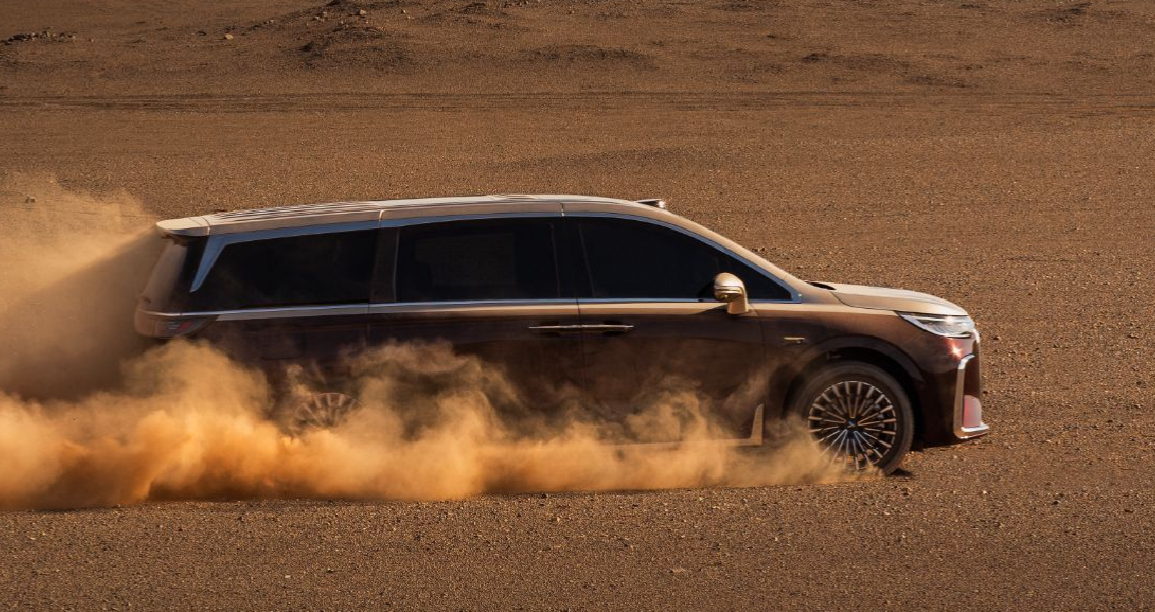
Dreamer, Image source: VOYAH
Industry analysts believe VOYAH's dual-MPV layout is an inevitable choice to cope with the intense stratification of China's current high-end vehicle market. Chinese luxury consumption is undergoing a profound shift—from conspicuous consumption to refined and value-oriented consumption—with consumer stratification becoming increasingly granular.
In the high-end MPV sector, demand is fracturing into multiple sub-segments.
One segment of elite users and high-net-worth families pursues extreme luxury, absolute privacy, and high customization. They are insensitive to price but demand the rarity of materials, pinnacle craftsmanship, early adoption of forward-looking technology, and exclusive premium services. Their essential need is a "mobile palace" or a "top-tier business cabin."
Another segment places greater value on versatility and balanced utility, requiring a vehicle that strikes the best balance between luxury feel, practical space, intelligent technology, and range economy. The Dreamer successfully captured this core user group. The launch of the Everest aims to precisely target the former, more top-tier niche market, forming a new product hierarchy of "Flagship (Everest) and Main Force (Dreamer)."
This layout not only achieves broader coverage of the high-end MPV value spectrum to maximize market share, but more importantly, the flagship Everest can assume the role of a brand value anchor. Its presence will forcefully lift the baseline of luxury perception for the entire VOYAH brand, thereby providing upward brand pull for the Dreamer and other models. This is a classic strategy of flagship-led brand building.
Furthermore, the new model is expected to serve as the ultimate showcase for VOYAH's next-generation core technologies.
Competition in the auto industry ultimately boils down to core technology and systemic capability. Entering 2026, NEV technology will inevitably see critical progress in solid-state battery research, the popularization of 800V—or higher—voltage platforms, the implementation of city-level advanced autonomous driving, the iteration of centralized electronic-electrical architectures, and the deep integration of AI large models in vehicles. VOYAH is bound to make massive R&D investments in these areas. The cutting-edge results of these investments require a flagship product—with sufficient positioning, cost space, and design freedom—to be the first to achieve mass production and demonstration. The Everest, officially defined as the 500,000-yuan-class "strongest luxury MPV" launching in the second half, is precisely the ideal technical carrier.
Therefore, it is not just a new car, but likely a "declaration vehicle" for VOYAH's technological reserves—clearly conveying the brand's technological leadership and determination to innovate to the industry, capital markets, and consumers.
At this stage, the high-end NEV MPV track is recognized as a high-margin sector and a showroom for brands. The recent influx of brands laying out in this segment is proof enough; traditional luxury brands and tech giants' cross-border automotive projects are all gearing up. VOYAH, which has already secured a position in the high-end MPV market, naturally needs to plan ahead. By proactively positioning a product that advances further in concept, technology, and luxury, it can build a wider and deeper competitive moat to deal with potential future disruptors with even higher positioning. This is a logical move.
If the dual-MPV strategy forms a synergistic system capable of both offense and defense, the Dreamer will be responsible for holding ground and generating volume—consolidating existing market share and user base to ensure healthy cash flow. The Everest will be responsible for expansion and benchmarking—not only exploring the limits of brand and product ascent to attract the gaze of more high-net-worth users, but also generating significant buzz. Ideally, this will further elevate the competitive position of VOYAH's entire MPV line and the brand itself.
The Challenge of Climbing the Industry's "Everest"
Of course, the future market prospects of the VOYAH Everest MPV will not be determined solely by its individual product strengths. They will be influenced by multiple factors, including the brand's overall momentum, industrial technology progress, and the macroeconomic environment.
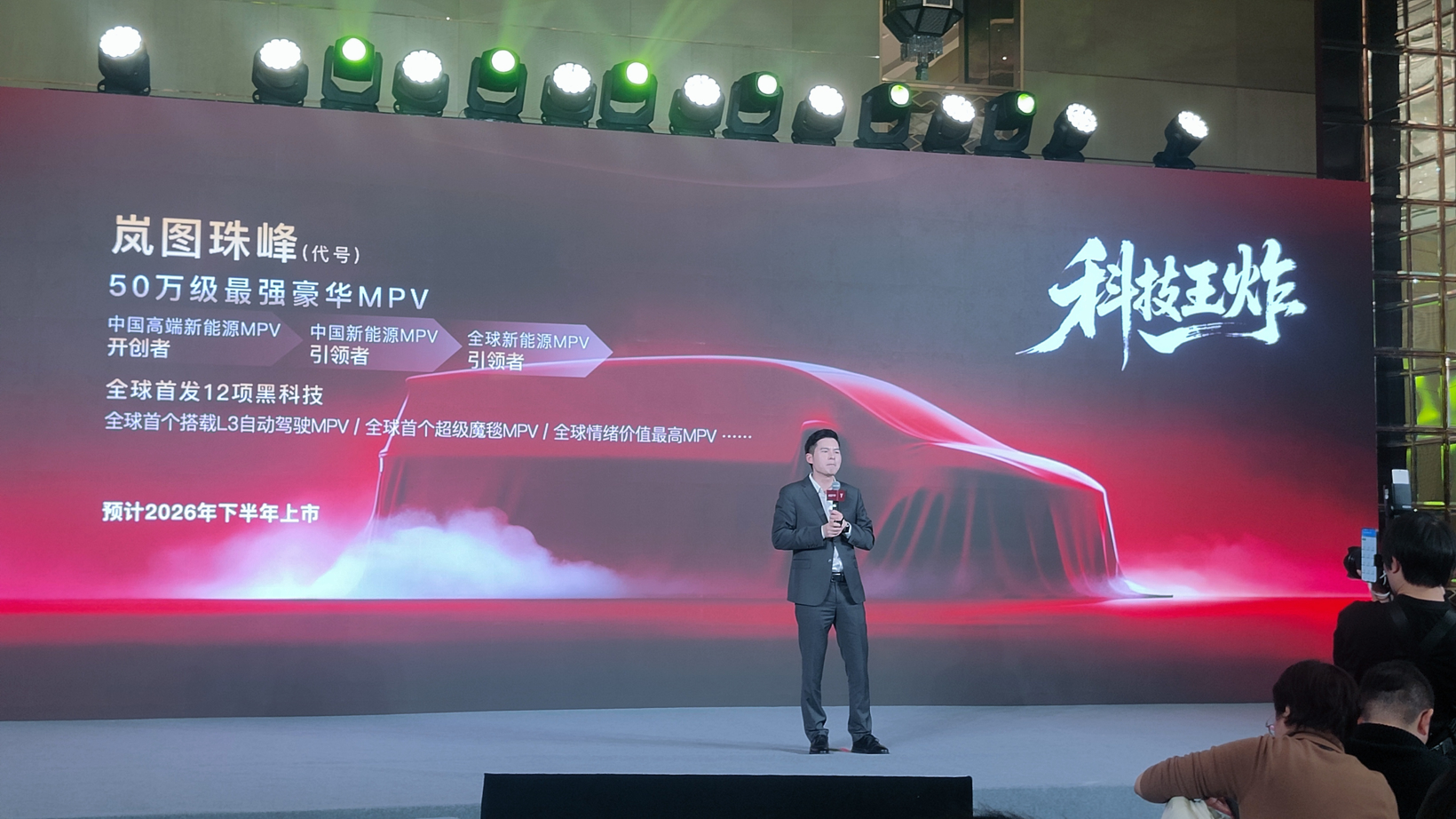
Image source: Gasgoo Auto
From the perspective of the window of opportunity, Everest faces a historic moment.
The continuous adjustment of China's economic structure has spawned a considerable and growing group of high-net-worth individuals. Their demand for mobility tools has transcended the attribute of simple transportation, moving toward mobile luxury tech spaces and an extension of personal identity and taste.
This group's identification with domestic high-end brands and cultural confidence is at an unprecedented high, providing a socio-psychological foundation for Everest to charge into a higher-end market. At the same time, China's global leadership in the completeness of the EV industrial chain and certain key technologies provides assurance for building a higher-end MPV. If Everest can deliver perceptible product highlights in the future—such as mass-produced L3 or higher-level autonomous driving, a "third space" experience surpassing existing competitors, leapfrog progress in charging speed or energy efficiency, and highly personalized, sustainable luxury customization—then it is possible for this car to create another phenomenon in the MPV market, thereby propelling the VOYAH brand to new heights.
Naturally, the challenges and risks the new model will face are equally significant.
The fulfillment of the "strongest" promise in the 500,000-yuan class is a major test. In an era of rapid technological iteration and high information transparency, "strongest" is a dynamic label that is easily challenged. The "strongest" claimed by Everest must possess hard-core strength that can withstand strict comparison and long-term testing upon delivery. This involves not only the leadership of individual technologies but also the harmony and excellence of the overall experience after all technologies are integrated. Additionally, the "shelf life" of technological leadership may be getting shorter; how to maintain that lead through continuous OTA upgrades is a massive test.
Breaking through the brand premium ceiling is also clearly a difficult problem. Charging into the 500,000-yuan or higher price bracket means VOYAH needs to convince consumers that its brand value is sufficient to support—or even surpass—the pricing of traditional luxury brands. This requires Everest to present a "generational gap" advantage in product strength, but also requires a complete set of top-tier service systems, user community operations, and brand narrative capabilities to match. How to tell a Chinese luxury story that moves top-tier consumers is a new subject VOYAH's marketing system must face.
In 2026, VOYAH will simultaneously advance the R&D, mass production, launch, and promotion of multiple heavy-hitting models. This places higher demands on the company's capital chain, R&D project management capabilities, supply chain coordination, production capacity planning, and marketing. Any error or delay in any link could cause the momentum of this "showdown" to fail to form a combined force, or even hinder each other.
More fundamentally, VOYAH's long-term health does not depend solely on the success of a single model, the Everest, in the high-end market. The foundation of its performance requires the VOYAH FREE and Titan series to fight their way out of the fiercely competitive intelligent SUV market. It needs the Courage and Passion series to achieve greater success in the new energy sedan market. It needs the Dreamer to continuously renew itself to maintain competitiveness. It requires a comprehensive improvement in the efficiency of the entire company's system. Only by forming a benign product ecosystem where the flagship sets the benchmark, the main force consolidates the foundation, and innovation explores the frontiers can VOYAH truly gain a firm foothold in the turbulent domestic high-end new energy market and convert the strategic gamble of 2026 into sustainable competitive advantage.
Conclusion
VOYAH's 2026 product plan is a concentrated bet made during a period of profound industry change, driven by a strong sense of crisis and clear strategic intent. The Everest high-end MPV is far more than a simple extension of the product lineup; it is the general offensive signal for VOYAH's upward breakout, and the ultimate carrier of its technological strength, brand ambition, and market appetite. It carries the mission of launching an assault on the brand and value "Everest" from the position established by the Dreamer.
The success of this strategy will depend on the complex interaction of multiple variables: both on whether "Everest" itself can achieve revolutionary breakthroughs in product definition and user experience to truly establish a new benchmark for "strongest luxury," and on whether VOYAH can demonstrate superior operational and collaborative capabilities while running multiple product lines in parallel.
Currently, the high-end path for Chinese brands is full of opportunities but also riddled with thorns. VOYAH's dual-MPV strategy provides a typical case study for observing how large traditional auto groups incubate new brands, integrate resources for high-end breakouts, and reconstruct brand value in the intelligent era. The road to the summit of "Everest" is a deep test of understanding industry laws, an extreme challenge to strategic resolve, and a comprehensive review of VOYAH's wisdom and courage.


