



Gasgoo Munich- Chinese Auto Expansion Enters "Deep Waters": Is Localization the Only Way Forward?
The global expansion of Chinese automakers stands at a watershed moment.
Over the past few years, fueled by first-mover advantages in the new energy vehicle supply chain and rapid product improvements, Chinese brands have rolled into most regions and countries worldwide. From the Andes in Chile to the Port of Antwerp in Belgium, from the Bangkok auto show to showrooms in Oslo, Chinese-made vehicles are becoming an increasingly common sight. Yet, beneath this surface prosperity, concerns are equally clear. The sword of anti-subsidy investigations hangs over many nations. Acceptance of Chinese brands in some markets remains stuck in the stereotype of "value for money." Furthermore, the lack of localized production and service systems leads to inconsistent user reputation.
The root of these issues lies in the expansion mentality of some companies. They remain stuck in a "trade mentality." This involves shipping domestically produced products overseas to sell. They are not truly integrating into the target market's industrial ecosystem. To break this impasse, companies need to redefine globalization. They must reconfigure R&D, manufacturing, and marketing resources globally. The goal is to build a self-sustaining, continuously evolving ecosystem. This means products must adapt to local energy conditions and consumer habits. Manufacturing must take root to ensure policy risk mitigation and supply chain resilience. Brands must integrate into local culture to earn long-term trust.
For Chinese automakers, this is a threshold they must cross. It is a necessary path from a major exporter to a global automotive powerhouse.
Against this backdrop, Leapmotor's overseas performance in the first quarter of 2026 is a case study worth analyzing. By rapidly expanding channels through a joint venture with Stellantis, it has carved out a distinct path. The company precisely adapts products for regional markets and usage scenarios. This differs from traditional whole-vehicle exports. It represents a new globalization model anchored by joint ventures. It is supported by localized manufacturing and product adaptation.
Why Is Going Global an Imperative?
Understanding the urgency of Chinese automakers' global expansion requires a clear look at the reality of the domestic market.
Data compiled by Gasgoo Automotive Research Institute shows that by 2025, there are 78 automakers, 125 brands, and as many as 953 models on sale in China. Behind these numbers lies a market entering a phase of stock competition: total volume is no longer growing rapidly, yet the number of competitors hasn't diminished. The crowding of market supply ranks among the highest in the world's major auto markets.
An even more critical issue is the mismatch between capacity and demand. In recent years, capacity utilization in China's auto industry has lingered below the warning line. A glut of homogeneous products is squeezing into the same price bands. This has turned the price war from a periodic promotion into a constant survival strategy. A "2025 National Auto Dealer Survival Survey Report" by the China Automobile Dealers Association reveals critical data. Over half of dealers failed to meet annual sales targets. Additionally, 55.7% slipped into the red. The profitability rate narrowed to 23.5%, a recent low.
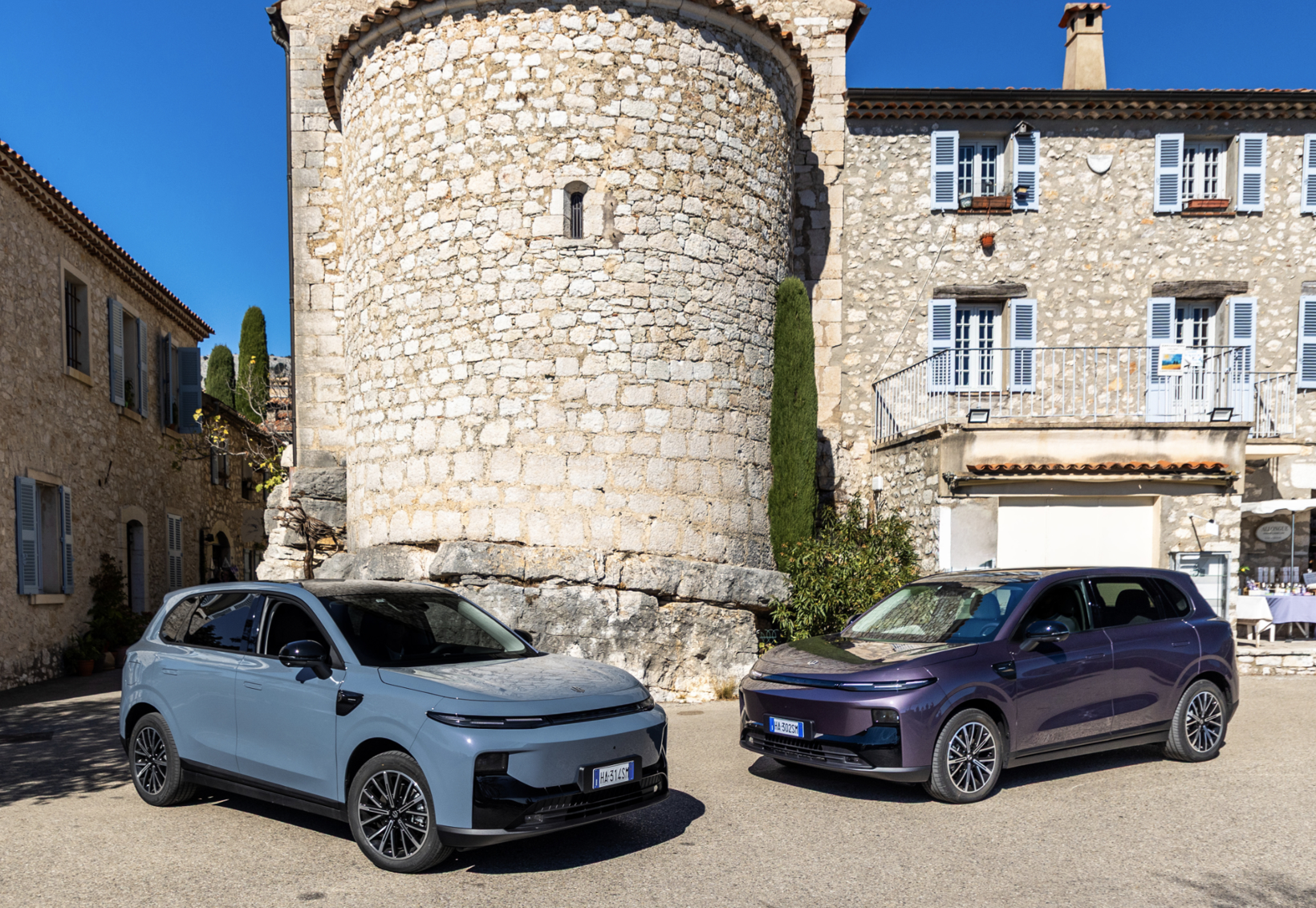
Image source: Leapmotor
The more brutal the price war, the more fragile the channel system becomes. The continuous bleeding of dealers will inevitably erode brand value and user trust.
In sharp contrast to the domestic "cut-throat competition" is the structural growth offered by overseas markets. Export data from the China Association of Automobile Manufacturers shows a trend. In the first quarter of 2026, cumulative auto exports reached 2.226 million units. This is up 56.7% year-on-year. New energy vehicles have become the primary driver. Cumulative NEV exports hit 954,000 units. This figure is more than double the previous year.
Crucially, NEV penetration in most overseas markets is still climbing. Consumers are relatively less price-sensitive. Brand premium space is significantly larger than at home. For Chinese automakers, the overseas market is not just a "second growth curve" for volume. It is a necessary route to improve profit structures. It also diversifies risks from relying on a single market.
Among all overseas regions, Europe holds a uniquely strategic position. As the heartland of the global traditional auto industry, it serves a dual purpose. It is a touchstone for brand gold content. It is also the frontline of current trade frictions. The exacting demands of European consumers for quality, safety standards, and after-sales service force Chinese automakers to deliver higher product standards and more sophisticated operating systems.
At the same time, Europe is a region with relatively proactive carbon reduction policies, and the direction of electrification is clear. Whether one can gradually gain a foothold in Europe not only relates to the global brand stature of Chinese automakers but also tests whether their comprehensive capabilities—in technology, manufacturing, channels, and after-sales—truly meet world-class standards.
And differences in comprehensive strength will ultimately be reflected in terminal performance.
In the first quarter of 2026, Leapmotor's overseas sales exceeded 40,000 units, a historic high. Europe was a standout contributor: registrations across 16 European countries hit 23,300 units, surging 726.5% year-on-year. In the 12 EU countries, pure EV sales totaled approximately 17,000 units, ranking first among Chinese pure EV brands.
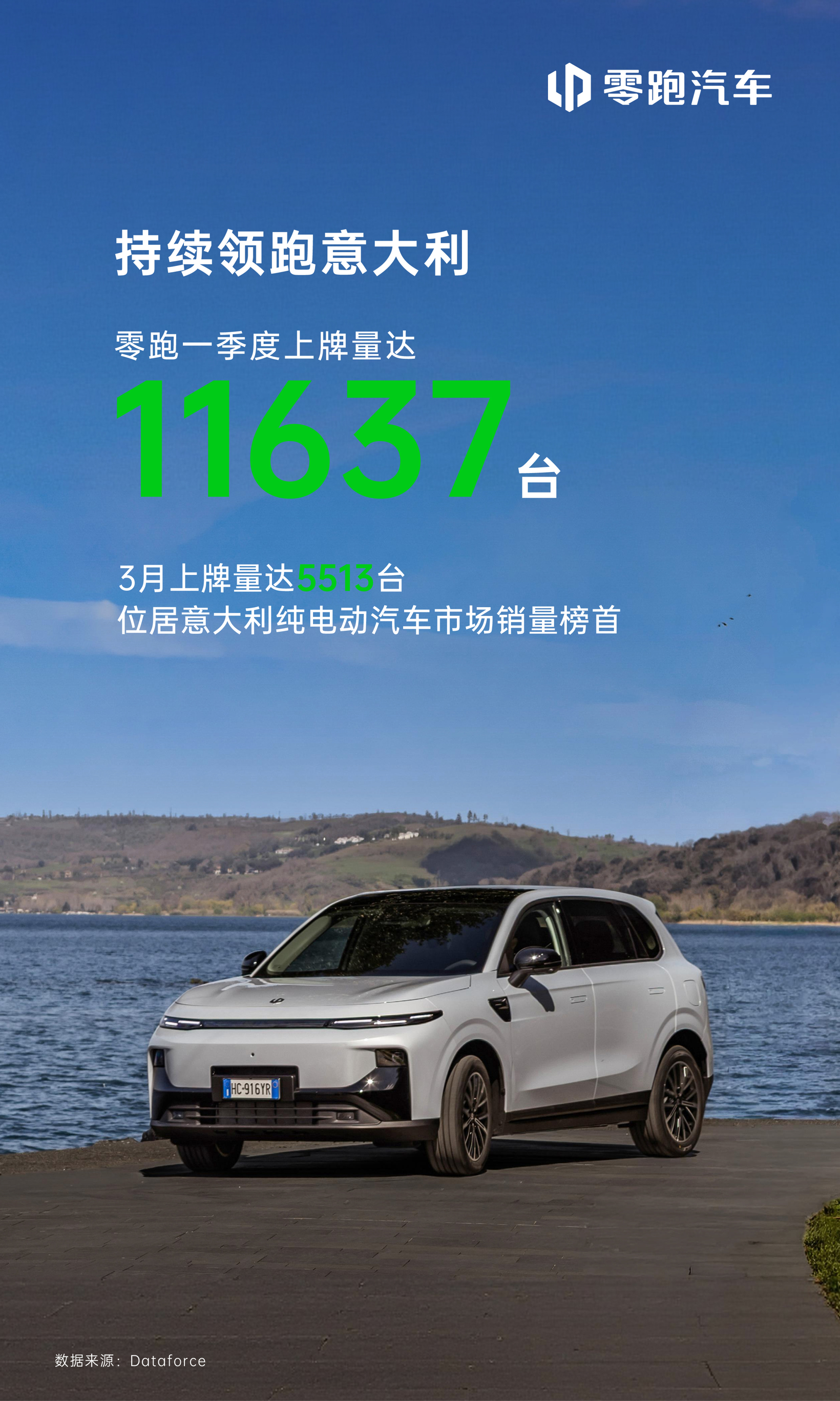
Image source: Leapmotor
In Italy's pure EV market, Leapmotor holds the top spot with a 33.5% share, rising to 44.6% in retail passenger car channels. In Germany, data from the Federal Motor Transport Authority (KBA) shows Leapmotor recorded 3,168 registrations in Q1, up 370.7%. Just this past March, Leapmotor celebrated the delivery of its 10,000th car in Germany.
Gaining a firm foothold in Europe's most core markets means not only that Leapmotor's product strength has won recognition in the most demanding markets, but also that Chinese auto brands have achieved a substantive leap in quality perception and brand image.
Going Global Is a Systematic Project
Intensifying domestic competition and the normalization of price wars force automakers to seek incremental growth overseas. Once the "why" is clear, the question that decides success or failure shifts to: *How* do they go global?
The explosive growth of Chinese auto exports in recent years has masked a deep concern. A large volume of exports remains stuck in the "trade mentality." This involves shipping whole vehicles produced domestically overseas and selling through local dealers. The fragility of this model has been fully exposed since 2025 amid the rise of global trade protectionism. EU anti-subsidy investigations, U.S. tariff hikes, and localization requirements from countries like Turkey and Brazil have all significantly raised the policy costs of exporting whole vehicles. More critically, simple trade exports struggle to build genuine brand loyalty, and the lack of after-sales networks continues to erode user reputation.
Localization has become the core threshold Chinese automakers must cross to go global.
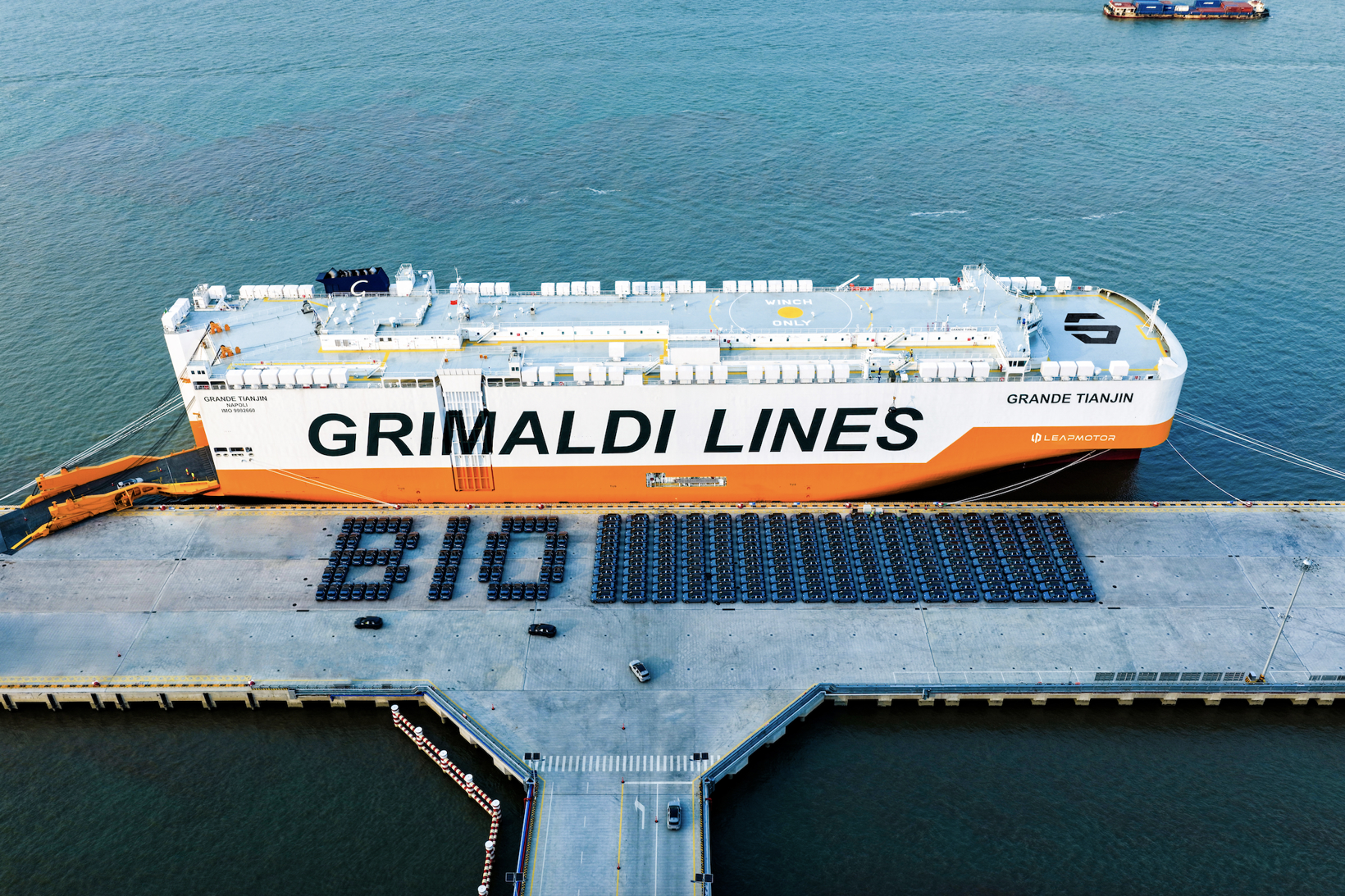
Image source: Leapmotor
Of course, the challenges of localization are immense. Building overseas plants requires massive capital investment and faces real obstacles like labor laws, cultural differences, and insufficient supply chain support. More importantly, localization isn't a simple copy-paste of the domestic model. Differences in energy infrastructure, consumer preferences, and regulatory standards across markets require automakers to possess global development capabilities. They must have these at the product definition stage, rather than applying "patches" afterward.
True localized competition is essentially a battle of system capabilities: whoever can achieve global coordination across R&D, manufacturing, supply chain, marketing, and after-sales can truly take root in overseas markets.
In this dimension, Leapmotor's performance is representative. The core of its globalization strategy is not an isolated overseas factory. Instead, it is a systematic framework supported by three pillars. These are "joint venture cooperation, localized R&D and manufacturing, and product adaptation."
The joint venture model with Stellantis is the most differentiated starting point. In the past, Chinese auto exports had limited brand premium power and lagged in after-sales network construction, making it hard to truly integrate into mainstream overseas markets. By establishing Leapmotor International as a joint venture with Stellantis, Leapmotor achieved systematic integration. It combined product, manufacturing, and channel capabilities. The goal is to build sustainable localized operations. This model retains the autonomy and product advantages of the Chinese brand. It fully leverages the partner's local resources and market experience. This forms a higher-dimensional global competitive capability. By Q1 2026, Leapmotor had entered over 40 international markets across Europe, Asia-Pacific, South America, the Middle East, and Africa, establishing approximately 950 overseas sales and service outlets.
Localized R&D and manufacturing form the second pillar of Leapmotor's systematic capability. In March 2026, the first B10 rolled off the line at Leapmotor's SKD plant in Myanmar. This took just 16 months from signing to delivery. In the same period, Leapmotor established a European Innovation Center in Munich, Germany. It built a global design network with Munich, Hangzhou, and Shanghai as hubs. This ensures products possess global DNA from the very beginning of their definition.
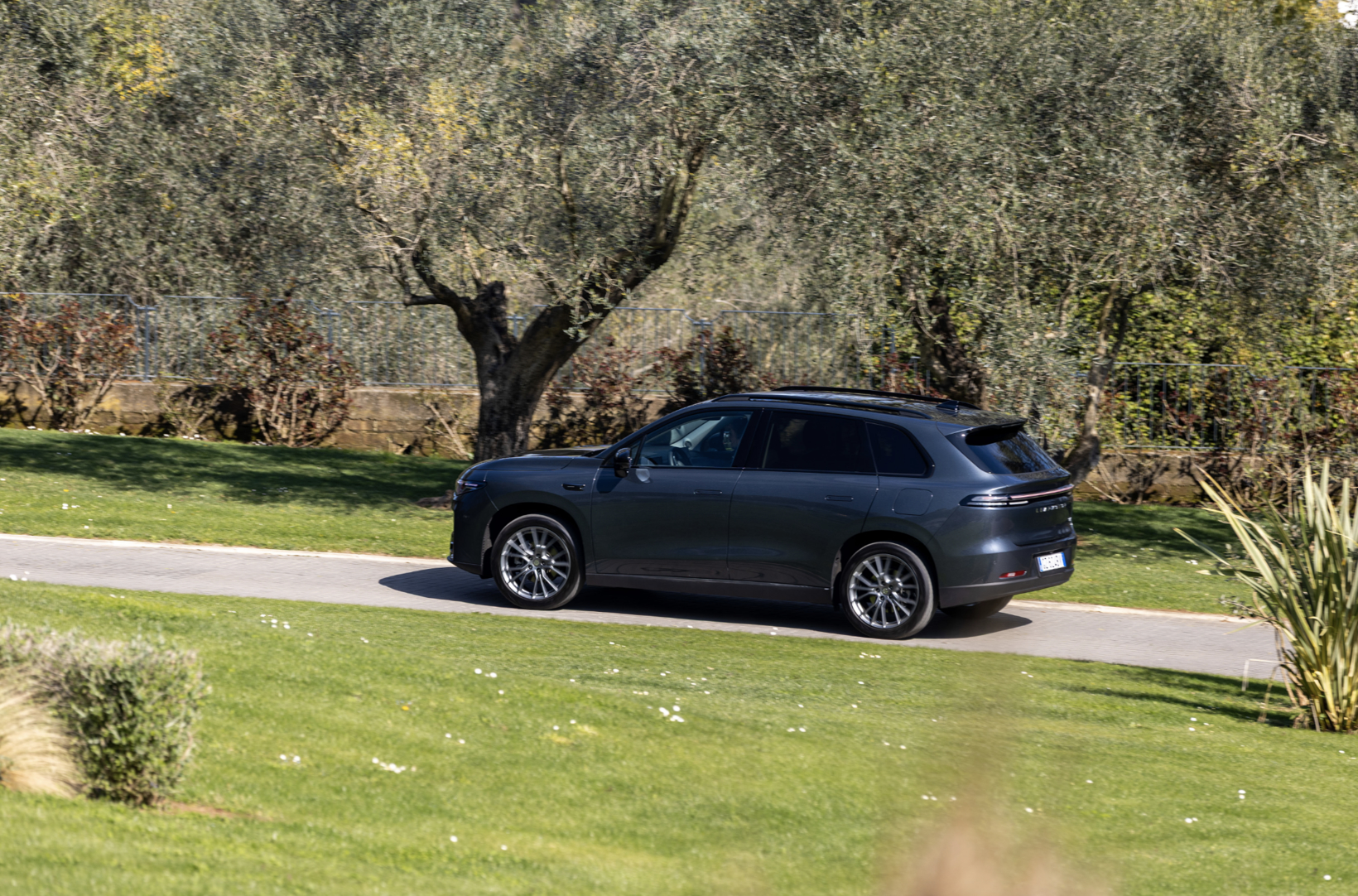
Image source: Leapmotor
Product adaptation is the third dimension of Leapmotor's localization strategy—and a crucial link directly facing consumers.
Leapmotor's overseas product strategy demonstrates two characteristics: first, multi-powertrain coverage, running pure electric and range-extended models in parallel to adapt to differences in energy infrastructure; second, precise value anchoring. The T03 enters the entry-level market in Europe. Meanwhile, the B10 and C10 occupy the mainstream price band. This creates a clear price ladder. It ensures volume potential while leaving room for brand ascent. Later in 2026, Leapmotor will launch two new models overseas. These are the B05 (known domestically as Lafe5) and B03X (known domestically as A10). This will further enrich its product matrix and cover more segments.
Localized manufacturing and product adaptation bring more than just cost optimization and tariff avoidance; they create a series of unique competitive barriers.
First is response speed. With local factories coming online, companies can adjust production plans more flexibly and respond quickly to regional demand shifts. Second are policy dividends. Most countries offer extra tax breaks for locally produced NEVs. They also provide purchase subsidies, government procurement preferences, or favorable market access conditions. Third is supply chain resilience. Amid intensifying global logistics volatility, regional capacity reduces dependence on transoceanic shipping. A "regional manufacturing, regional sales" model is clearly more risk-resistant than relying solely on exports. Finally, there is brand trust. Localized manufacturing is itself a promise—when consumers see a brand building factories, hiring locals, and integrating into the local economy, trust naturally rises.
In summary, Leapmotor's globalization path offers a key insight for the Chinese auto industry: true global expansion isn't about moving domestic products overseas to sell, but building a continuously evolving ecosystem on a global scale. With each concrete step, Leapmotor is weaving a value network covering the globe. The value of this network lies not only in sales growth. It lies in the systemic capabilities it builds. These capabilities help navigate trade barriers. They aid in integrating into local markets and establishing brand trust.


