



Gasgoo Munich- The domestic auto market is currently presenting a confusing dual picture: On one side, new car prices are plumbing new depths. The top-spec Leapmotor A10, equipped with a LiDAR system and a Qualcomm 8295 chip, sells for just 86,800 yuan; the newly launched Huajing S has stuffed Huawei's full intelligent suite into a 150,000-yuan class, six-seat SUV. Everything seems to signal that technological democratization is being realized at unprecedented speed. But on the other side, more than a dozen mainstream new-energy brands have recently raised prices on some models or tightened terminal discounts, with increases per vehicle reaching thousands or even over 10,000 yuan.
Yesterday (May 14), Lu Fang, chairman of Voyah Automotive Technology Co., wrote on his personal Weibo that two pieces of information have recently sparked widespread attention: First, the penetration rate of new-energy passenger vehicles historically broke through 60% in April; second, more than 15 new-energy automakers have successively announced price hikes.
In the domestic auto market over the past two years, price cuts have actually been the norm, but the sudden emergence of a "price hike wave" is truly unexpected. This is especially worth discussing when price cuts and price hikes coexist in the same market during the same period. This is clearly not a simple divergence in development strategies between companies; more accurately, it is a stress response made by the entire industry under the multiple pressures of profit ice points, cost squeezing, and a shifting competitive landscape.
To understand this contradictory phenomenon, we must look past the surface of prices and confront the reality of China's auto manufacturing sector—industry profit margins have fallen to historic lows, yet upstream costs for lithium carbonate and automotive-grade chips are racing upward. Automakers are sandwiched between end-market prices that cannot be lowered further and core costs that rise without end, and their survival space is being rapidly compressed.
Different companies are handing in starkly different answers in this stress test. Some are choosing to reconstruct the cost curve through self-developed technology, some are choosing to gamble on using scale to exchange for profit, and others are choosing to redraw the rules of the track through dimension-reduction pricing. Behind these paths lies the ultimate game of the Chinese auto industry as it shifts from incremental expansion to stock reshuffle: how to create value, how to distribute profits, and who can survive the next round.
Profit Ice Point?
To decipher the current price maze in the auto market, we need to start with the industry's most underlying ability to pay.
Data released by the CPCA shows that in the first quarter of 2026, the domestic auto industry's cumulative revenue stood at 2,412.8 billion yuan, a slight year-on-year decrease of 0.2%. However, costs bucked the trend, rising 0.7% to 2,140.6 billion yuan. The direct consequence of cost growth significantly outpacing revenue growth was severely eroded profits—industry profit for the quarter was only 78.4 billion yuan, a sharp year-on-year drop of 18%, with the sales profit margin further compressed to 3.2%. This profit margin is not only far below the 6% average of industrial enterprises above designated size nationwide but also approaches the operating break-even line for the vast majority of automakers.
This financial structure of "stable revenue, rising costs, and collapsing profit" reveals a deeper dilemma for the industry: Auto manufacturing is falling from being the value creation center of the industrial chain to becoming a value depression.
A so-called value depression refers to a link in an industrial chain that creates a large amount of value but cannot retain the corresponding profit, with most of it being siphoned off by other upstream and downstream links. China's auto industry is currently in exactly this situation.
The cost-siphoning effect of upstream raw materials is significant. The CPCA points out in its industry report that as the scale of automobile production expands and the PPI rises, the profits of upstream mining industries such as non-ferrous metals and oil have soared. Auto manufacturing恰恰 requires massive consumption of these mining raw materials. The rising prices of commodities like lithium carbonate and oil have directly pushed up the costs of intermediate goods like power batteries and chemical plastic parts, and most of these costs must be borne by automakers.
Facing upstream oligopolies in mining and the chemical industry, most automakers have relatively limited bargaining power. Even worse, automakers not only have to withstand the direct impact of rising raw material prices but also digest the sales pressure brought on by these price increases in the terminal market, forming an asymmetric pattern of "upstream feasting on price hikes while downstream shouts losses while losing money." The CPCA explicitly states that the severe squeeze on upstream profits is a key reason why the improvement in efficiency in the auto industry significantly lags behind other consumer goods.
The value "interception" by core components is also a major influencing factor. If upstream mining is considered the first layer of explicit siphoning, then suppliers of core parts like batteries and chips represent the second, more hidden layer. "The issue of automakers not building batteries is one of the reasons for the continuous decline in profits"—this judgment from the CPCA points to the essence of the problem. A comparison is particularly persuasive: In the first quarter of 2026, the cumulative net profit attributable to shareholders of several top listed passenger car enterprises was less than that of CATL alone. This contrast nakedly exposes the structural imbalance of profit distribution in the current industrial chain—core component companies, relying on technical barriers and oligopolistic status, are seizing the meager profits that originally belonged to the manufacturing segment.
The same is true in the chip sector. William Li, founder of NIO, revealed a data point: Chips and batteries together account for more than 50% of the cost of a smart electric vehicle. Li bluntly stated that this is an "out-of-control state"—when an automaker hands over more than half of its costs to external suppliers, the power to distribute profits has already been ceded. Li also used the NVIDIA OrinX chip as an example to do the math: At its peak, NIO purchased $300 million worth of NVIDIA chips annually. If it continues to outsource, this expense will swell to an astronomical figure as sales grow.

Image Source: NIO
It is against this background that Li Bin proposed the initiative of "standardizing cell specifications" and "unifying chip types," believing that as long as these two things are done well, the entire industry can reduce costs by over 100 billion yuan. The deeper meaning of this judgment is that while the current profit dilemma certainly involves factors of rising external costs, internal inefficiency and chaos within the industry cannot be ignored either.
Of course, the trap of internal "involution" in the vehicle manufacturing segment itself is also an important cause.
If upstream cost siphoning is external pressure, then the cruel competition within the industry is self-inflicted bleeding. The continuous price war has squeezed the profits of automakers to the limit. Many companies are deeply trapped in the dilemma of increasing volume without increasing revenue, or increasing revenue without increasing profit. Automakers have neither the power to transmit cost pressure upstream nor the ability to pass on price hikes downstream, and can only passively bear the pressure sandwiched in the middle.
In an interview, Lu Fang interpreted this dilemma from a micro-enterprise perspective: "The external market competition is currently very fierce, and internal raw material prices are rising again, which will certainly cause pressure on corporate operations." Lu Fang further pointed out that the collapse of some companies in the past "was the result of pursuing so-called negative-profit competition or sales. Under such a background, companies simply cannot achieve long-term sustainable development." Lu Fang's view reveals a key mechanism in the formation of the "value depression"—when the industry falls into the quagmire of negative-profit competition, even if upstream costs stop rising, companies cannot accumulate sufficient profits for technical R&D and capacity upgrades, and can only further compress costs, falling into a vicious cycle. And once upstream costs begin to rise, those companies that have already been severely weakened will be the first to fall.
Image Source: Voyah
Cui Dongshu, secretary-general of the CPCA, added a key observation from the perspective of market structure. In the current domestic auto market, the gross margins of high-end automakers are still above 20%, "so these automakers do not have the profit pressure to raise prices." This judgment in turn confirms that the "value depression" mainly exists in the mid-to-low-end market—high-end brands can still retain a portion of profits through brand premiums and product differentiation; while mid-to-low-end brands, in the midst of fierce homogeneous competition, have their profits hollowed out by both upstream squeezing and internal slaughter, becoming the most fragile link in the entire industrial chain.
In other words, the reason the vehicle manufacturing industry has become a "value depression" on the industrial chain is essentially the result of the combined effect of multiple structural imbalances: First is vertical imbalance, where the high concentration of upstream mining and semiconductor industries forms a bargaining advantage over the downstream, while the excessive fragmentation of downstream auto manufacturing causes it to lose its ability to bargain; Second is horizontal imbalance, where automakers fall into the prisoner's dilemma of price wars due to serious product homogeneity and insufficient brand loyalty, unable to hedge costs through coordinated price hikes; Third is spatiotemporal imbalance, where the rapid iteration of intelligent and electrification technologies forces automakers to continuously increase R&D investment, but the cycle for these investments to convert into profits is constantly being stretched, while cost-side rises happen instantly.
The profit ice point is not an accidental fluctuation, but the resonance of the industry's structural imbalances at a specific point in time. It is precisely this multiple imbalance that has pushed auto manufacturing to the end of the value distribution of the industrial chain.
The Truth About Price Hikes
Against the backdrop of continuously diving profit margins, price hikes have become a passive yet inevitable option for many automakers. However, this wave of price hikes is not a neat and uniform collective action, but presents distinct characteristics of differentiation.
To understand this differentiation, we must first see clearly where the real cost pressure driving the price hikes comes from.
At the end of April, Changan NEVO issued a price adjustment statement, stating that due to the significant increase in the cost of global automotive-grade chips, the official guide price of the Q07 Tianshu Intelligent LiDAR Version produced after May 7 would be raised by 3,000 yuan. In addition, more than a dozen new-energy brands have also released news of price increases for some of their products, and these models or configurations with price hikes are almost without exception concentrated on products equipped with core technologies such as high-end intelligent driving and LiDAR.
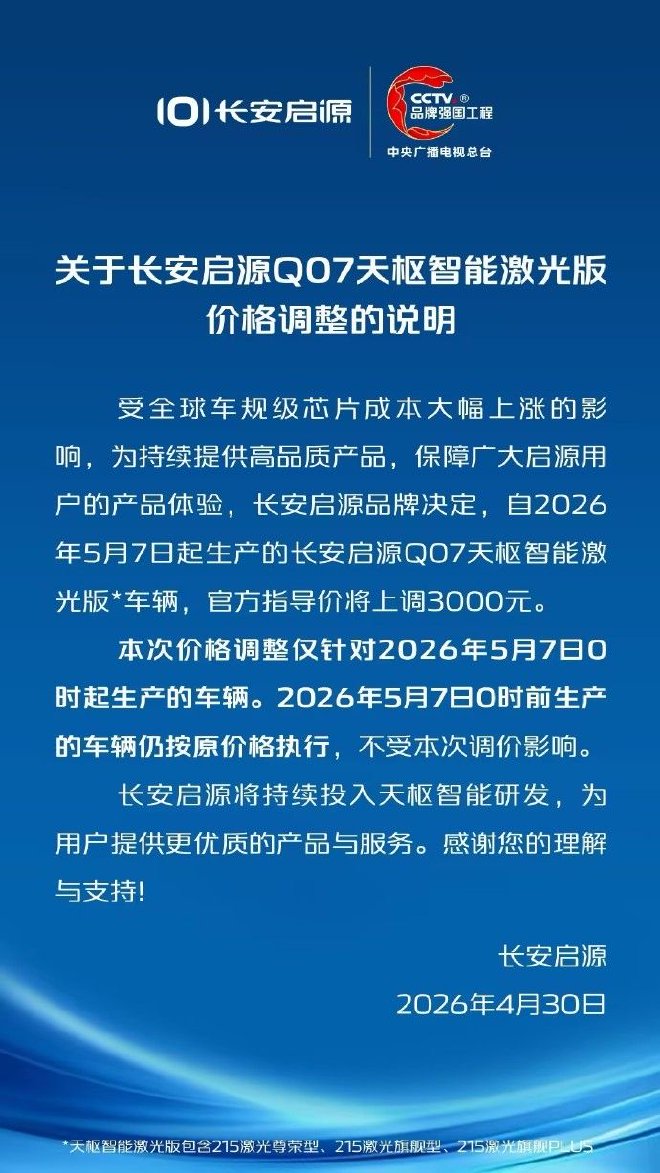
Image Source: Changan NEVO
It is not all cars that are raising prices, but those whose costs have risen most violently.
Facing this round of cost shock, Lu Fang gave his own judgment: "The rise in raw material prices does not shift with our will; it is an objective fact." But companies maintaining reasonable profits is also very necessary, "Any company, if it wants to stay healthy and be able to sustainably provide high-quality products and services to users, must have a certain gross margin or profit." Lu Fang's words reveal a common sense that is often overlooked: In an industry where profits are already razor-thin, price hikes are not greed, but a need for survival.
Of course, Lu Fang does not regard price hikes as the only way out. He proposed the path of tapping internal potential: "We must further reduce material costs through technological innovation. In addition, we must improve internal operational efficiency through management innovation." Lu Fang pointed out that directly passing raw material costs on to consumers is an irresponsible performance, but car price hikes are a high-probability event. "When we reach a certain point where everyone can no longer bear it, prices may change." The subtext of the above statement is very clear: Companies will do their best to digest cost pressure internally, but if the profit state of the entire industry continues to deteriorate, price hikes will be an unstoppable trend.
In terms of strategies to cope with cost pressure, NIO has chosen another path—self-developed chips.
Li Bin has done the math: "Self-developed chips, from the perspective of using R&D to exchange for cost and using R&D to exchange for gross margin, is definitely cost-effective. The initial investment stage is relatively large, but with NIO's current usage (hundreds of thousands a year), it is actually already cost-effective." According to what he previously revealed, the R&D cost of the Shenji NX9031 is roughly equivalent to building 1,500 battery swap stations. If calculated at 2 million to 3 million yuan per station, its chip R&D cost is between 3 billion and 4.5 billion yuan. Li Bin also revealed that Shenji "can bring a cost advantage of about 10,000 yuan per car." If calculated based on NIO's main brand sales of 179,000 units last year, the initial investment can be recovered in two to three years.
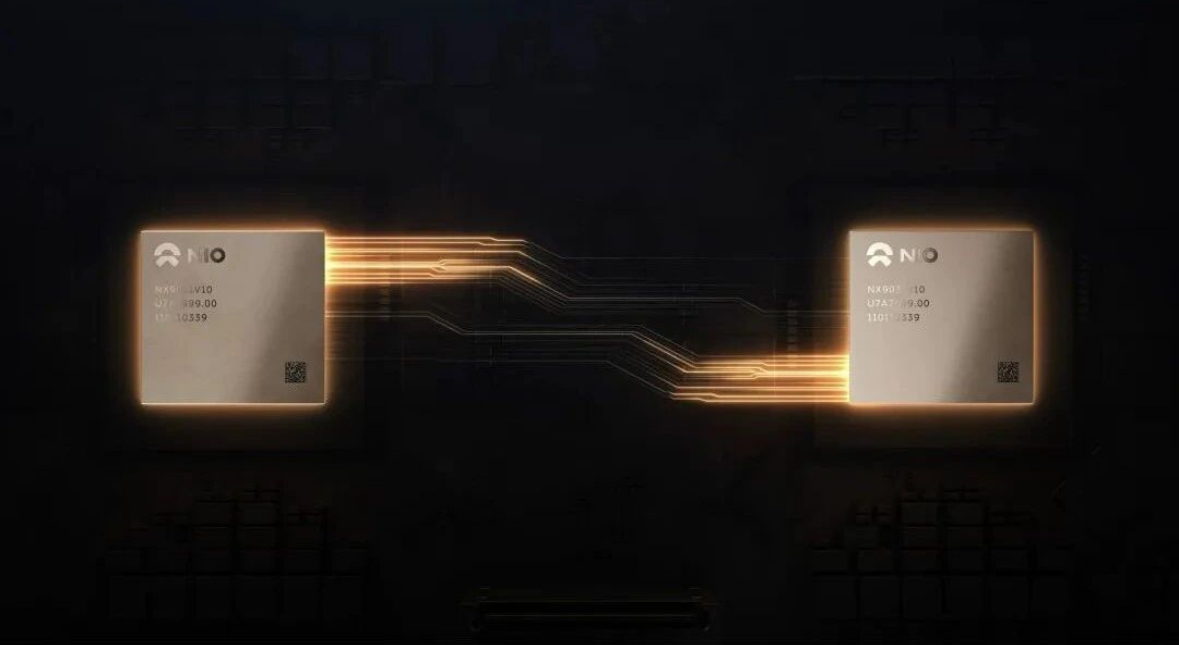
Image Source: NIO
This calculation is simple and direct, but the structural significance behind it is profound: When the scale effect of self-developed chips forms a hedge against the pressure of procurement costs, self-research is not "burning money," but rather the optimal solution for saving money.
Of course, self-developed chips are not a path that all automakers can choose. NIO's R&D investment of several billion yuan is already a heavy initial burden for a scale of over 100,000 vehicles a year, let alone those automakers with even smaller annual sales. This has formed a new market differentiation: Head automakers can build cost moats by self-developing core components, while small and medium-sized automakers can only passively accept the volatility of outsourced prices.
So, will this round of auto market price hikes continue to expand its scope? Cui Dongshu gave a relatively thorough judgment. In the short term, the possibility of large-scale price hikes by mid-to-low-end brands is actually not great. Domestic market competition continues to be white-hot, and in the competition of a red ocean, there is no market soil for large-scale price hikes. "Some car models may raise prices, but this is actually more of a promotional effect to stabilize consumer confidence or enhance the release of purchase enthusiasm under the expectation of price hikes. But from the actual situation, the current domestic market does not belong to an incremental market, and the newly launched products are becoming more and more competitive, so it is difficult to see large-scale price hikes."
Of course, regardless of whether the car market price hikes spread widely in the future, the structural pressure of the industry is already forcing companies to rethink their rules of survival.
Future "Divergence"?
If the "first half" problem solved by the Chinese auto industry in the past few years was how to capture the market faster, then the "second half" entered now requires answering a more difficult question—how to create value more resiliently. Standing at the node of mid-2026, we can clearly see that different companies have already gone their separate ways on this road.
Future competition will no longer be a simple sales contest or technology comparison, but a survival test about autonomous hematopoietic capability.
From current market trends, companies have roughly differentiated into several distinct paths. The first is to reconstruct the cost structure through technology self-research, converting the profits originally paid to external suppliers into their own gross margin space by self-developing core components. The essence of this path is to upgrade auto manufacturing from assembly and integration to technology platform operation, gaining the initiative in profit distribution by mastering core technologies.
Another path is to exchange scale for profit, continuing to fight within the mainstream price band. The advantage of these companies lies in the supply chain bargaining power and manufacturing cost control capabilities brought by huge production and sales scale. Even if industry profit margins fall, head companies can still achieve considerable total profits through annual sales of millions of units. The strategy of these companies is: not to pursue high gross margin per vehicle, but to maintain positive net profit in the era of meager profits through extreme scale effects and vertical integration. Price hikes for them are an optional but unnecessary means—unless cost rises touch the break-even line, they are more inclined to digest pressure through internal efficiency improvements.
There is also a more aggressive path, and it is also the path that has sparked the most discussion recently: redrawing the rules of the track through dimension-reduction pricing.
With a price range of 149,800 to 193,800 yuan, the Huajing S is a large six-seat SUV with a car length of 5,235mm and a wheelbase of 3,105mm. It comes standard with Huawei Qiankun Intelligent Driving ADS Pro Enhanced Edition and HarmonySpace 5 Cockpit across the entire series. The significance of this combination goes beyond the low-price entry of a new car; it establishes a new value anchor that did not exist before in the 150,000-yuan class market: making the two labels of "large six seats" and "standard Huawei Qiankun" established simultaneously for the first time at the 150,000-yuan price line.
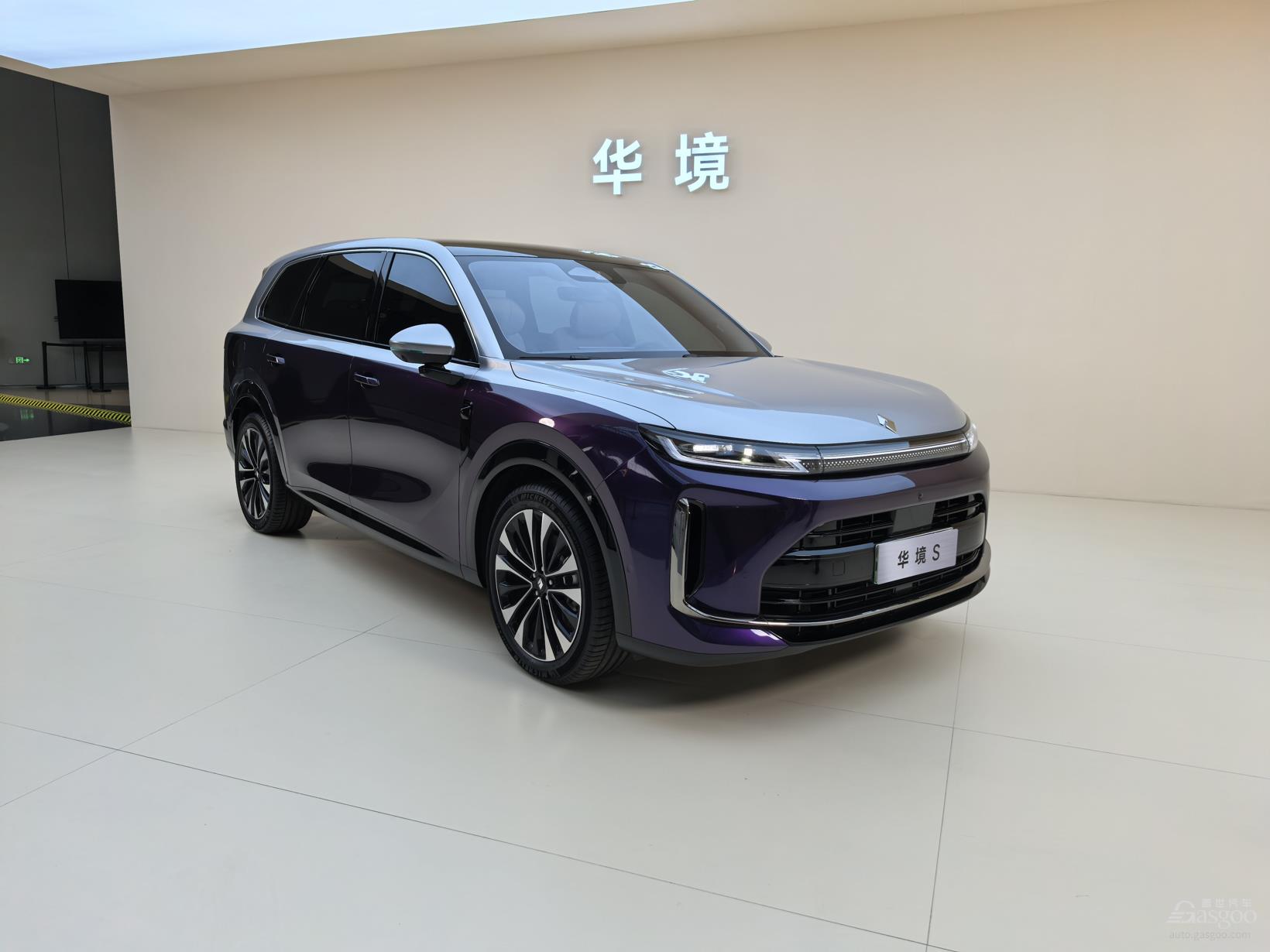
Image Source: Gasgoo
The Leapmotor A10, which launched earlier, is also a typical representative under this path. With a starting price of 65,800 yuan and a top price of 86,800 yuan, it includes a 505 km pure electric range, Qualcomm 8295 chip, Qualcomm 8650 intelligent driving chip, LiDAR, and door-to-door pilot assisted driving all in the configuration list. This means that in the 100,000-yuan price range, consumers can obtain intelligent configurations that only models costing over 300,000 yuan might have possessed two years ago.
Behind the pricing of these new models reflects the same industry trend: The technological maturity of smart electric vehicles is accelerating toward a普及拐点. When core technologies such as LiDAR, high-computing chips, and City NOA change from scarce resources to bulk commodities, brands that are the first to bring these technologies down to low-price ranges can gain huge first-mover advantages. Of course, the risk of this strategy is not small. It requires companies to still maintain positive gross margins at extremely low selling prices. Whether a brand can do this depends on two core factors: First, whether the upstream supply chain can provide sufficient cost support; second, whether sales volume can quickly reach the break-even point.
No matter which path companies choose, they must face a common underlying reality: Profits in the auto industry are turning from easy money to hard money.
In the past few years, the new energy vehicle market was in a stage of explosive growth, but the landscape of 2026 has undergone a fundamental change. The market has shifted from incremental competition to stock competition, and consumers have changed from early adopters to mass users, with significantly increased sensitivity to prices and more demanding requirements for products. In such an environment, a company's survival capability no longer depends on financing scale or brand hype, but on a more fundamental indicator—autonomous hematopoietic capability.
Summary:
China's auto market is accelerating into a deep reshuffle period. In the short term, the possibility of comprehensive price hikes is not great, because the competitive landscape of the stock market determines that companies taking the lead in raising prices will face the risk of losing market share; but in the medium and long term, if upstream costs remain high and industry concentration does not improve significantly, price hikes will become a gradual process.
Of course, the future of China's auto industry will certainly not be determined by the rise or fall of a single company, but by whether the entire industry can find a new equilibrium point between cost pressure and competitive pressure. This equilibrium point will not be the high-profit era of the past, nor the micro-profit struggle of the present, but a normal state closer to the average profit level of manufacturing. For those companies that can cross the cycle, the real moat is not the temporary high or low in the price war, but continuous autonomous hematopoietic capability, irreplaceable technology accumulation, and deep-rooted brand trust.
The hustle and bustle of price cuts and price hikes sharing the stage will eventually pass, and what will remain are those companies that truly understand how to create value.


