



Gasgoo Munich- Recently, FAW Group, working alongside industry partners, has successfully developed the Hongqi No.1 — China's first automotive-grade advanced-process multi-domain fusion chip.
In recent years, global supply shortages and price volatility have repeatedly hammered vehicle manufacturing costs. The procurement price of a single MCU chip has surged from a few dollars to nearly $100, while high-end, high-compute chips have long been monopolized by foreign giants.
FAW Group took the initiative to establish a collaborative innovation mechanism linking vehicles and chips. The self-developed "Hongqi No.1" reduces reliance on imports, providing robust support for supply chain security.
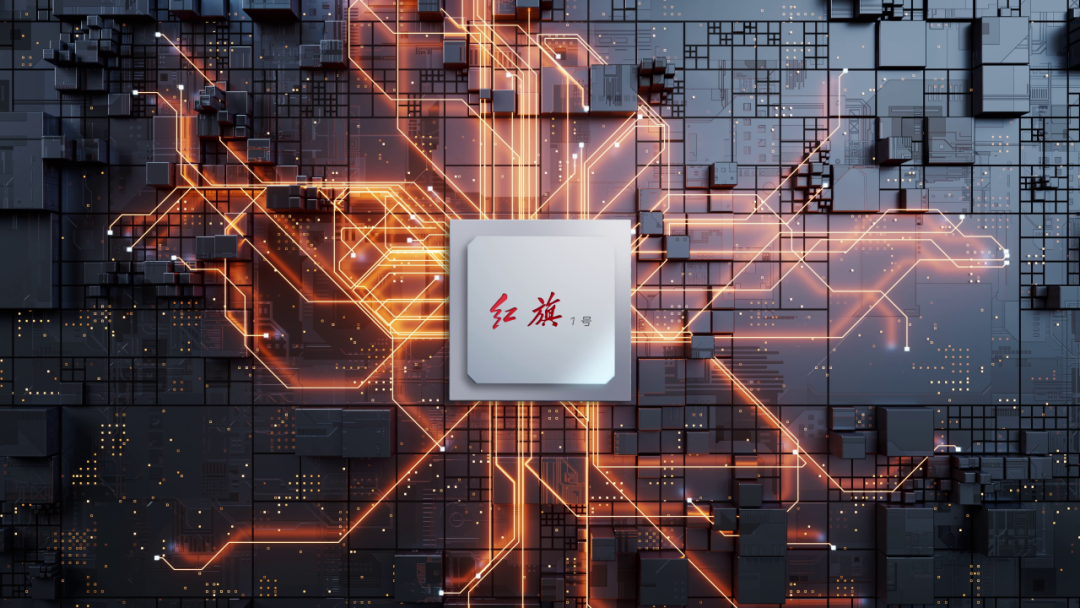
Image Source: FAW Group
The "Hongqi No.1" is not a traditional single-function chip; rather, it is a multi-domain fusion processor designed for intelligent vehicle central computing architectures. Its standout technical feature is the integration of five functional domains—driving assistance, smart cockpit, body control, communications, and safety—onto a single chip. This achieves true unification of "cabin, driving, and control."
In terms of logical computing power, the "Hongqi No.1" outperforms mainstream industry multi-domain chips (such as the SA8775) by 21.7%, with image processing capabilities up 15.4%. It efficiently supports complex cockpit scenarios like "one chip, multiple screens" and parallel multi-system operation, reserving ample computing redundancy for the future integration of higher-level smart cockpits and autonomous driving.
The chip features a built-in independent safety island with hardware-level isolation, supporting the highest functional safety level of ASIL-D while meeting National Secret Grade 2 information security requirements. This means that even in extreme failure modes, the chip ensures critical control signals are not lost and the system remains operational, providing a solid safety foundation for the vehicle's electronic and electrical architecture.
The successful development of the "Hongqi No.1" is more than just a technological breakthrough; it delivers tangible industrial benefits. By leveraging multi-domain fusion to drastically reduce the number of electronic control units (ECUs) and wiring harness complexity, it lowers overall system costs and shortens development cycles. This indigenous, high-performance chip solution also gives automakers greater leverage amid global price volatility. Beyond providing a high-performance, high-security, and low-cost "vehicle brain" solution for future models, it drives the collaborative upgrade of the domestic automotive-grade chip supply chain.


