



Gasgoo Munich- The Chinese New Year holiday in February 2026 did little to cool the capital frenzy surrounding the embodied robotics sector.
According to the cases complied by Gasgoo, February saw over 25 financing rounds disclosed in embodied robotics and core components, sustaining the intense momentum observed since the second half of 2025.
More notably, a structural shift has emerged. Unlike the previous "spray and pray" approach focused on early-stage concepts, February's financing was characterized by a distinct concentration at the top and deep technological focus, with significantly larger individual rounds.
This shift sends a clear signal: investors are pivoting from chasing the "embodied AI" buzzword to scrutinizing core technological moats, real-world deployment capabilities, and viable commercialization paths. In short, the era of winning over investors with pitch decks is fading. The capital is now chasing the scarce few who can deliver actual products, orders, and mass-production capacity.
At the same time, robots moved en masse from the backrooms to the spotlight during the holiday. From local satellite channels to the CCTV Spring Festival Gala—and dedicated robot galas hosted by AgiBot and JD.com—robots were no longer mere background props. They took center stage as the main attraction.
These two seemingly parallel narratives—rational capital allocation and public perception—point to a single conclusion: Embodied AI is accelerating out of the "innovation phase" and into a "deep industrialization phase" focused on proving value and capturing mindshare. While investors vote with cold cash for "certainty," the Spring Festival Gala offers a public endorsement of "tangibility" to hundreds of millions of viewers.
Four New Unicorns Worth 10 Billion Emerging in Just One Month
Gasgoo's data shows that of the 26 financing rounds disclosed in February, 20 were known to exceed 100 million yuan. Six of those hit the 1 billion yuan mark, involving LimX Dynamics, LinkerBot, GALAXEA, AI² Robotics, Spirit AI, and Anhui Shenji.
The largest round in February went to Anhui Shenji, which secured 2.2 billion yuan. As a chip subsidiary under NIO, Anhui Shenji has primarily focused on automotive-grade chips but is actively expanding into emerging fields like embodied robotics and Agent reasoning, aiming to provide complete chip and intelligent hardware solutions for clients in the AGI era.
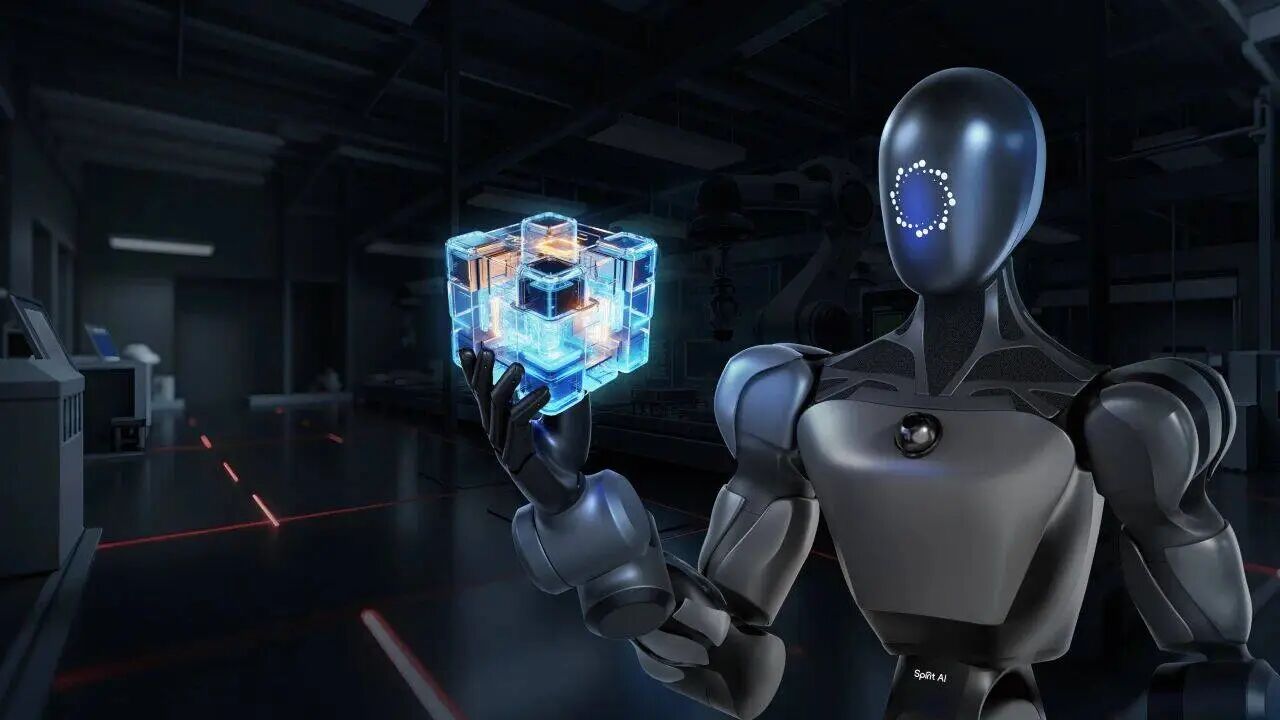
Image source: Spirit AI
In the dedicated embodied robotics track, Spirit AI led with nearly 2 billion yuan, followed by LinkerBot and LimX Dynamics, which raked in about 1.5 billion yuan and $200 million, respectively, in their latest rounds. GALAXEA and AI² Robotics each secured roughly 1 billion yuan.
Adding to this trend, X Square Robot, which completed a 1 billion yuan Series A++ round in January and secured a top-up in February, further illustrates the dynamic. In short, a handful of star projects cornered the vast majority of funding in February, demonstrating a clear "concentration effect" at the top.
In terms of funding stages, the proportion of Series B rounds and later rose significantly, with at least six such deals recorded. This indicates that after initial technical exploration and market validation, some embodied robotics companies have moved past the proof-of-concept phase and entered a critical period of scaled R&D and commercial deployment.
Series B represents the pivot point from "technical validation" to "scaled expansion." The willingness of investors to deploy large sums at this stage suggests these companies have crossed the "valley of death" from zero to one and are now advancing from one to one hundred.
Yet, the February roster also featured early-stage projects like EverWise, TengenX.AI, and Anyverse Dynamics.
This polarization reveals a sector that is becoming both more defined and more unpredictable. The certainty lies in the emergence of clear front-runners; the uncertainty lies in the fact that the endgame remains unclear as new players continue to enter the fray.
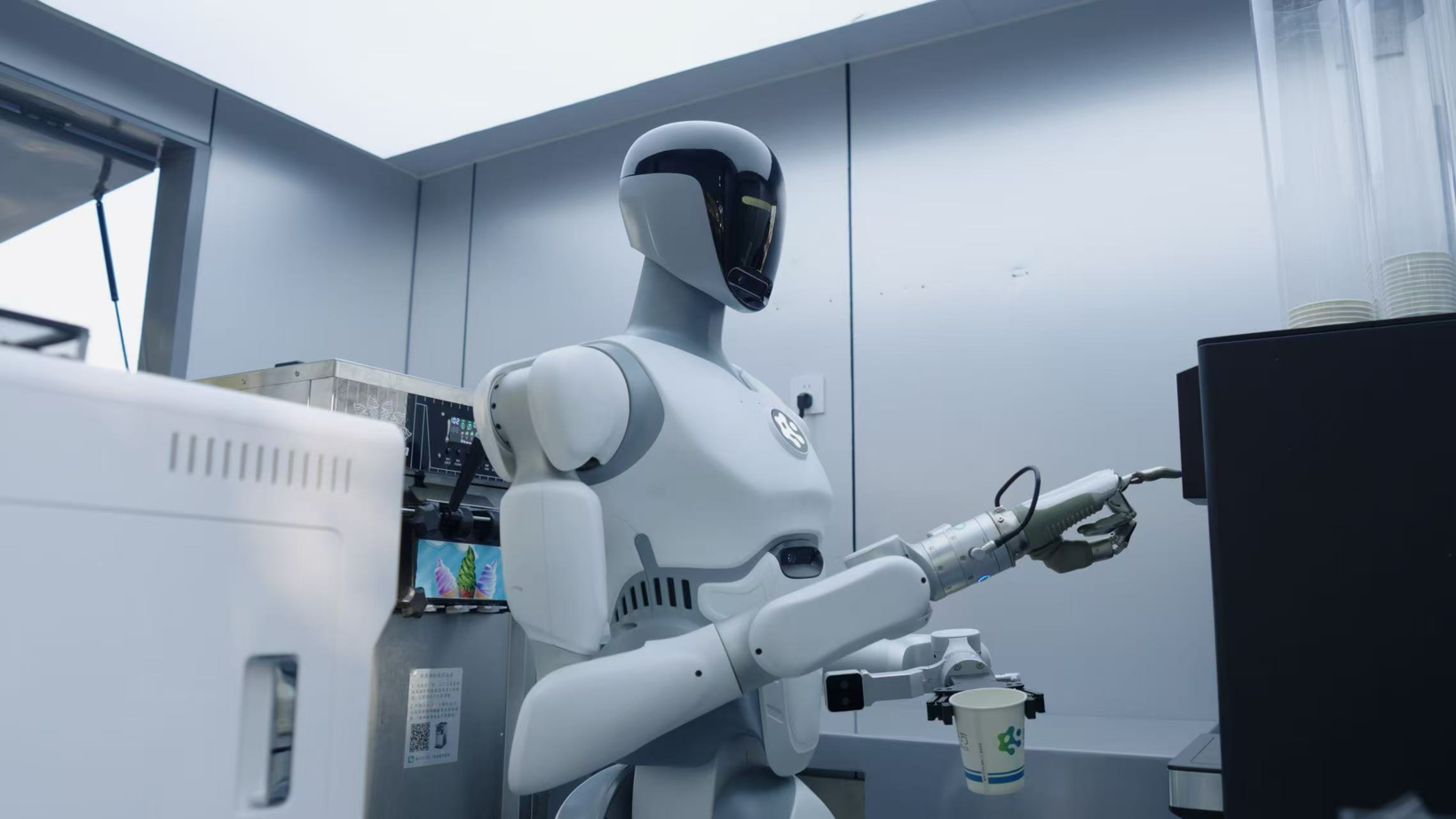
Image source: AI² Robotics
Notably, following the February closings, the valuations of GALAXEA, AI² Robotics, Spirit AI, and X Square Robot successively surpassed the 10 billion yuan mark.
A 10 billion yuan valuation has always been a significant watershed in the tech sector. Crossing it moves a company from being a "notable startup" to a "quasi-giant" with top-tier potential. That multiple companies crossed this threshold in a single month signals only one thing: The hierarchy of the embodied AI sector is solidifying fast, shifting from a "rising of many heroes" to a "battle of warlords."
Getting to this point, of course, is no small feat.
A deep dive into the business structures of these companies reveals a common thread: they all exhibit deep coupling of "software and hardware integration." Spirit AI developed its own VLA model while simultaneously building its Moz1 humanoid robot; AI² Robotics reverse-engineered its AlphaBot series around its proprietary AlphaBrain large model; and X Square Robot launched the "Quantum One" and "Quantum Two" based on its own foundational embodied model.
This implies a fundamental shift in the competitive logic of the embodied AI sector.
In the past, a breakthrough in a single area could secure survival. Today, however, the companies securing massive funding almost universally possess the ability to deeply couple intelligent algorithms with physical entities. They run their models on their own hardware, using real-world physical feedback to iterate algorithms, which in turn drive more sophisticated hardware.
This positive feedback loop is becoming the core moat for market leaders. Especially when algorithms must be attached to physical entities to create value, "soft-hard integration" is no longer a choice—it is a survival imperative.
Beyond integration, competition among leaders has extended from pure technology and product capability to the ability to bind industrial ecosystems. The heavy presence of corporate capital in the investor lists of these companies is the most direct proof.
This also proves, from another dimension, that the "technology narrative" in embodied AI is giving way to a "commercial narrative." When corporate capital steps in, it brings more than just money; it brings potential orders, use cases, and supply chain resources—assets often as valuable as the funding itself for startups.
In other words, the 10 billion yuan valuation acts as a sector "filter." Companies that cross this threshold are poised to develop a stronger Matthew effect in subsequent fundraising, talent acquisition, and customer acquisition. Conversely, those still struggling in the early stages and unable to scale will find it increasingly difficult to secure resources—after all, capital typically adds flowers to the brocade rather than sending charcoal in snow.
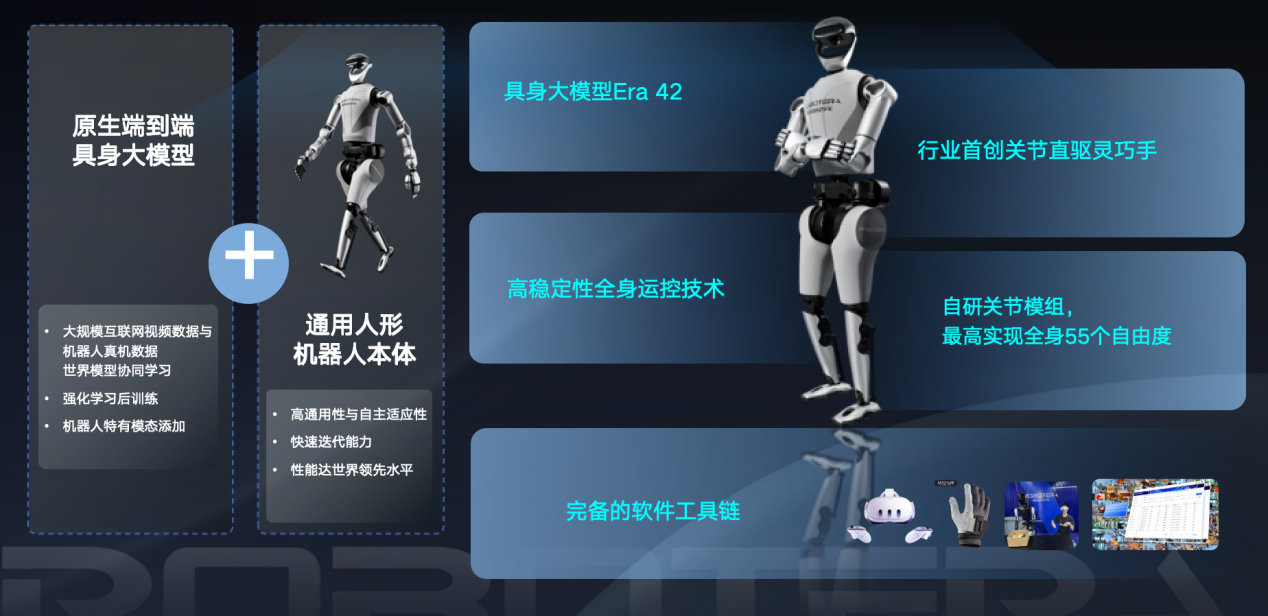
Image source: ROBOTERA
It is worth noting that, in addition to the four companies mentioned earlier along with Unitree and AgiBot, recently, GALBOT, ROBOTERA, and PaXini announced that their valuations surpassed 10 billion yuan in their latest rounds. This brings the total number of Chinese embodied robotics companies in the "10-Billion-Yuan Club" to ten.
On the other hand, it must be noted that a 10 billion yuan valuation is ultimately a pricing based on future expectations.
The capital market has given top players a high starting point, which implies higher expectations. A 10-billion-yuan valuation buys a ticket, not a seat—the real competition has only just begun.
"2026 will be the first year of volume expansion 'from lab to factory,' and leading companies need to quickly deliver on productive value," an analyst at the Gasgoo Automotive Research Institute noted.
From Backstage to Center Stage: The Real Show Begins
If financing data is the "insider's game" for industry professionals, the dense robot performances during the 2026 Chinese New Year were a "spectacle for the masses" facing hundreds of millions of viewers.
And this time, the spectacle was different.
On the CCTV Spring Festival Gala stage, Unitree Tech, Magic Atom, GALBOT, and Noetix Robotics competed side-by-side, covering a full range of scenarios from martial arts and dance accompaniment to comedy sketches and New Year micro-films.
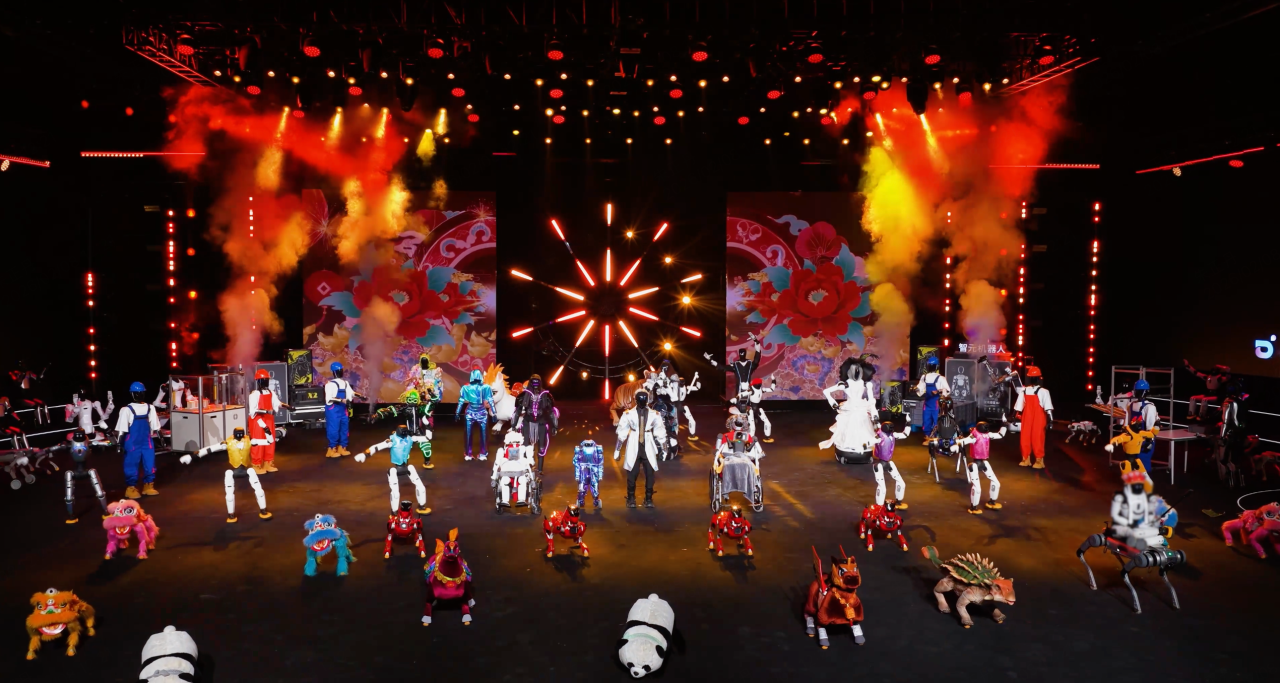
Image source: AgiBot Robot
That wasn't all. AgiBot even launched the world's first all-robot gala, "Robot Wonder Night." Featuring over 200 robots leading 12 performances—including dance, comedy sketches, magic, martial arts, singing, and runway shows—the event achieved multiple "zero-to-one" breakthroughs, such as the world's first robot comedy sketch, first robot magic show, and first human-robot waltz.
The gala even featured a "robots-only" audience section, symbolically declaring that robots, too, can have their own cultural celebrations.
Behind the qualitative shift from "robots performing acts" to "robots carrying an entire gala" lies a systemic leap in technical capability.
After a year of continuous evolution and iteration, robots no longer merely execute pre-set, highly repetitive dance moves. They are now participating in genuine dramatic interactions, understanding plot rhythm and coordinating with actors' lines to perform stably in unpredictable live environments.
So the question arises: Why are these companies racing to put their robots to the test on such high-pressure stages?
The core reason is the battle for the time window.
If 2025 was the year of intensive unveilings for humanoid robots, 2026 is the critical node where companies must prove to the market "I can mass-produce, I can deploy."
In this hyper-competitive track, the Spring Festival Gala stage is seen as a metaphor for "industry admission." Making it there implies that technical stability, financial strength, and government-business relations have all reached the first tier. The logic behind this investment is essentially using a high-cost "stress test" to buy market trust.
Consider the complex stage lighting, crowded wireless spectrum, and unpredictable live interference—these factors are, in some ways, more challenging than a factory environment. If a robot can complete complex interactions on the Gala stage without error, its reliability in industrial and commercial scenarios is effectively endorsed.
In other words, the high-pressure performance at the Gala is not just for the audience; it is for investors and potential buyers.
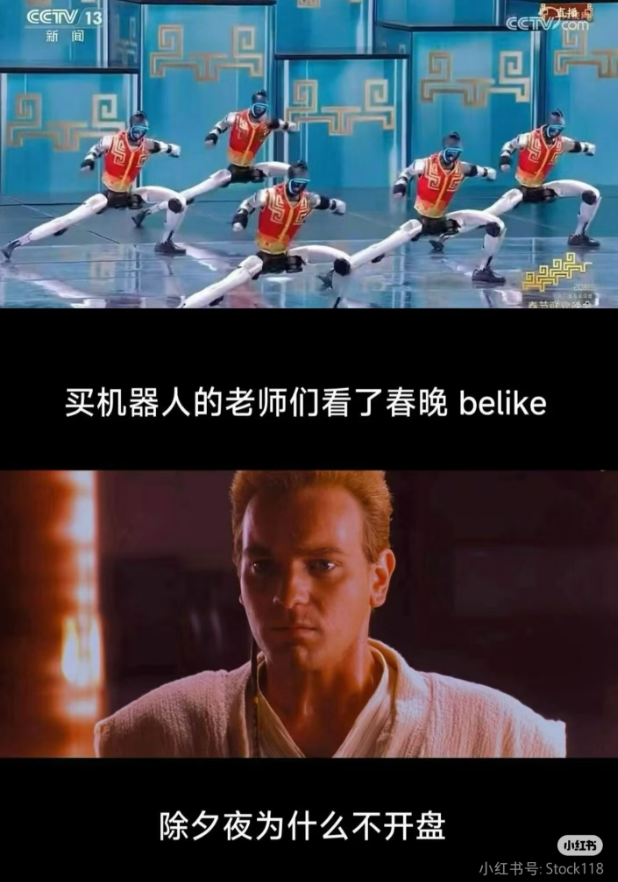
Image source: Internet
The fact that multiple participating companies, including GALBOT, Noetix Robotics, and INSPIRE-ROBOTS, secured large financing rounds shortly after the Gala is the most direct proof.
Meanwhile, the market feedback from the "Gala effect" was immediate. Data shows that within two hours of the broadcast, searches for robots on JD.com surged over 300% month-on-month, customer inquiries jumped 460%, and orders rose 150%. Several robots, including "Gala editions," sold out within minutes of listing.
This high efficiency from exposure to conversion is unmatched by any traditional advertising channel.
It is reported that to meet the maintenance needs of enterprises and consumers, JD.com has even established a comprehensive after-sales repair and maintenance service system covering cutting-edge products like embodied robots, AI robots, and quadrupeds. In 10 cities, including Beijing, Shanghai, Guangzhou, and Shenzhen, JD.com now offers on-site repairs, as well as post-sales debugging and routine maintenance for various types of robots.
In this sense, the Spring Festival Gala stage has become another "battlefield" alongside the financing race. Equity isn't traded here, but companies are endorsed by the gaze of hundreds of millions; orders aren't signed, but nationwide attention completes the market education, shifting the public imagination of embodied robots from a "distant future" to a "tangible present."
This shift in perception is no less significant than any financing round.
For any technology to truly change the world, it must clear two hurdles: technical feasibility and social acceptance. The former relies on R&D investment; the latter relies on the accumulation of trust. And trust often begins with a real interaction, a surprising engagement, or a moment of being moved.
The robot performances of the 2026 Chinese New Year achieved precisely that accumulation.
However, while bringing robots onto the Gala stage marks their transition from performance and research to mass production and real-world deployment—successfully helping embodied robots break into the mainstream once again—calm voices point out that what will truly determine the industry's trajectory lies not under the spotlight, but in the mundane realities of shopping malls, factories, and office buildings.
"When robots start doing actual work, the evaluation system changes. Parameters and movements are no longer the only standards; sustained operational capability, deployment efficiency, and accountable output become core metrics," an industry analyst noted.
Therefore, the judgment is that the true standouts in the embodied AI sector in 2026 will be robot OEMs that enter real scenarios, execute tasks stably, and continuously converge errors during long-term operation, as well as the core component suppliers that support them.
The aforementioned analyst at the Gasgoo Automotive Research Institute also believes that capital will continue to concentrate on companies with deployment capabilities. At the same time, it is predicted that core component companies, such as those developing dexterous hands and electronic skin, are also poised to see intensive financing opportunities.
Conclusion
The financing frenzy in February and the robot performances during the Spring Festival seemed like parallel threads, but they converged at a single point in time.
Capital voted with real money for "certainty," while the Spring Festival Gala endorsed "tangibility" with the eyes of hundreds of millions. As top-tier valuations successively broke the 10 billion yuan mark and "Gala edition" robots sold out in minutes, a clear signal was released: Embodied AI has stepped out of the small circle of tech geeks and entered the field of vision of mainstream capital and mass consumption.
This is the hallmark of an industrialization "tipping point"—technology matures, capital concentrates, and the market starts to pay. Three curves intersecting within the same time window create a combined force sufficient to accelerate the industry forward.
Of course, a tipping point also implies a watershed.
After all, only a few can stand on the Gala stage, and only a few can secure billion-level financing. For those who have secured an "admission ticket," the real test has just begun; for those players who haven't even made it to the table, the window of opportunity is narrowing.


