



Gasgoo Munich-"Following Chinese automakers overseas is a false narrative," the head of a parts supplier told Gasgoo.
The market has never reached a consensus on this view, nor is it easy to label it strictly right or wrong.
Yet, there is no denying that tagging along with automakers solves the "zero-to-one" entry problem for the supply chain. Suppliers can break into overseas markets with lower barriers and greater speed, establishing an initial foothold beyond China. More than one company has told Gasgoo it is willing to follow Chinese automakers abroad.
Regardless of the path chosen, the real test lies in turning a one-time purchase into repeat business, evolving from single-point supply to widespread adoption, and ultimately achieving the reuse of global solutions.

Image source: Doubao generated
How to Avoid One-Off Deals
Over the past few years, Chinese automakers have accelerated their international expansion, pulling a batch of domestic suppliers along with them. From seats and interiors to thermal management, battery systems, domain controllers, and automated driving solutions, the Chinese supply chain is hunting for new opportunities overseas—spanning both traditional parts and the software and hardware of smart vehicles.
For many companies, following established OEM clients abroad is indeed a more efficient route. As automakers build plants or push vehicle sales overseas, suppliers entering those local markets can save heavily on upfront development costs. In their view, overseas business is largely an extension of domestic clients; delivering projects smoothly and solving local problems is already a critical capability.
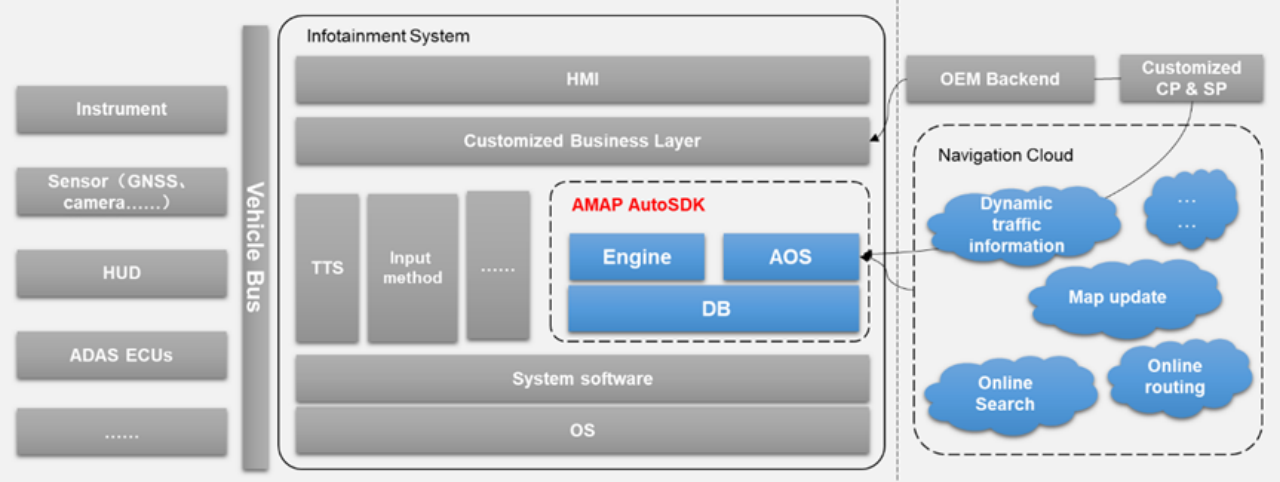
Image source: Amap (AutoNavi)
Amap (AutoNavi) is currently taking this path. Its international Auto SDK product leverages long-term partnerships with domestic automakers to deliver services alongside their global expansion, providing foundational capabilities for smart cockpit development. To date, Amap's international Auto SDK covers over 170 countries and regions—including Europe, Southeast Asia, the Middle East, South America, and Australia-New Zealand—and supports 19 major global languages, including English, Spanish, and Portuguese.
Lipo Microelectronics, a player in the domestic backlight driver market, has also chosen a similar path for going global.
Another group of companies takes a more proactive approach, viewing overseas markets as a new growth engine in their strategic planning. These firms are laying the groundwork for globalization early, often juggling both strategies: following automakers abroad while building their own independent presence. Horizon Robotics and SemiDrive are prime examples.
Horizon Robotics has already seen results from moving in sync with automaker brands into global markets. As of now, it has secured over 60 design wins for export models, partnering with Chinese brands like BYD, Chery, SAIC, NIO, and Great Wall Motor to scale coverage across key regions such as Southeast Asia, the Middle East, South America, and Europe. By validating its technology on actual foreign roads, it is continuously accumulating overseas driving data and automotive-grade engineering experience.
This means Horizon has moved beyond merely securing overseas project awards to entering the stages of mass production delivery and data accumulation. From this perspective, following automakers abroad is an extremely practical and convenient path. As for directly entering overseas markets on its own, Horizon is still taking its first steps.
The two paths may look different, but once overseas, they both face an unavoidable reality: you cannot rely on a single order.
The layout of Chinese suppliers in the Russian market serves as a case study. Around 2022, as Western automakers and suppliers exited one after another, gaps appeared in Russia's existing automotive supply system, and the Chinese industrial chain quickly stepped in to fill the void. In 2023, the export value of Chinese auto parts to Russia more than tripled year-on-year.
The book Automotive Globalization: Practices and Strategies of China's Auto Industry characterizes this phase as "substitution-driven prosperity."
However, some companies feasted primarily on short-term replacement demand, failing to keep pace with product adaptation, local service, and channel construction. When the market environment shifted, some orders, channels, and even cash flows quickly came under pressure. The previous market opportunity had transformed into an operational risk.
The shifts in the Russian market demonstrate that the value of an overseas order lies not just in the order itself. When the market window opens, suppliers can easily seize opportunities based on cost and delivery speed. But once that window narrows, product adaptability, service response speed, and the stability of client relationships directly determine whether overseas business can be sustained.
This is the reality all companies going abroad must face. Take Amap: following Chinese automakers overseas means confronting different countries' map data, navigation services, and compliance requirements. To address this, its international Auto SDK collaborates with overseas map providers like HERE. For companies treating overseas markets as a second growth engine, such preparations must begin even earlier.
How to Secure Repeat Business
You’ve secured the first order. What comes next?
For Chinese supply chain companies viewing overseas markets as a new growth frontier, the value of a single project lies not just in booking revenue, but in distilling products and capabilities from that project that can be reused next time. This is especially true in fields like automotive electronics and automated driving, where technology updates rapidly and development cycles are long. If a company has to rebuild a product from scratch for every new client or market, it will be difficult to truly scale its overseas business.
Therefore, companies need to focus on a more specific question: Can a one-off customization request from a client be crystallized into a general-purpose product that can be replicated across more vehicle models and customers?
This is precisely the lesson Chinese supply chains need to learn as they integrate into the global procurement system.
This is where the global top-tier suppliers hold their advantage. After decades of globalization, companies like Bosch, Continental, ZF, and Aptiv have developed mature platformized products and engineering systems. When a client raises a demand, they can adjust based on an existing technology platform. When new regulations emerge in a market, they can adapt within the existing product architecture. The more clients and projects they handle, the richer the product and engineering experience they accumulate.
But now, Chinese companies are doing this too.

Image source: SemiDrive
SemiDrive's "dual-track" model is built on this logic. Its overseas business operates on two legs: one follows Chinese automakers abroad to accumulate development experience across different markets and vehicle models in mass production projects; the other collaborates directly with overseas Tier 1 suppliers and local industrial partners to enter the supply chains of international automakers.
Based on differing client demands, SemiDrive extracts common requirements from both types of projects to feed back into the iteration of its chip architectures and software platforms. The result is that chip architectures, software platforms, toolchains, and verification systems can be reused across projects. Problems solved in one project can be proactively designed into the next. Reusable experience is the foundation for building repeat business.
Momenta is approaching this from the angle of global automated driving solutions. Through a tripartite collaboration with Xinxin Hangtu and QNX, it is jointly building a mass-production autonomous driving platform that meets global safety standards.
In this partnership, Momenta provides the algorithms, Xinxin Hangtu supplies the automotive-grade SoC chip X7, and QNX offers the safety operating system. The solution has passed TÜV Rheinland's ISO 26262 ASIL D certification and meets European UN R171 access requirements. Integrating algorithms, chips, operating systems, and safety certifications into a single mass-production solution inherently reduces the cost of redundant development and compliance verification across different projects.
Hangsheng Electronics offers another reference point. Yang Hong, the company's chairman and president, stated that if companies merely "patch" domestic solutions for overseas markets—tweaking them for every new region—they will forever be limited to one-off deals. Hangsheng has chosen to frontload international standards into its product and R&D systems. Products are built according to established processes, and technology is continuously integrated and optimized for efficiency, rather than relying on low costs to win.
Talent is also a component of this capability. Hangsheng follows a progressive path of "exporting talent + rotation + local cultivation." Compliance and a mindset for competition are equally critical. In Hangsheng's view, going global requires adhering to local product and labor regulations, adapting to labor laws and union rules, and not simply transplanting the Chinese model.
The logic for repeat business differs for software service firms. Companies like ThunderSoft and Neusoft embed themselves in overseas automaker projects as software service providers, gradually building long-term relationships through continuous participation in R&D and product iteration. When a client's next product continues to utilize the existing software capabilities, the supplier's business extends along with it, achieving the goal of repeat business.
The common thread in these cases is that companies are finding ways to extract more value from a single order. In particular, considering versatility during the product definition phase is key. The technology and engineering experience that remain after a project concludes are where the true value of a project lies.
Business that can be continuously repeated is called long-term business; if it cannot, you have merely done a pile of projects without leaving anything behind.
Choosing the Right Path to Enter and Rise
Once products have a global foundation and a company has accumulated reusable technical capabilities, the next challenge is business expansion. Based on their unique strengths, companies are seeing their globalization paths diverge.
The first path is to continue following Chinese automakers, expanding from a single client to multiple ones. For suppliers with limited scale and insufficient overseas client resources, following automakers remains a highly efficient route.
The second path is proactively entering the supply chains of mainstream overseas automakers. Most supply chain companies are leaning in this direction: continuing to serve the overseas business of Chinese automakers while simultaneously improving their products' global adaptability to actively engage with major global clients.
This approach demands higher standards in product capability, certification, and overseas business acumen. However, once inside the supply chain of a mainstream overseas automaker, client sources become more diverse, offering a chance to break free from dependence on a single automaker client.
The third path involves rapidly establishing an overseas business foundation through mergers and acquisitions. Joyson Electronics' acquisition of Germany's Preh is a classic example. Through M&A, a company can instantly gain overseas clients, technology, talent, and production operating systems, allowing for a faster entry into mature markets compared to starting from scratch.
The fourth path is penetrating the local supply chain by building factories overseas. For companies that have already secured a certain scale of overseas orders, local manufacturing can further shorten the supply chain distance to clients and create conditions for securing more vehicle model and platform projects in the future.
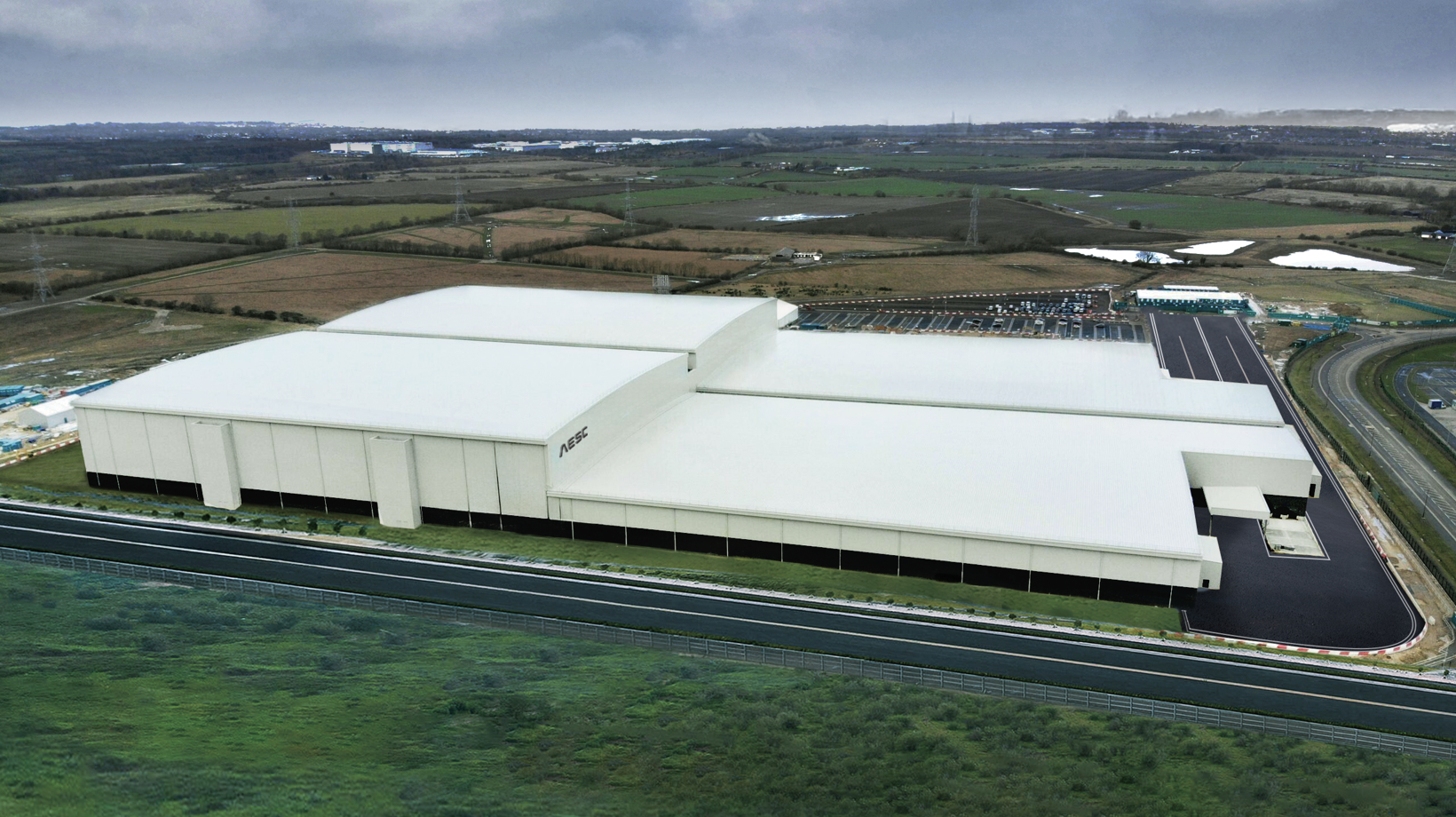
Image source: Envision AESC
For instance, companies like CATL and Envision AESC are building production bases overseas, positioning capacity close to clients to shorten logistics radius and better meet local automakers' requirements for local supply and stable delivery. Desay SV's overseas layout is also continuously extending into R&D, manufacturing, and services.
Of course, top-tier suppliers rarely stick to a single path indefinitely. Instead, they combine strategies based on different markets and business stages. Factors such as the number of clients, order scale, product attributes, financial strength, and global team capabilities all influence a company's choices.
Horizon Robotics demonstrates the possibility of "running two paths in parallel." The company believes that following Chinese automakers abroad and directly entering the global supply chains of overseas automakers will run in parallel and support each other over the long term, rather than being mutually exclusive. SemiDrive is taking a similar approach.
SemiDrive told Gasgoo that both Chinese automakers expanding abroad and mainstream overseas automakers are key service targets, adding that the company is pursuing "two paths in parallel, supporting each other." Rather than prioritizing by "regional ranking," the company follows the needs of automaker clients and the capabilities of its partners, focusing on "project priority."
For the Chinese supply chain, the current stage is largely defined by the continued core role of "following Chinese automakers abroad." Meanwhile, "directly entering the global supply chains of overseas automakers" has just set sail or entered the mass production stage.
Choosing a path is only the first step. As overseas business expands from a handful of projects to multiple clients and vehicle models, the depth of a supplier's local investment becomes a new dividing line. Some companies establish sales and technical support teams first; others set up R&D centers; while manufacturing-oriented companies go further to build production bases. As clients and orders increase, companies gradually fill in their capabilities in local procurement, manufacturing, after-sales, and service.
For example, if a client in Germany raises a technical issue, having to temporarily fly an engineer in from China increases both response time and cost. With a local technical team in place, many problems can be handled directly, and participation in new vehicle model development can be much faster.
For Chinese supply chain companies, truly stabilizing overseas markets requires exactly this kind of sustained investment. As orders increase, the team expands; as clients grow, capabilities are filled in. Business scale and local capabilities reinforce each other, and the overseas market gradually transforms into a solid business base for the company. Only when the relationship between supplier and client shifts from single-project cooperation to long-term partnership can a company be considered truly rooted.
Looking at the longer term, Chinese supply chain companies need patience as they go global. Going abroad is a long process; "it takes at least 10 to 20 years to integrate into the local community and society and truly take root." Only when clients, vehicle models, and markets expand to form a stable local business system does the overseas market truly become a new growth space.
It is precisely this qualitative transformation that the Chinese supply chain truly needs to achieve.
This is also the question that the 8th Gasgoo Golden Gear Awards in 2026 aims to explore further by selecting "China's Solutions Going Global" as its annual theme.

How can "China Speed" be consolidated into global value? What kind of Chinese innovation truly has the potential to become a global solution? After entering the global automaker system, is "being adopted" the finish line, or the start of a new round of tests? What changes are occurring in the next-generation automotive supply chain? Ultimately, how can Chinese solutions cross the "last mile" of regulations, standards, data, local manufacturing, and the industrial ecosystem?
Around these questions, Gasgoo will combine with the 2026 Golden Gear Awards theme "China's Solutions Going Global" to successively release a five-part series observation: From China Speed to Global Value, What Kind of Chinese Innovation Can Become a Global Solution?, Being Adopted Globally Is a New Starting Point for Chinese Solutions, What Is Happening to the Next-Generation Auto Supply Chain in China?, and How Can Chinese Solutions Cross the "Last Mile" of Globalization?.


