



Gasgoo Munich- As the global auto industry accelerates its shift toward electrification and intelligence, most automakers are making battery-electric vehicles their primary focus. Yet Toyota, the industry giant, is displaying a different kind of strategic resolve — continuing to cultivate hybrid technology and keeping it at the core of the group's medium-term development.
Under its latest roadmap, Toyota plans to lift global output of hybrids and plug-in hybrids to roughly 6.7 million units by 2028 — a full 30% increase over its 5 million-unit target for 2026. This means that even three years from now, when pure-electric penetration is expected to be high, hybrid models will still prop up half of Toyota's empire, if not more.
The Indispensability of Hybrids
Toyota's "obsession" with hybrids is actually grounded in market data.
In 2025, Toyota sold 11.3 million vehicles globally, securing the top spot for the sixth consecutive year. Behind that number, hybrids played the role of anchor: they accounted for a massive 42% of global sales, while pure-electrics made up just 1.9%, with sales falling short of 200,000 units. For Toyota, "no hybrid, no championship."
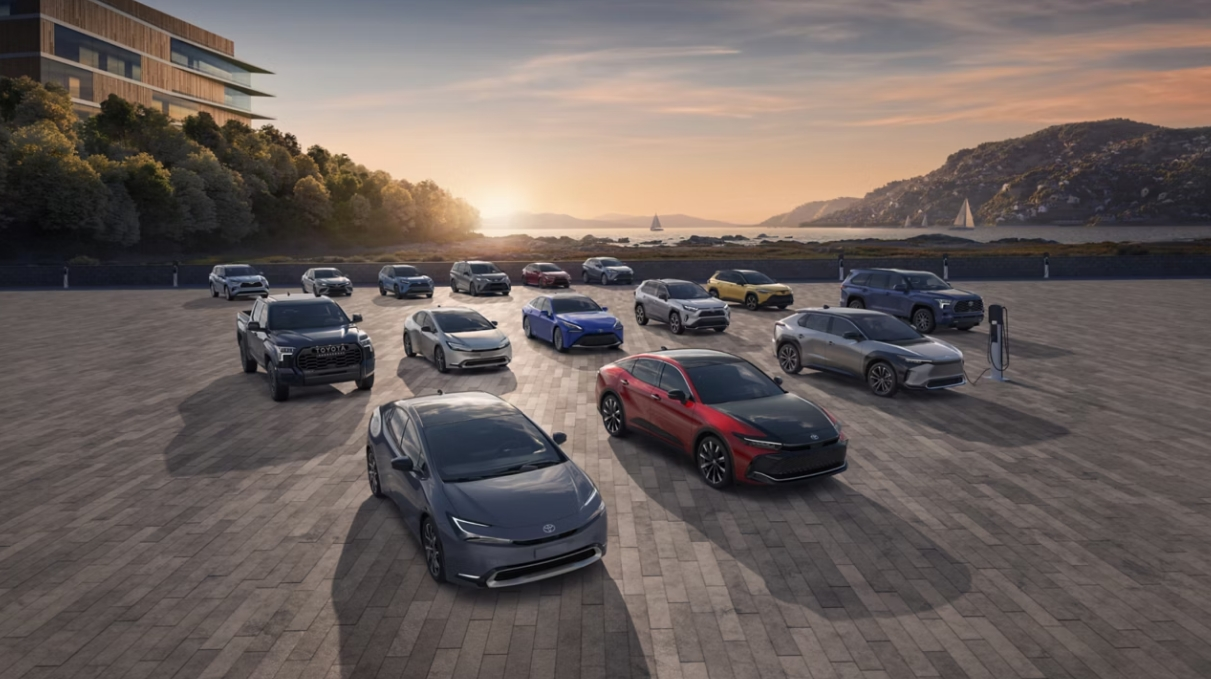
Image Source: Toyota
Looking at major regional markets, the supporting role of hybrids is even more pronounced:
U.S. market: Sales climbed 8% in 2025 to 2.51 million units, driven largely by hybrid versions of models like the Camry.
Japan domestic: Accounting for about 18% of 2025 sales, the market grew 12% year-on-year, still paced by hybrid technology.
Southeast Asia: In Indonesia, Toyota holds over 31% market share, firmly ranking first in ASEAN; hybrid penetration in key regions like Jakarta hits 50%.
China market: Amid intense industry volatility, Toyota sales edged up 0.2%, marking the first annual increase after four years of decline — a turnaround where hybrid products played an irreplaceable role.
For Toyota, hybrids are not just a sales pillar but a technological path it cannot abandon. By the end of 2025, its share of the global hybrid market stood at 58%, far outpacing rivals like BYD. This gives Toyota a depth in R&D accumulation, supply chain construction, and cost reduction through scaling that competitors find hard to match.
If it doesn't keep boosting output and deepening its technological moat, those massive early investments face the risk of becoming sunk costs. From the launch of the Prius in 1997 to today, Toyota has cultivated the hybrid field for nearly three decades, building a complete technical system and supply chain network spanning engines, motors, electronic controls, and batteries.
Toyota is doubling down. In 2025, it announced plans to invest $10 billion in the U.S. over the next five years, with an initial $1.4 billion earmarked for five factories to produce hybrid engines and components. That December, the RAV4 Hybrid hit the market, with plans to produce the Corolla Hybrid sedan in the U.S. after 2028.
Globally, Hybrids Are in Demand
While plug-in hybrids and range-extended vehicles are sweeping across China thanks to policy support and localization advantages, hybrids remain one of the most practical choices for consumers across the wider global market.
In 2025, Europe reached a turning point: sales of hybrid vehicles (including HEVs and PHEVs) surpassed gasoline cars for the first time, becoming the most popular powertrain. Hybrids claimed 34.5% of new car sales in Europe, while pure-electrics — despite recovering somewhat after subsidy cuts — showed weak growth and pricing power, managing just a 20% market share.
In the U.S., the removal of tax credits for pure-electric purchases has cooled consumer enthusiasm for high-priced EVs with charging anxiety, leading them back toward more pragmatic, affordable hybrid models.
Of course, challenges are severe. Chinese automakers are launching a fierce assault on traditional hybrids using plug-in hybrid products. Especially in Europe, Chinese plug-in hybrids currently face only a 10% basic tariff, avoiding the heavy anti-subsidy duties levied on pure-electric models.
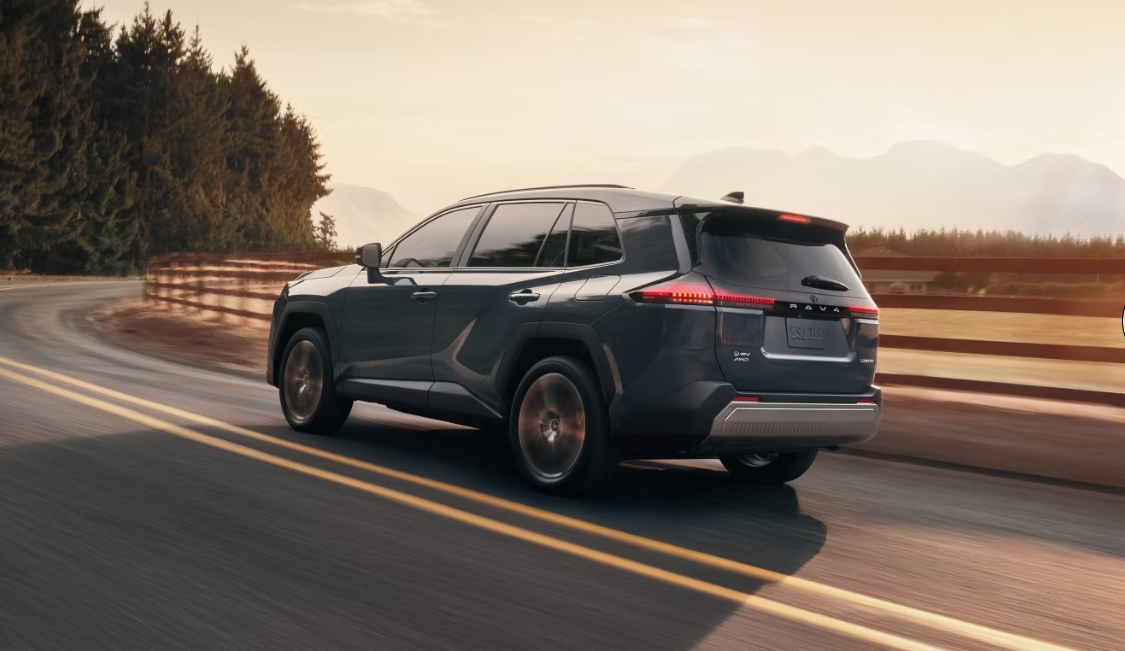
Toyota RAV4; Image Source: Toyota
In 2025, Chinese automakers sold 810,000 vehicles in Europe — a 99% surge that lifted their market share to 6.1%. By December that year, Chinese brands had captured over 13% of Europe's hybrid market. This shows that in the affordable hybrid and plug-in hybrid segments, Chinese companies are rapidly expanding their influence through supply chain advantages and product value.
Toyota knows that relying solely on existing hybrid technology won't hold back the long-term electrification tide. That is why, even as it expands capacity, it is preparing its real "trump card" — solid-state batteries.
Toyota is teaming up with Idemitsu Kosan and Sumitomo Metal Mining to accelerate the build-out of a solid-state battery supply chain. According to the roadmap, its first-generation solid-state batteries are slated for application between 2027 and 2028, offering a range of 1,000 kilometers and the ability to charge from 10% to 80% in just 10 minutes. This is seen as the critical springboard for Toyota's transition from "hybrid hegemon" to "late-blooming EV leader."
Toyota's strategic logic is cautious yet clear: hybrids are there to "win the present," serving as the primary cash flow source to cement its dominance as global number one; solid-state batteries, meanwhile, are there to "bet on the future," acting as a weapon to transcend the limitations of liquid battery technology and counter China's electrification offensive.
This approach may seem sluggish to outside observers, but it represents the optimal solution for Toyota given its global supply chain, resources, and profit margins.


