



Gasgoo Munich- Data released by Cui Dongshu, secretary-general of the China Passenger Car Association (CPCA), shows the average retail price of passenger vehicles hit 180,000 yuan in February 2026. That marks a 15,000 yuan increase from the same period last year, and a clear "year-end rally" compared to the full-year 2025 average of 170,000 yuan. This "down then up" price curve maps out a profound transformation in China's auto market: a shift from chaotic price skirmishes to a new stage of value competition driven by policy guidance, optimized product structures, and the rebuilding of market order.
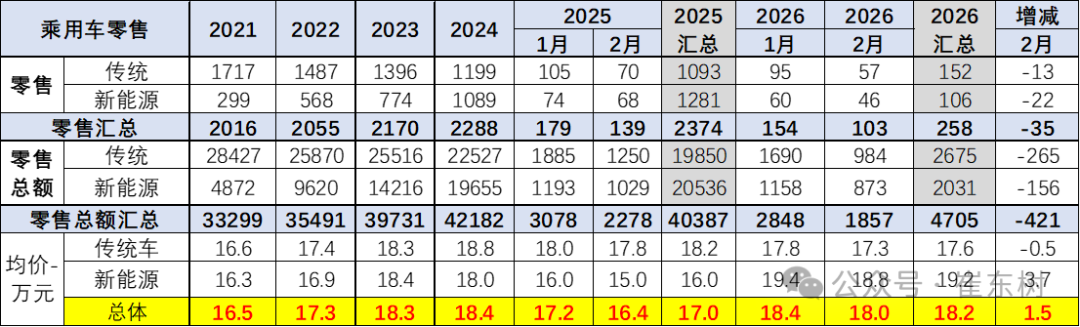
Image source: Cui Dongshu
From a "Price Red Ocean" to "Compliant Operations": Was 2025 the "Watershed"?
Zooming out, 2025 marked a pivotal year as China's auto price wars moved from "frenzy" toward "rationality."
The downward pressure on prices in 2025 was no accident; it resulted from converging factors like capacity expansion and intensifying competition. Data from the China Association of Automobile Manufacturers (CAAM) shows auto production and sales reached 34.531 million and 34.40 million units respectively in 2025—up 10.4% and 9.4% year-on-year. It marked the third consecutive year holding above the 30 million unit threshold. Yet, even as production and sales hit new highs, cutthroat competition pushed the price war into a disorderly phase.
That disorderly conflict brought growing pains to the industry. Cui Dongshu's data indicates the sales profit margin for China's auto sector stood at 4.1% for all of 2025, down 0.2 percentage points from 4.3% in 2024. Vicious competition continued to erode industry profits.
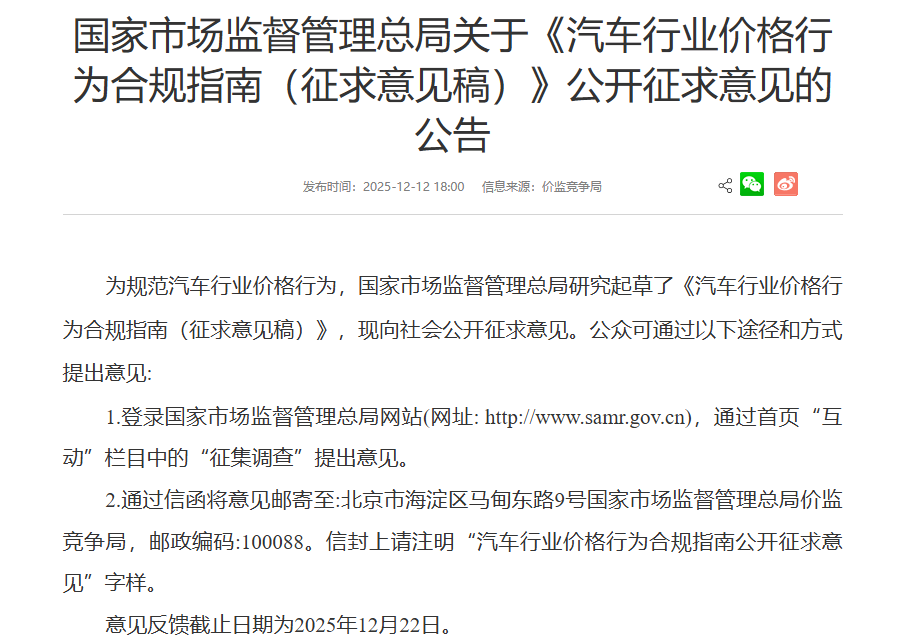
Image source: Screenshot from State Administration for Market Regulation
Addressing this climate, the State Administration for Market Regulation released the "Guidelines on Compliance with Price Behaviors in the Automobile Industry (Draft for Comment)" on December 12, 2025. The guidelines drew clear red lines for automaker pricing, explicitly warning of significant legal risks for behaviors like setting factory prices below production costs to squeeze out competitors or monopolize the market. The policy signal drew an immediate industry response: more than 10 automakers, including Dongfeng Motor, BAIC Group, Chery Automobile, and Leapmotor, issued statements supporting the move and pledging a return to compliant operations.
According to Cui's analysis, the price cuts since 2025 have largely been a "regression of guide prices." As the purchase tax exemption for new energy vehicles shifted to a 50% reduction, inflated official guide prices needed to be lowered to reduce consumers' actual tax burden. Take luxury cars as an example: BMW China adjusted retail guide prices for 31 models starting January 1, 2026. Of those, 24 saw cuts exceeding 10%, five dropped by more than 20%, and the flagship electric i7 M70L was slashed by 301,000 yuan. This shift from "hidden terminal discounts" to "official price adjustments" makes the pricing system more transparent and helps stabilize profit expectations for dealers.
Structural Rebound: Market Shifting and Self-Correction
Cui's data shows the average price of new energy vehicles hit 188,000 yuan in February—a surge of 37,000 yuan from a year earlier. This apparent "price hike" is actually an adjustment in product mix: the low-end market is shrinking while the share of high-value models rises.
The most telling case comes from the micro-EV segment. In January 2026, the micro-electric vehicle market—once responsible for "half the sky" of new energy adoption—cooled significantly, with sales falling noticeably.
This shift stems from a stack of factors. On the policy front, the halved purchase tax for new energy vehicles, combined with new Ministry of Industry and Information Technology (MIIT) safety standards for power batteries, has challenged the segment. On the consumption side, user demand has evolved from simply "having a car to drive" to "driving a good car," raising the bar for safety, range, and intelligence.
At the other end of the market, luxury brands are undergoing a profound reckoning. CPCA data shows the average price of luxury vehicles stood at 358,000 yuan in 2025, down 18,000 yuan from 2024; by February 2026, it had slipped further to 344,000 yuan. This persistent downward drift reflects the shrinking market share of luxury brands in China. Combined sales for BBA (BMW, Mercedes-Benz, and Audi) fell by roughly 260,000 units in 2025 compared to 2024. Mercedes-Benz saw the sharpest decline, with full-year sales dropping 19% to 551,900 units.
The loss of market share transmitted pressure directly to the sales channel. The Automobile Dealers Chamber of Commerce of the All-China Federation of Industry and Commerce reported that Mercedes-Benz dealers are widely grappling with high inventory levels and price inversion—selling below cost. The chamber sent three letters to Mercedes-Benz headquarters between December 2025 and January 2026, urging the company to address the risks facing its dealer network.
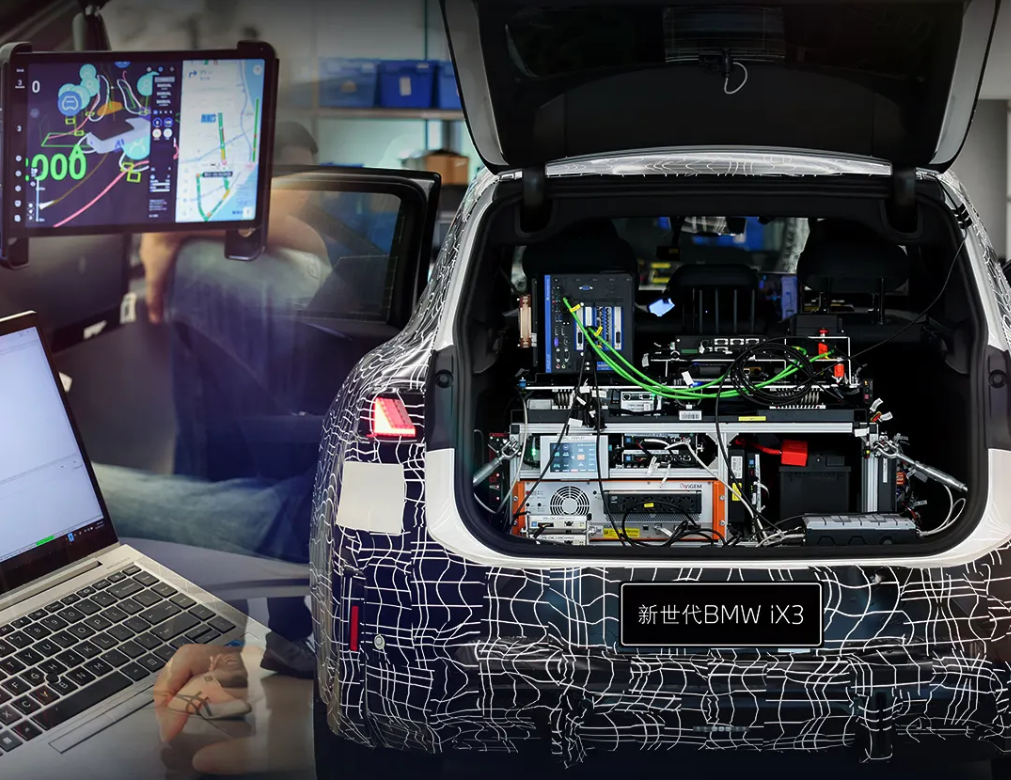
Image source: BMW China
Facing this industry dilemma, BBA's strategy shifted subtly at the start of 2026. Li Yanwei, a member of the Expert Committee at the China Automobile Dealers Association (CADA), notes that BBA's core objective is no longer scale expansion, but rather "stabilizing prices and stabilizing market share." This explains why BMW and Mercedes-Benz chose official price cuts early in the year: rather than letting "hidden discounts" in a chaotic market erode brand value, they opted to actively restructure their pricing system and pave the way for an upcoming "big product year." BMW plans to launch around 20 new models in 2026, including vehicles based on the Neue Klasse pure electric platform; Audi, meanwhile, is betting on localized electric models like the Q6L e-tron and A6L e-tron, developed with Huawei for intelligent driving.
Looking ahead to the full year 2026, the growing pains of market consolidation are likely to persist. Some analysts suggest the elimination race for automakers is accelerating, pointing toward a future landscape dominated by "a few head automakers, a handful of mid-tier players, and a long tail of smaller firms." For the industry, the February price data offers a positive signal: after more than a year of adjustment, the price war has eased to some degree, and the market is slowly pivoting from the aggressive growth of "fighting for scale" to the healthier competition of "fighting for quality."


