



Gasgoo Munich- For years, the auto industry has sung the praises of solid-state batteries, hailing them as the ultimate future of power storage. Yet, the technology has remained perpetually stuck on the "eve of mass production."
The hype was loud, but the landing was silent. Consequently, public excitement and discussion around putting all-solid-state batteries into cars have gradually cooled. Beyond the battery specialists still grinding away in the labs, most people have grown numb to the perennial prophecy that mass production is "just around the corner."
Yet, the winds seem to have truly shifted. Major automakers like Geely, FAW, and BYD have announced in succession that prototype vehicles featuring all-solid-state batteries will debut in 2026, with official market launches following in 2027.
"Progress on solid-state batteries has undeniably accelerated," a technical researcher at an automaker admitted. This latest wave of commercialization news isn't just smoke and mirrors. Within the next two years, we may actually witness the batch application of all-solid-state battery products in mass-produced vehicles.
So, how did this long-delayed shift finally gather momentum?
A Wind Blowing for Decades
Solid-state batteries are not a sudden invention; their research history dates back to the 1830s. It was then that physicist Michael Faraday discovered solid electrolytes like silver sulfide, laying the theoretical foundation for solid-state ionics. For nearly a century after, research on solid electrolytes remained largely confined to the laboratories of materials scientists.
It was Japanese companies in the 1990s that truly brought solid-state batteries into the automotive industry's field of vision. Around 1990, giants such as Toyota and Panasonic initiated early development of the technology.
Image Source: Toyota
The industry's fascination stems from two core advantages. First is extreme safety: solid electrolytes are non-flammable and non-volatile, fundamentally eliminating the risk of thermal runaway and fire inherent in liquid batteries. Second is ultra-high energy density. All-solid-state batteries promise to push the range of pure electric vehicles beyond 1,000, perhaps even 1,500 kilometers, effectively banishing range anxiety.
In an era when electric vehicles were still in their infancy—plagued by both range anxiety and safety concerns—solid-state batteries were regarded by the industry as the "Holy Grail" of new energy vehicles.
However, the path to commercialization has been far from smooth, hampered primarily by three core bottlenecks. The first is the "solid-solid interface impedance" issue. Simply put, while the electrolyte in liquid batteries acts like water, soaking into the electrodes, solids struggle to make intimate contact with one another, resulting in extremely low lithium-ion transmission efficiency.
The second involves technical hurdles like "lithium dendrites." When lithium ions deposit on the anode, they tend to form dendrites—needle-like structures that can pierce the electrolyte and cause short circuits.
The third is material stability and cost. High-performance solid electrolytes, such as sulfides, demand extremely stringent production environments, and their raw materials are costly. This implies that even if the technical route is validated, massive resources are required to build new production lines. In a stage where new energy vehicles had yet to achieve economies of scale, such high-investment, long-cycle, and uncertain technology was rarely a top priority for companies.
These issues kept solid-state batteries trapped in the laboratory. Consequently, the narrative that mass production was "imminent" persisted for years, yet it remained much ado about nothing—all thunder and no rain.
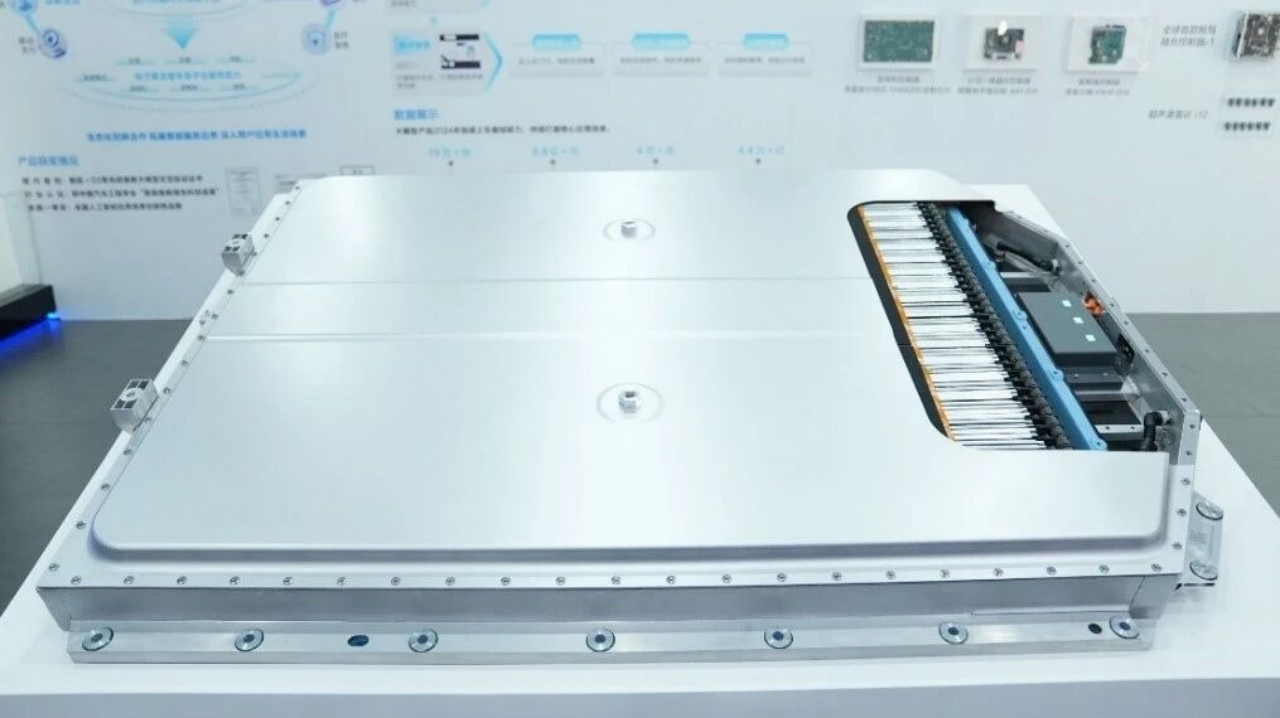
Image Source: WeLion New Energy
Around 2022, the industry even hit a trough. Several battery startups saw their valuations shrink due to technical bottlenecks, with production timetables pushed back repeatedly. Solid-state technology was even dismissed by some outsiders as mere "PPT batteries." Adding to the pressure, the past decade saw significant cost drops and steady performance improvements in lithium iron phosphate (LFP) and ternary lithium batteries, making the position of solid-state batteries increasingly awkward.
Under these circumstances, apart from a handful of battery practitioners and automakers with long-term strategic vision, most people held a wait-and-see or even skeptical attitude toward the technology's commercial prospects.
The turning point arrived after 2024. As semi-solid batteries took the lead in achieving vehicle installation verification, industry confidence began to recover. Last year, automakers like SAIC and NIO rolled out models equipped with semi-solid batteries, breaking through an energy density of 350Wh/kg and pushing pure electric range past the 1,000-kilometer threshold.
Solid electrolyte technology suddenly felt within reach again, revitalizing a sector that had been dormant for years.
What Problems Have Been Solved?
More than one industry insider told Gasgoo Automotive that companies have been closely monitoring the implementation of solid-state battery technology over the past two years.
Starting last year, semi-solid battery products initiated a wave of installations, reaching down into the 100,000 yuan price segment. For instance, SAIC Motor's new MG4 "Anxin" edition began deliveries last December; its liquid electrolyte content has been reduced to 5%, with a price point around 100,000 yuan. Meanwhile, Dongfeng's eπ brand completed testing of a solid-state battery with 350Wh/kg energy density in its eπ 007 model. These developments are viewed by the industry as a critical turning point for solid-state batteries moving from the lab to mass production.
"This isn't a breakthrough in a single technology, but an accumulation of optimizations to many technical details," said He Wei (a pseudonym), a technical researcher at a major brand.
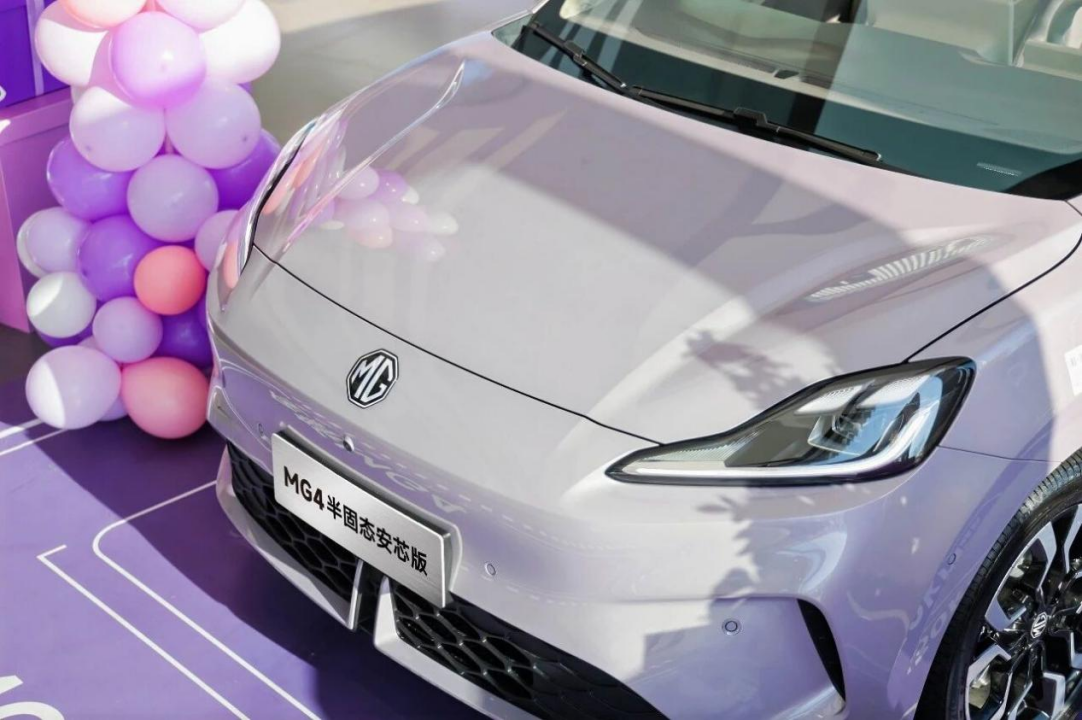
Image Source: SAIC MG
So, what specific hurdles have been cleared in recent years to enable the rollout of semi-solid batteries and bring the popularization of all-solid-state batteries within sight?
First, engineers got ions to "run" inside solids, solving the solid-solid interface issue. To use an analogy: in traditional liquid batteries, ions "swim" through the electrolyte with unrestricted paths. But in solid-state batteries, the electrolyte becomes solid, forcing ions to "trek" through solid material—increasing resistance exponentially.
It is like suddenly being thrown from a swimming pool into a sandbox for a run—naturally, battery performance suffers.
Over the past few years, scientists have devised various solutions. Some applied a "coating" to the surface of cathode and anode materials, effectively paving a smooth runway for ions. Others tweaked the formula of solid materials to improve their inherent "permeability."
In 2025, a team at the Institute of Physics under the Chinese Academy of Sciences discovered an iodine ion doping technology. This allows ions to move much more freely within the solid world, enabling normal operation without applying excessive external pressure to the battery. This breakthrough offers a glimmer of hope for resolving the industry's long-standing solid-solid interface problem.
Second, the issue of overly "delicate" solid materials was addressed. In early development, engineers were plagued by how difficult materials were to control. Sulfide electrolytes, once favored for their performance, release toxic gases upon contact with moisture.
Production workshops for these materials must remain extremely dry, with humidity controls so stringent that equipment investment and operating costs soar. Reportedly, building just one such workshop requires an investment of several hundred million yuan.
In recent years, companies like CATL have adjusted material formulas by adding "stabilizers" to sulfides, boosting their stability. Production conditions have relaxed from requiring an extremely dry environment of minus 80 degrees Celsius to minus 60 degrees Celsius. That 20-degree difference translates to significantly lower equipment costs and energy consumption for factories.
Meanwhile, Qingtao Energy achieved breakthroughs on another track. They realized ton-level production of LLZO (lithium lanthanum zirconium oxide) oxide electrolyte materials, with a yield rate exceeding 98% and costs half that of imported products. The Qingdao Institute of Energy under the Chinese Academy of Sciences even created an ultra-thin electrolyte film just one-tenth the thickness of a hair, greatly boosting ion transmission efficiency.
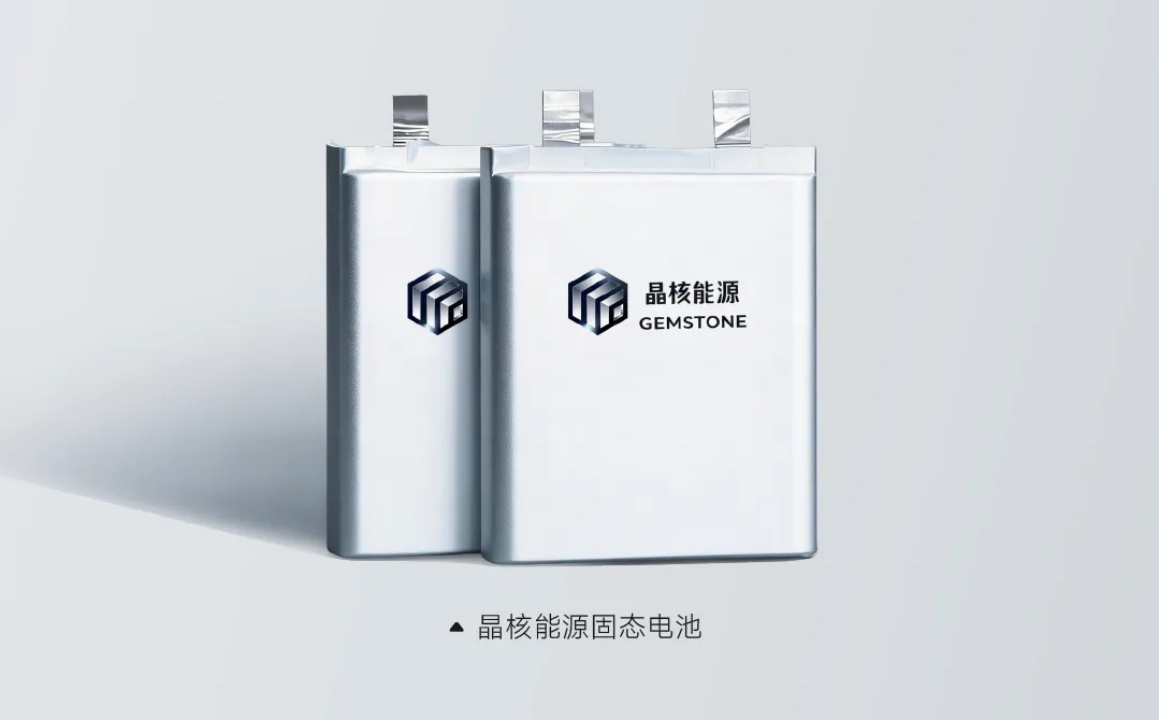
Image Source: Starry Sky Project
At the start of 2026, a team at the University of Science and Technology of China developed a new electrolyte using low-cost zirconium tetrachloride as a core raw material. The cost is just one-twentieth of mainstream sulfides, and its hardness is 10 times that of traditional oxides. Moreover, this material isn't as "finicky," placing far lower demands on production equipment, meaning many existing battery production lines can be directly repurposed.
This breakthrough has led many in the industry to sigh with relief: the cost hurdle for solid-state batteries may be overcome sooner than expected.
Third, the leap from laboratory to commercial product was achieved. The manufacturing process for solid-state batteries differs entirely from traditional liquid batteries. It is like switching from making steamed buns to baking bread—you have to buy all new equipment.
Over the past two years, Tesla and CATL made breakthroughs in dry electrode technology. This process eliminates the need for solvents and drying steps found in traditional methods, reducing energy consumption by 40% and cutting costs by 30%. Simultaneously, domestic equipment manufacturers have advanced. Companies like Lead Intelligent and Hymaz have localized specialized equipment such as dry rooms and isostatic presses, lowering the cost of building a new production line by 40% compared to a few years ago.
With so many problems solved, why must we wait until after 2027 for all-solid-state batteries to become widespread? The reason is simple: between the laboratory and mass production lie several unavoidable obstacles.
The first hurdle is cost. Currently, all-solid-state batteries cost four to six times as much as liquid batteries, with a battery pack exceeding 1,000 yuan per kilowatt-hour—a price only high-end models can absorb. Costs are expected to gradually fall to an acceptable range only after 2027, as materials and equipment mature further.
The second hurdle is the validation cycle. Batteries must undergo extremely rigorous testing before installation. They must withstand minus 40 degrees Celsius cold and 85 degrees Celsius heat, show no significant performance degradation after thousands of charge-discharge cycles, and survive violent impacts. Running this full suite of tests takes at least a year or two. Newly released national standards have also set explicit requirements for these tests.
The third hurdle is capacity building. All-solid-state battery production lines have low compatibility with liquid battery lines, requiring large-scale retrofits or new construction. A decent production line typically takes two to three years from planning to commissioning.
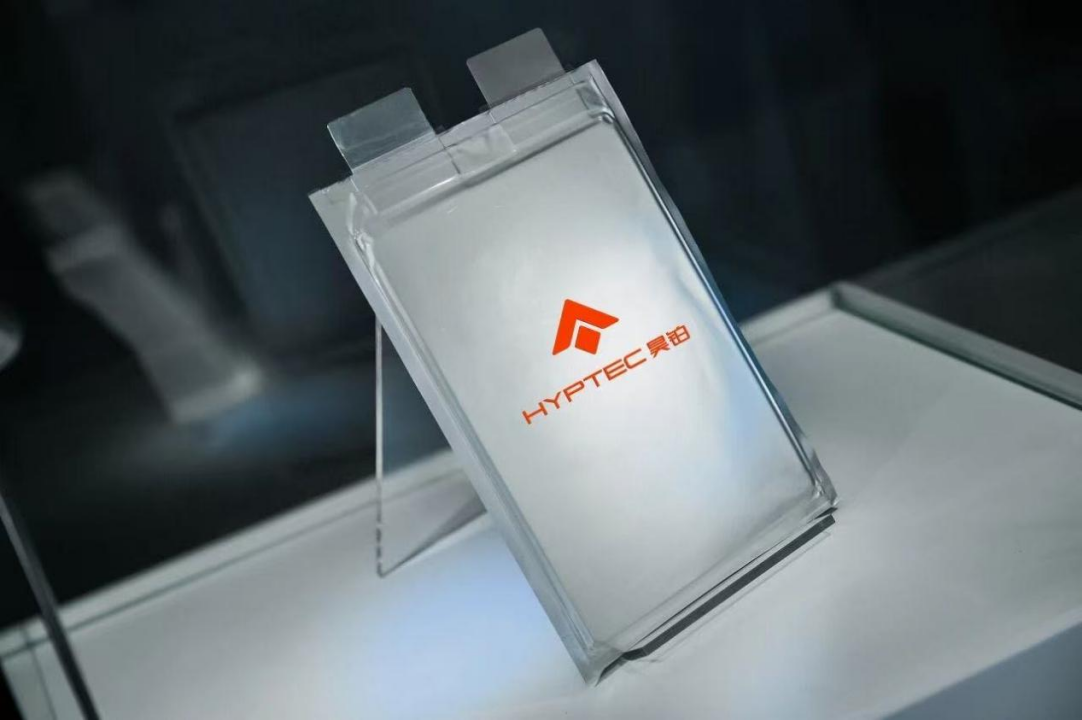
Image Source: GAC Group
Policy will serve as a catalyst. The Ministry of Industry and Information Technology has explicitly identified all-solid-state batteries as a key breakthrough direction, and the first national standard for automotive solid-state batteries will be officially released in July, marking a clear track for industry development.
Based on this, the industry consensus is now: 2026 will be the "inaugural year of verification" for all-solid-state batteries, featuring small-batch prototype trials and installation tests; 2027 to 2028 will see small-scale mass production, initially in high-end models; and large-scale commercial application will arrive after 2030. The production timeline actually aligns with previous predictions—the difference is, this time it's "for real."
Analysts at Huatai Securities note that the current focus of industrialization is shifting from "materials science" to "production engineering," making equipment the key to realizing advantages. They predict that all-solid-state battery equipment will see a surge in volume between 2027 and 2030—a critical window for industrialization where related manufacturers will be the first to benefit.
What Changes Will It Bring to the Auto Market?
If all-solid-state batteries truly achieve mass production and installation in 2027, what shifts will the automotive market experience? Gasgoo Automotive offers the following speculations:
First in the line of fire are the extended-range electric (EREV) and plug-in hybrid (PHEV) markets. Their popularity in recent years stems largely from exploiting the weaknesses of pure electric vehicles.
Driven by range anxiety, consumers felt pure electrics couldn't go far enough or charge fast enough, compounded by incomplete charging infrastructure. Buying a "fuel-or-electric" PHEV became a transitional choice. This logic holds today, but in the era of solid-state batteries, it may need rethinking. As Huatai Securities points out, all-solid-state batteries completely replace liquid electrolytes, offering disruptive advantages in safety and energy density.
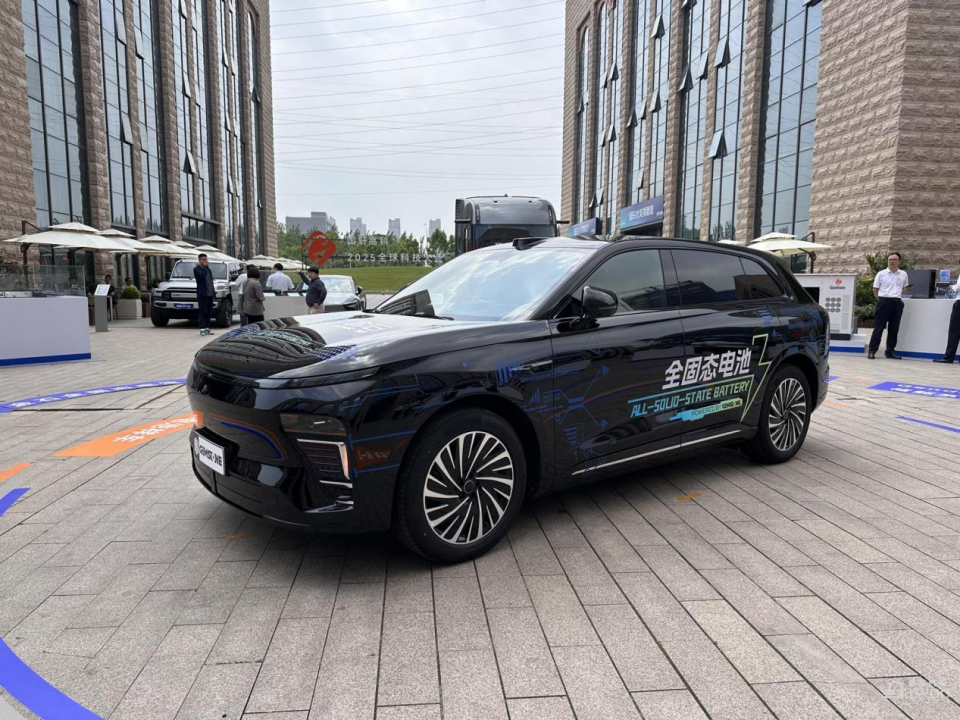
Image Source: Gotion High-Tech
According to the industry's general timeline, solid-state batteries mass-produced between 2027 and 2028 will easily break the 1,000-kilometer range barrier, with 10 minutes of charging providing 800 kilometers of range. Winter range degradation can also be controlled within 10%. By then, range anxiety will no longer be a shortcoming of pure electric vehicles. With charging becoming more convenient, the "best of both worlds" value proposition of EREVs and PHEVs may lose its luster.
Internal combustion engine (ICE) vehicles may face an even tougher ordeal, with their survival space further compressed. The cost reductions and performance gains brought by solid-state batteries will make electric vehicles the preferred choice in the vast majority of driving scenarios.
The prevailing view is that by 2030, ICE vehicles will further retreat from the mainstream passenger market, retaining a foothold only in niches like commercial vehicles, off-roaders, and low-end commuting. The market structure is expected to settle at 40% pure electric, 40% hybrid, and 20% ICE (dominated by hybrids). For traditional automakers slow to transform, this is undoubtedly a matter of life and death.
The competitive landscape of the auto market is set for a reshuffle. Whoever secures solid-state battery technology first secures their ticket for the next decade.
SMM predicts that global solid-state battery penetration will sit around 0.1% in 2025, potentially reaching 4% by 2030, and approaching 10% by 2035.
Looking at current layouts, a first tier is taking shape. China's BYD, FAW, GAC, Changan, and NIO; Japan's Toyota and Nissan; South Korea's LG Energy Solution, Samsung SDI, and SK On; and the US's Tesla are all aiming for the 2028 timeframe to pioneer all-solid-state applications. These companies are either grinding away at core technologies themselves or are deeply bound to battery manufacturers.
The second tier consists of players relying on partnerships to catch up quickly, such as Volkswagen, BMW, XPENG, and Li Auto, with installation timelines roughly between 2026 and 2029. Volkswagen Group plans to launch vehicles with all-solid-state batteries in 2026; BMW unveiled an EV prototype equipped with the technology in 2025 and aims for mass production before 2030.
The most precarious position belongs to the third tier: traditional automakers with insufficient technical reserves, limited funding, and weak supply chain integration capabilities.
In this tech race, new forces actually have an opportunity to overtake on the bend. Solid-state batteries are a contest of technical strength, not brand heritage. New players who break out early in battery technology may find a chance to rewrite the market rankings.
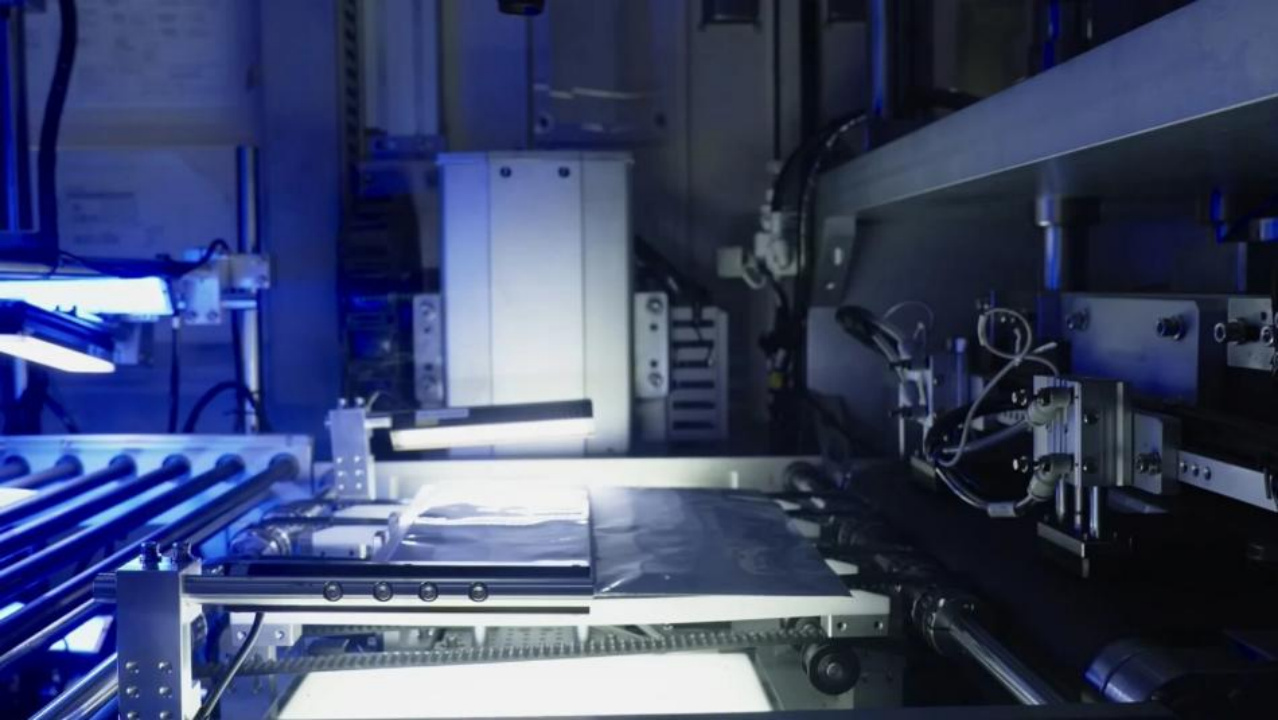
Image Source: Farasis Energy
The pricing structure could also be redefined. Like any new technology, solid-state batteries won't be cheap at launch. From 2026 to 2027, they will likely concentrate in high-end models priced above 300,000 yuan, with a penetration rate of around 5%.
But as capacity ramps up and costs decline, between 2028 and 2030, solid-state battery costs could be squeezed to 0.8 to 1 yuan per Wh. By then, electric vehicles with 1,000-kilometer range should descend into the market below 200,000 yuan. This means competition in the solid-state battery market will intensify.
After 2030, when solid-state battery costs reach parity with liquid batteries, it will propel the popularization of electric vehicles into a new phase.
Of course, change won't happen overnight. Liquid batteries won't sit idly by. Companies are researching 4C, 5C, and 6C fast-charging technologies, while lithium manganese iron phosphate (LMFP) and large-format cylindrical batteries are also seeing continuous breakthroughs in energy density. In the short term, the low-to-mid-end market will remain the domain of liquid batteries. Solid-state batteries still need to proceed step by step to achieve full rollout. "The threshold for all-solid-state batteries is high and the difficulty is great; do not seek quick success, or you will reach your goal slower," Ouyang Minggao, an academician at the Chinese Academy of Sciences, once warned.
But the direction is clear. From alleviating range anxiety to reshaping powertrain types and rewriting the competitive landscape, solid-state batteries are altering the underlying logic of the automotive industry. For consumers, this means longer range, faster charging, and safer travel. For automakers, the message is stark: embrace the transformation, or be left behind by the times.


