Gasgoo Munich- On April 22, Amap unveiled its Auto Mobility AI Agent. The launch marks a pivot from the traditional model of passively receiving commands and mechanically executing routes to an "active service" approach — one capable of understanding vague user expressions and autonomously planning complex itineraries.
Traditional in-car navigation operates on a "human-adapts-to-system" logic, requiring users to explicitly state destinations and route preferences before the system plots a path. Amap’s new AI Agent changes that dynamic by endowing the system with understanding, reasoning, and proactive service capabilities.
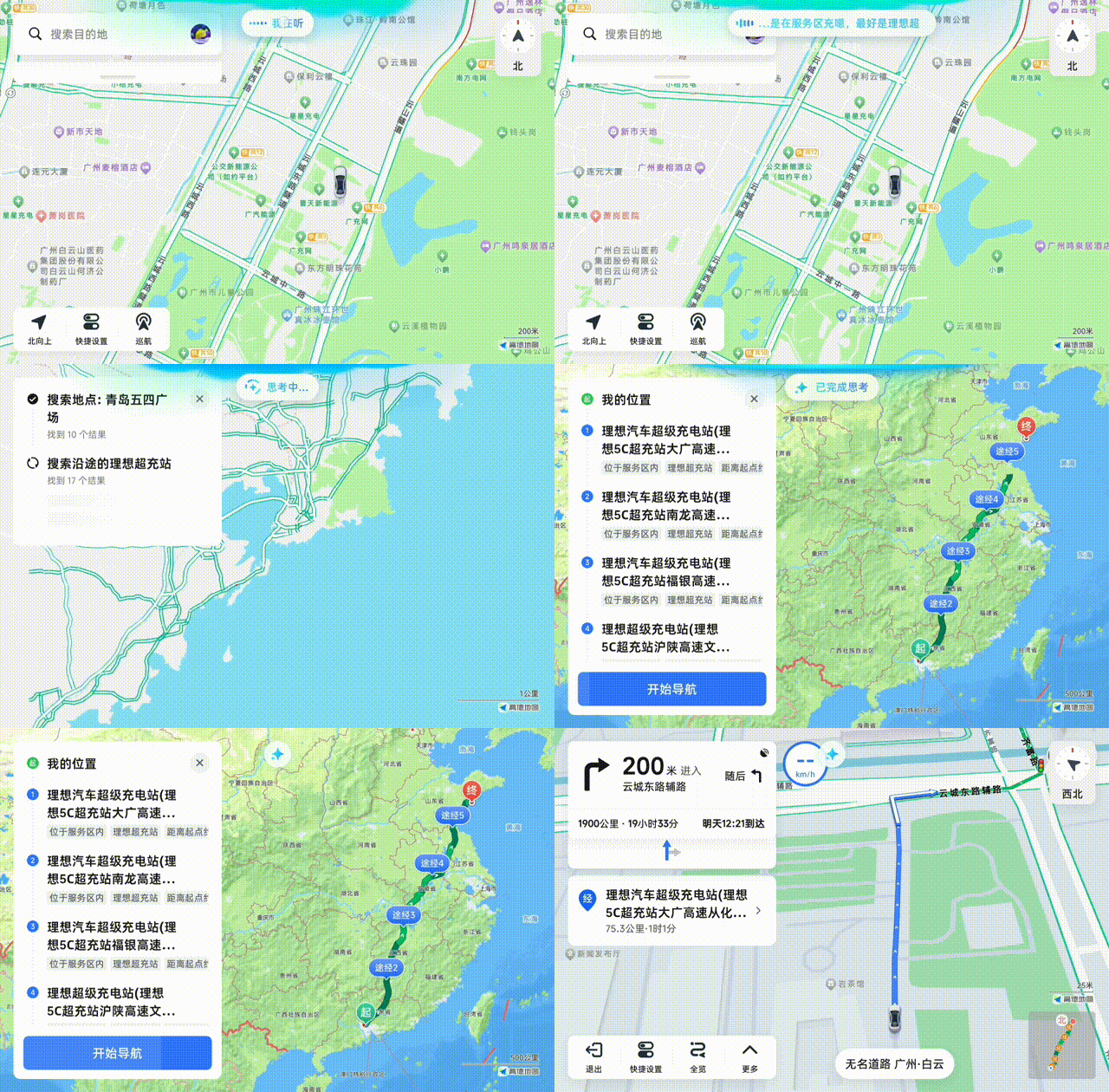
Image Source: Amap
The system features four core capabilities. First is precise fuzzy semantic search: if a user mentions a "theme park with Transformers" or a "round lake where you can sail," the system uses these clues to pinpoint the exact location.
Second, complex itineraries in a single sentence: users can describe multiple stopover needs in one go, and the system handles POI retrieval, stop sequencing, and path planning to deliver a coherent route instantly.
Third, dynamic route reasoning: for long-distance EV trips, the system synthesizes battery levels, real-time supercharger availability, and dining preferences. It aligns charging stops with meal breaks to generate a plan that balances refueling needs with rest.
Fourth, multi-turn conversational route editing: if a user requests adjustments like "too fast" or "avoid traffic" while navigating, the system grasps the optimization intent and re-plans the route in real time.
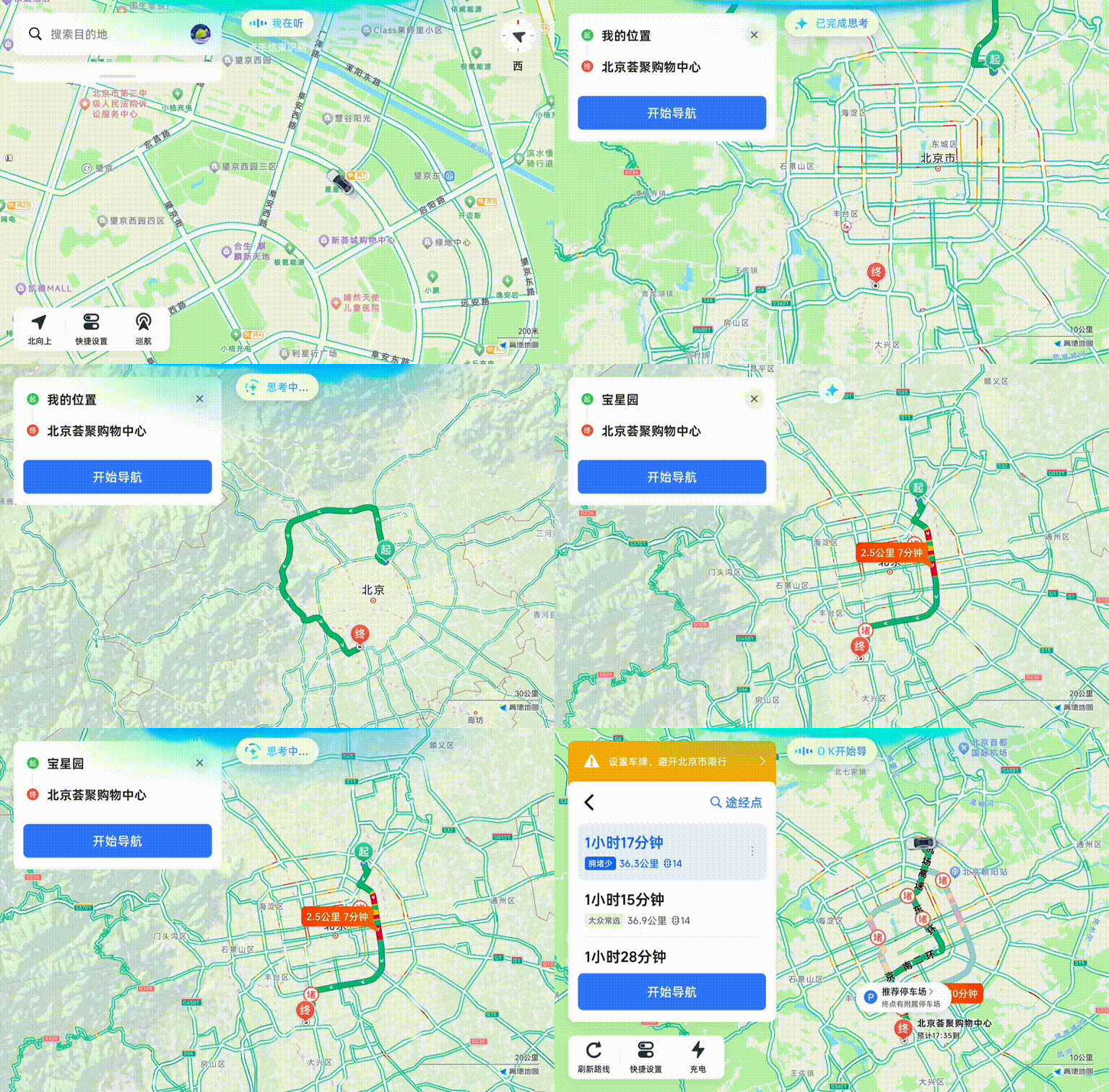
Image Source: Amap
Underpinning this is an upgraded technical architecture. The system employs a dual-engine design: a "Language Brain" and a "Spatial Brain." The Language Brain, powered by the Qianwen large language model, handles natural language understanding, while the Spatial Brain taps into Amap’s geographic database to validate intent feasibility and match routes.
The design adheres to an "intent-fact separation" principle. All geographic information must be validated by the Spatial Brain before presentation, minimizing the risk of routing users to closed venues or construction zones.
On personalization, the system continuously adjusts service strategies based on user behavior. It gradually identifies traits like road preferences and willingness to detour—without relying on fixed tags—to deliver a tailored experience.
Amap notes that smart cockpit interaction is evolving from simple voice recognition and command mapping toward intent understanding and capability collaboration. Under a "cloud decision, edge execution" model, the cockpit’s main Agent handles global intent and task decomposition, while Amap acts as a mobility sub-Agent to execute travel tasks.
This suggests the partnership between automakers and map providers is shifting from traditional SDK integration to Agent capability fusion. The mobility Agent is poised to become a critical piece of infrastructure within the smart cockpit ecosystem.