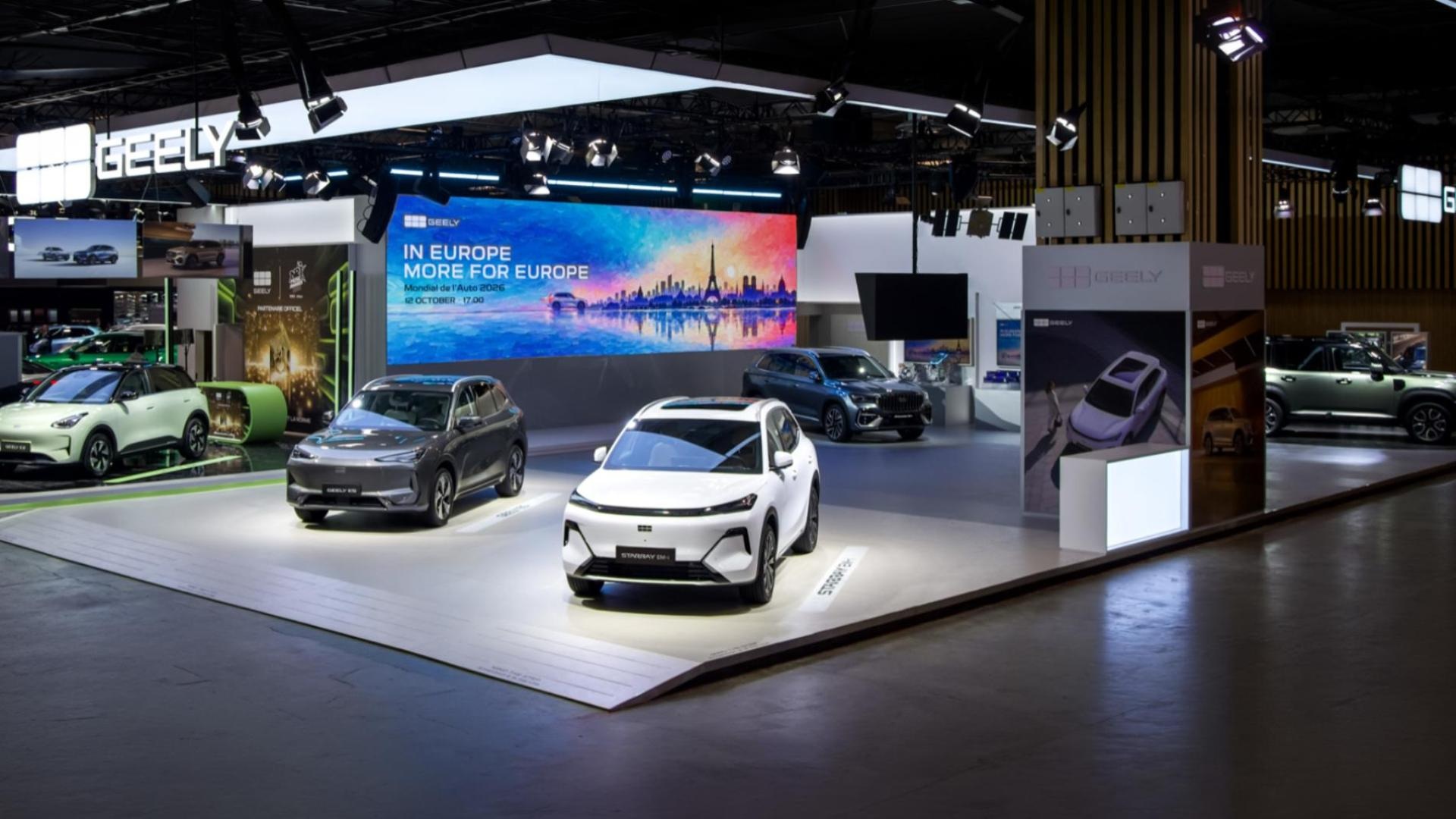
Gasgoo Munich- China's auto exports are still in full swing in 2026. Monthly shipments topped 1 million units for the first time, while the first half saw over 5.3 million units shipped—a surge of more than 50% year-on-year. The country's grip on the title of world's top exporter is tightening.
Yet behind these dazzling numbers, a debate is quietly heating up across the supply chain: when will the export boom hit its ceiling?
Gu Huai, a pseudonym for an insider at a Chinese Tier 1 supplier with an early overseas footprint, just returned from a tour of global markets. He puts the ceiling at 2029, with a peak volume of roughly 12 million units.
He isn't alone. At a recent salon hosted by Gasgoo Automotive Research Institute, several industry insiders converged on a peak window between 2028 and 2030. Estimates for that peak range from 12 million to 15 million units, with the divergence hinging on two key variables: the pace of tightening trade barriers and the speed at which overseas capacity comes online.

Image source: Leapmotor
Growth Still Climbing, but a Ceiling Looms
Roll back the clock two years, and the industry's prediction for the export peak was much earlier.
The logic then was clear: top automakers' overseas plants would start production between 2025 and 2026, quickly replacing complete vehicle exports with local capacity and flattening the growth curve. But exports have shown far more stamina than expected. The "ceiling" once thought imminent has been shattered by a stream of record-breaking figures.
Data from the General Administration of Customs, compiled by the China Association of Automobile Manufacturers (CAAM), shows China exported 5.307 million vehicles in the first half of 2026—up 52.8% year-on-year. The CPCA puts the January-July figure at 6.4 million units, a 54% jump. At this pace, breaking the 10 million mark for the full year is all but certain.
Faced with these sizzling numbers, the industry has revised its timeline for when exports will peak.
"We originally thought this year or next would be the peak, given that overseas factories have started local production," says Chen Mo, an insider at a global Tier 1 cockpit electronics supplier. "But now, that timeline has to be pushed back."
He attributes that resilience to a diversified market layout. Leading Chinese automakers are expanding simultaneously across Southeast Asia, South America, and Europe, with staggered growth cycles that prop up the overall export volume. "We won't see the explosive growth of before, but it will likely hold steady or dip slightly—there won't be a cliff-like drop."
Similar views are common across the supply chain, though companies are watching from different angles.
Jiang Yu, an insider at a domestic automotive semiconductor firm, believes exports will keep growing for another two or three years. Only when they hit around 15 million units will they hit a real bottleneck. That implies a much higher global market share for Chinese cars, which will inevitably trigger denser trade protection measures.
Lu Ming, head of overseas business at a leading Chinese interior and exterior trim supplier, focuses more on the capacity cycle. He observes that Chinese automakers' overseas capacity will gradually come online between 2027 and 2028. Exports won't slam on the brakes immediately; instead, they will continue rising along with the production ramp-up. A true balance between exports and overseas capacity will likely emerge around 2028 or 2029.
Zhou Yan, who oversees overseas business for a global auto parts giant, offers a more granular take from the front lines. By metric, pure CBU (completely built unit) exports will likely hit an inflection point in 2028, seeing a substantial drop in volume. If KD (knocked-down) kits are included in the total, the data will look smoother, but the downward trend for pure vehicle exports is clear.
Tian Tao, an analyst at an automotive consultancy, suggests that a combination of geopolitics, tariff policies, and local capacity will likely push the export ceiling to around 2030.
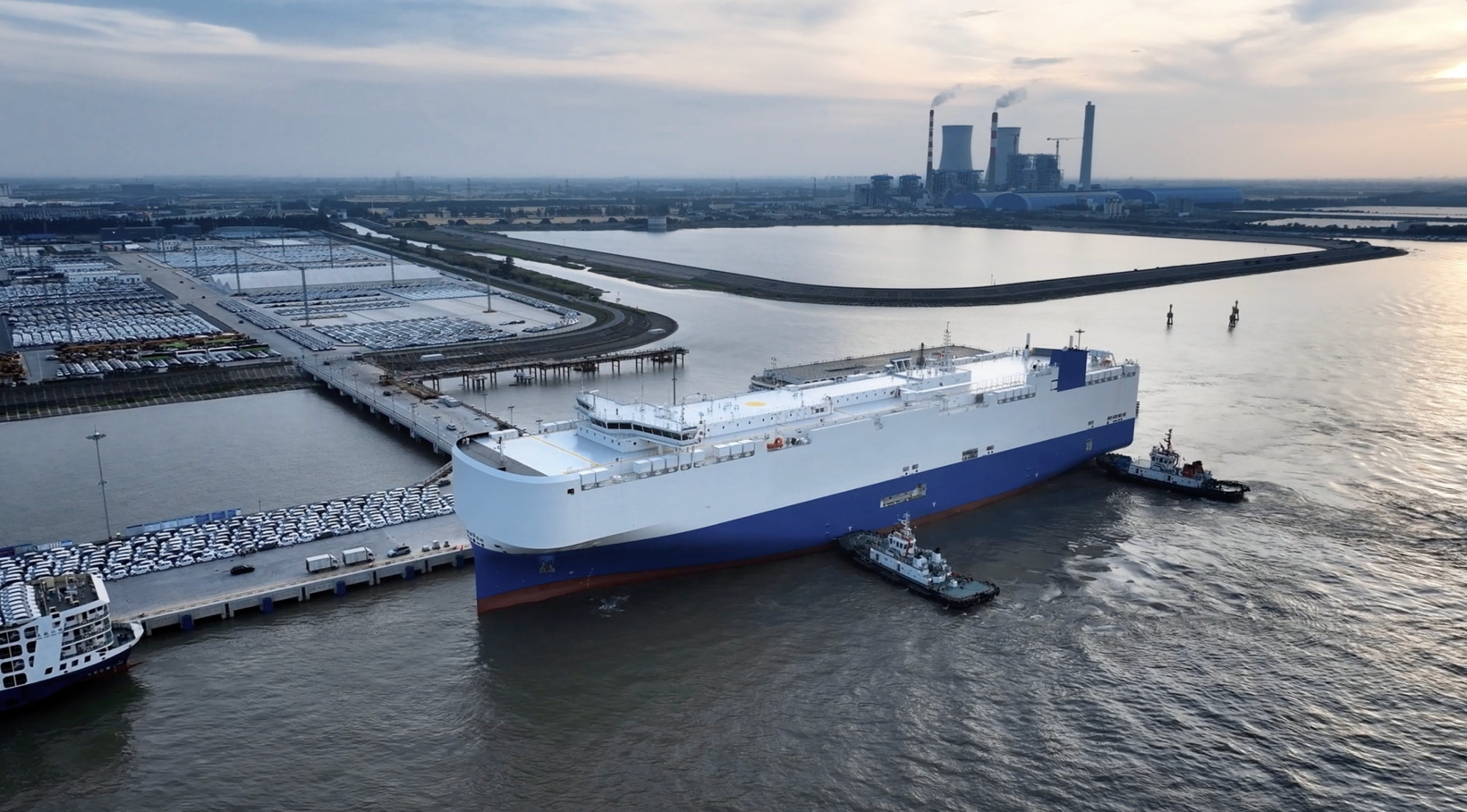
Image source: Chery
Of course, these insiders all emphasize one thing: an export cap does not mean a cap on Chinese automakers' overseas sales.
Su Wan, who oversees overseas expansion for smart cockpits at a parts supplier, puts it plainly. The momentum toward 10 million exports this year is stunning, but volume will likely hit a bottleneck in the coming years, stabilizing rather than skyrocketing. Factor in local production, however, and the total scale will keep climbing. "Exports have a ceiling, but the globalization of Chinese automakers doesn't. Those are two fundamentally different things."
Zhao Kai, a development director at a German parts supplier, backs this up from an industrial logic perspective. New energy vehicles becoming the main export driver has naturally extended the growth cycle. The battery technology iteration behind EVs creates a synergy with national energy storage strategies, making China's industrial advantage more solid than in the internal combustion era. The resilience of export growth has far exceeded initial expectations.
Barriers and Capacity: Two Real-World Constraints
As fierce as the momentum is, no one believes exports will rise forever. Two ceilings are pressing down: one is the rising wall of trade policy barriers, and the other is the shift toward local production voluntarily driven by automakers themselves.
Europe is the first market to feel the chill.
The EU's anti-subsidy tariffs on Chinese pure electric vehicles are now in effect, with several automakers facing varying additional rates. Combined with base duties, the total tariff cost for some brands has risen significantly, and the measures are valid for several years. This is just the first gate; a more systematic overhaul of rules is on the way.
Lin Zhou, an insider at a Spanish joint venture parts firm, reveals that the EU's "Industrial Accelerator Act" is still in the draft legislative stage. Industry projections suggest the bill could pass in 2027, with auto-related constraints rolling out after it takes effect. The window is concentrated around 2027-2028, though the final pace depends on negotiations between the European Parliament and the Council.
The core logic is blunt: protect and prop up Europe's native auto industry through local content requirements, restrictions on public procurement, and investment reviews.
"2026 is a critical juncture," Lin adds. A leading new energy brand's Hungarian plant is officially running this year, but carbon emission qualifications won't be calculated until 2027. The EU will bring in third-party auditors to check 2026 data to determine final carbon metrics. Those metrics tighten every year—miss the standard, and you pay extra tariffs. Beyond the EU-wide bill, individual member states are rolling out local policies, openly or covertly pushing Chinese automakers to invest locally. It's all about using rules to force localization.
Fang Cheng, an insider at a domestic auto electronics firm, is even more direct. "We aren't just there to make money from Europeans; we're restructuring their industrial landscape. For European players guarding a century-old foundation, making money is tolerable. But having newcomers steal their lunch and change the game? That's a slap in the face. The backlash will only intensify. Trade protection isn't a question of if—it's already here, and there's more coming."
In his view, relying on rapid growth in vehicle exports is inherently unsustainable. It will soon hit a policy red line, making localization the only path to breaking through.
Even more fundamental than policy barriers is the voluntary shift to localization by automakers. Once export volumes hit a certain scale and tariff costs rise, building local plants becomes inevitable.
Right now, overseas factories for top automakers are entering a concentrated production phase.
BYD's Szeged plant in Hungary will start vehicle assembly in the fourth quarter of 2026, while its Rayong plant in Thailand and Camacari plant in Brazil are already in mass production, with capacity still ramping up. Chery's joint venture factory in Barcelona, its smart auto industrial park in Malaysia, and its Rosslyn plant in South Africa will all launch successively in 2027. SAIC's MG European production base at the Port of Ferrol, Spain, is slated to officially begin operations by the end of 2028.
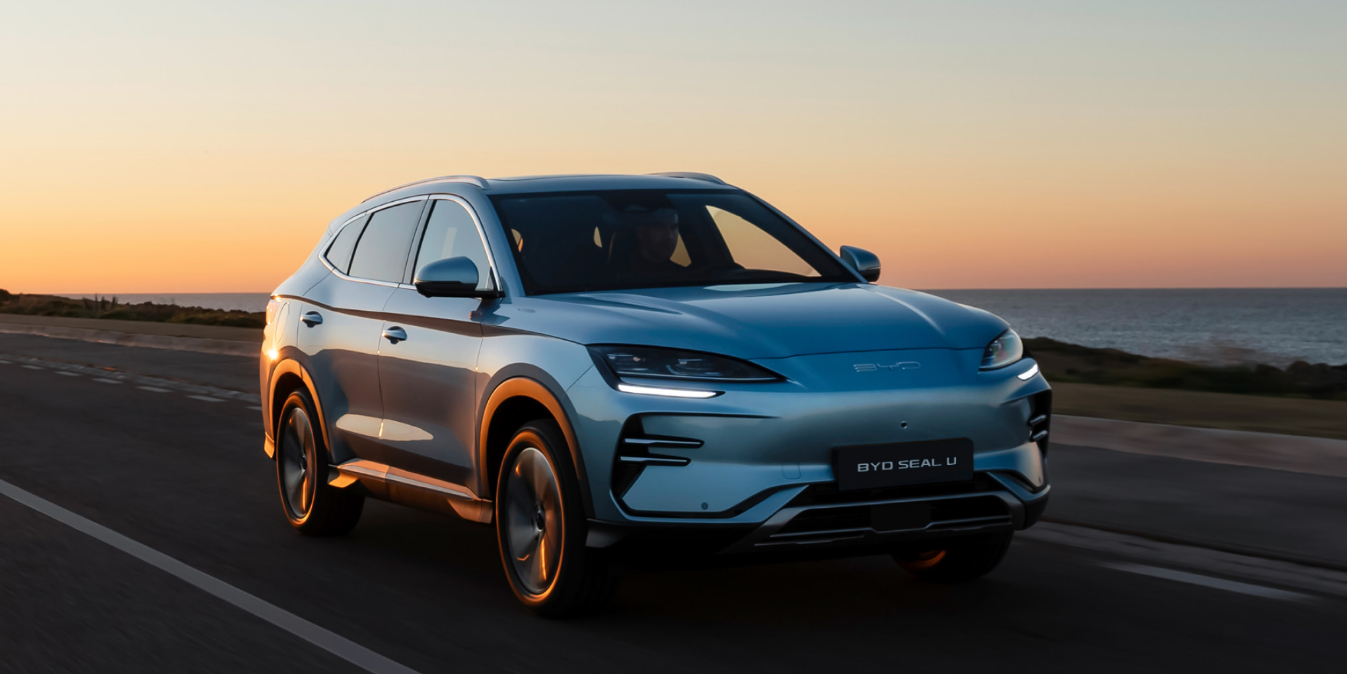
Image source: BYD
The industry views complete vehicle exports as a transitional phase in overseas expansion. Once local factories prove their cost-efficiency, especially when stacked against tariffs and logistics costs, the priority of exporting finished cars will naturally fade.
Lu Ming's view confirms this logic: the release of overseas capacity is the process by which exports are gradually replaced. Early in the ramp-up, exporting parts or vehicles might still be needed to fill market gaps, but once capacity is fully unleashed, the room for export growth will be severely compressed.
But this isn't a zero-sum game. Su Wan stresses that exports and local production aren't mutually exclusive; they are a relay. Exports open markets quickly and build brand awareness, while localization cuts costs and deepens customer engagement. Together, they expand the overseas foundation for Chinese automakers.
Exports Are Not the End; Going Global Enters Deep Waters
As the growth rate of vehicle exports gradually peaks, China's globalization strategy will simultaneously enter truly deep waters.
As Jiang Yu notes, once vehicle exports approach the 15 million mark, resistance to further growth will spike significantly. This isn't a decline in the competitiveness of Chinese automakers; rather, it's because overseas local capacity is entering a concentrated release phase, gradually replacing exports. On the surface, export growth slows, but global market share for Chinese automakers is still rising—the vehicle for growth has simply shifted from "exporting vehicles" to "local manufacturing."
This is the consensus across the supply chain: the next stage of China's auto export journey is a shift from "selling products" to "exporting industries." Going abroad alongside the automakers aren't just cars, but entire supply chain ecosystems.
Gu Huai's overseas research confirms this trend. He summarizes three mainstream models for automakers going global: pure exports to test the market, partnering with local factories to cut costs, and building wholly-owned plants and ecosystems like the top new energy brands. As these models blend, supply chain links—parts, glass, chips, electronics—are also gradually localizing.
"At the current pace, by around 2028, the industrial footprint of Chinese automakers overseas will reach significant scale. It won't just be selling cars there; it will be transplanting the entire industrial ecosystem," Gu says.
Tier 1 suppliers are already ahead of the curve. Many global parts companies are adjusting their capacity layouts to fully sync with the expansion of Chinese OEMs. Su Wan reveals that her company's factories worldwide are aligning with Chinese automakers' overseas projects, landing capacity in step with customers. From cockpit systems to interior modules, local support capabilities are ramping up fast.
The pace of domestic supply chains going abroad is accelerating. Fang Cheng reveals that as a chip maker, his company is planning to follow OEMs overseas, partnering with domestic parts firms to achieve local production together. "Automakers never go it alone; the entire supply chain must move together to truly take root."

Image credit: AI-generated; Source: Doubao
Of course, the challenges are far greater than imagined. Moving a factory overseas doesn't guarantee successful localization.
Shen Yan, an insider at an Italian firm, warns that the biggest mistake Chinese brands make is copying their domestic tactics overseas. European consumers are far more sensitive to long-term resale value, brand reputation, and after-sales service than to short-term price cuts. Relying solely on price wars and rapid model iterations, while neglecting core user retention and service networks, makes it hard to gain a foothold in mature markets—even with local factories.
"Between 2028 and 2030, export growth will slow, but it won't hit a wall immediately. The real test isn't how high export volumes can go, but whether Chinese new energy brands can truly establish themselves in mature markets like Europe," Shen emphasizes. The model of moving volume through low B-end prices won't work in Europe. Focusing on quality and terminal service is the key to long-term survival.
Zhou Yan suggests not keeping eyes solely on Europe. Auto consumption in South America, Africa, and other regions is still rising, and trade environments are friendlier, offering sustained new growth points. Diversifying market layouts is the best way to hedge against policy risks in any single market.
Zheng Ze, an insider at a German-funded parts company, offers a judgment from a macro perspective: Chinese cars are already competitive enough. What truly determines the height of the ceiling isn't the product itself, but national strategy and industrial clout. The ability to break down trade barriers and secure a fairer market environment is the core variable defining the upper limit of Chinese automotive globalization.
Viewed through a longer industrial cycle, the peak of China's auto exports is essentially a switch in growth models. In the past few years, we secured the top exporter spot through rapid growth in vehicle exports. Next, we will gradually fight for a voice in the global auto industry through deep localization.
Beneath the ceiling of export numbers lies a far broader space for globalization.
(Note: Names in this article are pseudonyms, and some details identifying individuals have been obscured.)