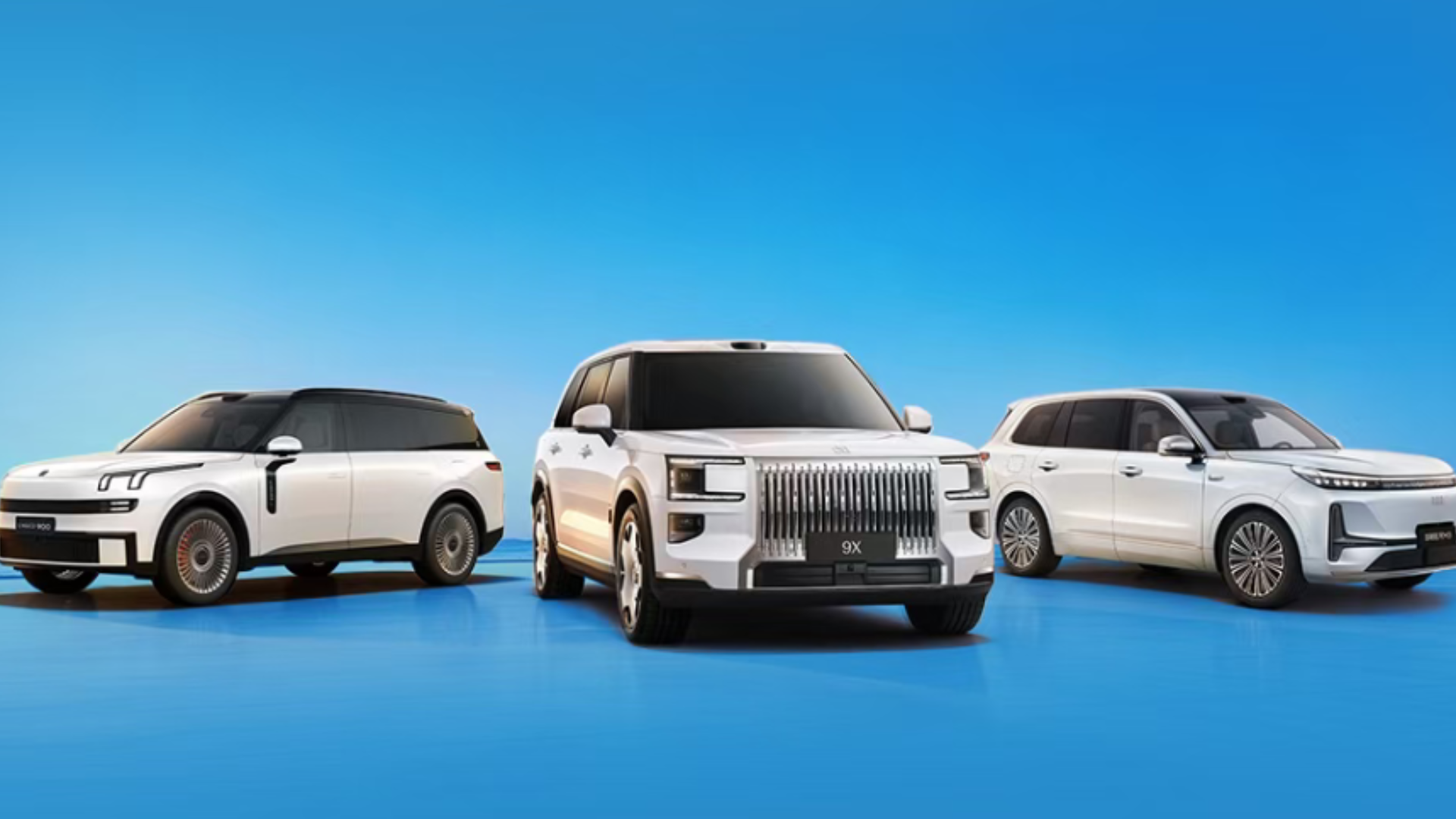
Hebei increases contribution to China's huge car market.
Hebei Province, already one of China's major centres for auto manufacturing, is a key area for the positioning of auto parts companies keen to follow the increasing foreign investment and new official national policy encouraging light automobile manufacturing.
Among Hebei's 54 foreign-invested auto parts enterprises, 44 are in the four cities within the industrial cluster that includes Baoding, Qinhuangdao, Tangshan and Langfang - with the latter two cities leading in terms of the number of enterprises and order of capital available. Of the province's 21 auto parts enterprises with over US$5 million in investment each, nine are located in Langfang and two in Tangshan.
These figures show just where Hebei stands as a pillar of the industry now and in the future. In fact, under the 11th National Five-Year Plan, priority is indeed to be given not only to the development of light vehicles, but also special-purpose vehicles, multi-purpose vans and parts and components for saloon cars - with longer-distance planning to look at how such auto products can be branded and introduced to the world's marketplace.
Right now, efforts are confined to speeding up construction of the three auto industrial parks at Dingzhou Changan, Baoding Changcheng, Handan Yukang and the two auto parts manufacturing bases at Tangshan and Langfang.
Following the shift of the internationally-driven auto sector to the Beijing-Tianjin area and development of Hebei's car industry, auto parts manufacturers are however poised to form a significant support base for the overall auto market in the region.
This is set against a 17-year cycle of foreign investment to 2006, which has seen 54 foreign-invested auto parts enterprises approved in Hebei and a total investment of US$614 million.

Investment in the two newly-approved projects - Asiain Auto Parts Co Ltd and China United Piston Ring Co Ltd - topped US$127 million in 2005.
Within this scenario, several foreign parts companies have formed partnerships with their opposite numbers in Hebei, including Volvo Penta and Michelin Group of the US, Japan's triumvirate of Okamoto Glass Co Ltd, Fuji Kiko and Teikoku Piston Ring, Thehwa Precision Industry Inc of South Korea, TMD Friction International GmbH of Germany and the UK's Lucas-TVS and Urbanhurst Limited.
There is also a growing trend for foreign investors to set up wholly-owned enterprises in the area. Multinational corporations including the Industrial and Trade Inc of the US, Aisin Seiki Co Ltd and Watabe Transport Co Ltd of Japan, along with W.E.T. Automotive Systems AG and ZI Druckguss Schelklingen GmbH of Germany have each established operations in Hebei itself.
Investment encourages diversified production
Foreign auto parts companies in the Beijing-Tianjin area have expanded their product range from simple parts and accessories - such as interior decorative items and plastic parts - to products with high value-added and high technology content, including car engines and related key parts and components, drive assemblies, brake assemblies and precision tools.
Additionally, more diversified products are being produced. Close to 100 categories of auto parts are now being made by foreign-invested companies, including brake assembly and drive axle assembly from Asimco; seat heaters, steering wheel temperature modulators, seat climatronic systems from W.E.T. Automotive Systems (China) Ltd and transmissions from Tangshan Asiain Gear Co Ltd.

A list of parts such as doors, tyres, hubs, vibration dampers, turbo chargers, piston rings, air cleaners, dash assembly, electronic parts and injection moulded parts are manufactured by a host of other foreign-invested auto parts firms.
A number of companies are moving from production-based to research- and development-led manufacturing. One example is a wholly-owned R&D company which was established in Langfang by Taiwan's GSK Group in November 2004. The firm concentrates on R&D and the design of auto parts, along with the production and testing of moulding tools.
Foreign investors in particular are optimistic about investing in auto parts production in Hebei. According to Korea's Hyundai group, the low labour costs in Hebei have made it possible for auto parts produced there to be competitively priced universally.
Domestic company China United also notes that peripheral cities around the Beijing-Tianjin area prove attractive for auto parts manufacturers for several reasons.
For a start, transportation is convenient around the Beijing-Tianjin area, while production costs are relatively low. Additionally, there are useful government support measures to boost the industry's development, such as encouraging the main auto factory and the auto parts factory to be located in different cities yet within a distance of 100 km from each other.
To date, foreign auto parts companies investing in Hebei have been mainly from South Korea, Japan, the US, UK and Germany. There is not yet a single Hong Kong investor.
Industry sources reckon that as there is only a limited range of high value-added auto parts produced in Hebei, Hong Kong companies can take advantage of the gap in supply and target the high-end market with value-added products. By doing so, they will be able to avoid head-on competition with existing players, help improve Hebei!|s overall auto parts structure, and take a dominant market position.
Advantages in Hebei Province
Advantages of Beijing-Tianjin market.
Hebei is at the heart of the Bohai Rim economic zone, a priority development area. Embracing the two major cities of Beijing and Tianjin, the Tianjin-Beijing-Hebei economic zone has a consumer population of 120 million and is one of the largest markets in the country.
In fact, the province possesses a market accounting for more than 10% of the national auto industry's output. Major automobile and auto parts distribution marts are located in the zone's peripheral areas - including Beijing-Hyundai, Beijing-Jeep, Tianjin-Charade and Tianjin-Toyota.
In addition, 15 trunk railways and 17 national highways run through the province - helping it to achieve top ranking among all provinces in terms of rail and highway freight volume. The province comes fifth nationally for the total length of highways it provides, with convenient sea and air transport interchanges.
Apart from convenient geographical location to the capital, Hebei's cost advantages in labour, land, water, electricity and gas supplies also serve to attract foreign investors to the province. Labour costs in Langfang are at around one-third of those in Beijing, while land costs are below those in the Beijing-Tianjin area (given the shortage of supply in the latter).
Besides, as a heavyweight iron and steel producer, Hebei is ready made for developing an auto parts sector, with a fertile supply of materials and supporting products to the auto industry.
Currently, there are 36 auto parts enterprises in Langfang, including Asimco and China United, with some 21 of those among the world!|s top 500 auto parts companies. In Langfang's auto parts industry, foreign enterprises play a dominant role while domestic enterprises play a smaller part.

A wide range of products, such as engines, brakes, car electrical parts and high performance composite materials are manufactured and supplied to brand torques such as BMW, Toyota, Volkswagen, Hyundai and General Motors.
Hu Zhaowei, deputy director of the Langfang bureau of commerce, noted that Rmb30 billion (HK$29 billion) will be invested in the auto parts industry during the 11th Five-Year Plan period.
In Baoding, the auto parts industry has also been designated a major development priority during the Five-Year Programme.
Preliminary work on three sites - Changcheng, Hebei Changan and Zhongxing - is to be the start of a major effort to constructing an auto parts manufacturing base by 2010 for supplying auto parts to the entire country and, beyond, the international market. The city!|s car production capacity is also expected to rise to 800,000 vehicles.
Put in perspective, China's production of automobiles grew by an average of 20% in the past four years. Last year, eight million vehicles were manufactured and the total industrial output amounted to Rmb1,200 billion (HK$1,164 billion). In the first half of this year, the industry experienced another boom following the implementation of a number of favourable government policies, with 3.6 million vehicles produced and nearly the same number sold.
China is currently the world's third largest auto market. Its car output also accounts for 8% of the world total. Yet, statistics show that the car ownership rate in the mainland is only 24 vehicles for every 1,000 people, lagging far behind developed countries and the world average.
According to mainland official estimates, the share of China's car output in the world total will continue to grow. By 2010, the number of cars in China is forecast to reach 55 million, or an ownership rate of 40 vehicles to every 1,000 people.
Also, by 2010 the number of cars produced on the mainland is predicted to top nine million, with 10% of complete cars and 50% of motor cycles produced for export. Products from major auto parts enterprises are also expected to make their way into the international market, with profitable returns on the offing.