



Gasgoo Munich-Recent volatility has hit the automotive supply chain in both Hong Kong and A-share markets. Sentiment has shifted from a broad rally to caution, with auto and related sectors seeing a widespread pullback in recent days.
On March 18, data from Tonghuashun showed declines across the board in Hong Kong's auto sector. At the time of writing, Li Auto had dropped 6.17% to 66.90 Hong Kong dollars; XPENG fell 4.28% to 74.85 Hong Kong dollars; and NIO slipped 0.89% to 46.90 Hong Kong dollars. On the A-share market, leaders like CATL and EVE Energy also edged down.
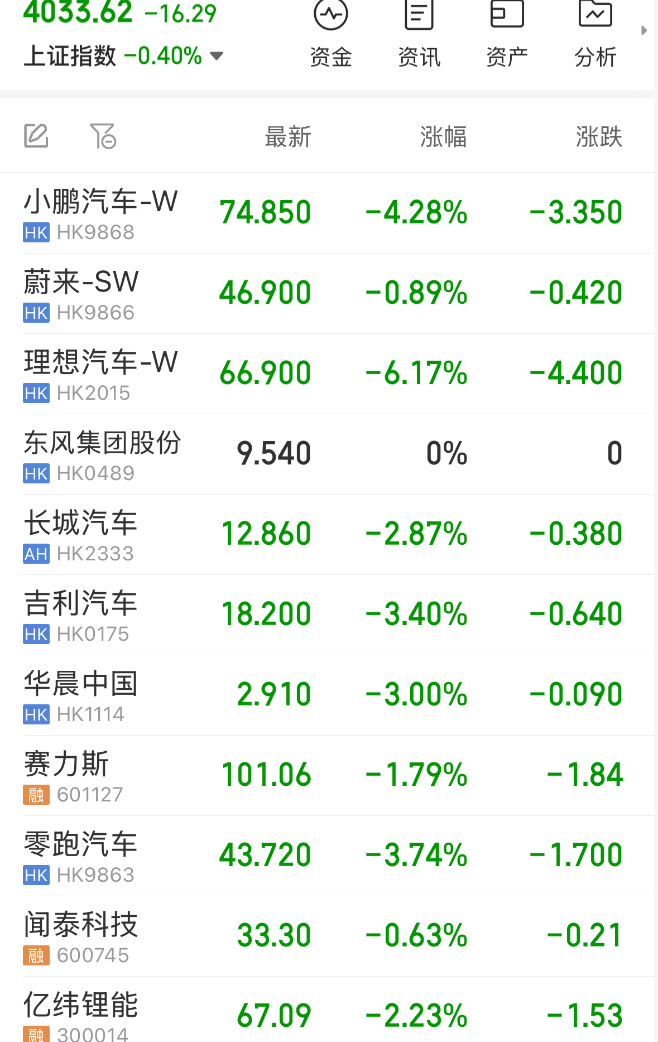
Image source: Tonghuashun
Yet just a week ago, the picture in Hong Kong was starkly different. During morning trading on March 11, Geely Auto surged over 9% to 17.50 Hong Kong dollars, while CATL's Hong Kong shares jumped more than 8% to breach 596 Hong Kong dollars. At the time, policy tailwinds were blowing strong — 250 billion yuan in ultra-long special sovereign bonds to support trade-ins and state backing for future industries like embodied intelligence. Combined with standout earnings from top players, sentiment ignited, driving a broad rally in auto stocks.
The shift from collective strength to widespread retreat took mere days. This round of auto stock trading has laid bare the market's capricious nature. For investors, the roller-coaster ride is all too familiar. The ups and downs test not just vision, but temperament.
A Run of Bad News
A closer look reveals the auto industry is facing multiple cost "challenges" from upstream in the supply chain. The steady drumbeat of negative factors is weighing directly on investor profit expectations.
The most immediate headwind comes from persistently rising raw material prices. The cost of power batteries — a core component for new energy vehicles — is tightly linked to lithium prices. Data shows battery-grade lithium carbonate has climbed from 75,000 yuan per ton in July 2025 to around 170,000 yuan per ton in March 2026, a surge of nearly 130%. That spike in lithium alone adds between 3,000 and 5,000 yuan to the cost of a single vehicle's battery.

Image source: Chery
The global lithium market is equally turbulent. On February 25, Zimbabwe abruptly suspended exports of all raw ore and lithium concentrate. The next day, the main domestic lithium carbonate futures contract soared over 10%, and it remains elevated. As the world's second-largest supplier of hard-rock lithium and the second-biggest source of lithium concentrate imports for China, the ban has deepened concerns over supply security.
Beyond lithium, the chip shortage is worsening. Explosive growth in artificial intelligence has recently siphoned off significant capacity from automotive-grade memory chips. Data indicates that in the first quarter of 2026, prices for automotive-grade DDR5 memory jumped nearly 300%, pushing the cost of memory chips per vehicle from 700 yuan to 2,000 yuan.
William Li, NIO's chairman, acknowledged that rising memory chip prices are the company's biggest cost pressure in 2026. "The auto industry is competing with AI and computing centers for chips, and it's not easy," he said. Meng Qingpeng, vice president of supply chain at Li Auto, warned that the supply fulfillment rate for automotive memory chips could fall below 50% this year. Lei Jun also revealed that the new Xiaomi SU7 is facing quarterly cost spikes for memory, adding thousands of yuan per vehicle.
The dual squeeze from raw materials and chips is passing directly to automakers' cost sheets. Since March, several new energy vehicle brands have announced price increases.
Chery's Exeed brand said the high-spec version of the ET5 will cost 5,000 yuan more. Sources at ZEEKR revealed the price of the refreshed 007 GT could rise by nearly 10,000 yuan. Lei Jun also confirmed in a post that the next-generation SU7 will definitely see a price hike, noting that "costs have risen significantly." Meanwhile, some brands are effectively raising prices by trimming configurations or scrapping discounts to ease the pressure.
Policy adjustments are adding to the pile-on. Starting in 2026, the purchase tax exemption for new energy vehicles will be halved. Combined with tightening local subsidies, this further compresses profit margins per vehicle just as automakers face rising costs.
A recent HSBC report noted that the sharp rise in upstream raw materials — including metals and memory chips — will create significant cost pressure for automakers in the short term. The surge in memory chip prices alone could add 1,000 to 3,000 yuan in costs, dealing a direct blow to the cost structure of electric vehicles.
Beyond chips, volatility in battery raw materials like lithium ore is amplifying cost pressures. UBS went further in an early February report, declaring that "the lithium market has entered its third super cycle" and sharply raising its 2026 price forecast for lithium carbonate to $26,000 per ton (approximately 185,000 yuan).
Guosen Securities followed suit, predicting lithium prices could top 200,000 yuan per ton in the near term.
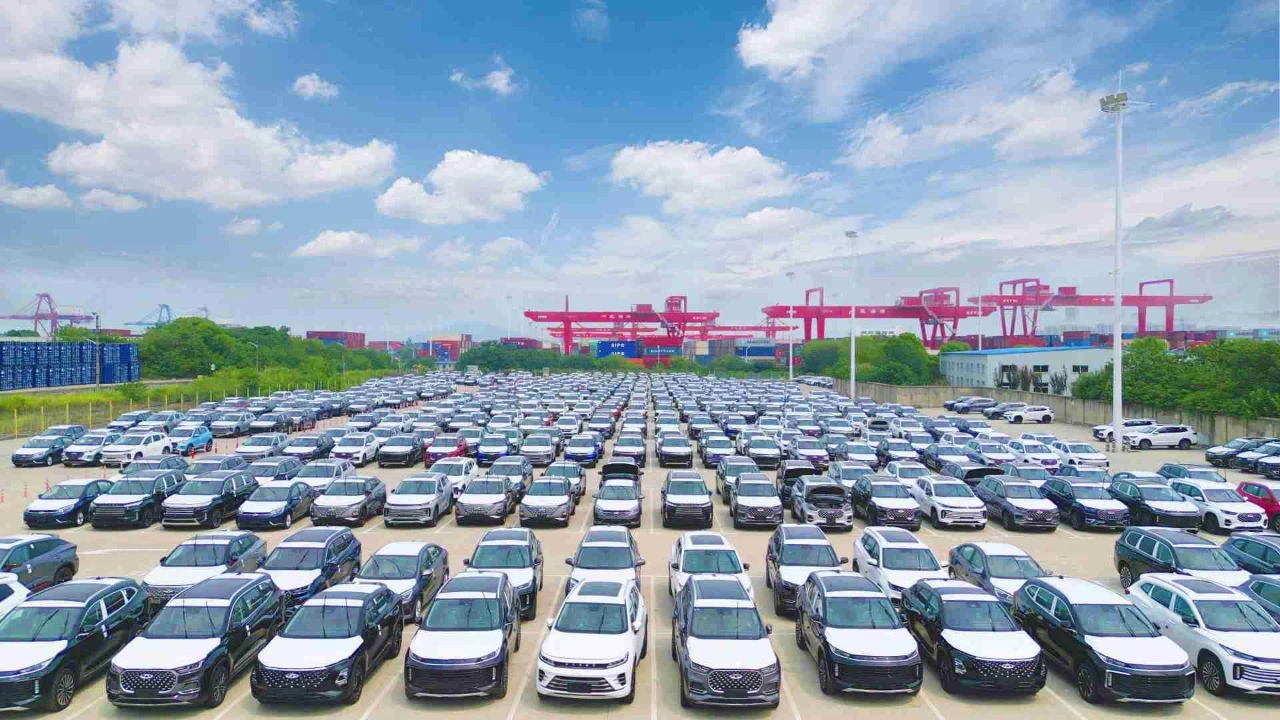
Image source: Chery
Facing a potential new cycle and an increasingly complex geopolitical landscape, lithium giants are spending heavily to lock down resources. Chengxin Lithium has invested roughly 7.4 billion yuan to bring one of Asia's largest proven hard-rock lithium mines under its full control. Tianqi Lithium launched a 7.1 billion yuan fundraising plan to find the next "Greenbushes." Salt Lake Industry acquired a controlling stake in the Yiliping Salt Lake in Qinghai at a 352% premium. International players are also moving aggressively, with Rio Tinto and POSCO doubling down on their lithium layouts.
All signs point in one direction: lithium resources are becoming a core competitive barrier. Pure processing companies lacking resource security face severe challenges, caught between cost pressures and supply chain risks.
For auto stocks, short-term fluctuations may be just market sentiment shifting, but the reshaping of the upstream resource landscape is quietly rewriting the industry's rules of the game. In an era defined by both lithium price cycles and geopolitical risks, whoever controls the resources holds the initiative. Automakers reliant on external sourcing will struggle not only to control costs but to guarantee supply chain stability.
Auto stocks rise and fall; that is the norm in capital markets. This latest broad rally and subsequent pullback are simply the market reacting to news — last week, a boost from policy and earnings; this week, a shock from costs and resource scarcity. In a shifting stock market, temperament is king.


