



Gasgoo Munich-Auto and supply chain stocks rallied across Hong Kong and mainland markets during morning trading on March 11. The E Fund HK Stock Connect Auto ETF (159121) opened 3.07% higher, while Geely Auto surged more than 9% at one point to 17.5 Hong Kong dollars. CATL's Hong Kong-listed shares joined the rally, climbing over 8% to break through 596 Hong Kong dollars.
On the A-share front, the Shenzhen Component Index gained more than 1% and the ChiNext Index jumped over 2%. Energy storage and battery supply chain players—including EVE Energy, Hunan Yuneng, and Tinci Materials—also climbed in tandem.
Why is the auto sector taking off now? Two forces are driving the surge simultaneously: clear signals from policymakers and a stream of positive news from industry leaders.
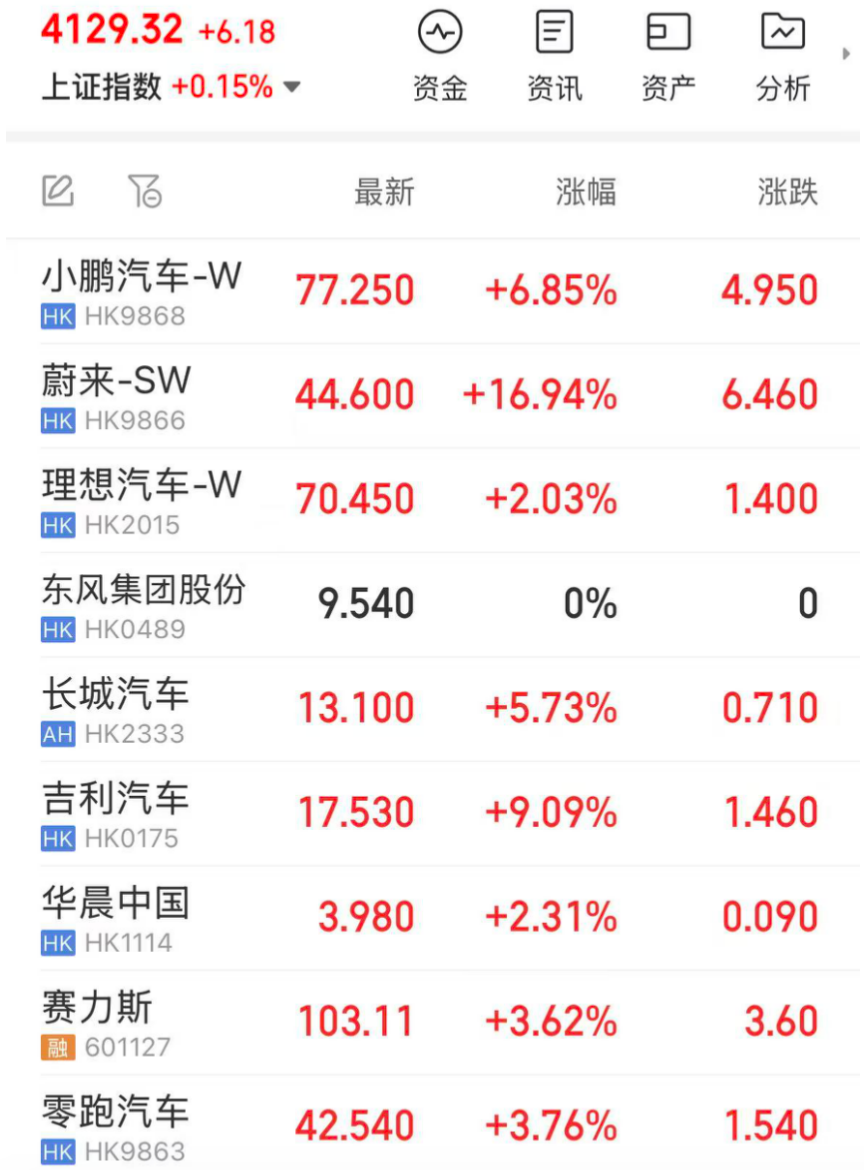
Image source: Tonghuashun
What's Behind the Gains
Broad-based sector rallies rarely happen without macro policy support. For this round of auto stocks, government policy has served as a critical catalyst.
In 2026, the government maintained its core strategy of "boosting consumption while upgrading industry," continuing to treat the auto sector as a key engine for domestic demand. Notably, 250 billion yuan in ultra-long special treasury bonds has been earmarked to support trade-ins for consumer goods. This move injects strong expectations into auto consumption—simply put, the money is there to encourage consumers to scrap their old cars for new energy vehicles.
For the industry as a whole, this creates a clear policy "floor" for total vehicle sales, stabilizing the baseline for sector prosperity.
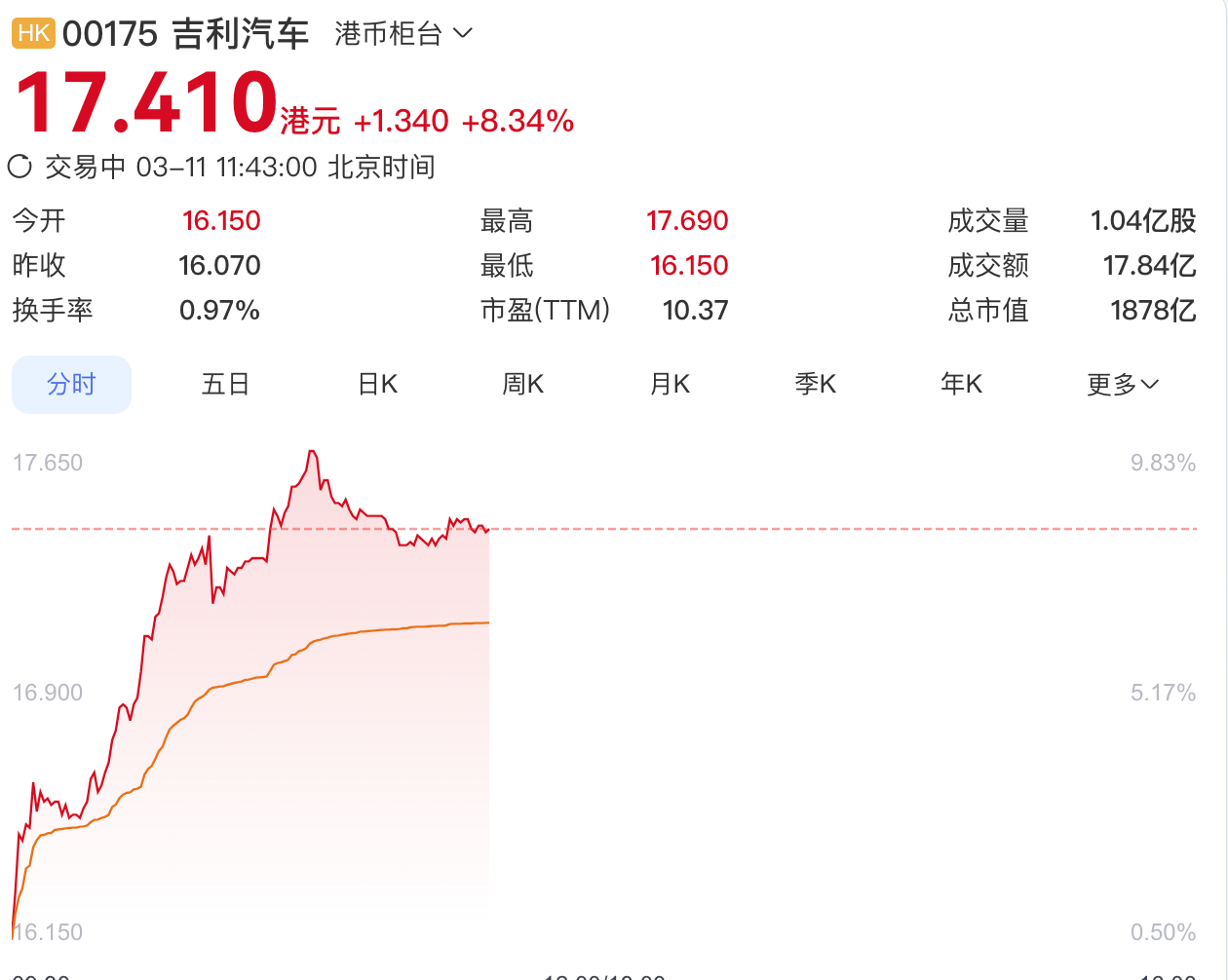
Geely Auto Hong Kong shares. Image source: Baidu Stock Tong
Yet beyond consumer-side measures, the deeper focus lies in the policy push for "AI+" initiatives. The government has explicitly called for cultivating future industries like embodied intelligence and accelerating the adoption of next-generation smart terminals. While this may sound distant from the auto sector, the connection is critical: automobiles—particularly intelligent connected new energy vehicles—represent one of the most important commercial applications for AI technology today.
The logic for capital markets is clear: as the penetration rate of L2+ intelligent driving rises and the commercial rollout of Level 3+ autonomy accelerates, the industry is shifting from selling vehicles to selling intelligence. With state policy explicitly backing this shift, the valuation potential of the entire supply chain is being reimagined. For investors, such top-down signals often rapidly ignite bullish sentiment in the short term.
Meanwhile, humanoid robotics has emerged as a key investment theme for 2026. As mass production plans from manufacturers like Tesla and XPENG take shape, orders for auto supply chain firms—particularly those in machine tools and precision components—have surged. Some companies have already booked orders through September of this year.
Corporate Catalysts
Amid the broader sector rally, some companies have seen stock gains far outpace the industry average—often driven by specific positive news released in recent weeks.
CATL, the industry leader, reported 2025 annual results that blew past market expectations. Full-year revenue reached 423.7 billion yuan, with net profit soaring 42.28% to 72.2 billion yuan—roughly 200 million yuan in profit every day.
This performance exceeded the forecasts of several institutions. Following the earnings release, numerous investment firms swiftly raised their target prices for CATL, citing its enduring competitive edge in scale, cost control, and global market layout. For capital markets, sustained profit growth at a sector leader reinforces the growth narrative for the entire supply chain, lifting the broader sector.
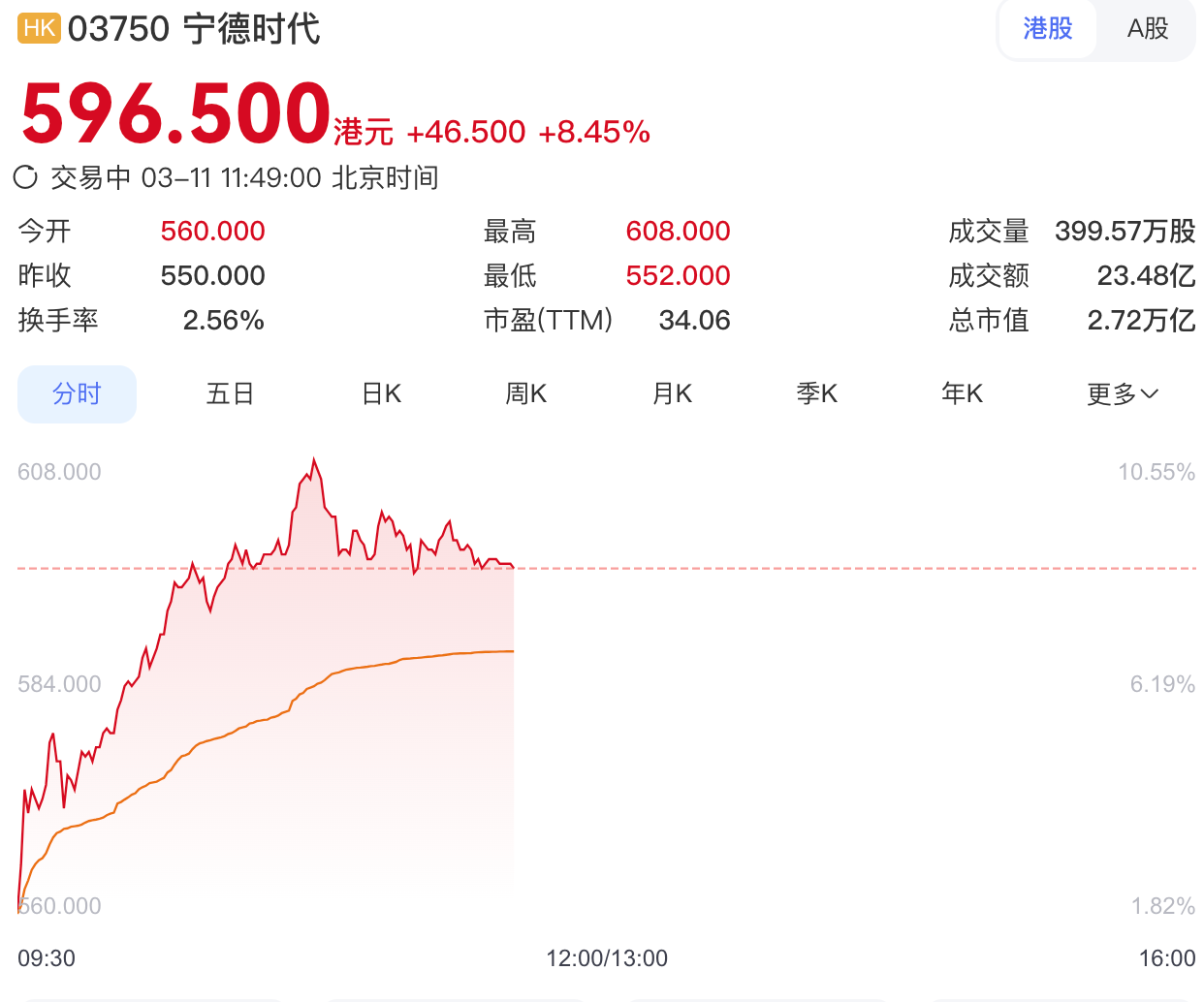
CATL Hong Kong shares. Image source: Baidu Stock Tong
Additionally, CATL plans to distribute a cash dividend exceeding 31.5 billion yuan. That aggressive shareholder return policy has significantly boosted market confidence.
Among the new forces, NIO released its fourth-quarter and full-year 2025 financials. The company posted an operating profit of 1.25 billion yuan in the fourth quarter—marking its first quarterly operating profit. NIO forecasts first-quarter 2026 deliveries will jump 90.1% to 97.2% year-on-year. The market believes a profit inflection point has arrived, lifting sentiment across the new energy vehicle sector.
Although NIO CFO Qu Yu highlighted pressure from rising material costs like lithium carbonate in 2026, the company maintained its full-year growth targets by boosting efficiency and sustaining high margins on larger vehicles.
Geely Auto's gains are tied to the start of a new product cycle. The latest addition to its Galaxy series—the Galaxy M7, a mid-size plug-in hybrid SUV—has begun arriving at dealerships ahead of its official debut on March 13. The launch injects fresh growth momentum and has revived investor expectations for future sales.
Competition in the new energy vehicle market is fierce, and new model releases often directly sway sales forecasts. When the market perceives a new product as highly competitive, investors raise their expectations for future revenue growth, driving the stock price higher.
Meanwhile, BYD unveiled its second-generation Blade Battery and flash-charging technology on March 5, setting a record by charging from 10% to 97% in just nine minutes. This breakthrough addresses the pain points of slow charging and poor performance in low temperatures. The technological advance has injected new energy into the vehicle and battery supply chains, lifting related stocks like CALB.
From a broader perspective, NEV makers have logged steady breakthroughs in technology, costs, and market scale in recent years. Improvements in battery energy density, charging efficiency, and vehicle intelligence are driving NEVs into the mainstream. As companies roll out new tech and products, capital markets often price in that growth trajectory early.
Consequently, with macro tailwinds combining with positive corporate news, the outperformance of these leading companies—gaining far more than the sector average—has become a key force driving the auto rally.


