Hyundai Motor is looking to supply Google's self-driving unit Waymo with 50,000 IONIQ 5 autonomous vehicles by 2028, according to people familiar with the matter, Gasgoo learned on Feb. 10.
With an estimated price tag of $50,000 per vehicle, the contract could be worth $2.5 billion.
News of Hyundai's bid to supply Waymo with 50,000 IONIQ 5s makes this potential $2.5 billion deal far more intriguing than the headline numbers suggest.
It's not just one of the largest potential commercial orders in the autonomous driving sector in recent years; it marks a pivotal shift from rivalry to collaboration between legacy automakers and tech giants in the race for self-driving supremacy.
Hyundai's Turning Point: Unlocking Capacity and Validating Tech Through a Massive Order
Hyundai's need for this potential contract may be far more urgent than it appears on the surface.
On Jan. 29, Hyundai released its 2026 performance forecast, outlining plans to invest 17.8 trillion won, sell 4.16 million vehicles, and achieve a consolidated operating profit margin of 6.3% to 7.3%.
Yet the automaker faces clear profit pressures. Its operating profit for the fourth quarter of last year slumped 40% year-on-year, far missing market expectations. With growth slowing in key markets and competition intensifying in emerging economies, Hyundai anticipates that 2026 will remain challenging.
A $2.5 billion deal would not only deliver a significant revenue boost but, more importantly, provide a stable outlet for Hyundai's electric vehicle production capacity. As the flagship of Hyundai's electrification push, the IONIQ 5's large-scale deployment in autonomous driving serves as powerful market validation.
The IONIQ 5's technical specs highlight its potential for autonomous retrofitting. Built on Hyundai's E-GMP platform, the model boasts a 3,000mm wheelbase and 800V high-speed charging, capable of going from 10% to 80% charge in roughly 18 minutes.
These features make it particularly suited for robotaxi operations, where rapid turnaround is essential.
For Hyundai, partnering with Waymo offers more than just a commercial order; it's a valuable opportunity for technical validation. Large-scale deployment allows the automaker to collect real-world performance data, accelerating the iteration of its own autonomous driving technology.
Waymo's Expansion Map: A Scaling Strategy from Phoenix to Nationwide
As a pioneer in the autonomous driving industry, Waymo is accelerating the expansion of its commercial footprint.
Since launching fully driverless service in Phoenix in 2018, Waymo has expanded to Los Angeles, San Francisco, and Austin.
In 2025, Waymo partnered with Lyft to bring robotaxis to Nashville, with public service slated to begin in 2026. That July, the company announced a collaboration with AVIS to launch an autonomous taxi service in Dallas, also targeting a 2026 start.
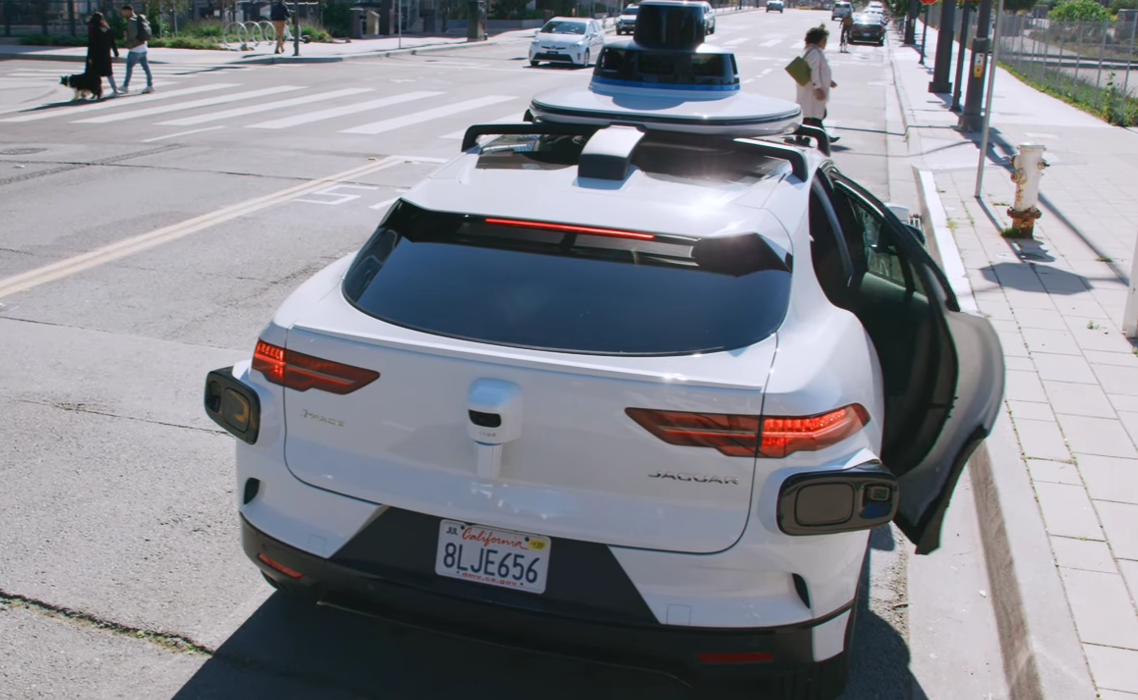
Image source: Waymo
Behind these expansion efforts lies Waymo's diversified partnership model. In cities like Phoenix, San Francisco, and Los Angeles, it operates through its own app; in markets such as Austin and Atlanta, service is delivered via a partnership with Uber.
The potential order for 50,000 IONIQ 5s aligns precisely with Waymo's rapidly growing fleet needs. Calculating based on a pace of adding one or two cities per year, Waymo could require tens of thousands of autonomous vehicles to support its operational network by 2028.
This potential contract secures a stable, standardized vehicle supply for Waymo, mitigating the risk that vehicle shortages or a fragmented model mix could disrupt service consistency.
As news of this potential deal emerges, the boundaries of collaboration between legacy automakers and modern tech companies are being redrawn.
Combining Hyundai's manufacturing prowess with Waymo's self-driving technology could pioneer a new model for scaling autonomous driving deployments.
The automotive industry is undergoing a transformation from "manufacturing" to "manufacturing plus services." The potential partnership between Hyundai and Waymo is not merely a commercial transaction—it is a microcosm of this shifting era.