



Gasgoo Munich-On the evening of March 16, 2026, XPENG Chairman He Xiaopeng and Liu Xianming, head of the General Intelligence Center, appeared together before the camera for a livestream titled "Ask Me Anything." Over two hours, the duo answered 22 questions ranging from the rollout schedule of the second-generation VLA system to its underlying technical logic, from specific use cases to industry comparisons.
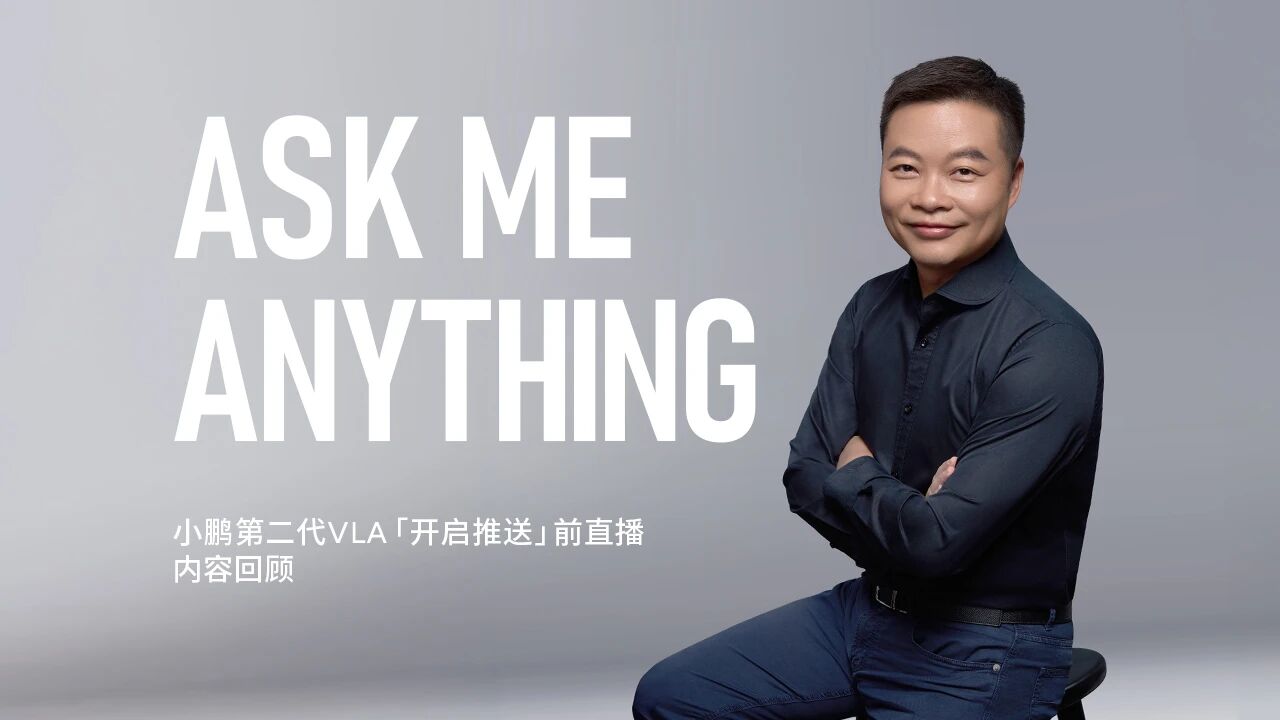
Image Source: XPENG
The timing of this livestream was telling: three days later, XPENG’s second-generation VLA system would officially begin rolling out; a week earlier, test drives had launched across 732 stores nationwide; earlier in the month, during the "Two Sessions," representatives had submitted proposals on autonomous driving legislation and liability. As intelligent driving technology iterates rapidly and policy windows shift, this broadcast was more than just product communication—it served as a snapshot of the current Chinese autonomous driving landscape.
Smart Driving Enters an "Era of Democratization": From Tech Breakthroughs to Mass Deployment
China’s smart driving market in 2026 is undergoing a profound shift in positioning. Many industry observers note that advanced intelligent driving is evolving from a "bonus feature" into a "must-have," continuing its transition toward L3 and beyond. According to data from the Ministry of Industry and Information Technology, sales of new passenger cars equipped with combined driving assistance systems reached 7.76 million units in the first seven months of 2025, a penetration rate of 62.6%. This signals that the popularization of smart driving capabilities is moving from the early enthusiast phase toward mass application.
During the stream, He Xiaopeng offered his take on this trend. Addressing the "gap between China and the U.S." in smart driving, he argued that "autonomous driving is a comprehensive contest of software, hardware, engineering capability, and scale; currently, China and the U.S. are both in the first tier." Liu Xianming added that Chinese driving scenarios are more complex, with higher densities of electric vehicles, pedestrians, and other road users. The team adheres to a development philosophy of "mastering the most complex scenarios first, then generalizing to all domains."
Behind this judgment lies an iteration in the technological roadmap. Liu Xianming explained that the essence of autonomous driving is a physical AI problem, offering a formula: L4 capability = Model × Computing Power × Data × Entity. This implies a multiplicative relationship, not an additive one—any shortcoming in one area drags down the final result. XPENG’s team has self-developed base models, chips, and compilers, aiming to build a systemic advantage through full-stack in-house development and joint optimization.
He Xiaopeng revealed the scale of this investment during the livestream: for over ten consecutive months, the company invested 300 million yuan monthly on the second-generation VLA. He admitted, "I was terrified at the time," but technical intuition and courage kept them going.
From a macro perspective, this level of spending reflects a shift among Chinese smart driving firms from isolated breakthroughs to building systemic capabilities. Industry reports indicate that the smart driving chain—comprising upstream core tech, midstream manufacturing, and downstream applications—is improving "top-down." By 2029, China’s L2+ smart driving solution market is expected to exceed 150 billion yuan, with a CAGR of 33.7% between 2024 and 2029. Unlocking this space requires companies to form a closed loop across technology, product, and business models.
XPENG VLA’s Industry Coordinates: Dual Positioning in Tech Strategy and Industrial Ecosystem
In this broadcast, XPENG clarified the rollout rhythm and technical definition of its second-generation VLA, providing a coordinate reference for the company’s current industry standing.
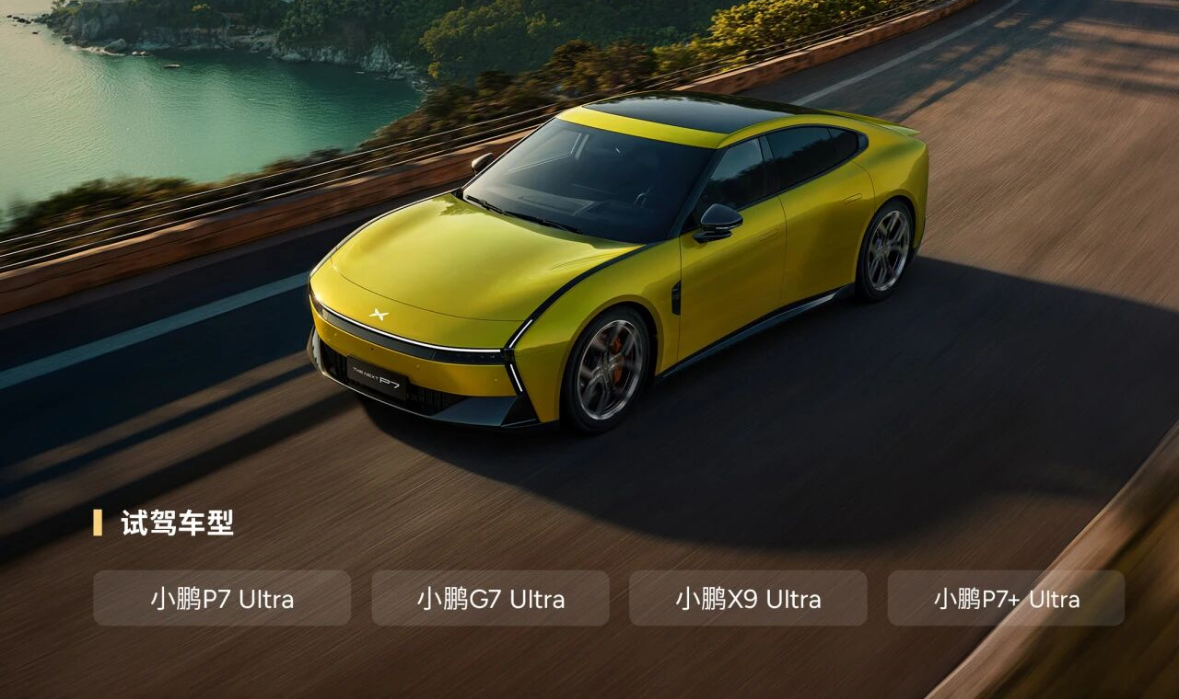
Image Source: XPENG
Regarding the rollout schedule, updates will begin rolling out to the P7 Ultra, G7 Ultra, and X9 Ultra starting March 19, completing these three models within the month. In April, updates will launch for the 2026 XPENG P7+, G9, and G6 (Ultra/Ultra SE versions), as well as the XPENG G7 Ultra/Ultra SE (Super Extended Range version). The Max distilled version will follow in the second half of 2026. This timeline reveals XPENG’s strategy of phased coverage across different user groups and versions.
On version definitions, He Xiaopeng clarified the positioning gap between Ultra and Max: the Ultra version is built for L4 capabilities, supporting full-scenario navigation, while the Max version delivers the industry’s best L2 assisted driving, covering high-frequency scenarios like highways and main urban roads. This "dual-track" strategy addresses current user needs while reserving space for future evolution.
Addressing concerns that the "media test drive version" might differ from the "mass rollout version," Liu Xianming was clear: there is no "special edition" for the second-generation VLA. The media test version was the 13th branch of the second version, while the upcoming mass rollout is the 28th branch of the fourth version—offering an experience that is even more stable and consistent.
On claims that the system is "5 times ahead of the industry," Liu Xianming clarified this is based on internal test results. It’s not about leading in a single metric, but a roughly 5x improvement in overall comprehensive experience. Over the same time and road section—covering big roads, small roads, complex routes, and rush hours—competitors averaged 4 to 6 more takeovers than XPENG. He Xiaopeng translated this into user-friendly terms: the second-generation VLA involves much less harsh braking, effectively raising the "emotional stability index" of driving by five times.
Regarding performance in night scenarios and special weather, He Xiaopeng explained that the second-generation VLA uses "human-like perception" to simulate how human eyes see and brains process information. Camera perception at night exceeds human vision, and imaging in rain or snow is clearer than the naked eye. To ensure safety, the system also actively slows down on slippery roads or in low light, just like a human driver would.
Notably, the livestream also revealed XPENG’s stance on the industrial ecosystem. Liu Xianming stated clearly, "Tesla is a friend, not a rival. The second-generation VLA was built entirely through our own internal trial and error. He Xiaopeng and I share a consensus: we hope China has more than just one smart driving player." This open attitude reflects a forming industry consensus: the overall competitiveness of China’s smart driving sector requires multiple companies to cultivate market awareness, drive tech iteration, and build user trust.
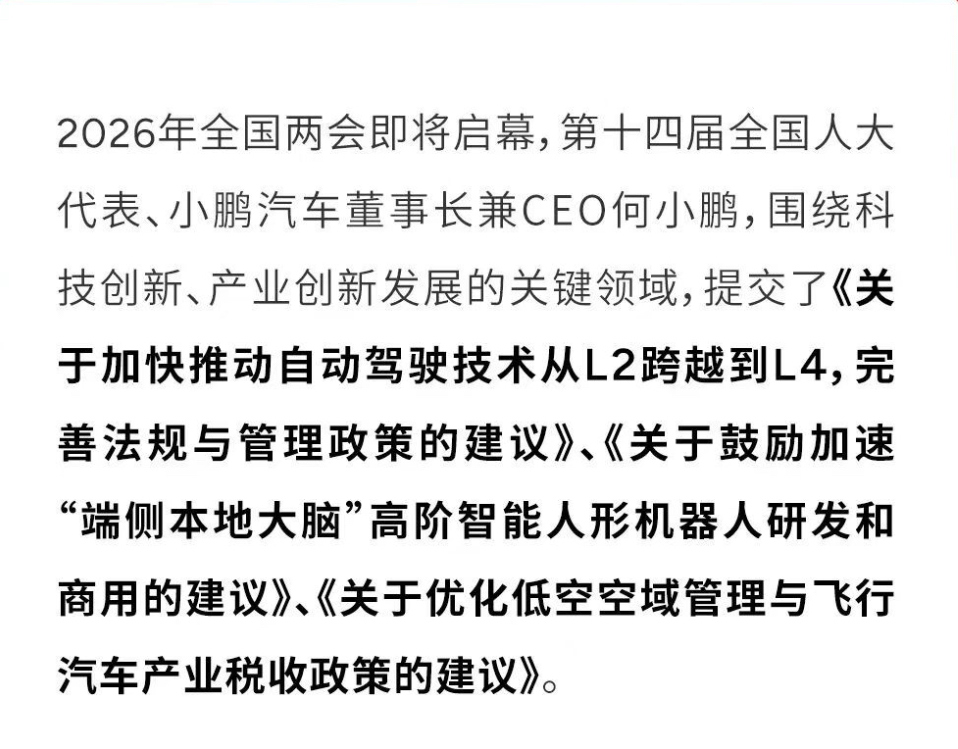
Image Source: XPENG
As a deputy to the National People's Congress, He Xiaopeng also submitted a proposal during the "Two Sessions" on accelerating the transition from L2 to L4 and improving regulations. He elaborated on this during the stream: L2 is driver assistance, designed to help humans drive; L3 is supervised autonomous driving, where liability is complex; L4 is fully autonomous, with automakers bearing primary liability for accidents. He expects regulations for L4 to accelerate, arguing that the legal framework should stay ahead of technological development, social needs, and user expectations.
Looking at the longer cycle, the evolution of smart driving is syncing with a restructuring of the industrial ecosystem. He Xiaopeng shared his forecast: "The last decade was the era of new energy; the next decade is the era of the intelligent economy. Cross-domain fusion and soft-hard integration are the keys to breaking through. Ignoring 'intelligent agents + vehicles' now is like missing the new energy wave ten years ago."
Whether this judgment holds true remains to be seen. But what is certain is that with the official rollout of the second-generation VLA on March 19, XPENG is entering a practical testing phase. For the industry, this livestream offers a window into a critical shift: as smart driving moves from a "specs war" to "user experience," how companies balance technical ideals with actual delivery—and find their differentiation in this "era of democratization"—will be key. The answers likely lie in the market feedback to come.


