



Gasgoo Munich-The 19th Beijing International Automotive Exhibition kicked off on April 24, 2026, spanning 380,000 square meters and showcasing 1,451 vehicles. With 181 global debuts and 71 concept cars, the event hit a new record for scale.
This year's Beijing Auto Show marked a leap in charging rates, the mass production of cabin-driving fusion chips, the dawn of the steer-by-wire chassis era, intelligent driving compute power breaching 1,000 TOPS, and hybrid engine thermal efficiency setting new global records. As core technologies iterate in unison, the industry's battleground is shifting from finished vehicles to an ecosystem-level contest over core components and underlying tech.
As the race for electrification and intelligence enters deep waters, what will ultimately decide the winners over the next three years? The answer lies in the collective breakthroughs across core technologies on display. By flexing their technological muscle in these areas, automakers and suppliers are essentially fighting to define the standards and control the narrative for the next generation of smart EVs.
Power Batteries: From 'Good Enough' to 'Next-Level,' Solid-State Batteries Begin Mass Production
On the power battery front, multiple battles are advancing simultaneously: charging speed, range, high-voltage platforms, and solid-state batteries remain the focal points of technical innovation. At this Beijing Auto Show, the recharging experience is rapidly catching up to internal combustion engine vehicles, while the divergence in technological pathways is intensifying.
In the race for charging speed, the head-on clash between CATL and BYD emerged as one of the most watched technical showdowns.
A month prior, BYD unveiled its second-generation Blade Battery and flash-charging technology. Data presented by Chairman and President Wang Chuanfu was equally stunning: charging from 10% to 70% takes just 5 minutes, and 10% to 97% only 9 minutes. Even at minus 30 degrees Celsius, the battery charges from 20% to 97% in 12 minutes, leading him to declare on the spot that this set 'a global record for the fastest charging speed in mass production.'
Hot on BYD's heels, CATL held its 'Polar Region' Super Tech Day in Beijing on April 21—three days before the show opened. The company rolled out five battery products and a new replenishment network in an event industry insiders dubbed 'the most tech-dense launch since the company's founding.'
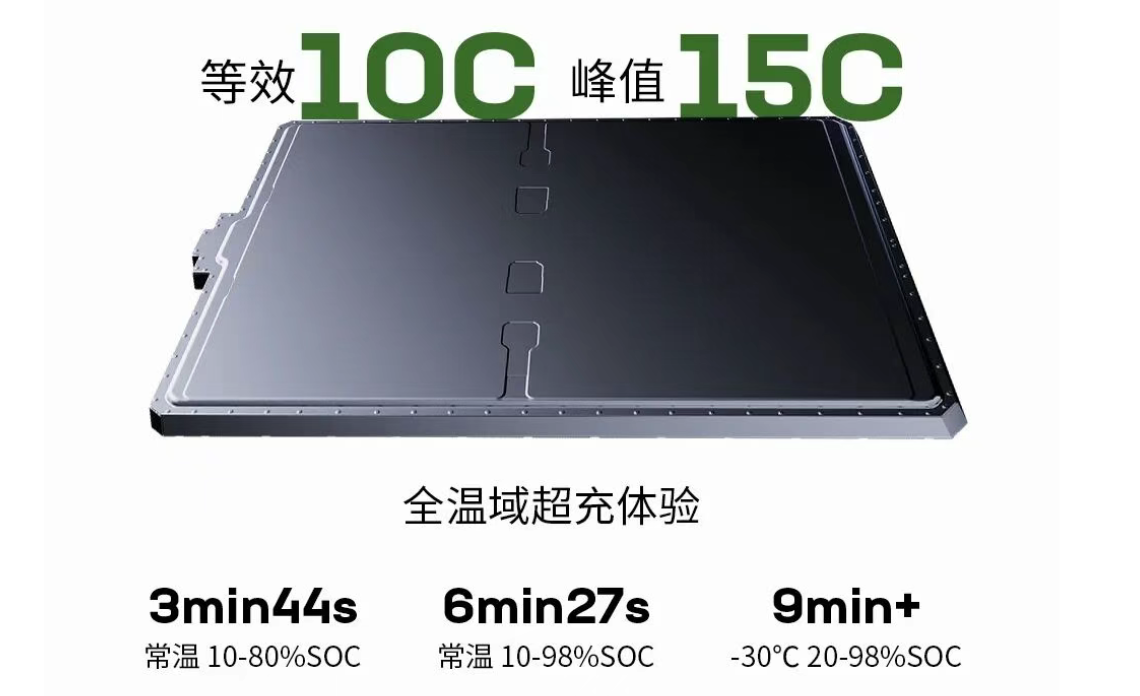
Image Source: CATL
The standout was the third-generation Shenxing ultra-fast-charging battery. It charges from 10% to 98% in just 6 minutes and 27 seconds at room temperature—equivalent to 10C and peaking at 15C—shattering industry records. In extreme cold of minus 30°C, it still manages a 20% to 98% charge in roughly 9 minutes. Crucially, capacity retention remains above 90% after 1,000 cycles, directly countering industry concerns that ultra-fast charging degrades battery life.
In the solid-state battery arena, while most players are still in the semi-solid mass production phase, roadmaps for fully solid-state batteries are already clearly laid out by major manufacturers like CATL, BYD, and CALB, as well as automakers like Chery, GAC, and SAIC. CATL's condensed-matter Qilin battery, unveiled at its tech day, uses a semi-solid electrolyte to achieve an energy density of 350 Wh/kg and a range of 1,500 kilometers. Several high-end models have confirmed adoption, with mass deliveries expected in the second half of 2026. CATL previously outlined plans for small-batch production of fully solid-state batteries by 2027, targeting large-scale mass production and commercialization around 2030.
CALB showcased two products at the show: a 400 Wh/kg solid-liquid hybrid battery and a 450 Wh/kg all-solid-state high-energy-density battery, targeting applications ranging from vehicles to low-altitude aircraft and humanoid robots. Gotion High-Tech plans to launch small-batch production on a fully solid-state battery line by the end of 2026; its Jinshi all-solid-state battery offers 350 Wh/kg and has already secured intent orders from Volkswagen and Audi. SVOLT Energy is pursuing a 'semi-solid first, all-solid-state follow' strategy, aiming to launch a 500 Wh/kg all-solid-state battery by 2028.
Automakers, too, have been densely populating their calendars with mass production timelines for all-solid-state batteries.
At this Beijing Auto Show, BYD completed the world's first real-vehicle demonstration of its sulfide-based all-solid-state battery. The sample boasts a maximum energy density of 480 Wh/kg and a CLTC pure electric range exceeding 1,218 kilometers, with small-batch vehicle installation planned for 2027.
Chery plans to put a pilot line for all-solid-state batteries into operation in 2026, aiming for a market launch in 2027. FAW Group has completed road testing of prototype vehicles, while GAC Aion and SAIC Group have both pegged their solid-state battery mass production targets between 2026 and 2027.
Despite clear roadmaps and aggressive R&D from multiple players, caution persists within the industry regarding the timeline for actual mass production and market rollout.
A senior technology executive at EVE Energy told Gasgoo Auto: 'Our Chengdu base has a solid-state production line up and running, but it's currently focused on small-capacity products for sectors like robotics. Commercializing automotive-grade solid-state batteries within two to three years will be difficult. Large-format cylindrical cells remain the superior choice for high-end vehicles over the next five years.' In his view, even if solid-state batteries reach the market, cost and usage scenarios will dictate adoption. Urban commuters, for instance, have little need for ultra-long range and won't blindly opt for expensive solid-state batteries—suggesting multiple technological pathways will coexist for the long haul.
Parallel to gains in battery density and charging efficiency, competition over high-voltage platforms is heating up. At this year's show, 800V platforms have effectively become standard equipment for mid-to-high-end pure electric models. As 800V becomes ubiquitous, the battle is escalating further—900V and 1,000V architectures made concentrated appearances.
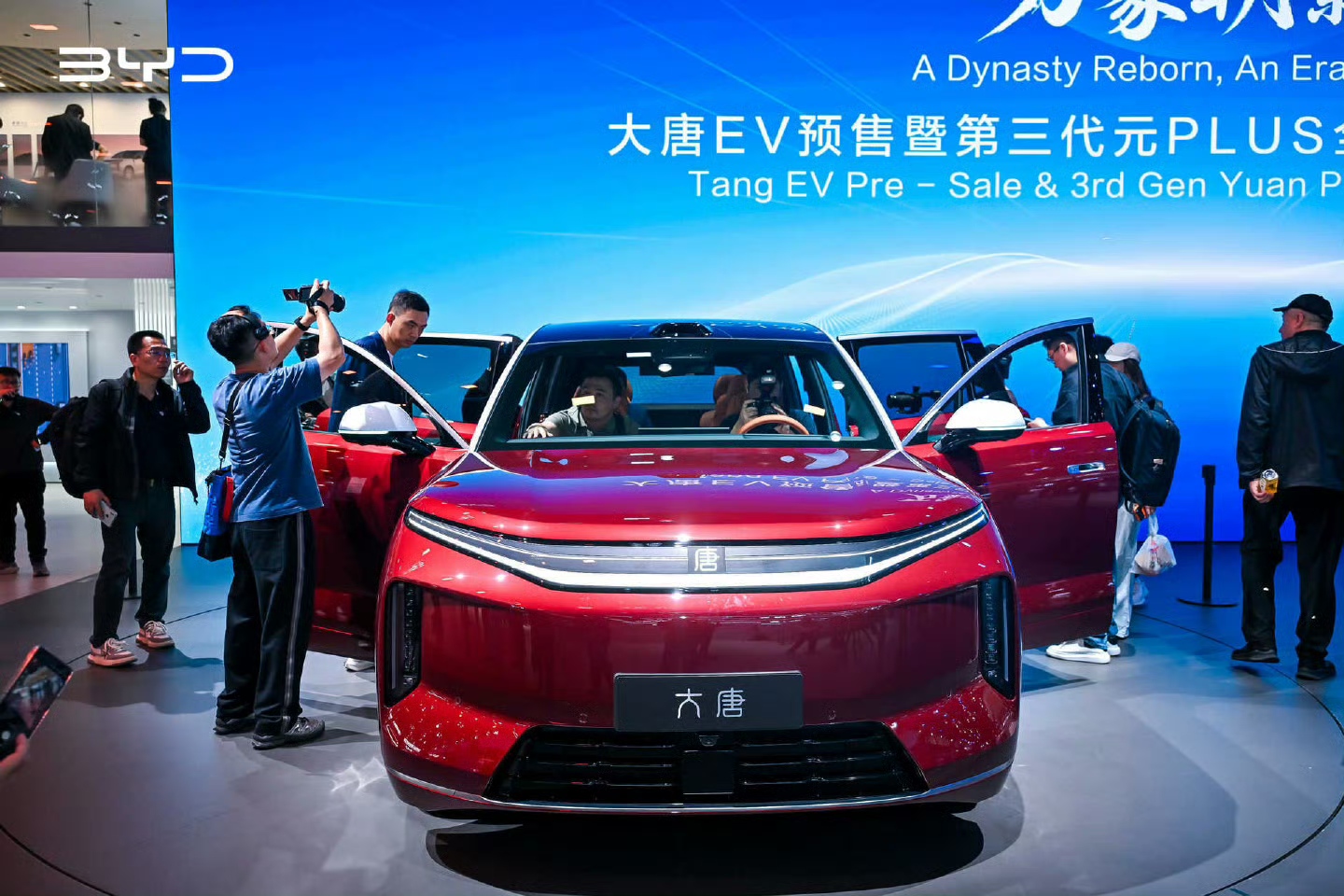
Image Source: @BYD Auto
BYD, for instance, unveiled a full-domain 1,000V high-voltage platform; its flagship 'Datang' SUV's pure electric version, equipped with the platform, opened pre-orders at the show. NIO partnered with onsemi to upgrade to a 900V architecture, with its flagship ES9—featuring a 900V silicon carbide platform—making an appearance. Meanwhile, Leapmotor's D99 flagship MPV, revealed in Beijing, adopts a 1,000V electrical architecture; paired with a 115 kWh battery pack, it can add 350 kilometers of range in just 15 minutes.
At the same time, 800V technology is trickling down from premium models to the mainstream market. The Luxeed R7 and S7, along with the Stelato Z7 series, come standard with 800V silicon carbide powertrains, while joint venture brands like Nissan have also made 800V ultra-fast charging standard on models such as the NX8.
The widespread adoption of high-voltage platforms imposes new technical requirements on silicon carbide power devices, high-voltage insulation materials, and vehicle thermal management systems.
Automotive Intelligence: AI Defines the Chassis, Cabin-Driving Fusion Ends the 'Spec-Stacking Era'
While automakers spent the last few years fiercely competing over large screens and smart driving features, the core signal from this Beijing Auto Show is clear: the battleground for intelligence is shifting from 'flashy features' to 'AI-driven holistic experiences.' Steer-by-wire chassis and cabin-driving fusion have emerged as the new technological high ground.
Zhao Lijin, deputy secretary-general of the Society of Automotive Engineers of China, noted: 'After three to five years of iteration, smart chassis technology has entered the inaugural year of mass production for steer-by-wire systems.'
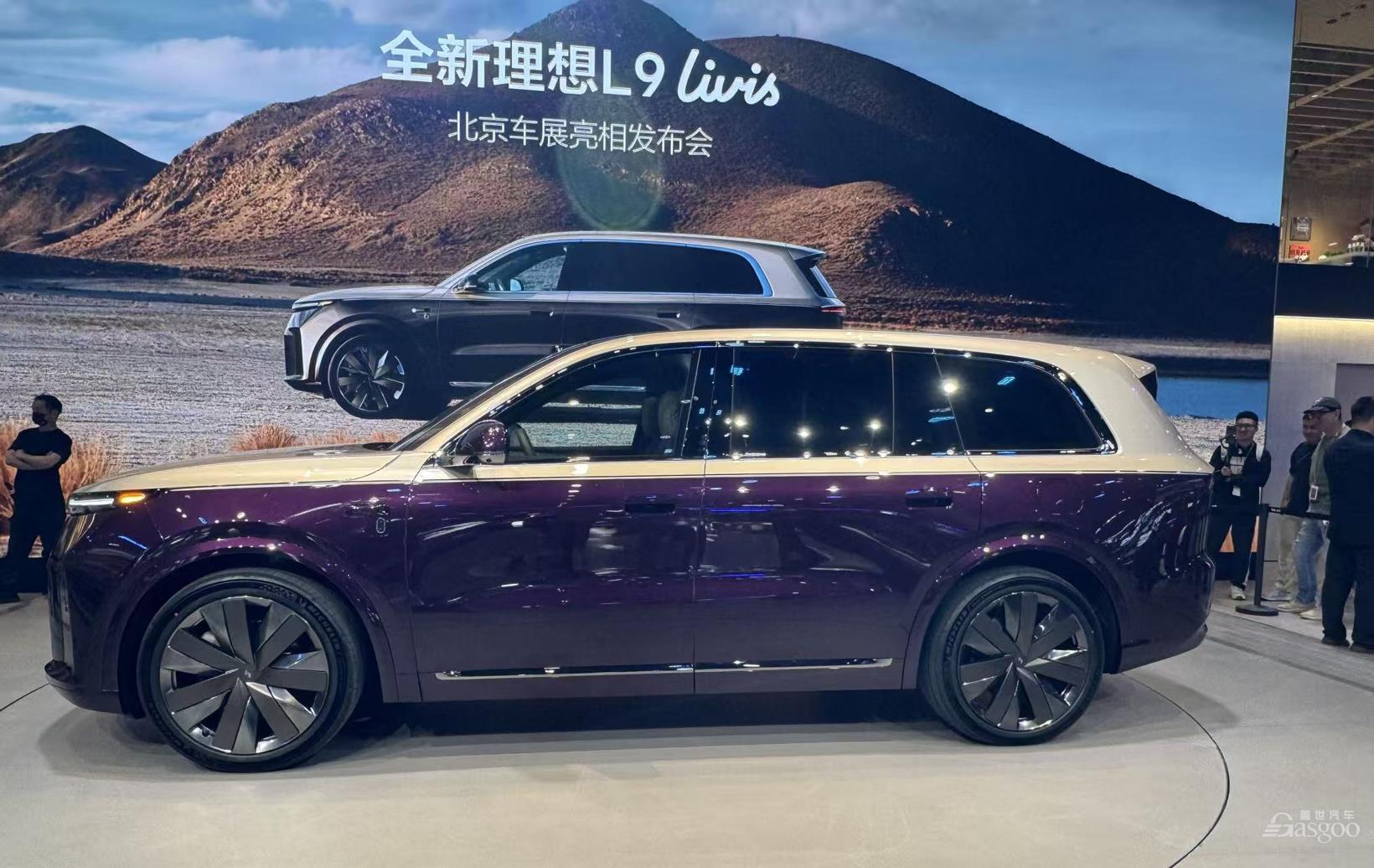
The new Li Auto L9 Livis exemplifies this trend. It features an 800V active suspension and a full steer-by-wire chassis system developed over four years, integrating steer-by-wire steering, four-wheel steering, and fully electronically controlled mechanical braking. According to Li Auto, the system eliminates traditional mechanical connections to achieve full chassis wire control, providing millisecond-level execution capabilities essential for high-level autonomous driving.
Liu Liguo, Li Auto's senior vice president of vehicle electric R&D, explained the technical logic in an interview: 'Full steer-by-wire chassis and embodied intelligence are deeply homologous in technology. Chassis electrification and intelligence are indispensable execution foundations for achieving Level 4 autonomous driving.'
He further predicted that chassis electrification is an inevitability, stating, 'Only by gradually electrifying systems like suspension, braking, and steering can we lay the groundwork for true intelligence.'
NIO and XPENG have also offered their own answers in the smart chassis space. The NIO ES9 features the 'Tianxing Smart Chassis,' integrating steer-by-wire steering, active suspension, and rear-wheel steering. The XPENG GX marked the global mass-production debut of Bosch's next-generation steer-by-wire system, paired with XPENG's in-house X-VMC intelligent fusion system that deeply integrates steer-by-wire braking, rear-wheel steering, and intelligent four-wheel drive.
In an interview, NIO's William Li elevated smart chassis to a strategic level, noting that smart chips, full-domain operating systems, and smart chassis are becoming the new benchmarks for judging the technological prowess of smart EVs. He dubbed these the 'new big three' for NIO.
As Li suggested, full-domain operating systems are becoming a new technological standard. As a key pathway for these systems, cabin-driving fusion has emerged as an explicit industry consensus at this auto show.
At this Beijing Auto Show, cabin-driving fusion solutions debuted in droves. It is no longer a solo performance by a single player, but a collective action spanning the entire supply chain.
Among automakers, Leapmotor's D19 marked an industry first by featuring dual Qualcomm 8797 central domain control chips to enable a super-coordinated cabin-driving architecture. XPENG has already implemented a cabin-driving integrated architecture in its flagship models, unifying the scheduling of cabin interaction and autonomous driving perception. Dongfeng Motor partnered with Black Sesame Technologies at the platform level to build China's first mass-production cabin-driving integration platform.
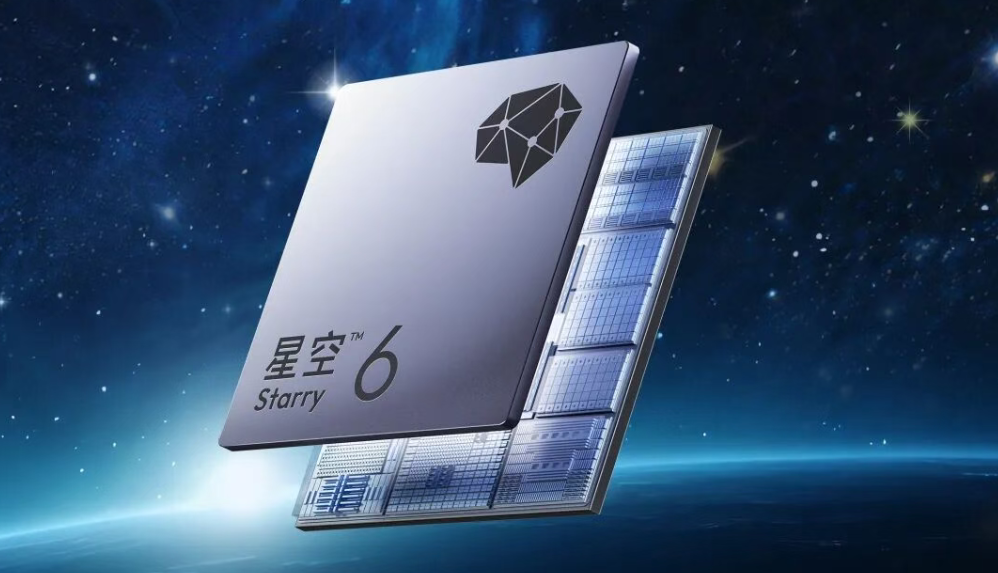
Image Source: Horizon Robotics
Horizon Robotics is offering automakers software-hardware integrated cabin-driving solutions via its 'Xingkong' chips and 'KaKaClaw' operating system. CheLianTianXia's single-chip solution based on the Snapdragon 8775 has achieved the world's first mass production on BAIC's Arcfox. SiEngine released its 'Longying No. 2' AI cockpit chip, designed to cover full-scenario demands for cockpits and cabin-driving fusion. On the overseas Tier 1 front, Bosch's cabin-driving fusion platform, developed on the Qualcomm SA8775P chip, is production-ready.
From the supply chain to the assembly line, cabin-driving fusion is accelerating toward mass adoption. SiEngine CEO Wang Kai told media outlets including Gasgoo Auto that few companies currently offer true cabin-driving fusion chips. He noted that such chips are best suited for mid-to-low-end models: 'By merging the cabin and driving into a single domain, you eliminate control boxes and many peripheral devices, driving down the cost.' High-end vehicles, he added, still predominantly use two independent chips to guarantee extreme performance and safety.
He also emphasized that chip suppliers must provide fusion solutions with system-level innovation. 'The unit price of such a chip might be slightly higher than others, but the total cost will still be lower than purchasing multiple separate components,' Wang explained.
According to Wang, SiEngine's 'Longying No. 1' chip has already realized a 'cabin-driving-parking integrated' single-chip solution. The Galaxy E5 adopts this approach, using a single chip to handle cockpit functions, driver assistance, and parking simultaneously, significantly reducing system costs.
The deployment of these intelligent applications relies heavily on support from underlying chip computing power. At the 2026 Beijing Auto Show, the competitive landscape in chips showed increasing diversification: international giants still hold ground in the high-end market, while domestic suppliers are accelerating their catch-up efforts. The core dimension of competition is shifting from a simple battle over 'peak TOPS' to a comprehensive contest involving 'effective computing power + cost + ecosystem.'
International giants still dominate the ultra-high-compute sector. Nvidia's Thor chip, for instance, delivers up to 2,000 TOPS and remains the top choice for many high-end models, particularly those pursuing advanced autonomous driving capabilities. However, domestic chips are increasingly demonstrating advantages in cost, localized service, and cabin-driving fusion solutions.
Horizon Robotics showcased multiple products at the show, including its 'Xingkong' and Journey series chips, covering full-scenario demands from low-end ADAS to high-end intelligent driving. Notably, the Xingkong 6P is China's first cabin-driving fusion vehicle intelligent agent chip; built on a 5nm automotive process, it offers 650 TOPS of BPU computing power.
Black Sesone Technologies' Huashan A2000X, with single-chip computing power exceeding 1,000 TOPS, was also on display. SiEngine released its 5nm automotive-grade AI cockpit chip, 'Longying No. 2,' during the show. With 200 TOPS of AI computing power, it is slated to begin adaptation in the first quarter of 2027, covering full-scenario needs for AI cockpits and cabin-driving fusion.
Notably, mass-production models featuring self-developed chips made a concentrated appearance. XPENG's Turing AI chip entered mass production in the second quarter of 2025, debuting on the G7 before rolling out to new models; the XPENG GX on display also features this chip and has secured a designation from Volkswagen. NIO's Shenji NX9031 launched in March 2025 on the ET9 and comes standard across the ES9 lineup at this show. Li Auto's self-developed chip arrived a bit later: the L9 Livis at the show marks the first use of two in-house 'Mach 100' chips, delivering a combined 2,560 TOPS.
As new forces collectively become chip developers, the discourse over the 'most powerful brain' of smart EVs is partially shifting back to automakers from international suppliers like Nvidia and Qualcomm. Meanwhile, local chip firms like Horizon Robotics continue to firmly hold their ground in the mid-to-high volume market and supply numerous smaller automakers, thanks to a full product matrix spanning L2 to high-level driving and significant cost advantages.
Hybrid Technology: Back at the Table, Domestic Brands Consolidate Strategic Positions
At the 2026 Beijing Auto Show, oil-based hybrids made a strong comeback, sending a signal the industry cannot ignore: in the Chinese market, hybrids are poised to become a powertrain option equal in standing to pure electric, plug-in hybrid, and range-extended vehicles.
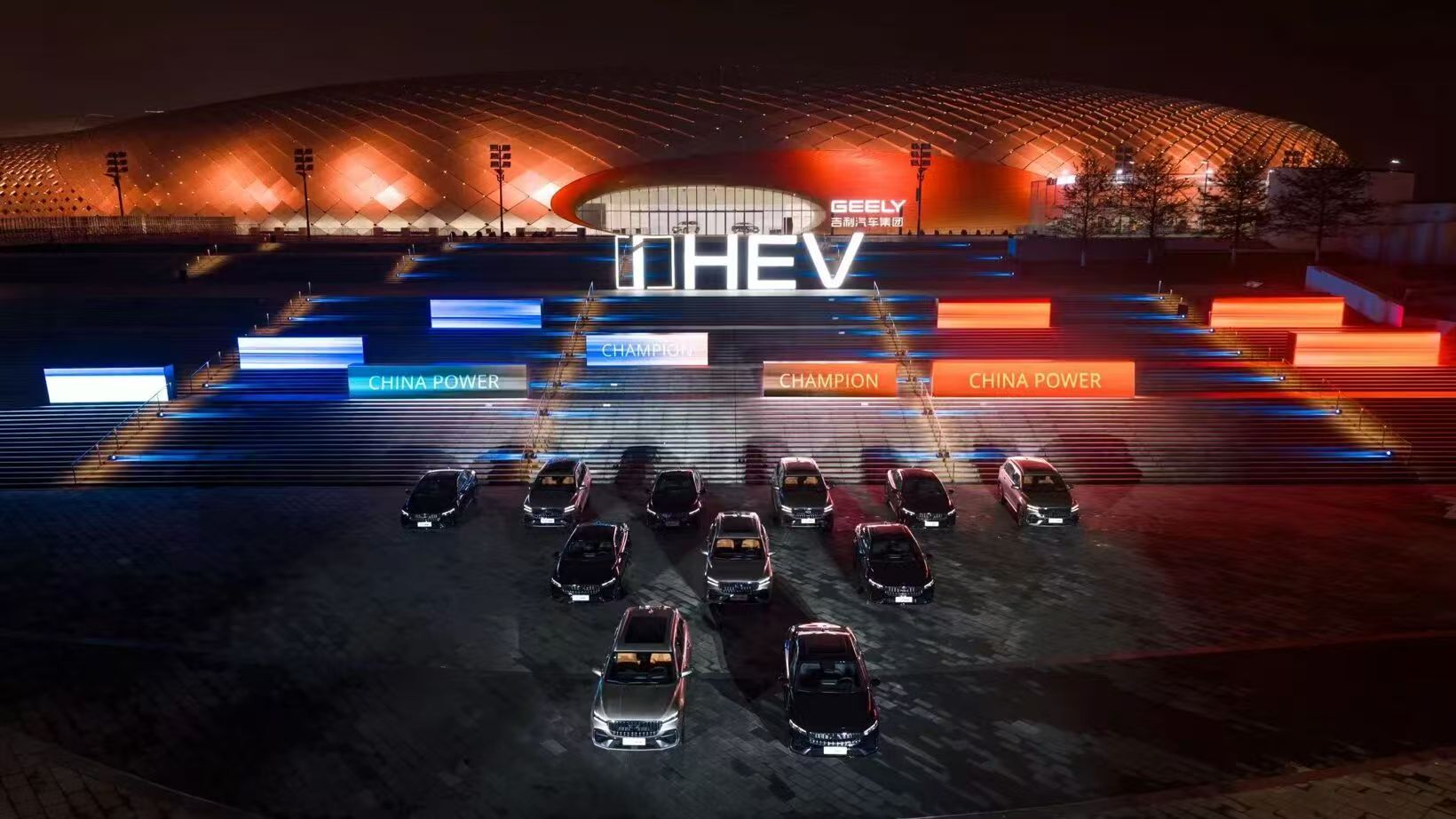
Image Source: Geely Auto
On April 13, Geely Auto officially unveiled its new-generation hybrid technology solution: the i-HEV Zhiqing Hybrid. This technology is considered Geely's core brand for asserting voice, achieving technological autonomy, and competing globally in the hybrid sector. It is slated for debut on flagship models like the Preface, Xingyue L, Boyue L, and Emgrand. At this Beijing Auto Show, the fifth-generation Emgrand, equipped with this hybrid system, made its official debut.
Certified by the China Automotive Technology and Research Center (CATARC), Geely's i-HEV achieves a thermal efficiency of 48.41%—the highest level currently among mass-production engines globally. Under WLTC conditions, the electric motor handles over 80% of driving scenarios, reducing engine runtime by more than 27% compared to traditional hybrids. The vehicle can operate in pure electric mode at speeds below 66 km/h.
In real-world testing, the fifth-generation Emgrand i-HEV achieved fuel consumption as low as 2.22 liters per 100 kilometers, successfully setting a Guinness World Record for the lowest fuel consumption in a mass-production vehicle. This represents a reduction of over 12% compared to global benchmarks like the Toyota Prius. The breakthrough shatters a 30-year technical barrier held by Japanese hybrids in efficient engine technology, signaling that Chinese hybrid technology has entered the world-class ranks.
Ren Xiangfei, Geely Group's chief engineering technology scientist, pointed out that Japanese hybrids essentially 'grew' out of internal combustion technology pathways, prioritizing fuel economy at the expense of performance. In contrast, Geely's i-HEV was developed from electric-hybrid technology. 'Safety standards, design philosophy, and intelligence are all designed using the same underlying logic as new energy vehicles and plug-in hybrids,' he said, giving it a generational advantage.
Geely Group Vice President Li Chuanhai stated at the technology launch that internal combustion vehicles still hold a massive market, particularly globally. 'Varying user perceptions of new energy vehicles, usage habits, and the uneven development of charging infrastructure across different regions all determine that fuel cars still have a significant future,' he said.
Given this global reality, as Chinese automakers expand aggressively overseas, Geely's move is far from an isolated case. This year, domestic players like Changan, Great Wall Motors, and GAC have all successively released their own hybrid solutions.
Great Wall Motors is taking a systematic approach with its 'Super Smart Hybrid HEV.' In early 2026, based on its Guiyuan platform, the company launched a native AI all-power platform compatible with five powertrain forms: PHEV, HEV, BEV, FCEV, and ICE. The goal is an underlying architectural innovation enabling 'multiple powertrains in one vehicle, one vehicle sold globally.' The WEY V9X, built on the Guiyuan S platform, covers BEV, PHEV, and HEV configurations and features the Super Hi4 hybrid system.
Changan Auto showcased its Blue Whale Super Engine hybrid system at the show, debuting the fourth-generation CS75PLUS Blue Whale Super Engine and the Eado Blue Whale Super Engine. Officially launched in March, the system achieves a maximum engine thermal efficiency of 44.28%, with real-world city fuel consumption dipping into the 3-liter range. The pre-order price for the fourth-generation Eado Blue Whale Super Engine has dropped to 79,900 yuan, pulling HEV compact sedans firmly into the sub-80,000 yuan price bracket.
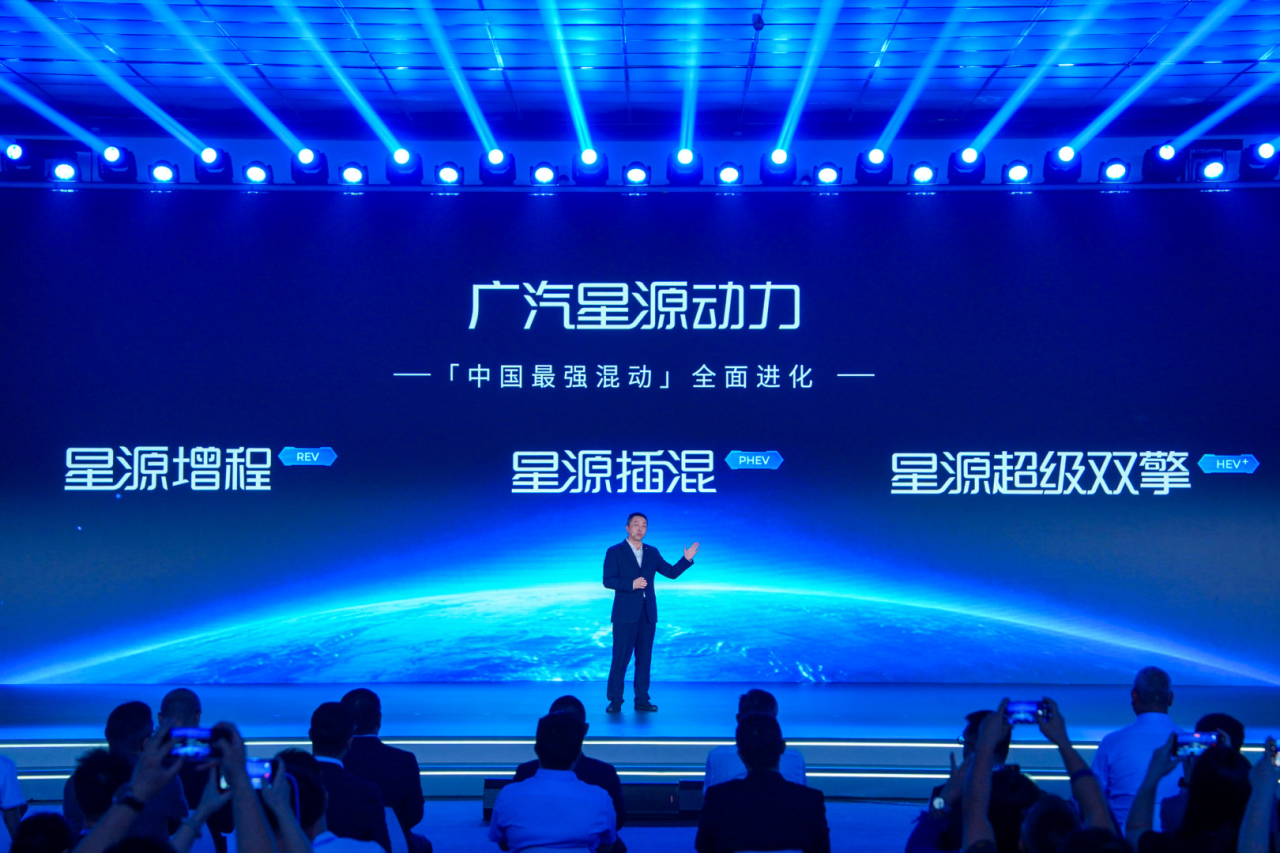
Image Source: GAC Group
GAC Group also released its Xingyuan powertrain technology system in April at GAC Tech Day, covering three pathways: Xingyuan plug-in hybrid, Xingyuan range extender, and Xingyuan Super Dual Engine. The Xingyuan Super Dual Engine is an oil-electric hybrid (HEV+) system under GAC's new-generation Xingyuan brand, reducing fuel consumption by over 40% compared to traditional internal combustion vehicles.
Since the beginning of this year, and especially in the lead-up to the Beijing Auto Show, numerous automakers have integrated oil-based hybrids into their core strategic roadmaps and accelerated implementation, systematically showcasing their achievements at the event. HEV technology, once marginalized by policy and known as 'more praised than purchased,' is regaining a central strategic position among domestic brands.
Conclusion
The 2026 Beijing Auto Show sent a clear signal: industrial competition is escalating from a contest over finished vehicles to a systemic battle over core components and underlying technologies. Suppliers are defining technological pathways from the ground up, automakers are vying for the right to define the upper layer through in-house R&D, and multinational giants are accelerating their localization efforts to adapt to Chinese standards across multiple domains.
As William Li observed, 'Competition in smart EVs has entered the final stage of systemic capability.' This is precisely why so many players are fighting to control the technological narrative.
Over the next three years, Chinese solutions are poised to accelerate their rise as industry benchmarks in smart chassis, high-voltage platforms, solid-state batteries, and cabin-driving fusion. Yet, whether these cutting-edge technologies can be translated into sustainable cost advantages and superior user experiences remains the decisive factor in the final phase of this core technology arms race.


