



Gasgoo Munich- Ganfeng Lithium released its first-quarter 2026 earnings forecast late on April 16, projecting a return to profitability. The company estimates net profit for the quarter will land between 1.6 billion yuan and 2.1 billion yuan — a surge of 549.65% to 690.17% from a year earlier. Excluding non-recurring items, net profit is expected to reach 1.25 billion yuan to 1.75 billion yuan, climbing 616.12% to 822.56% year-over-year.
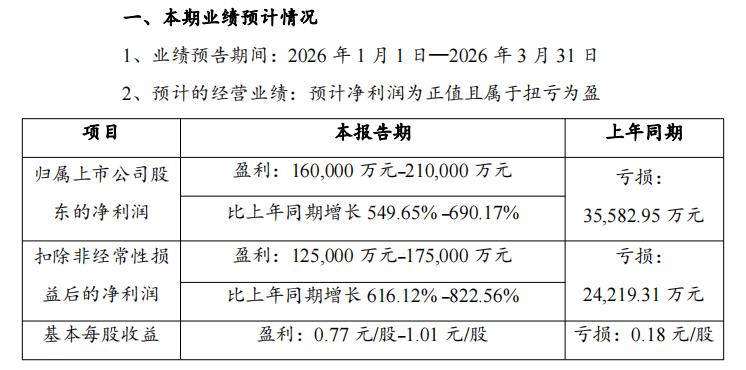
Image Source: Ganfeng Lithium
The rebound is driven by booming demand. Ganfeng Lithium attributed the performance shift to rapid growth in the global new energy sector, which fueled strong downstream demand for lithium salts. Selling prices for these products rose sharply compared with the same period last year. Meanwhile, the release of capacity from the company's lithium resource projects has optimized its cost structure. Add to that sustained growth in the power battery and energy storage markets, which lifted production and sales volumes in the lithium battery division, and the result is a clear year-on-year improvement in operating performance.
Ganfeng also noted gains from its financial holdings. During the reporting period, the rising share price of PLS Group Ltd (PLS) generated a fair value gain. After hedging through established risk management strategies involving collar options, the net fair value gain came to approximately 259 million yuan.
The forecast surge underscores a broader trend: lithium prices have been climbing all year. Take lithium carbonate as a benchmark. Battery-grade prices started the quarter near 120,000 yuan per ton, broke through several key resistance levels, and stabilized around 150,000 yuan per ton. That marks a sharp recovery from the first quarter of last year, when prices hovered between 70,000 and 80,000 yuan per ton.
Speaking to investors recently, company executives pointed to market research suggesting that lithium supply and demand will remain in a tight balance throughout 2026. Should supply face disruptions from policy shifts, environmental regulations, or regional conflicts, the market could tip into a shortage.
Chairman Li Liangbin highlighted the company's global footprint. Projects in Australia, Argentina, Mali, and Sierra Leone are moving forward, with lithium resource capacity set to release gradually over the next three years. This expansion will boost self-sufficiency rates, further optimize the cost structure, and strengthen the company's resilience against lithium price cycle volatility.


