



Gasgoo Munich- Since 2026, Chinese automakers have noticeably accelerated their push into the field of embodied intelligence.
At a global product launch, XPENG Chairman He Xiaopeng announced that the company will mass-produce humanoid robots and flying cars in 2026, while also launching Robotaxi operations. He framed the company's new ten-year vision as transforming XPENG into a "global embodied intelligence company."
That same month, Li Auto CEO Li Xiang outlined a new strategic direction at an internal all-hands meeting. The company, he said, would evolve from "creating a moving home" to an "embodied intelligence enterprise," stressing that Li Auto is committed to building humanoid robots and aims to unveil them soon.
The following month, at a high-quality development conference in the Guangzhou Development Zone, GAC Group officially unveiled GoMate Mini, its fourth-generation embodied intelligent humanoid robot.
From south to north, and from startups to traditional giants, a race to "build humans" is heating up across China's auto industry. Companies that once focused solely on vehicles are suddenly announcing plans to manufacture humanoid robots. Is this surge merely capital chasing a hot narrative, or a strategic move by Chinese manufacturing into the era of physical AI?
A "Mass Production Schedule" in Full Bloom
Mapping out the robot strategies of major automakers reveals a landscape clearly defined by production timelines and core tactics.
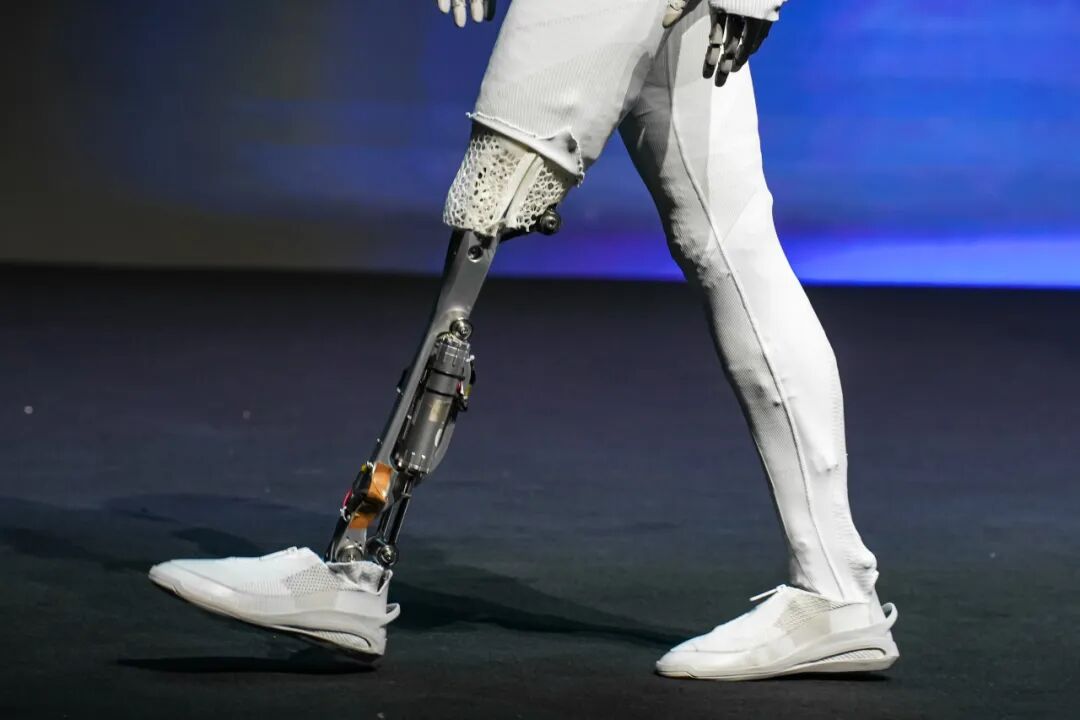
Image Source: XPENG
XPENG is undoubtedly moving the fastest and has been the most explicit. In his 2026 New Year letter, He Xiaopeng stated that the company will begin mass production of its next-generation IRON humanoid robot by the end of 2026, with the goal of becoming the "first company to mass-produce high-end humanoid robots" globally. The first batch of IRON robots will be deployed for venue guidance and commercial shopping assistance, with software development kits opened to global developers.
GAC Group is close behind. On February 26, 2026, GAC unveiled the GoMate Mini humanoid robot and established Huilun Technology to oversee its robotics business. The plan calls for Huilun to begin trial production and small-batch manufacturing of core products within 2026, targeting mass production by 2027.
Changan Automobile, by contrast, is playing a longer game. In November 2025, the automaker announced plans to invest 450 million yuan to establish "Changan Tianshu Intelligent Robot Technology Co., Ltd." as the strategic vehicle for its robotics ambitions. Under the roadmap, Changan aims to roll out humanoid automotive robots off the production line by 2028, gradually expanding into home service robots after 2030.
Other automakers are choosing a capital-driven approach. SAIC Motor, for instance, recently provided the first systematic look at its robotics ecosystem. According to the company, SAIC has invested over 800 million yuan since 2023—dubbed the inaugural year of the humanoid robot industry—backing leaders like AgiBot, GALBOT, and Noetix Robotics. "The robotic components we've invested in not only share technology with automotive parts, but they also allow us to export our supply chain capabilities to robotics firms, creating a synergistic closed loop," said a senior executive at SAIC Financial Holding.
Geely and BYD are pursuing a dual-track strategy of "investment plus in-house R&D." In November 2025, Stardust, a startup incubated by Tsinghua University's Institute for Interdisciplinary Information Sciences, closed a nearly 1 billion yuan Series A+ round led by Geely Capital—marking the largest single investment by automotive capital in an embodied intelligence firm to date.
On the in-house R&D front, Geely has been equally active. The automaker established a robotics division within its Central Research Institute, allocating 5 billion yuan to tackle core technologies ranging from motors and reducers to motion control algorithms and large models. Its subsidiary, Qianli Technology, serves as the technological foundation for an "AI + Car + Robot" ecosystem, leveraging a VLA model that shares its architecture with autonomous driving to deeply integrate robotics with automotive intelligence.
BYD set up a dedicated research team back in 2022 and has since developed humanoid-like robots and intelligent collaborative machines. It also established a "Future Lab" and a joint laboratory with the Hong Kong University of Science and Technology to work on cutting-edge technologies. On the investment side, BYD has accelerated its ecosystem build-out by taking stakes in AgiBot and PaXini. Notably, UBTECH's humanoid robots are already undergoing training in its factories, demonstrating their potential for smart manufacturing.
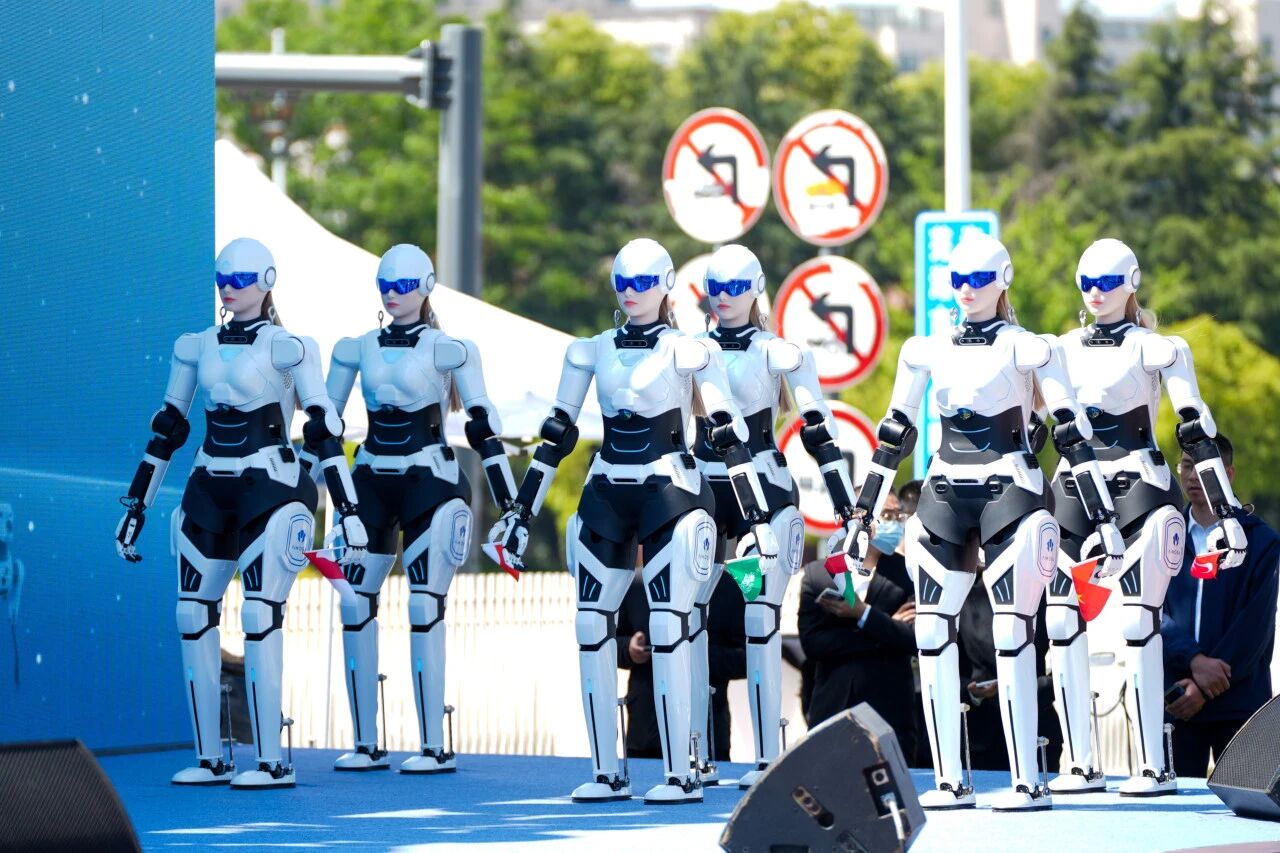
Image Source: Chery
Chery Automobile is prioritizing a "scenario-first" approach. According to Zhang Guibing, executive vice president of Chery and general manager of AiMOGA, the company's robotics strategy began by addressing pain points in overseas sales—such as labor fluctuations during peak seasons and the challenges of multi-language training. "Robot development must revolve around real-world scenarios," Zhang emphasized. So far, Mojia has delivered over 300 Mornine robots, deployed in more than 100 scenarios including factory inspections and showroom services.
NIO is taking a more cautious approach. CEO William Li has made it clear that "for the foreseeable future, we will remain focused on building great cars." While robots undoubtedly have a future, Li noted, that doesn't mean NIO needs to build them now. The company has no plans to follow the trend into humanoid robots, preferring to concentrate its resources on its core automotive business.
Li Auto is taking a far more aggressive stance than NIO. Reports indicate the company's humanoid robotics team has been working in secret for nearly a year on a project codenamed "Nexus." The roadmap includes a two-wheeled robot and a bipedal model; the two-wheeled version is ready and expected to launch this year, primarily for manufacturing tasks. Li Xiang has repeatedly stated that Li Auto is "100% committed to building humanoid robots."
From EV startups to legacy giants, automakers may differ in their paths and pacing, but all have incorporated embodied intelligence into their future roadmaps. This is no longer an optional experiment; it is a battle for dominance over the next generation of intelligent terminals.
Why Are Automakers Leading the Charge?
For automakers, building robots isn't a raid on a new sector—it's a natural extension of shared technology.
Not long ago, smart electric vehicles were dubbed "smartphones on wheels." Now, as automakers transform into AI tech companies, they increasingly refer to EVs as "robots on four wheels."
Industry leader Tesla demonstrates that cars and humanoid robots share core technologies across three key areas: electric powertrains, physical AI, and human-machine interaction.
In terms of electric systems, the high-performance battery packs and high-torque-density motors in EVs directly correspond to the energy and drive units in humanoid robots. For physical AI, the lidar and cameras used in autonomous driving serve the same purpose for robots: environmental modeling. And in human-machine interaction, the technologies overlap in voice assistants, smart cockpit logic, and multimodal interfaces.
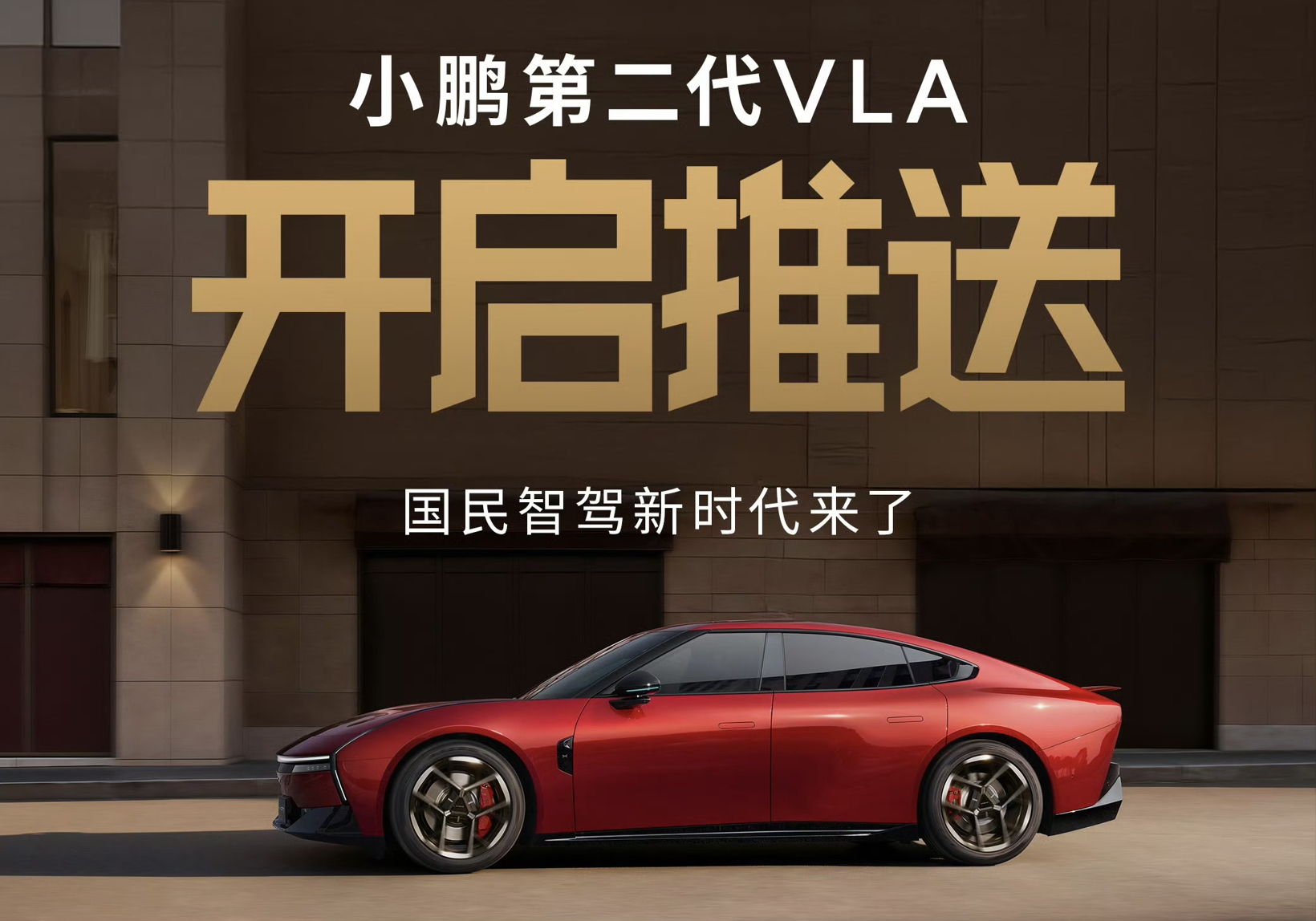
Image Source: @XPENG
XPENG's second-generation VLA model offers a prime example. By innovatively removing the traditional "language translation" step, it achieves end-to-end generation directly from visual signals to action commands. This model can drive cars, robots, and flying cars across different domains, providing a unified intelligence foundation for various forms of embodied terminals.
Similarly, Li Auto—known for its aggressive roadmap—unveiled its next-generation autonomous driving model, MindVLA-o1, at NVIDIA GTC in March 2026. "When we unify vision, language, and action into a single model, it ceases to be just an autonomous driving system and evolves into a general agent for the physical world," said Zhan Kun, head of Li Auto's foundation models. "Based on this same VLA architecture, we can control not only vehicles but also robots. Autonomous driving is merely the starting point for physical AI."
Zhang Yongwei, chairman of the China EV 100, has noted that smart cars and embodied robots share a highly common industrial foundation—over 60% of the supply chain is reusable.
As Zhou Xiaoying, CEO of Gasgoo, remarked at the Gasgoo Embodied Intelligent Robot Industry Development Forum: "Looking at the technological foundation—whether perception systems, chips, computing platforms, motion control, actuators, or software, data loops, and simulation training—the core capabilities amassed by smart EVs in recent years are increasingly extending into the realm of embodied robotics."
If technology transfer solves the challenge of moving from zero to one in prototype design, then supply chains and mass-production engineering capabilities determine the leap from one to a million.
A mature automaker manages a global supply chain comprising thousands of suppliers, backed by strong procurement leverage and rigorous quality control. When building robots, these companies aren't starting from scratch with a new bill of materials; they are working from a familiar component list. Sourcing the right joint motor or sensor for a humanoid robot is essentially a matter of precise search and adaptation within an existing supplier database.
"From an industrialization perspective, the auto industry's long-standing capabilities in complex system integration, engineering, reliability verification, cost control, and supply chain collaboration are exactly what embodied robots need to achieve mass adoption," Zhou noted.
Furthermore, automotive factories are among the most complex environments in manufacturing—making them ideal "gyms" for training embodied robots. Automakers can deploy robots on their own assembly lines to learn by doing, solving real-world problems and creating a data feedback loop.
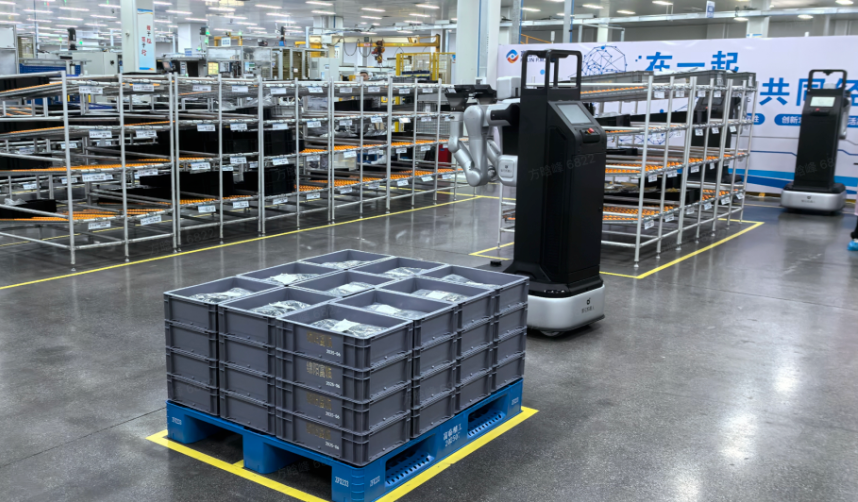
Image Source: AgiBot
SAIC's efforts are representative. At its SAIC-GM plant, for instance, the A2-W wheeled robot—developed by SAIC portfolio company AgiBot—transfers battery cells from bins to the inspection line. An SAIC Financial Holding executive revealed that while the robot is still in testing, it is performing well enough to "go permanent" and officially join the production line soon.
In BYD's welding workshops, humanoid robots are already assisting with logistics and quality control. UBTECH's Walker series industrial robots are undergoing training at BYD factories, handling tasks like material transport, inspection, screw fastening, and parts sorting. In some logistics and sorting operations, efficiency has doubled.
Ms. Zhou offers a clear assessment: "The automotive industry is itself one of the most important and viable scenarios for embodied robots. Auto manufacturing is highly complex, labor-intensive, and deeply integrated. Factories naturally possess rich, real-world environments. They are not just critical spaces for validating robot technology; they are likely to be among the first where embodied intelligence achieves large-scale deployment."
"Three Strategies" and "Three Hurdles"
While everyone is positioning for robotics, strategic choices vary significantly, reflecting distinct commercial calculations.
XPENG represents the "product camp," viewing robots as standalone intelligent terminals for consumers and commercial clients. He Xiaopeng has explicitly identified the deep integration of humanoid robots with the automotive sector as XPENG's "third growth curve," following AI-driven vehicles and globalization.
Others fall into the "industrial camp," such as BYD and NIO. For them, robots are primarily "industrial tools" in the short term, designed to boost manufacturing efficiency. UBTECH's Walker robots, now training at BYD, have already doubled efficiency in certain logistics tasks. NIO, meanwhile, has deployed adaptive robots for charging, seat testing, and interior inspection, achieving a 48% efficiency gain over manual labor.
Li Auto is taking a hybrid approach, transitioning from industrial to consumer applications. According to insiders, the strategy is to "iterate technical capabilities in closed environments first, then gradually move to consumers." The first two-wheeled robot will prioritize factory use. Li Xiang has indicated he will tread carefully in commercialization, treating robotics like a startup venture.
Many automakers are using capital to build ecosystems. Traditional giants like Geely, BYD, and SAIC are investing to secure stakes in core components and technologies, ensuring they hold sway in the industry's future.
Amid the noise and excitement, rational reflection is essential. Building robots is far from a smooth ride for automakers.
The cost of a single humanoid robot can easily run into hundreds of thousands or even millions of yuan. The immediate question is when this will fall to a tipping point acceptable for industrial and consumer use.
XPENG plans mass production in 2026 but hasn't announced a price. GAC's 2027 target faces similar cost hurdles. Ji Xuehong, director of the Automotive Industry Innovation Research Center at the North China University of Technology, points to two core challenges: achieving human-like perception and solving the persistently high cost of hardware.
Image Source: Huaban
Second, can robots in factories truly replace humans for complex tasks? While many robots are already training on factory floors and boosting efficiency, they are largely limited to handling, sorting, and inspection. Fine motor skills required for intricate manufacturing tasks remain a work in progress.
Furthermore, with the auto business locked in brutal price wars, how much capital and patience can automakers spare for a sector with no short-term payoff? Data from the China Passenger Car Association (CPCA) shows the domestic auto industry's profit margin fell to 4.1% in 2025—a record low.
At the forum, Zhou urged the industry to stay clear-headed amid the hype, warning against three misconceptions:
First, confusing hype with maturity. Industry buzz does not mean commercialization is ready. Second, mistaking demo capabilities for real-world application. The industry needs robots that "can work, collaborate, and create value," not just perform on stage. Third, focusing only on the hardware while ignoring the system. "The future of embodied intelligence is not a race of single-point technologies, but a race of system engineering," she said.
Conclusion:
According to current roadmaps, 2026 to 2028 will be the critical proving ground as automakers move robots from "prototype" to "mass production." The companies that crack the business model first will seize control of the next generation of intelligent terminals.
By diving en masse into embodied robotics, automakers are essentially extending their experience with "robots on four wheels" to a more general "embodied agent." The future competition will not just be between vehicles, but between ecosystems comprising "mobile living spaces" and "physical intelligent agents."
"The development of the robotics industry has never been an overnight success," Zhou concluded in her remarks. "Every technological leap that truly reshapes the industry must eventually answer a simple question: Does it solve real problems? Does it create real value? Does it drive the industry forward?"
As the automotive and robotics industries merge deeply, a new era of smart manufacturing is quietly dawning.


