



Gasgoo Munich- A technology unveiling held on the traditional Chinese solar term Jingzhe (Awakening of Insects)—symbolizing the awakening of spring—offered a fitting backdrop for what could mark a new inflection point in China's electric-vehicle industry. At the event in Shenzhen, BYD introduced the second generation of its Blade Battery technology, presenting it as a significant step forward at a time when the country's new-energy vehicle market is undergoing a deeper phase of consolidation and competition.
Rather than a sweeping reinvention of the industry, the launch may be better understood as a technological watershed. As automakers and battery makers push the limits of electrification, the evolution of the battery itself is increasingly shaping the next stage of the EV race.
Ceiling of battery technology has been raised again
When the first-generation Blade Battery debuted in 2019, the industry's attention centered on safety. Its ability to withstand the needle-penetration test without catching fire set a benchmark at a time when battery safety was under intense scrutiny.
Six years later, the competitive landscape of EV batteries has evolved. Lithium iron phosphate (LFP) and ternary lithium chemistries have alternated in dominance, but LFP has now gained a stronger presence thanks to lower costs and steady technological improvements. Even so, energy density has remained the critical bottleneck for both camps, effectively acting as a ceiling on how far battery performance can be pushed.
With the second-generation Blade Battery, BYD has focused on materials innovation. The cathode chemistry shifts from traditional LFP to lithium manganese iron phosphate (LMFP), raising the voltage platform from roughly 3.2 volts to around 3.8 volts.
On the anode side, the company has introduced silicon-carbon composite materials at scale. Silicon anodes have long been explored across the battery industry for their potential to dramatically boost capacity, but their tendency to expand during charging cycles has proven difficult to control. BYD says it has mitigated the issue using nano-coating techniques and structural expansion-suppression technologies.
The material-system upgrade delivers comprehensive performance improvements across the board. The second-generation Blade Battery achieves a system-level energy density of roughly 190-210 Wh/kg, an improvement of about 40% compared with the previous generation, approaching the territory once reserved for mid-nickel ternary lithium batteries.
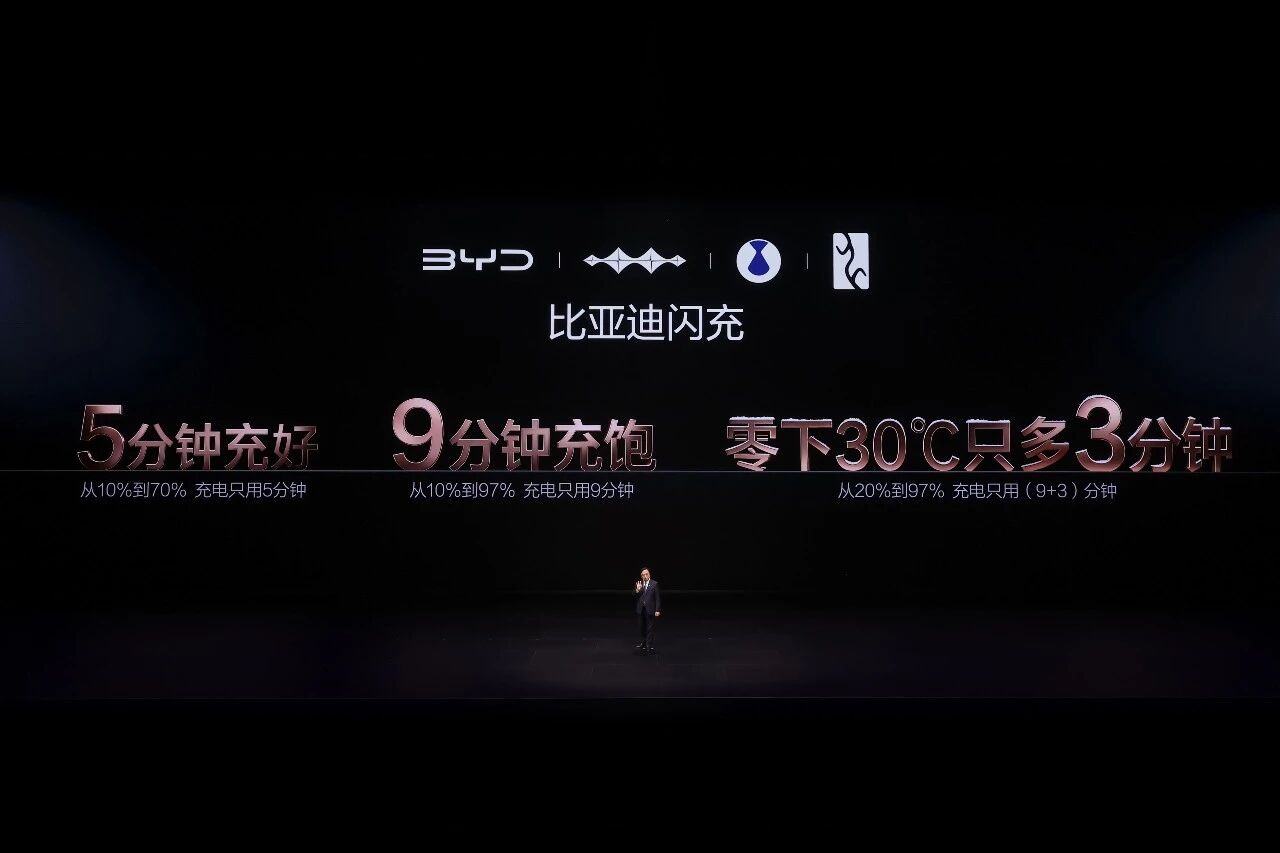
Image source: BYD
Even more critical is the breakthrough in charging performance: at normal temperatures, charging from 10% to 70% takes just five minutes, and from 10% to 97% only nine minutes. This means that "charging as fast as refueling" is transitioning from concept to reality.
CTB 2.0 offers stronger compatibility with short blade cells
Beyond chemistry improvements, BYD has also redesigned the battery structure itself. The new generation adopts a shorter "Blade" cell format roughly half the length of the original version, which the company says improves adaptability across a wider range of vehicle platforms—from compact city cars to full-size SUVs.
The shorter cell architecture is also expected to enhance manufacturing yields and simplify large-scale production, potentially making the technology easier to roll out across an entire vehicle lineup.
At the same time, the company has advanced its Cell-to-Body (CTB) architecture to a new iteration. In this design, the battery pack becomes an integral structural component of the vehicle floor. According to BYD, the approach increases space utilization from about 65% to 76% while reducing structural component weight by roughly 27% and boosting body torsional rigidity by around 40%.
For end users, these engineering changes translate into tangible benefits: more battery capacity within the same chassis footprint, improved vehicle stiffness and handling, and a thinner battery pack that frees up additional interior space.
One example cited by the company is the battery-electric version of the DENZA Z9GT, which carries a 122.5-kWh pack and is rated for 1,036 kilometers of range under the CLTC testing cycle. The vehicle illustrates how the battery is no longer treated as a standalone component but as a deeply integrated part of the overall vehicle architecture.
Conquering cold that once kept EVs at bay
Cold climates have long posed a challenge for battery-electric vehicles. In northern China and other regions with harsh winters, range loss and slower charging in low temperatures have often pushed consumers toward plug-in hybrids instead of battery electric vehicles.
BYD says it has addressed cold-weather performance through several upgrades, including a revised electrolyte formulation, a full-temperature intelligent thermal-management system, and pre-heating technology for battery cells.
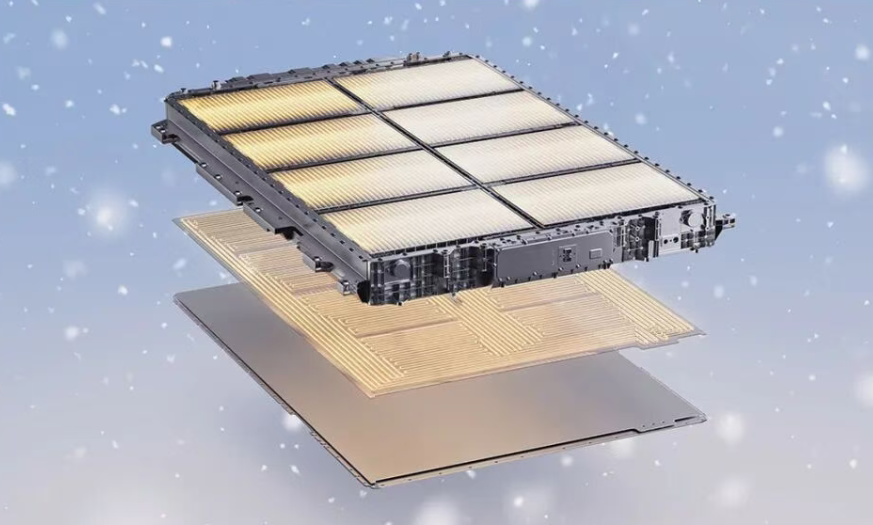
Image source: BYD
Company testing indicates that the second-generation Blade Battery retains more than 85% of its capacity at –20°C, with winter range loss limited to roughly 15%. In extreme conditions of –30°C, the battery reportedly charges from 20% to 97% in about 12 minutes—only a few minutes longer than in moderate temperatures. The new dual-loop thermal-management system keeps cell temperatures within an optimal range of roughly 25–35°C, which BYD says can improve charging efficiency by about 50% at –10°C.
Should those figures prove consistent in large-scale real-world use, one of the EV industry's most persistent barriers—poor winter performance—could begin to fade. For China's rapidly evolving electric-vehicle market, that shift would mark yet another step toward mainstream adoption across all climates.
Flash-charging network: a strategic move beyond the battery
The launch of BYD's second-generation Blade Battery could have easily stood alone as the centerpiece of a major product event. Instead, the company paired the announcement with another strategic reveal: its Megawatt Flash Charging 2.0 system, signaling ambitions that extend beyond battery technology itself.
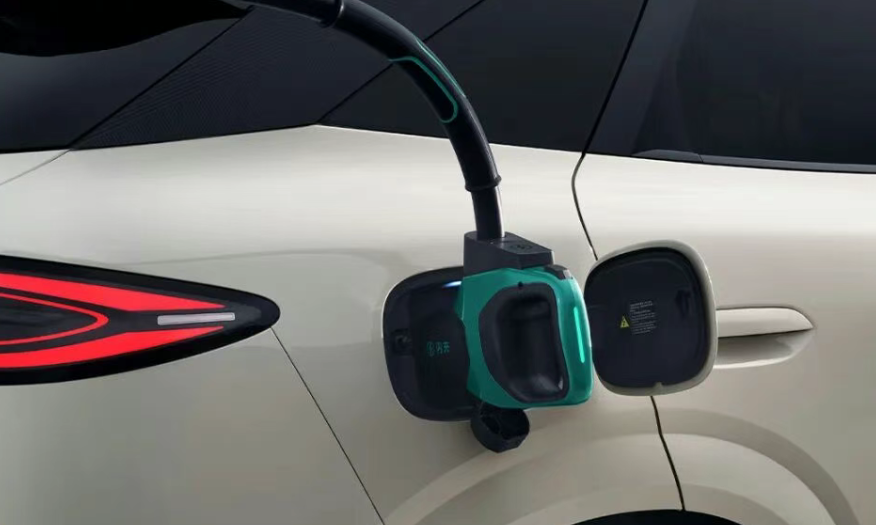
Image source: BYD
The system delivers a peak output of up to 1,500 kW per charging gun, supported by a full-range 1,000-volt architecture and currents reaching 1,000 amps. According to the company, the setup can add roughly 400 to 500 kilometers of driving range in about five minutes—an interval that, at least in theory, approaches the time required to refuel a gasoline vehicle.
Equally notable is the supporting grid solution. BYD has integrated energy storage into the charging stations themselves, effectively giving each unit its own buffer reservoir. This design allows megawatt-level output even when connected to conventional 100 kW grid lines, potentially cutting installation costs by about 60% compared with traditional infrastructure. The approach suggests the company is preparing for rapid network expansion.
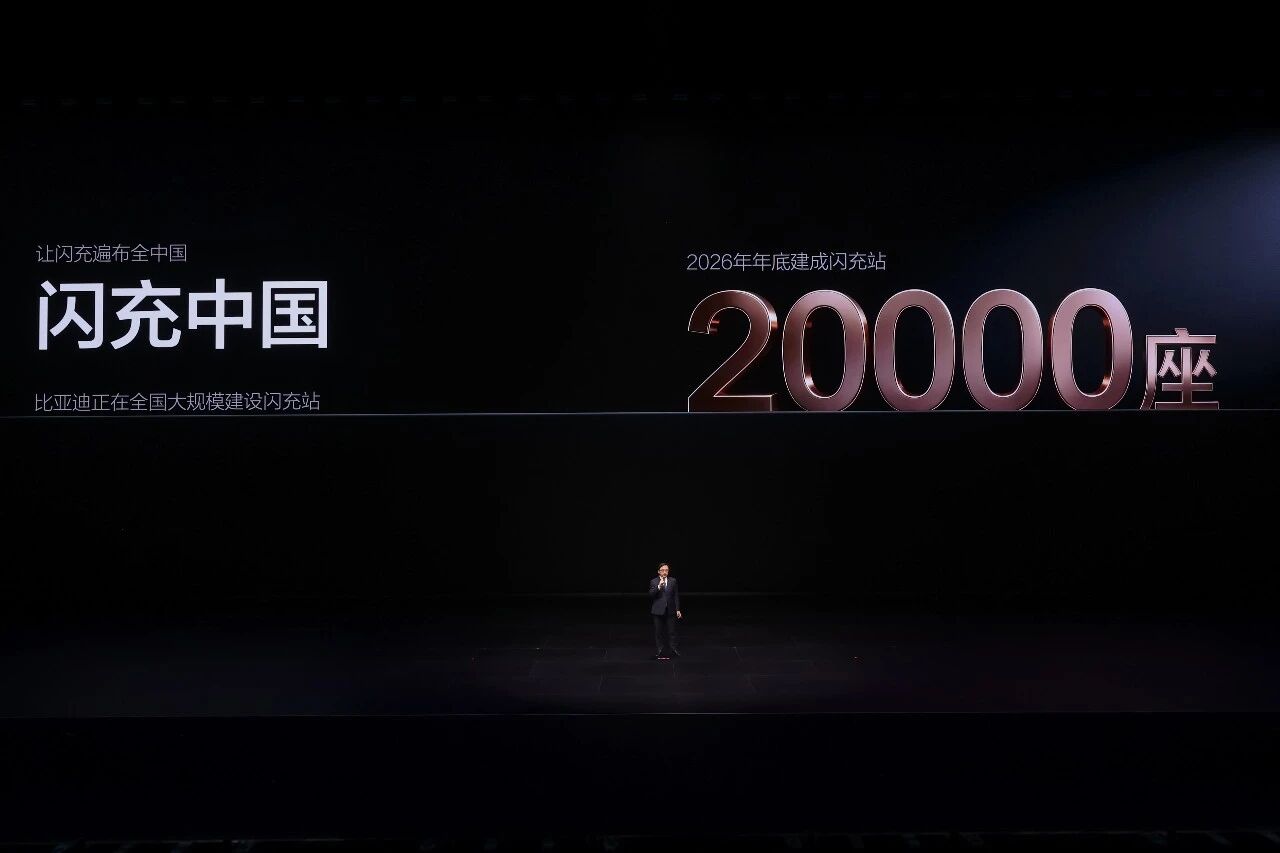
Image source: BYD
BYD says it aims to deploy 20,000 flash-charging stations by the end of 2026. Around 18,000 of those will be "stations within stations," built in partnership with existing charging-network operators to place flash-charging access within five kilometers of roughly 90% of urban areas. Another 2,000 sites will target highway corridors, covering nearly one-third of service areas nationwide. The first 1,000 locations are expected to come online before the upcoming May Day holiday this year.
If the rollout succeeds, BYD could gain something more difficult for competitors to replicate than battery chemistry: a proprietary flash-charging ecosystem.
Extended warranty underscores safety focus
At the event, the company also showcased a series of stress tests designed to highlight the battery's safety performance. Demonstrations included a nail-penetration test conducted while the battery was charging after 500 flash-charge cycles, as well as a scenario involving simultaneous short circuits across four cells. In both cases, the battery pack reportedly avoided thermal propagation, fire, or explosion. In another test simulating a severe underbody impact, the pack withstood forces significantly above current regulatory standards while maintaining structural integrity.
To reinforce consumer confidence, BYD announced a lifetime warranty for the battery cells themselves, promising free replacement if capacity falls below 77.5%. The policy appears aimed at easing lingering concerns among buyers about long-term battery degradation.
BYD has also outlined a clear rollout schedule for the second-generation Blade Battery. Deliveries will begin in March 2026 with higher-end models including the YANGWANG U7, DENZA Z9GT, Han L, and Tang L. During the second quarter, the technology will expand to high-volume family vehicles such as the Song and Qin series, before reaching entry-level models like the Dolphin and Seagull in the second half of the year.
The strategy points to a broad diffusion of the new battery technology—from luxury vehicles priced in the million-yuan range to mass-market models around the 100,000-yuan level. The YANGWANG U7, for example, carries a 150 kWh battery pack and is rated for 1,006 kilometers of range under China's CLTC standard, while its four-motor e3 platform produces over 1,300 horsepower and enables acceleration from zero to 100 km/h in around two seconds. Meanwhile, the DENZA Z9GT pairs a 122.5 kWh battery with a claimed range reaching 1,036 kilometers, while maintaining energy consumption near 13.3 kWh per 100 kilometers.
Taken together, the figures highlight BYD's broader objective: turning advanced EV technology into a mass-market feature rather than a niche luxury capability.
Final thoughts
At the event, BYD chairman Wang Chuanfu summed up the moment with a striking remark, suggesting that the "first half" of the industry's electrification race has effectively reached its conclusion.
The statement carries implications beyond the product launch itself. It suggests that BYD believes the initial phase of EV development—centered on proving the viability of electric powertrains—has largely been settled. The next stage of competition, in this view, will hinge on integrated system capabilities, from materials research and cell manufacturing to vehicle integration, charging infrastructure, and after-sales support.
For the wider automotive sector, the message is clear: the rules that defined the first chapter of electrification are being rewritten, and a new phase of competition is only just beginning.


