



Gasgoo Munich-By 2025, the penetration rate of new energy vehicles in China has breached 60%, and a wave of "smart driving democratization" is sweeping the industry. As intelligent driving accelerates from a "high-end option" to a "standard feature," high-precision positioning is becoming a critical foundational capability for reliability and safety, spawning new growth opportunities.
Against this backdrop, Bynav opened its annual chapter with a striking data point: the Alice GNSS SoC—China's first automotive high-precision positioning chip to receive functional safety certification—has seen cumulative shipments surpass 1.5 million units.
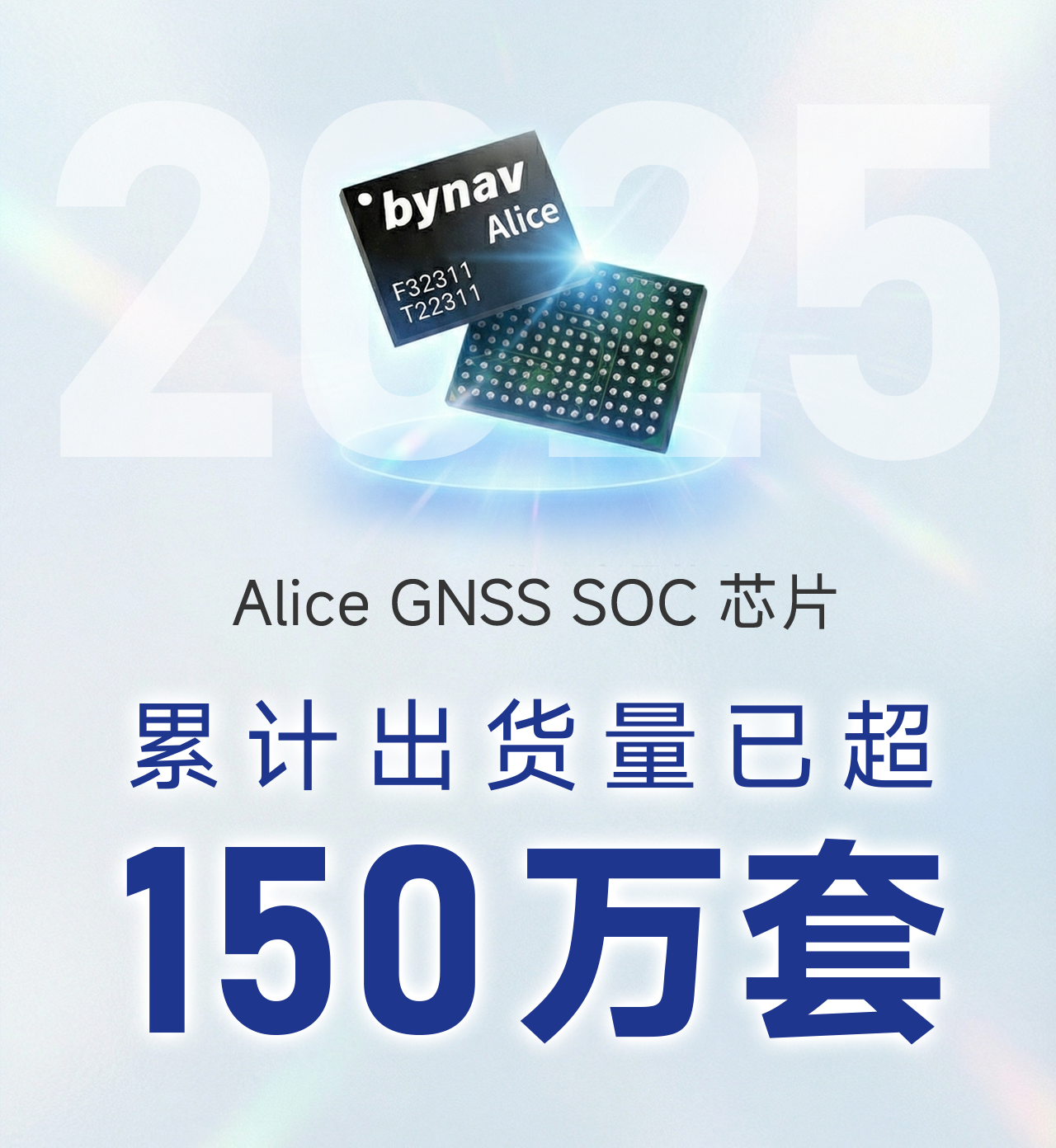
This milestone signals that Bynav has cleared a critical threshold: moving from "product mass production" to "systematic reliable delivery." Automotive-grade safety and a supply chain capable of large-scale delivery have now become its core defensive moat.
Gasgoo understands that with its chip technology as a foundation, Bynav is building an in-house capability system spanning perception to decision-making, and hardware to software. It is not only securing a position in the smart vehicle "main battlefield" but also extending its reach into incremental markets like the robotics industry.
From "Product Mass Production" to "Systematic Reliable Delivery": The Underlying Logic of Million-Unit Deliveries
According to data from the Ministry of Industry and Information Technology, the penetration rate of passenger cars equipped with combined driver assistance functions (L2) reached 64% in the first three quarters of 2025. At the same time, intelligent driver assistance is shifting from a focus on scale adoption to a rational track centered on safety and user experience.
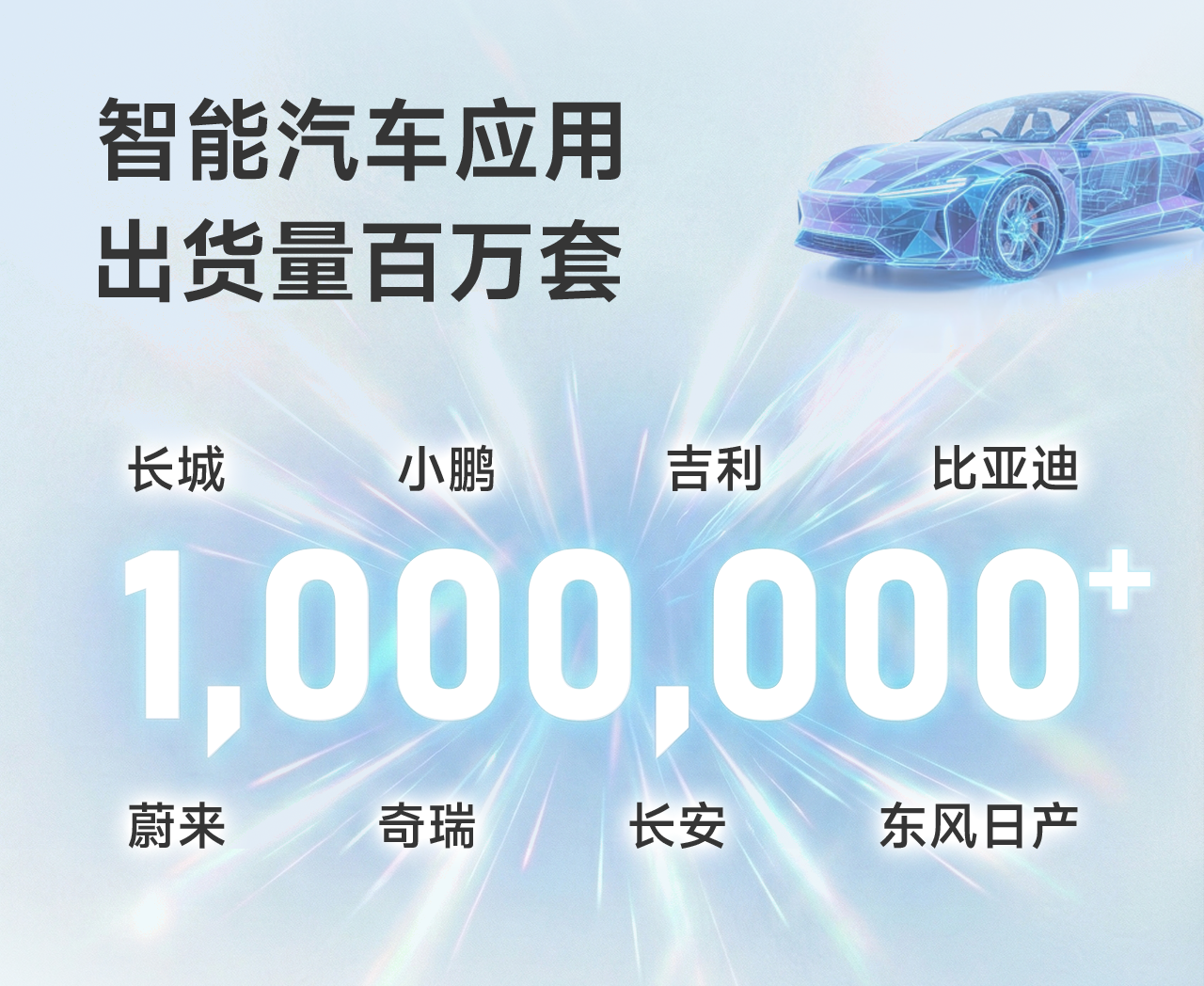
As the hardcore "heart" of Bynav's products, the Alice GNSS SoC chip has surpassed 1 million units in shipments for smart vehicle applications. Underpinning Beiyun's ability to meet the rigid demand of this industrial upgrade is its years of accumulation in the field of high-precision positioning.
Alice was born from Bynav's long-term technical accumulation—from boards and FPGAs to self-developed chips—and has been continuously iterated and optimized in large-scale applications.
Reportedly, Alice's technical barriers are mainly reflected in its handling of complex electromagnetic environments, cost control capabilities enabled by its self-developed architecture, and the performance advantages of its deep-coupling algorithms in extreme scenarios.
"The scale effect of over 1.5 million units has not only established Bynav's solid market position—verifying and consolidating its supply chain reliability and cost advantages—but also provided 'real-world' endorsement for its automotive-grade safety and reliability," a Bynav representative stated in an interview with Gasgoo.
Notably, the large-scale delivery of the Alice GNSS SoC chip has also driven the popularization of centimeter-level positioning technology. Features that were once "luxuries" reserved for L3/L4 high-level autonomous driving are now trickling down to L2+ driver assistance and even ordinary consumer-grade smart hardware.
Consequently, from traditional giants to new entrants, and from domestic brands to joint ventures, Bynav's client circle now covers the core landscape of China's smart vehicle market.
Currently, Bynav's products cover major domestic automakers including Great Wall Motor, XPENG, Geely, BYD, NIO, Chery, Changan, and Dongfeng Nissan, providing them with more accurate and reliable high-precision positioning solutions.
From Cars to Robots: Bynav's "Outdoor Intelligence" Landscape
Bynav's ability to win such widespread recognition relies not on a single product advantage, but on a "chip + algorithm + module" system-level capability.
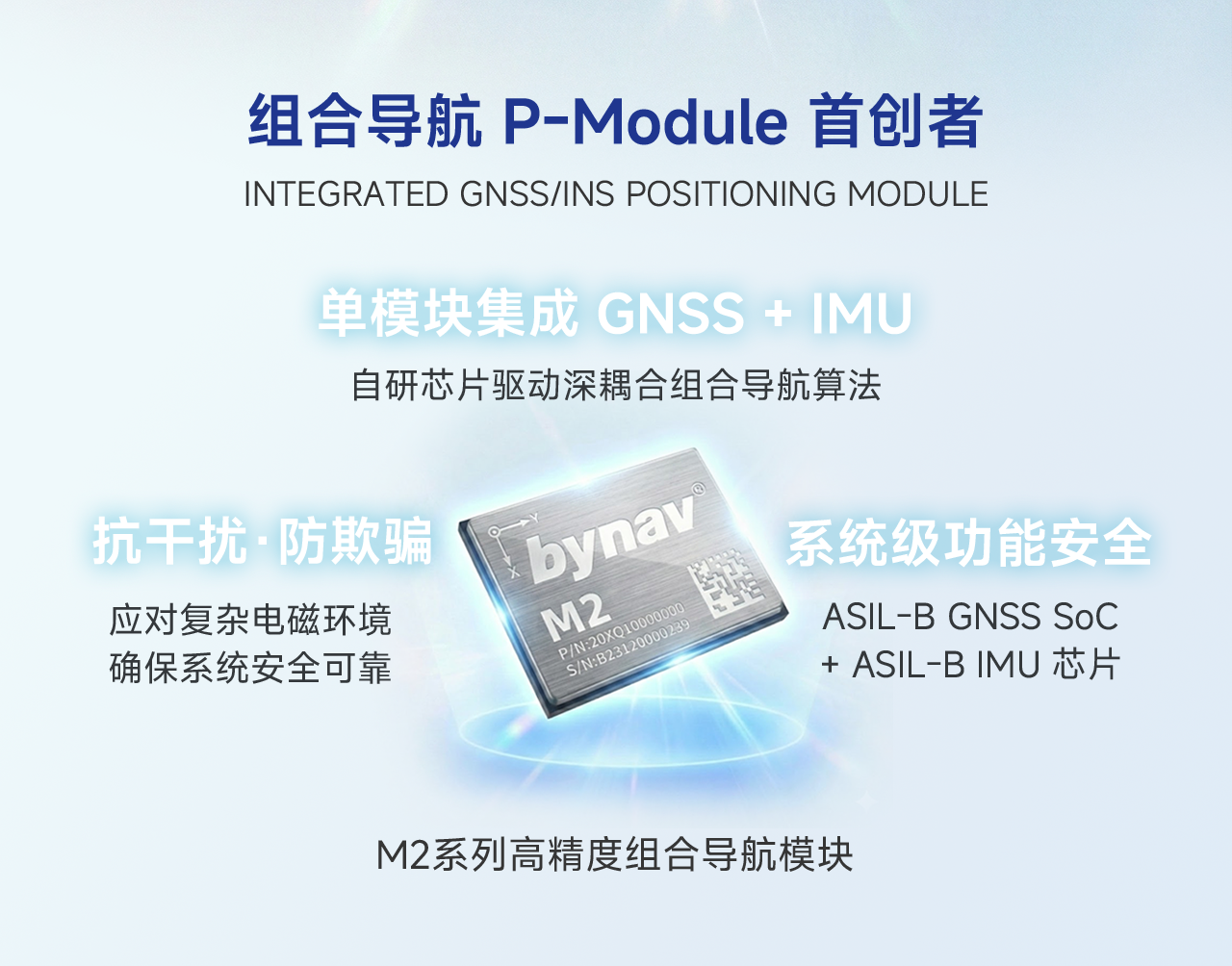
Take the P-Module integrated navigation system, launched two years ago as an industry first. It integrates a self-developed GNSS chip with an IMU into a single module, boasting core advantages such as deep-coupling integrated navigation algorithms, anti-interference and anti-spoofing, and system-level functional safety.
Meanwhile, the D3 series of automotive-grade, high-performance IMU modules has also achieved mass installation. Its full-temperature-range high-precision calibration technology effectively suppresses drift errors caused by temperature changes, ensuring that vehicles can still provide stable and reliable positioning data in extreme environments like severe cold or intense heat.
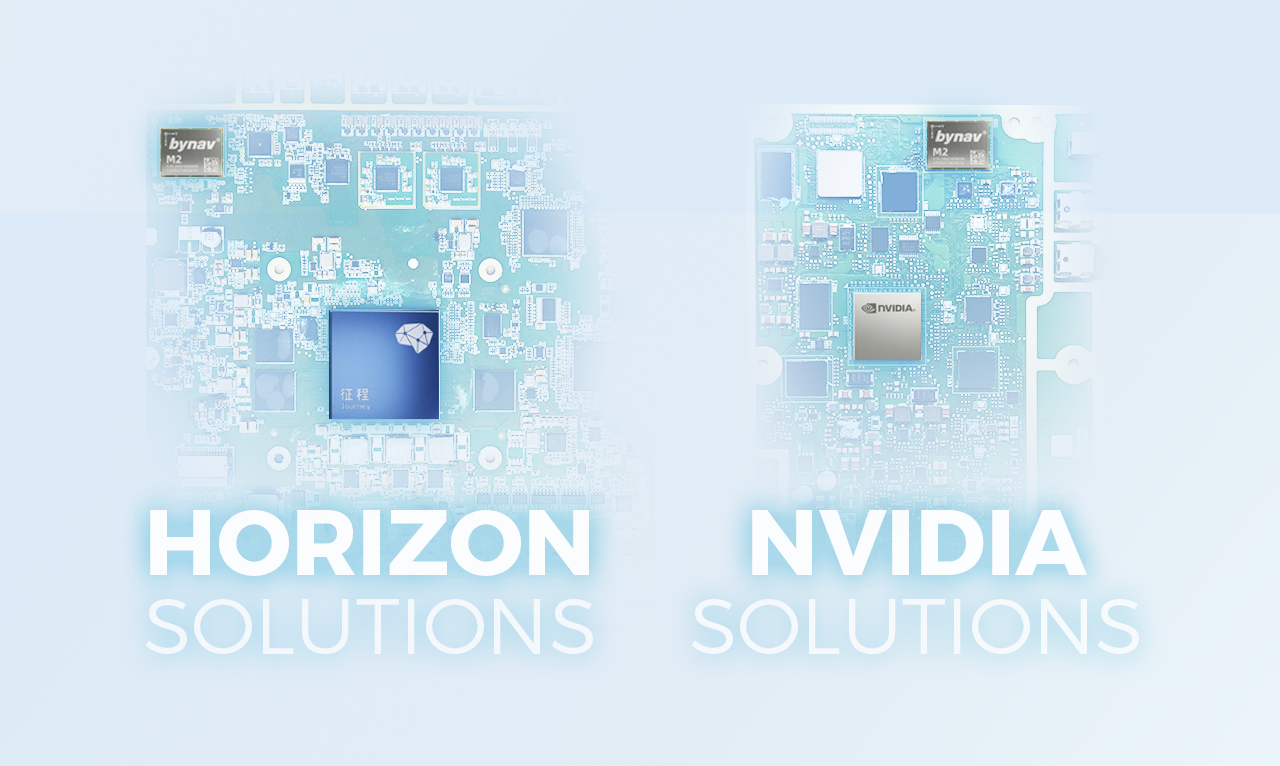
It is worth mentioning that Bynav's automotive-grade integrated navigation modules have been successfully mounted on mainstream AI platforms like Horizon Robotics and NVIDIA, achieving mass production. This means that regardless of which intelligent driving computing solution an automaker chooses, Beiyun can provide seamlessly adaptable high-precision positioning capabilities.
Furthermore, in L4 autonomous driving applications such as smart ports, unmanned mining trucks, RoboTaxis, and unmanned carts, Bynav has long been a market share leader.
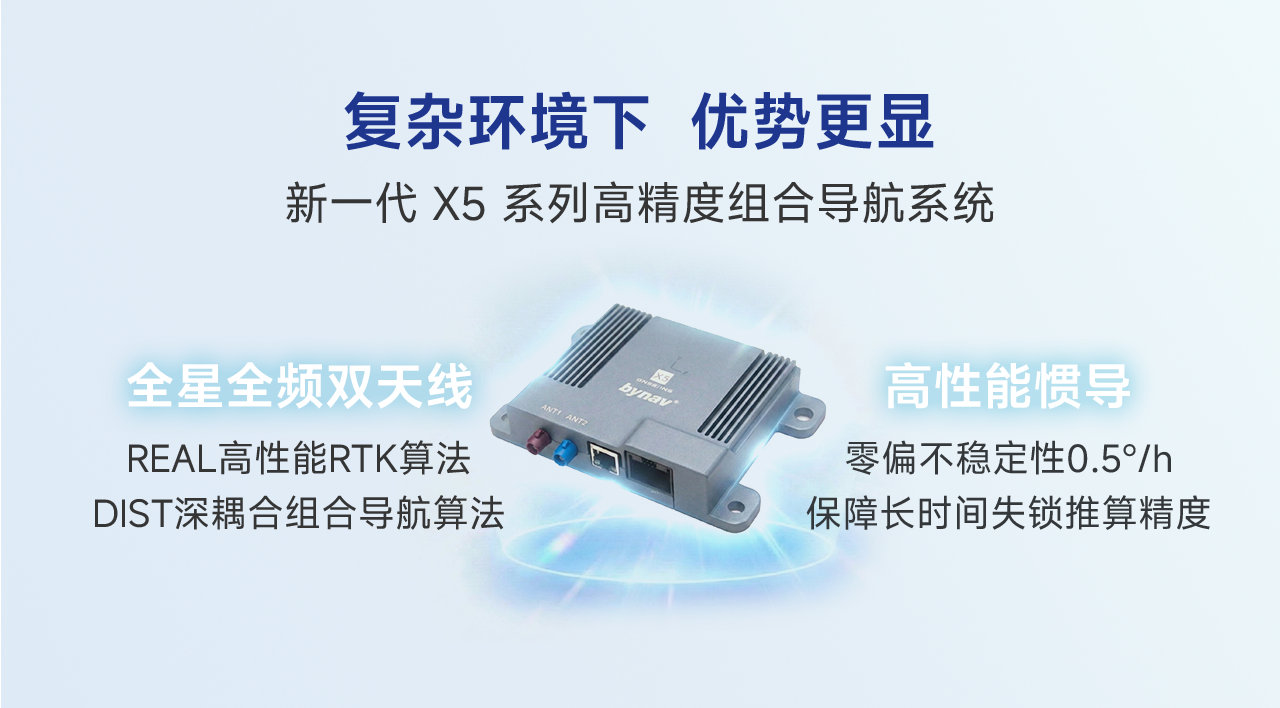
In 2025, Bynav launched the new X5 series designed for complex L4 scenarios. It pushes the hardware performance of the Alice chip to the extreme while fully integrating the algorithm optimization results accumulated over years in mining trucks, unmanned carts, and Robotaxis into the latest algorithm system. This dual evolution of hardware and software allows the X5 series to raise the certainty of positioning in complex environments to a new height—building on the algorithm advantages validated by large-scale applications—and achieve further cost optimization.
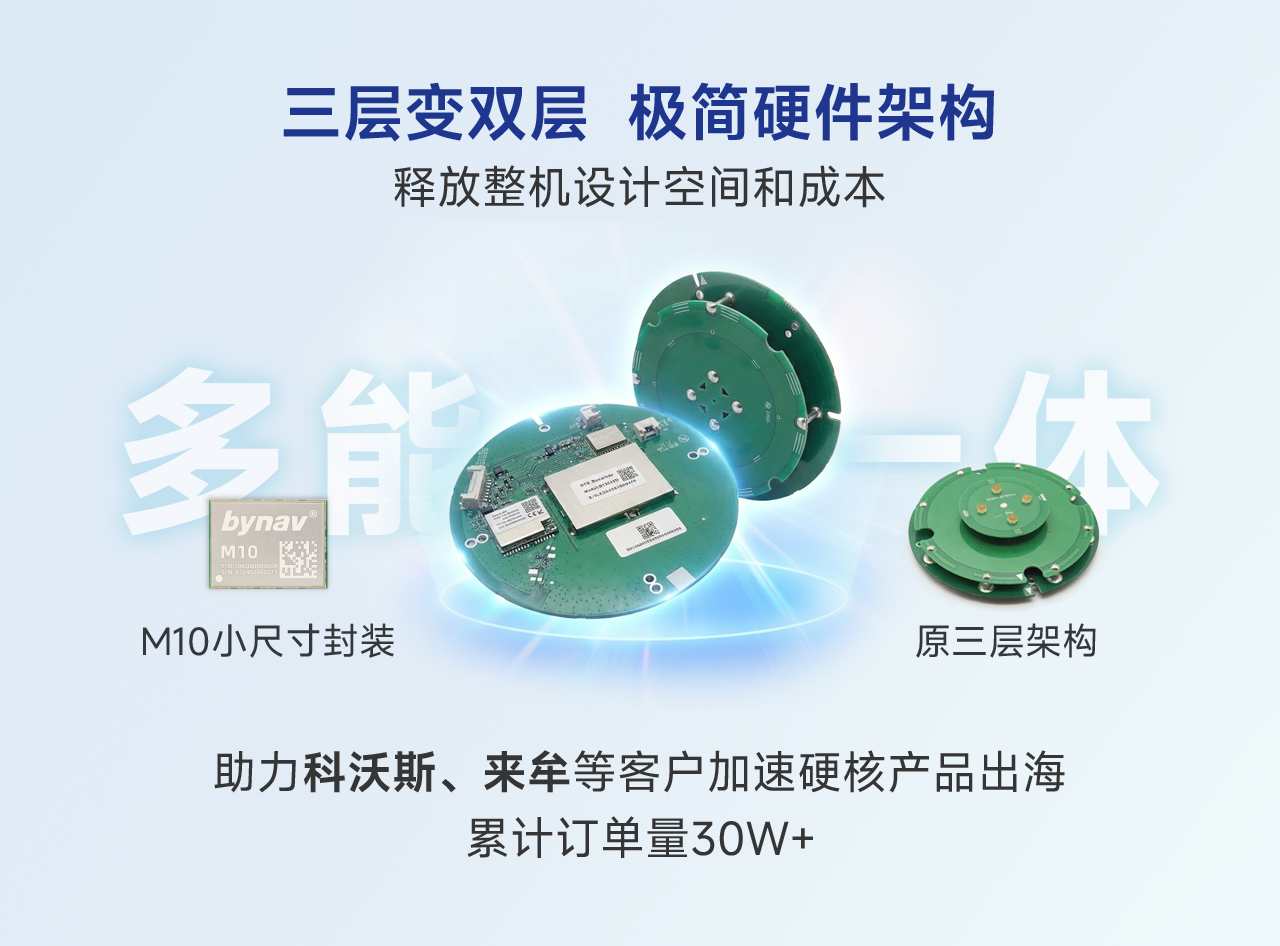
To date, cumulative orders for mowing robots based on Bynav's solutions have exceeded 300,000 units, helping clients' products rapidly penetrate overseas markets.
Fundamentally, whether it is smart vehicles, L4 autonomous driving (ports/mining), or consumer robots (mowing robots), all represent the implementation of "outdoor intelligence" across different industries. Therefore, they all need to determine their location, match it with a map, perceive the environment, and execute functions.
For a market strategy to succeed, adapting to local conditions is key. Bynav has formulated a clear development path based on the characteristics of different markets: the automotive front-loading market is characterized by "concentrated volume, long cycles, and large initial volumes," with extreme requirements for stability and automotive-grade quality; the robot market, however, has a shorter introduction cycle and is more sensitive to performance.
"We prioritize the automotive industry first, then expand into mowing robots," a Bynav representative emphasized. "The stringent requirements of the automotive industry lay the strongest foundation for other fields."
After 1.5 Million+ Deliveries: Bynav's Three Growth Pillars for 2026
Bynav's technology is a solution truly running on the road and verified by the market, having proven product stability and service response speed during mass delivery. Additionally, the government has recognized Beiyun's smart manufacturing capabilities. This means it can not only guarantee current deliveries but also signals flexibility for future capacity.
Bynav's "hard power" has gained wide recognition. It has been named a "National Little Giant" enterprise, and its "Beiyun Smart Factory" was selected as a landmark project for Hunan Province's new digital infrastructure. Relying on excellent technology implementation capabilities and stable product quality, Bynav won the Great Wall Motor "2025 Quality Progress Award" and the Gasgoo "Golden Gear Award 2025 Best Technical Practice Application Award" in 2025.
For automakers laying out high-precision positioning, the core lies in it being an essential "safety foundation" for achieving high-level autonomous driving. Choosing Bynav means choosing a "rare target" that possesses core proprietary chip capabilities, can solve industry pain points, and has been widely verified.
Industry experts estimate that by 2029, sales of L2 and above intelligent driving vehicles in China will reach 31.7 million units, with a penetration rate of 84.99%. This means the "ceiling" for high-precision positioning is still far from being reached.
Looking ahead to 2026, Bynav's growth path is already clear:
First, the smart vehicle front-loading market will continue to see volume growth. As more designated models successively enter the mass production and delivery phase, combined with the continuous landing of new customer orders, this field will witness significant growth this year.
Second, under this new wave of robotics technology, new incremental markets are opening up. The robotics track is moving into a period of explosive scaling. Product lines represented by mowing robots are welcoming larger-scale deliveries and order releases.
Third, the horizontal expansion of robot categories is opening up new growth spaces. The company has deployed substantial resources in multiple emerging scenarios, waiting for the seeds to bear fruit.
Conclusion:
From a single chip breakthrough to 1.5 million deliveries; from a standard feature in smart cars to an industry benchmark for L4 autonomous driving, Bynav has proven its "hard power" with tangible results. In 2026, the market imagination brought by the "intelligence" wave of smart cars remains immense, and the robotics industry is also reaching the eve of an explosion from "specialized scenarios" to "general scenarios." For Bynav, which has already secured a dual position in the automotive front-loading market and the emerging robotics track, the next journey is worth anticipating. (Note: Images in this article are from Bynav)


