



Gasgoo Munich- On March 26, Changan Automobile fired up production at its joint venture plant in Anápolis, located in Brazil’s central state of Goiás. Built with local partner CAOA Group, the facility's initial lineup includes three models such as the UNI-T, spanning internal combustion, hybrid, and plug-in hybrid powertrains. This marks a milestone for Changan: achieving localized manufacturing in Brazil.
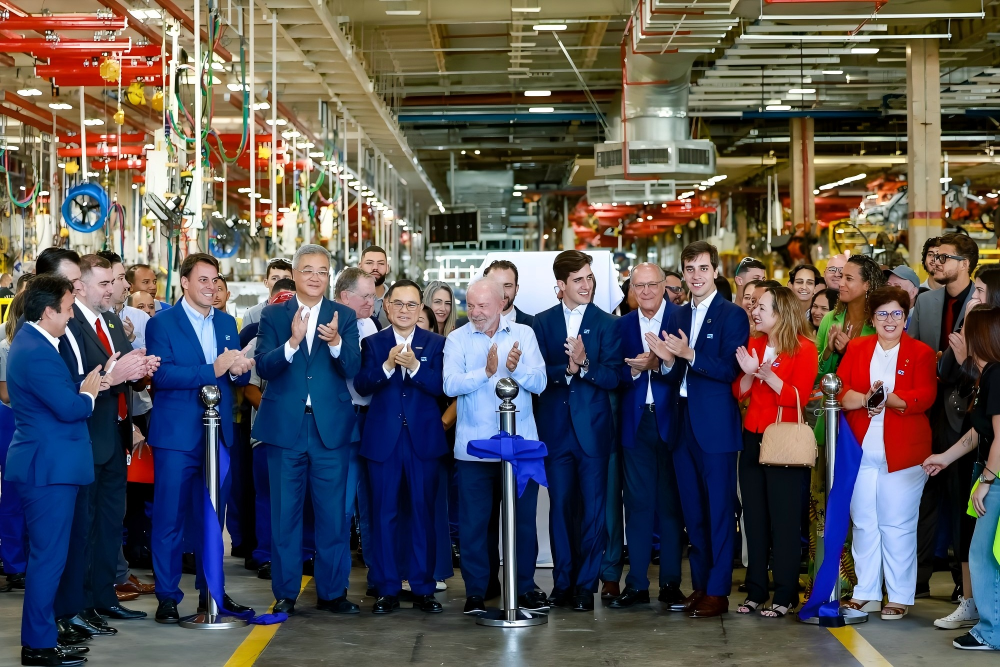
Image Credit: Avatr
Brazilian President Luiz Inácio Lula da Silva, Vice President Geraldo Alckmin, and Chinese Ambassador to Brazil Zhu Qingqiao attended the opening ceremony. In his address, Lula noted that the plant creates local jobs and plays an active role in Brazil's push for re-industrialization. Changan Chairman Zhu Huarong emphasized that Brazil is a key pivot in the company's globalization strategy, adding that the firm will stick to a localized development path.
Three models from Avatr — the 11, 06, and 07 — made their debut at the ceremony. As Changan's premium smart electric vehicle brand, Avatr will leverage the partnership's channels to enter the Brazilian market.
Why Brazil?
Brazil is one of the world's major automotive consumer markets and the largest in Latin America. Data from the Brazilian automakers' association shows annual sales have held above 2 million units in recent years. For automakers eyeing Latin America, entering Brazil is a critical step toward regional coverage. Its geography offers strategic value as a regional hub, radiating to neighbors like Argentina, Uruguay, and Paraguay.
The Brazilian market is defined by its unique fuel structure. Since the 1970s, the country has promoted ethanol fuel; today, gasoline, ethanol, or any blend of the two is widely used nationwide. That energy reality means vehicles entering the market must offer flexible-fuel compatibility.
Addressing this, all models Changan is launching in Brazil feature flex-fuel engines capable of handling various blend ratios. According to the company, this technical adaptability is a prerequisite for its entry into the market.
The choice of partner was another critical factor in Changan's entry. CAOA Group is among Brazil's top automakers and dealers, boasting a mature local sales network and after-sales service system.
By building a joint venture with CAOA, Changan can push product introductions and brand building on top of existing channels, lowering the costs and operational risks of starting from zero.
From a tariff perspective, local production offers clear cost advantages. Under current Brazilian policy, import duties on EVs and hybrids range from 25% to 30%, set to rise uniformly to 35% in July 2026. Manufacturing locally allows Changan to sidestep those duties entirely.
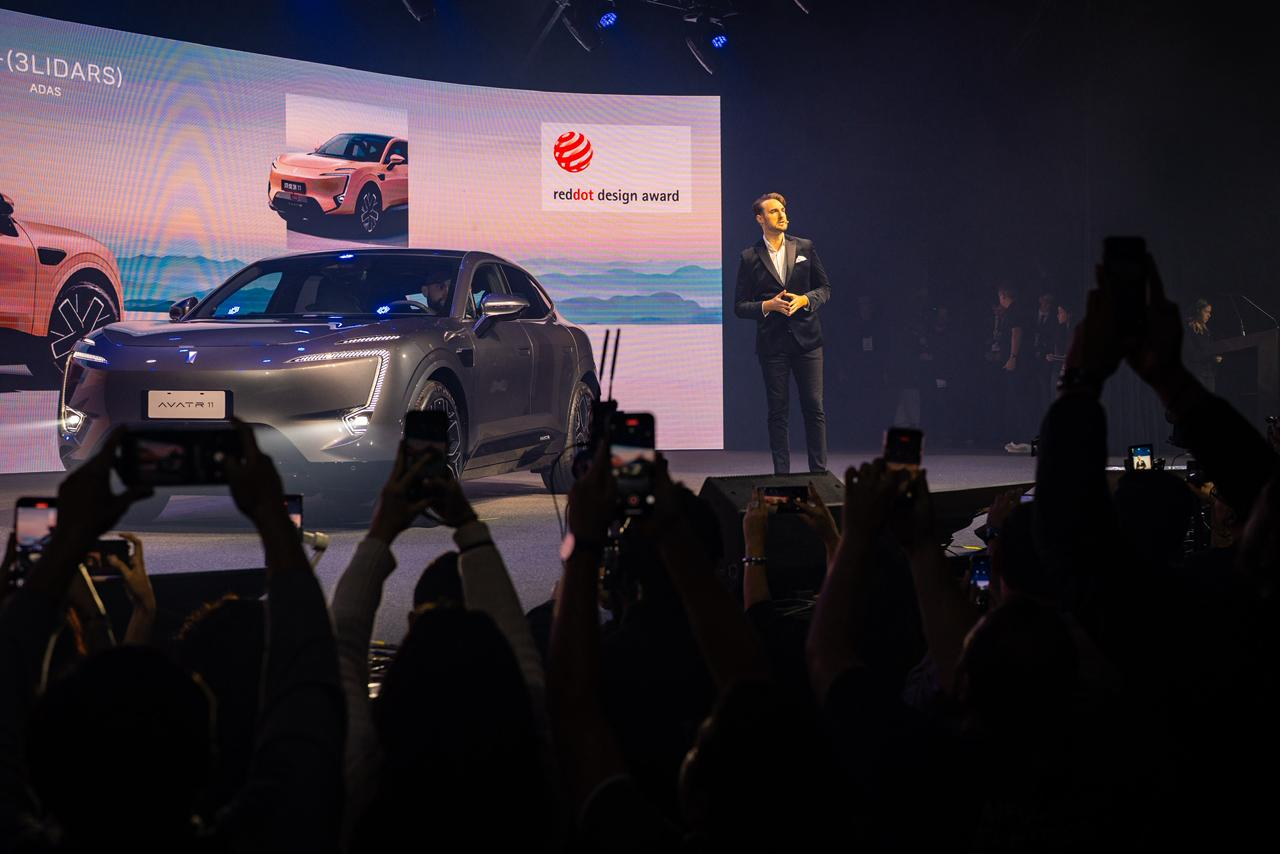
Image Credit: Avatr
Additionally, the Mercosur customs union grants tariff preferences for goods produced within member states and traded across the bloc. This means vehicles made in Brazil could eventually reach other Mercosur countries, further amplifying the economic benefits of the plant's capacity.
The Brazilian government's "re-industrialization" strategy in recent years encourages foreign companies to invest in local plants. Specific industrial policies for the auto sector provide tax incentives for energy-efficient vehicles produced domestically.
Changan's entry aligns with these policy directions. Zhu Huarong stated at the ceremony that the company's Brazilian layout is a strategic decision based on long-term development, pledging continued investment in local R&D and production capabilities.
Rapid Progress
Changan's market landing in Brazil began in 2025. That November, the Avatr brand debuted at the São Paulo Auto Show, with the Avatr 11 marking its official entry into the Latin American market. Local media reported the Avatr 11 drew significant attention following its reveal.
By March 2026, the Changan-CAOA joint venture plant was officially up and running. The gap between brand launch and localized production was under six months. Overseas plants typically require long preparation cycles in the auto industry; Changan's ability to move from signing to production so quickly stems from its deep cooperation with CAOA and reflects the maturity of its supply chain and manufacturing capabilities.
According to production and sales data released by Changan, overseas sales reached 637,000 units in 2025 — a 19% year-on-year increase that accounted for over 20% of total annual volume. International markets have become a vital engine for Changan's growth.
Regionally, Changan's overseas presence is concentrated in Southeast Asia, the Middle East, South America, and Russia. Currently, Changan operates multiple production bases globally; with the Brazil plant now online, it will form regional synergies with bases in Southeast Asia and the Middle East, acting as a key node in the company's global manufacturing and sales network.
For Avatr, corporate plans call for entering more than 80 countries and regions by 2030, establishing hundreds of sales channels. The Brazilian market is a crucial link in that global expansion.
Before the plant's launch, Avatr's expansion in Latin America relied mainly on exporting fully built vehicles. With the joint venture plant operational and the local supply chain maturing, Avatr's after-sales service and parts supply capabilities in Brazil are set to improve.
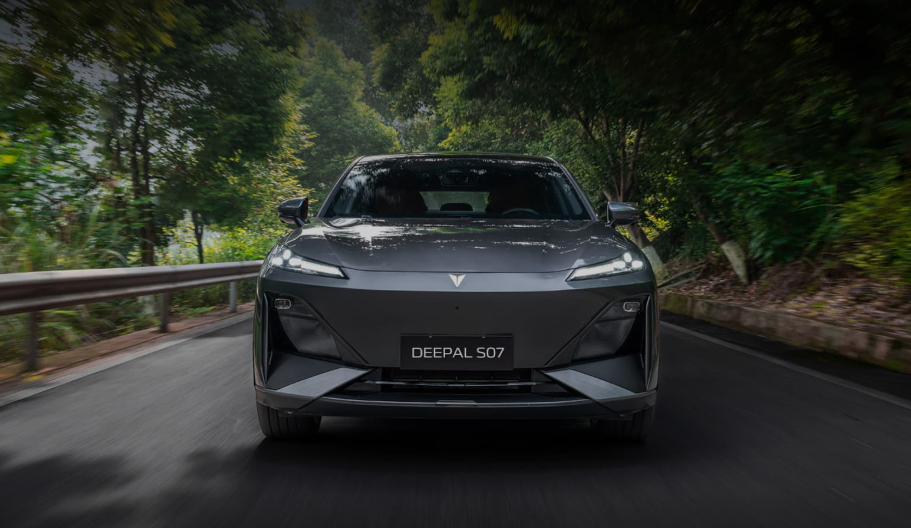
Changan Deepal S07; Image Credit: Changan Automobile
In terms of product lineup, Changan's Brazilian strategy features a parallel approach with multiple powertrains. Among the first three models, the UNI-T uses a flex-fuel engine tailored to local fuel characteristics. Meanwhile, the introduction of hybrid and plug-in hybrid models leaves room for a future transition to electrification.
Industry analysts predict the share of electrified vehicles in Brazil's new car sales will gradually rise. By laying out ICE, hybrid, and plug-in hybrid technologies simultaneously, Changan is well-positioned to meet the diverse demands of a market in energy transition.
From exporting products to local manufacturing, and from introducing single models to building a multi-powertrain lineup, Changan's pace in Brazil reflects an adjustment in its overseas strategy. In its "All Rivers Run to Sea" global plan released in 2023, Changan set a target of exceeding 1.2 million in annual overseas sales by 2030. The launch of the Brazil plant is a significant step toward that goal.
Zhu Huarong reiterated at the ceremony that Changan will adhere to a long-term, localized, and systematic approach to overseas development. Judging by current progress, the company's Brazilian layout has achieved an initial shift from "exporting products" to "exporting industries."
As local production advances and the supply chain matures, Changan's competitiveness in Brazil and Latin America is expected to strengthen further. The introduction of Avatr, meanwhile, carries a dual mission: lifting brand premium and exploring the path toward intelligent electrification.


