



Gasgoo Munich- On March 18, Chery Automobile released its 2025 annual performance report. Data shows the company generated operating revenue of 300.29 billion yuan during the reporting period, up 11.3% year-on-year; profit attributable to owners of the parent company reached 19.02 billion yuan, a 34.6% increase. This report card marks the first full fiscal year since Chery's listing on the Hong Kong Stock Exchange, serving as a crucial window into the effectiveness of this veteran automaker's transformation.
Behind the dual growth in revenue and profit, Chery is also navigating the deep waters of a transformation from an "internal combustion engine veteran" to a "smart, global technology enterprise." Structural changes brought by slowing growth in fuel vehicles and the rapid expansion of new energy operations are reshaping the company's financial foundation and competitive landscape.
Financial Performance Breakdown: Structural Shifts Amid Growth
In 2025, Chery's revenue structure displayed a distinct "dual-track" character. Full-year passenger vehicle sales revenue reached 272.35 billion yuan, up 10.3%. The company attributes this growth to enhanced competitiveness driven by technical innovation, a rich product portfolio, and market expansion. Notably, revenue from automotive components and parts reached 21.73 billion yuan, a substantial 36.9% year-on-year increase. This growth rate far outpaced vehicle sales, driven primarily by rising demand for related parts due to the rapid increase in passenger vehicle sales and growth in overseas markets in 2025.
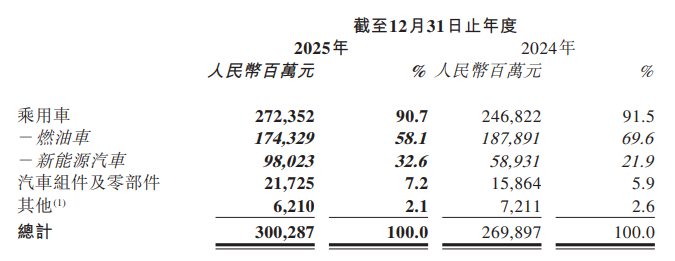
Image Source: Screenshot from Chery Financial Report
The profit picture was even brighter. Full-year gross profit rose 14.1% to 41.44 billion yuan, lifting the gross margin to 13.8%—a 0.3 percentage point improvement from the previous year. Crucially, the 19.02 billion yuan in profit attributable to owners grew faster than revenue, signaling a clear improvement in profitability.
A closer look reveals a shift in margins. The passenger vehicle gross margin slipped to 12.8% from 13.2% a year earlier, primarily due to the growing contribution of new energy vehicles—which typically carry lower margins than internal combustion models—and intensifying market competition. Conversely, margins for automotive components remained stable, inching up from 20.4% to 21.3%.
Another financial metric demanding attention is the surge in trade receivables. By the end of 2025, these had reached 33.88 billion yuan—a 94.5% increase—which the company attributes largely to higher sales volumes.
Overall, the company's cash position remained resilient. Net cash inflows from operating activities totaled 20.13 billion yuan by year-end, with cash and cash equivalents reaching 46.96 billion yuan. Meanwhile, investment in the future accelerated: annual R&D spending jumped 23.8% to 11.44 billion yuan.
Expansion and Trade-offs Under Multi-brand Synergy
In terms of sales volume, Chery formed a stable "tripod" pattern in 2025. Chery Automobile Co., Ltd.'s cumulative annual sales reached 2,631,381 units, an 8% increase. Including the overall group data, Chery Holding Group's full-year sales were 2,806,393 units, up 7.8%.
This success stems from a diversified brand matrix and synergy across business units: exports reached 1.344 million units (up 17.4%); new energy vehicles hit 903,800 units (up 54.9%); the internal combustion engine base remained stable; and major passenger vehicle brands—Chery, Jetour, Exeed, iCAR, and Luxeed—drove growth in tandem.
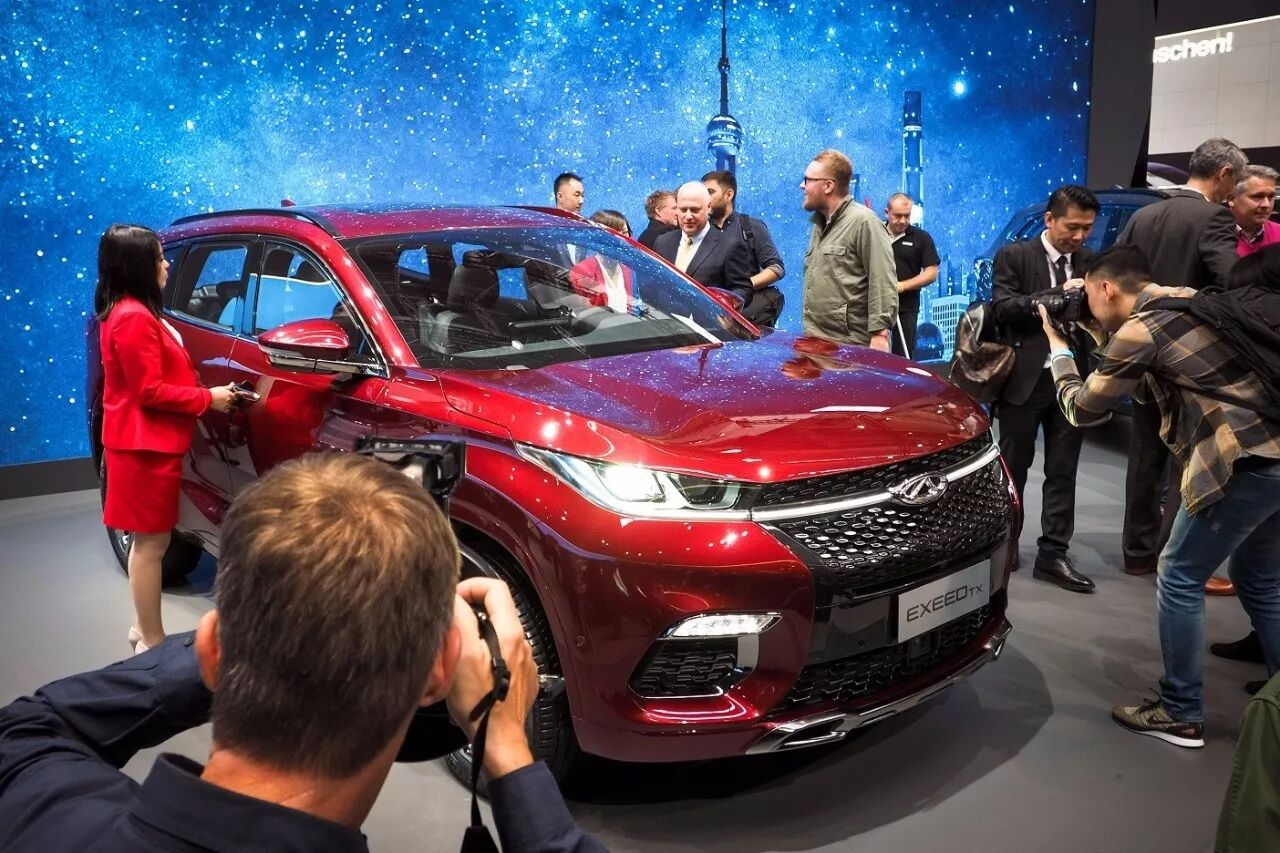
Image Source: Chery Automobile
Exports remain Chery's most defining label, with its globalization undergoing a transition from "scale expansion" to "quality improvement." Exports accounted for nearly 48% of the total, maintaining the top spot among Chinese brand passenger vehicle exports for 23 consecutive years. December alone saw exports hit 144,430 units, a historical peak. In the European market, Chery sold 145,000 units in the first three quarters, more than tripling year-on-year. It has entered 15 European markets, including the UK, Spain, and Italy, and has become the first Chinese automotive brand to achieve localized production in Europe.
Yet, overseas expansion carries hidden risks. In 2024, Chery exported 325,000 vehicles to Russia, accounting for nearly a third of all Chinese automaker exports to the country. But that landscape is shifting. Policy conditions in Russia are tightening: since October 2024, import "scrap taxes" have risen by 70% to 85%, with planned annual increases through 2030, directly eroding automaker profits. Currently, Chery is actively adjusting its Russian strategy.
Additionally, the division of labor within Chery's multi-brand matrix is becoming clearer, gradually forming systematic capabilities: The Chery brand solidified its base with 1.70 million sales, with fuel models like the Tiggo 8 and Arrizo 8 remaining the cornerstone; The Jetour brand, relying on its "Travel+" strategy and "box" design, sold 622,600 units for the year, with the Jetour Traveler standing out in its segment; The iCAR brand, targeting young buyers with new electric concepts, sold 97,000 units, up 47%, proving the feasibility of its personalized path; The Luxeed brand, representing high-end intelligence, sold 90,500 units, up 56%.
It is worth noting that the Exeed brand sold 120,400 units, a 15% year-on-year decline. This reflects the brutal reality of competition in the mid-to-high-end market. In the 150,000 to 200,000 yuan price bracket, Exeed must engage in head-on battles with joint ventures and emerging startups. Despite short-term pressure, Exeed bears the responsibility of elevating the brand's image and technology; the rise in average selling price remains a key metric to watch.
The explosive growth of the new energy business was the highlight of 2025, marking the harvest season after a long technology marathon. Full-year new energy sales reached 903,800 units, jumping 54.9%.
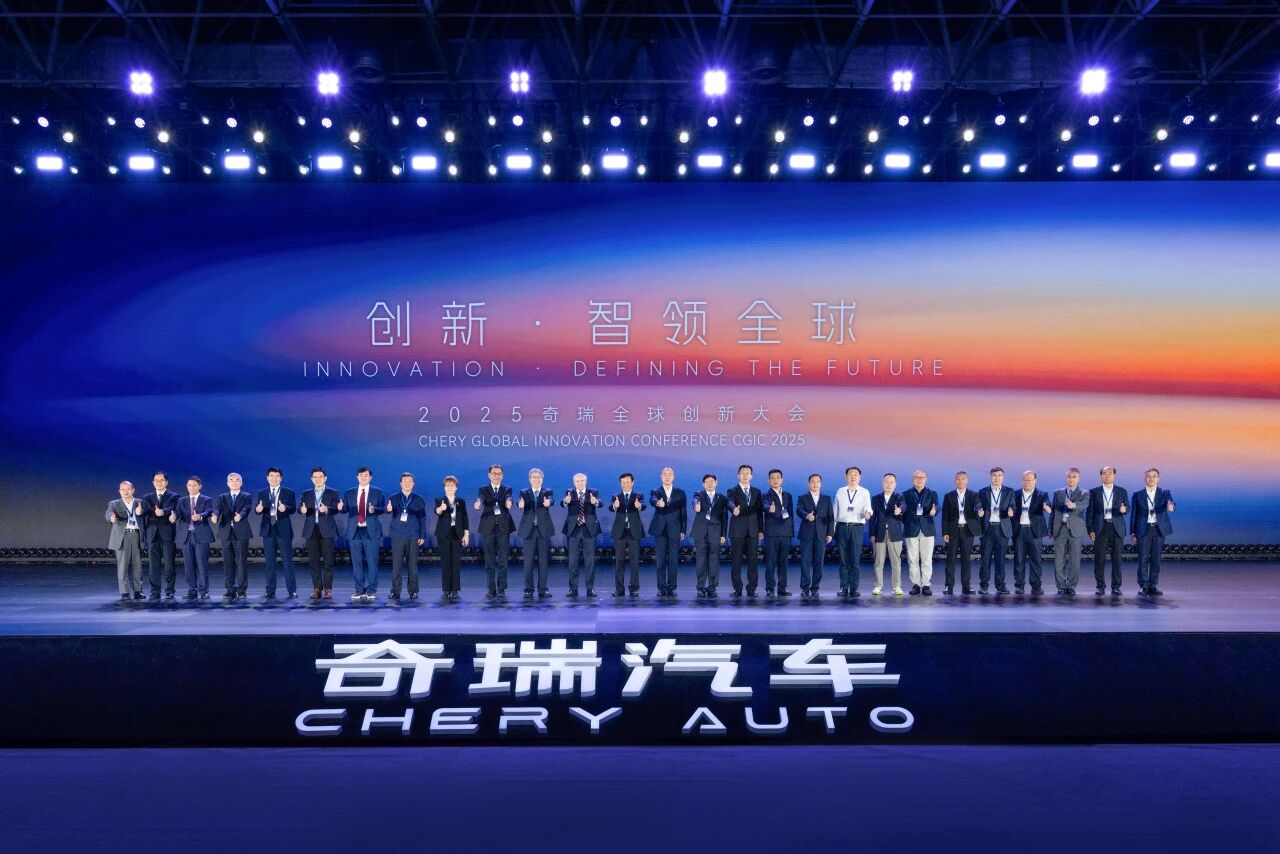
Image Source: Chery Automobile
In October 2025, at the Chery Global Innovation Conference, the company unveiled achievements including the Kunpeng engine, the Ark amphibious system, and the Falcon intelligent driving model. On the intelligent driving front, Chery is pursuing a "dual-track" strategy: showcasing its self-developed Falcon model while simultaneously introducing Huawei's Qiankun ADS 4 system. Additionally, the Rhinoceros S all-solid-state battery is scheduled for its first vehicle installation verification in 2027.
For 2026, Chery has set an ambitious sales target of 3.2 million units and plans to launch 17 key models across four categories—internal combustion, hybrid, range-extended, and pure electric—to support that goal. In terms of growth drivers, quality improvements in overseas markets, a continued increase in new energy penetration, and clearer delineation among brands will be the critical variables determining whether Chery can successfully switch from "explosive growth" to "compound growth."
Overall, Chery's 2025 performance was characterized by the parallel tracks of scale expansion and structural optimization. Revenue surpassing 300 billion yuan, net profit growth exceeding 30%, and new energy sales nearly doubling are all commendable achievements. Yet, the margin pressure from slowing internal combustion vehicle sales and the reality that new energy operations remain in an investment phase highlight the complexity and long-term nature of this transformation.


