Gasgoo Munich- Sales of Chinese domestic brands reached 1.07 million units in February 2026, data from Gasgoo Automotive Research Institute shows. BYD maintained its lead with 164,989 sales, while Chery rose to second place. Geely and Galaxy followed, with Leapmotor entering the top ten — indicating that leaders are consolidating their positions, market tiers are distinct, and competition is intensifying across diverse segments.
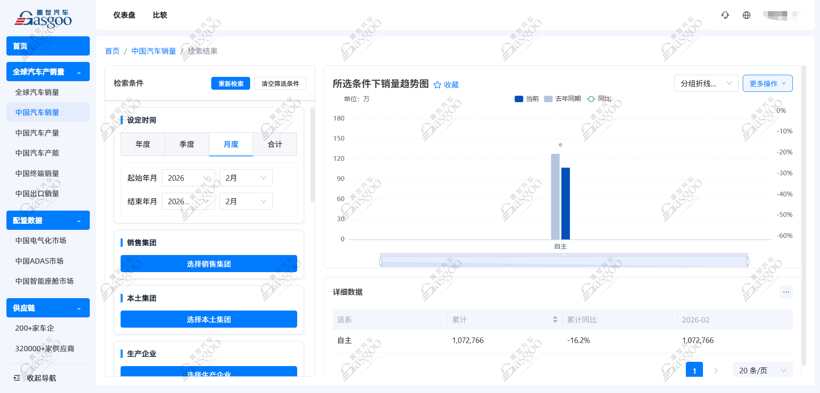
Image source: autodata.gasgoo.com
Based on data from Gasgoo Automotive Research Institute, the domestic brand sales chart for February 2026 is as follows:
NO.1 BYD, Feb sales 164,989 units
NO.2 Chery, Feb sales 103,799 units
NO.3 Geely, Feb sales 81,461 units
NO.4 Galaxy, Feb sales 73,126 units
NO.5 Changan, Feb sales 69,391 units
NO.6 MG, Feb sales 54,477 units
NO.7 Haval, Feb sales 43,660 units
NO.8 Wuling (Silver Badge), Feb sales 33,511 units
NO.9 Leapmotor, Feb sales 28,067 units
NO.10 Jetour, Feb sales 27,607 units
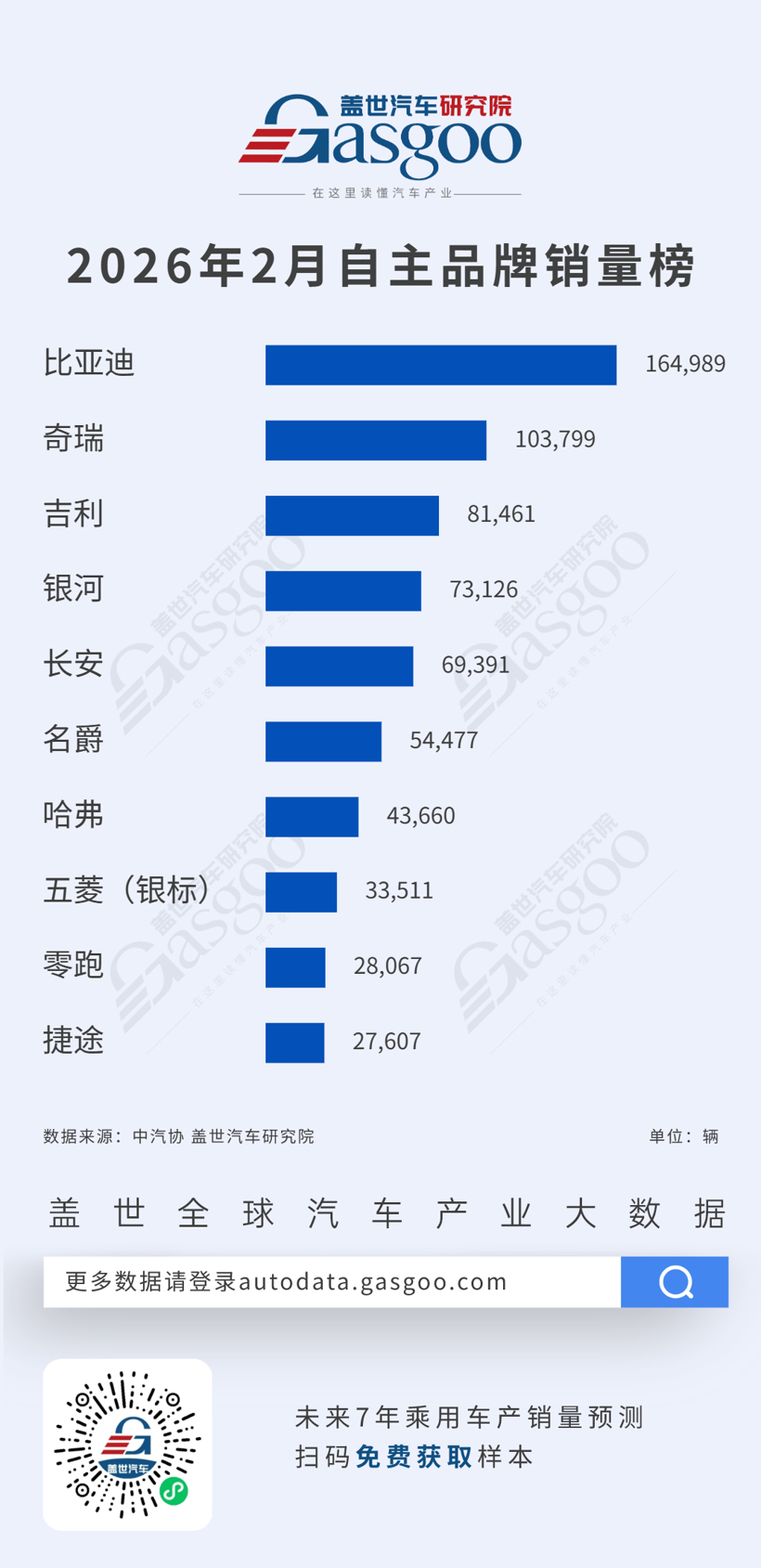
The competitive landscape in February 2026 was characterized by dominant leaders, distinct tiers, and diverse battlegrounds. BYD consolidated its top position with 164,989 units, reinforcing its status as the sales leader among domestic brands. Chery rose to second place with 103,799 sales, while Geely took third with 81,461 units, signaling a shift in the scale gap among top contenders. Galaxy maintained fourth place with 73,126 units, sustaining steady momentum in the new-energy sector.
Changan, MG, and Haval ranked fifth to seventh, with volumes clustered between 40,000 and 70,000 units, intensifying competition among traditional major players in specific segments. Wuling (Silver Badge), Leapmotor, and Jetour ranked eighth to tenth, with volumes ranging from 27,000 to 34,000 units. Notably, Leapmotor’s ninth-place finish highlights its competitiveness in smart electric vehicles, while Wuling (Silver Badge) and Jetour relied on differentiated product portfolios to secure market share.
In terms of market structure, brands like BYD, Galaxy, and Leapmotor are relying on pure electric and plug-in hybrid models as main growth drivers, with new-energy products accounting for a growing share of total sales. Traditional players like Chery, Geely, Changan, Haval, and Wuling (Silver Badge) are pursuing a dual-track strategy: stabilizing internal combustion engine operations while expanding new-energy presence. By maintaining a balance between conventional fuel markets and the EV race, these automakers are leveraging broad product portfolios to maintain market resilience.
Overall, the competitive landscape for domestic brands improved in February 2026. Top players maintained their lead through technological and product advantages, while traditional automakers and emerging EV makers engaged in differentiated competition across various segments. As the industry accelerates toward high-quality development through dynamic adjustments, technological innovation, rapid product iteration, and brand upgrades are emerging as core drivers driving the growth of domestic brands.