



Gasgoo Munich- On March 6, comments from Zhao Xiaoguang caught the attention of Gasgoo. She is a researcher at the Chinese Academy of Sciences' Institute of Automation. She is also a member of the National Committee of the CPPCC. Discussing embodied intelligence, she argued that robots need a clever brain and dexterous limbs. However, whether they look human, or even exactly like us, is not important.
The statement sounds simple enough. Yet, against the current frenzy surrounding "humanoid robots," it lands like a splash of cold water.
As dozens of humanoid robots perform traditional dances on the Spring Festival Gala stage, "embodied AI" becomes the darling of capital markets. Zhao cuts to the chase. Do we actually need a workforce that solves problems? Or do we just need an expensive, complex emotional projection?
A shift in perception — from "imitating humans" to "prioritizing function" — is quietly taking shape this spring of 2026.
Separating Form from Function: Why the Brain Matters More Than the Face
In Zhao's definition, the core of embodied AI breaks down into two dimensions: a "clever brain" and "dexterous limbs."
This framing deliberately downplays the necessity of a humanoid form.
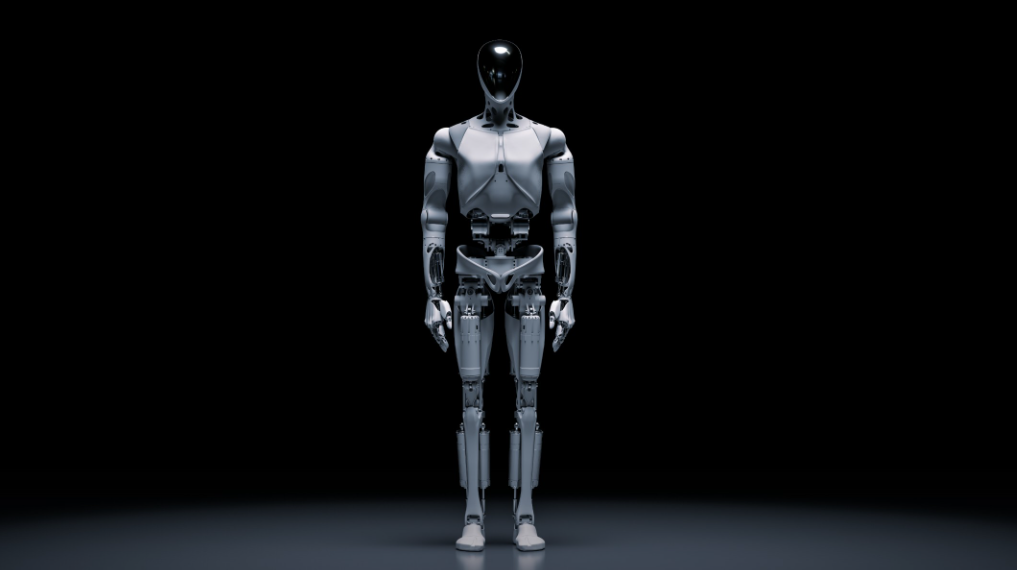
Image source: XPENG Motors' official website
She went on to explain that the value of embodied AI lies not in singing or dancing. Instead, it lies in its ability to autonomously adapt to environments, make decisions, and execute tasks. This value proposition shifts the metric for judging robots. It moves from "how human they look" to the pragmatic track of "how well they work."
In fact, industry consensus is shifting toward a "coexistence of diverse forms."
Analysts point out that the evolution of robotics isn't linear. Specialized machines, quasi-humanoids, and full humanoids will each serve distinct functional roles.
Specialized robots target single scenarios like cleaning and delivery, prioritizing sheer efficiency. Quasi-humanoids, which pair wheeled chassis with robotic arms, balance efficiency with operational versatility. Full humanoids, while offering advantages in interaction and spatial adaptability, come with high costs. They also have complex control algorithms, meaning they aren't always the optimal solution.
Addressing technical bottlenecks, Zhao highlighted a key limitation. Compared to human muscle, current motors still lag in flexibility. "Muscles can stop at any point," she noted, "whereas motors can only halt at specific positions."
That means forcing a machine to mimic the human body could be counterproductive. In certain scenarios, it amounts to tying one's own hands technologically.
The Rationality Behind "De-Humanization": From Stunts to Utility
Once robots shed the aesthetic shackle that they "must look human," the logic of industrial deployment becomes much clearer.
The year 2026 is viewed as pivotal for embodied AI's transition from "performance mode" to "work mode."
During the "Two Sessions," Zhao made it clear. The ultimate test of embodied AI's successful deployment is whether it solves real-world problems. It also depends on whether it delivers on "cost reduction and efficiency gains."
Her view echoes a growing sentiment within the industry. Zhou Yunjie, a deputy to the National People's Congress, is chairman of Haier Group. He also called for accelerating embodied AI to empower industrial intelligence. He noted that a major bottleneck remains the lack of efficient coordination. This is between the "brain," the "cerebellum," and the "limbs."
Notably, an obsession with humanoid form risks slowing the pace of actual deployment.
In an interview, Zhao detailed five major technical bottlenecks currently hampering embodied AI. These include perception capabilities that need improvement. Also, drive systems and mechanical structures lag behind human biology. Other issues are insufficient reaction speeds and weak generalization capabilities. Finally, there is limited reasoning power in large models.
These are challenges that must be met — regardless of whether the robot wears a human face.
Yet, by letting go of the obsession with "human form" in specific scenarios, technical hurdles could be cleared. This can be done by adopting more mature technologies. Examples include wheeled chassis or specialized arms.
Conclusion:
From "looking like us" to "just getting the job done," Zhao's remarks at this year's Two Sessions may signal a significant pivot. This is for China's embodied AI industry.
When the hype fades and the bubble bursts, what remains in factories and households won't be the "actors." It will not be those that look most like us. Instead, it will be the "workers" that are the most capable and durable.
As Zhao noted, with technological advances, the next three to five years will likely see embodied AI products. They are becoming commonplace in homes, hospitals, and public spaces.
By then, we may have truly accepted it. The robots beside us don't need to share our face.


