



The embodied intelligence sector began 2026 with a surge in B-round financing.
Leading companies such as Noetix Robotics and LimX Dynamics have recently announced closing B-rounds that collectively surpassed 1 billion yuan, with two raising nearly 1.5 billion.
Raising 1 billion yuan was once typical for C-rounds or later stages. Now, it has become the "starting price" for top-tier embodied robotics firms at the B-level.
This is more than an investment boom; it is a prelude to industry consolidation. The B-round, fundamentally, marks a watershed defined by substantial capital.
The emergence of this divide signals that embodied intelligence is shifting from a "technical validation phase" to a "commercial expansion phase." Companies that clear the hurdle have effectively secured their "admission tickets" to the next stage of competition.
Five Deals in One Month: High-Value B-Rounds Surge
In capital markets, the weeks around the Lunar New Year are traditionally a quiet period, with trading activity usually tapering off.
However, this year the embodied intelligence sector is defying the trend. Between January and early March, a series of B-rounds exceeding 1 billion yuan landed in just two months.
On March 2, Noetix Robotics announced the completion of a B-round totaling nearly 1 billion yuan.
The round was led by Chendao Capital, CATL's industrial investment platform, with participation from Guoke Investment, Beijing Guosheng Fund, and United Ventures. The capital will primarily be used to deepen presence in home consumer scenarios, accelerate industrialization, and push humanoid robots from technical validation into commercial deployment.
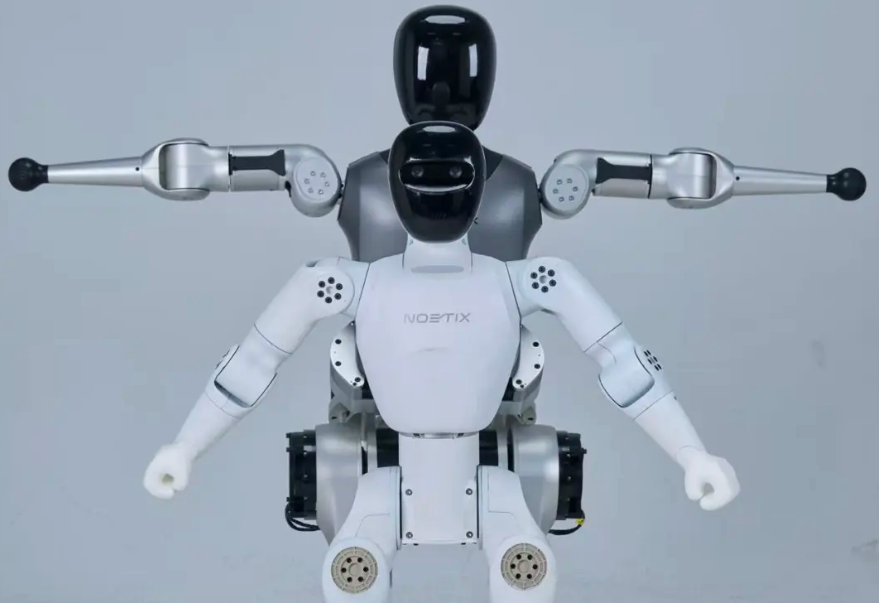
Image Credit: Noetix Robotics
Noetix Robotics is the latest embodied intelligence firm to secure 1 billion yuan in a B-round. In February, leading companies such as AI²Robotics, LimX Dynamics, LinkerBot, and Galaxea Dynamics also announced B-rounds at the 1 billion yuan level.
On February 23, AI²Robotics announced the completion of a B-round exceeding 1 billion yuan. The investor roster spanned internet and AI giants, top state-owned enterprises, leaders in the Tesla ecosystem, strategic partners, well-funded private equity funds, and securities firms—including Baidu, CRRC Capital, Yusys Technologies, Sentury Tire, Yuanbio Capital, and Guotai Haitong. It was a comprehensive lineup.
In mid-February, both Galaxea Dynamics and LinkerBot secured capital backing at the 1 billion yuan level in their B-rounds. Notably, LinkerBot raised as much as 1.5 billion yuan, with investors including Daode Investment, Shengshi Investment, Yingyuan Puyuan Fund, Xinding Capital, Linyun Capital, and Singapore's Eastern Epic Capitals.
Galaxea Dynamics, backed by Jinding Capital, BAIC Industrial Investment, Meituan Longzhu, and Hillhouse Ventures, saw its valuation approach 10 billion yuan after the round. It joins Unitree, Zhiyuan, and Galaxy General as another "unicorn" in the domestic embodied intelligence sector.
In early February, LimX Dynamics announced a $200 million B-round. Investors included the UAE's Rock Capital, Oriental Fortune, Cornerstone Capital, Tianchuang Capital, and GF Xinde, alongside strategic partners like JD.com, Zhongding, Guangyang, and Kyland. Existing shareholders, including SAIC's Shangqi Capital and NIO Capital, also doubled down.
Clearly, in the embodied robotics space, 1 billion yuan has effectively become the "entry barrier" for B-rounds.
Two years ago, a sum of this size could have carried a company from a B-round all the way to an IPO. Today, it is merely the minimum ante required to stay at the embodied robotics table.
Analysts at Gasgoo Auto attribute this to the B-round being a critical pivot point from early exploration to large-scale expansion. Once top-tier firms achieve an initial loop combining large models, hardware, and scenario applications—and secure small-batch orders with scaling potential—capital naturally follows.
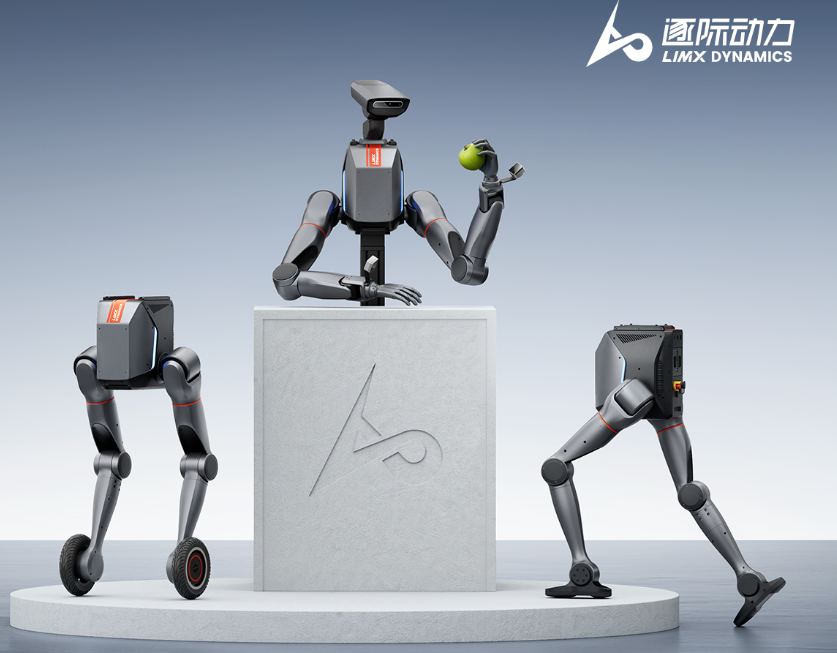
Image Credit: LimX Dynamics
On the investor side, industrial and state capital have led this wave. CATL's investment in Noetix Robotics, JD.com and SAIC's significant investment in LimX Dynamics, BAIC and Meituan's increased stake in Galaxea Dynamics, and the presence of Baidu's strategic investment arm and CRRC Capital in AI²Robotics' shareholder list are all prime examples of deep industrial involvement.
Leveraging their advantages in capital, supply chains, application scenarios, and tech ecosystems, these industrial giants are providing more than just funding; they are delivering end-to-end support ranging from R&D collaboration to commercial deployment.
Simultaneously, state capital is becoming increasingly active.
Examples include the Beijing Guosheng Fund, which just backed Noetix Robotics, and Chengdu Science City Venture Capital and Kesheng Fund behind AI²Robotics. The entry of state capital not only reflects strong national support for embodied intelligence but also promises stable resource backing for the sector's future development.
In comparison, the share of pure financial investment is declining.
This shift signals a profound change: the "technology narrative" of embodied intelligence is giving way to a "commercial narrative."
When industrial and state capital invest, they bring far more than figures on a balance sheet—they bring a systematic suite of resources spanning technical validation to scenario deployment.
CATL's energy scenarios, JD.com's warehousing and logistics, BAIC's smart manufacturing, CRRC's rail transit—these real industrial demands are becoming the industry's most scarce "proving grounds."
What Does a 1 Billion Yuan B-Round Really Mean?
Understanding the significance of this B-round wave requires examining it from both corporate and capital perspectives.
For companies, the B-round is becoming a critical "watershed"; for investors, it reflects a rapidly climbing "certainty premium" for top-tier projects.
First, the corporate perspective: why is the B-round a watershed? The answer lies in three layers: technology, mass production, and commercialization.
On the technology front, this is a battle to establish a "generational gap."
Before the B-round, the competition is about "feasibility"—is the technology viable, is the demo impressive? After the B-round, it shifts to "strength"—are the technical barriers high enough, is the moat wide enough?
Behind this lies the need for continuous, heavy investment in training VLA (Vision-Language-Action) large models, building computing clusters, and accumulating data platforms.
AI²Robotics previously stated that its core purpose in closing 12 funding rounds in a year was to "continuously widen the generational gap between its GOVLA model and competitors." In the AI field, no gap means no pricing power.
In terms of mass production, this is the critical leap from "prototype" to "product."
Between a lab demo and a scalable commercial product lie significant obstacles: supply chain integration, manufacturing processes, and yield control. Clearing each hurdle requires significant capital.
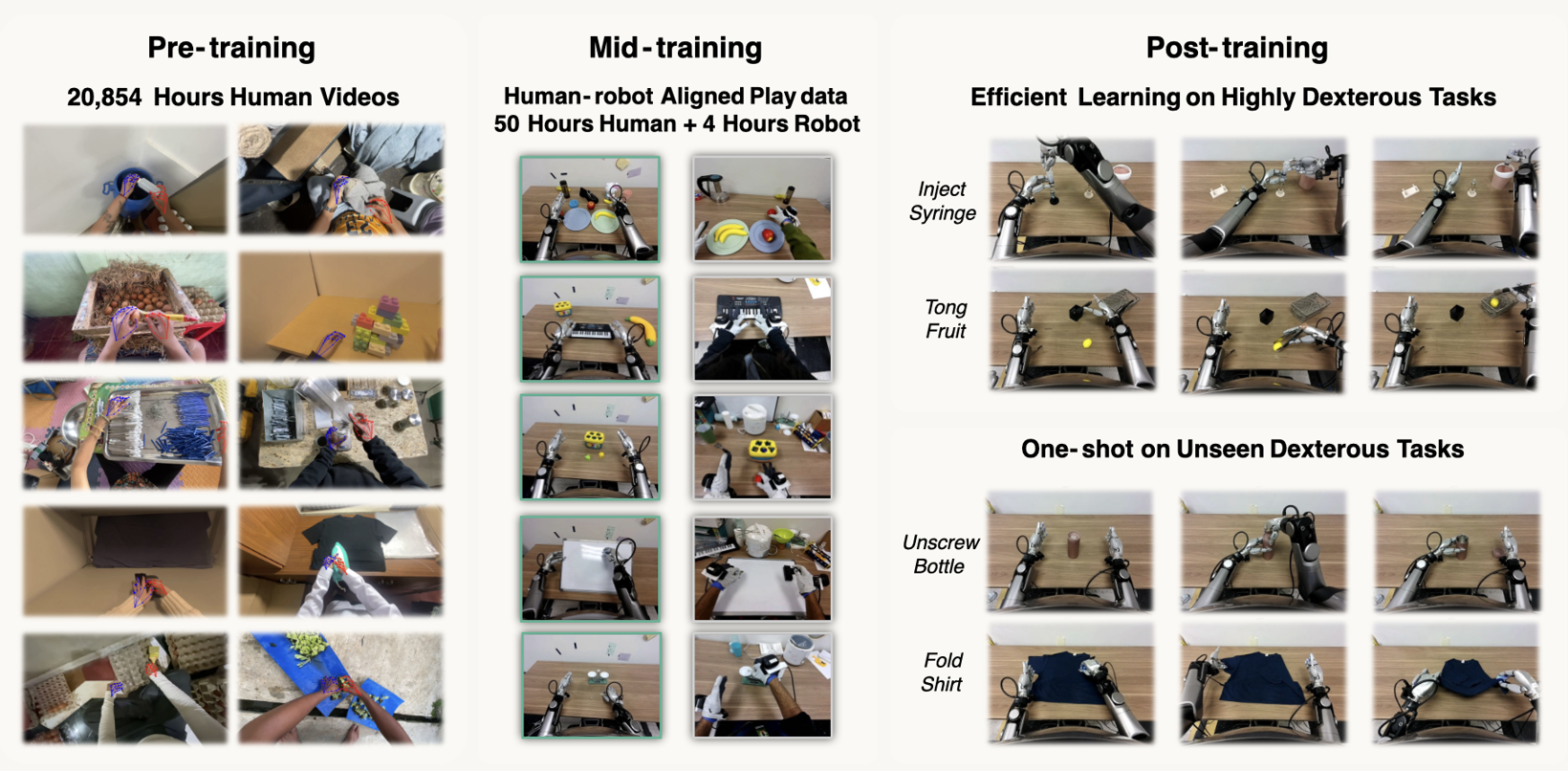
Image Credit: Galaxea Dynamics
When announcing its B-round, AI²Robotics explicitly stated that the funds would be used primarily to maintain the GOVLA embodied large model's leading edge and to drive the iteration of its AlphaBot series and production line expansion.
LinkerBot also indicated that the B-round proceeds would be funneled into core product R&D, capacity ramp-up, and building full-stack foundational capabilities.
After all, without capacity, technology cannot be deployed; and without major funding, capacity cannot scale. For this reason, analysts believe 2026 will be the first year of large-scale volume for embodied robots moving "from lab to factory," with top companies quickly realizing productivity value.
On the commercial front, this is the ticket to securing "validation orders."
In the current phase of embodied intelligence, investment logic has returned to its essence: only real orders prove commercial value.
However, this is an industry requiring "upfront investment." Companies must first pay a price for a "ticket" to enter the core processes of industry. Behind that ticket lies customized tech development, production line retrofits, deep adaptation to pain points, and trust built through long-term collaboration.
Only by completing this step can companies secure "validation orders" that prove their worth, thereby closing the critical loop of commercialization.
More importantly, these orders are not just a revenue source; they are the key to starting the "data flywheel"—gathering data in real scenarios to feed model iteration, which in turn attracts more orders.
In short, this is a marathon of "trading orders for data, and data for barriers."
Why is capital willing to pay such a high "certainty premium" at this stage?
The core logic is "strategic positioning."
Image Credit: BAIC Industrial Investment
CATL's investment in Noetix Robotics and JD.com's backing of LimX Dynamics are about more than providing capital support. To some extent, they are buying priority access to future technologies and opportunities for deep scenario binding. After all, whether it is CATL's battery factories or JD.com's warehousing and logistics, these are currently core commercial scenarios for embodied robots.
The entry of state capital carries even stronger industrial strategic intent.
Institutions like the National AI Industry Fund, Beijing E-Town Capital, Hefei Innovation Investment, and Shenzhen Capital frequently appear in shareholder lists. Behind this lies a dual mission: upwards, supporting the national strategy for China to secure core competitiveness in future industries; downwards, the long-term consideration of building industrial clusters and ecosystems within regions.
As for market-oriented funds, the logic is more direct—avoiding missing out on the leaders.
As resources accelerate toward the top, failing to invest in leading projects means potentially missing the entire sector. Moreover, rather than casting a wide net in A-rounds with higher uncertainty, it is better to "place a heavy bet" at the B-round stage when certainty is emerging, buying a more definite future at a higher price. This is both a rational risk-avoidance strategy and an inevitable choice under the "winner-takes-all" effect.
In summary, the 1 billion yuan B-round is essentially the inevitable result of the embodied robotics industry transitioning from a "fragmented phase" to a "consolidation phase." It represents the "provisions" companies must stockpile to win the three battles of technology, mass production, and orders, just as it is a "decisive bet" by capital on a few "seed players" driven by strategic necessity.
Some professional investors even predict a distinct "80-20 split" in the embodied intelligence industry by 2026. This means that a 1 billion yuan B-round is not just a financing round, but a ticket to the next stage of competition.
Landscape Reshaping, Accelerating Sector Divergence
If a 1 billion yuan B-round is an admission ticket, the next question is: what kind of battlefield awaits the companies that hold one? And what fate awaits those still on the outside looking in?
Judging by the current situation, the competitive landscape of the embodied intelligence sector is evolving in several clear directions.
The shift in competitive focus is the most core signal of this upheaval.
For the past two years, the industry's gaze was fixed on the "body": stable bipedal walking, sufficient degrees of freedom, fluid motion execution. But entering 2026, the commanding heights of competition are shifting rapidly to the "brain."
The recent large funding rounds for several top firms focused on "embodied brains" serve as direct proof. As Chinese robotic hardware achieves global competitiveness, the decisive point on the track naturally shifts to cognitive and generalization capabilities—a logic already fully validated in the smart driving sector.
The divergence in scenario deployment rhythms is also shaping different survival paths.
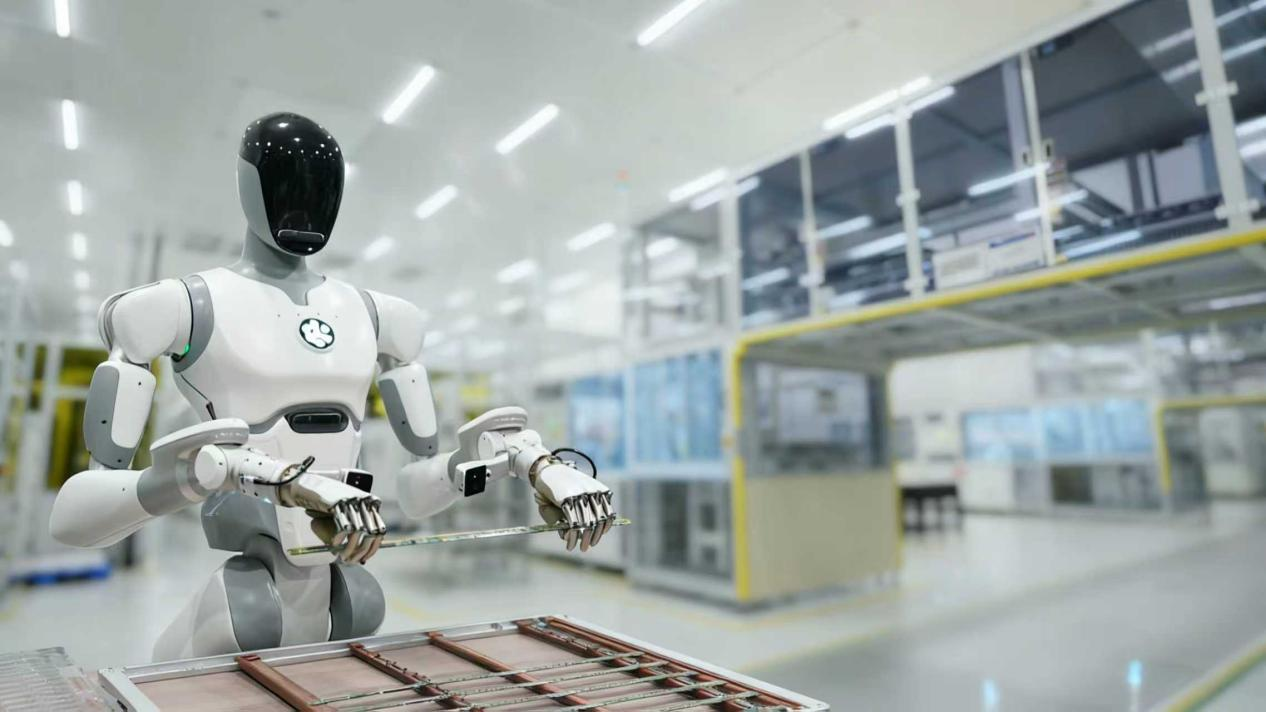
Image Credit: AI²Robotics
Currently, industrial and specialized scenarios are on the eve of a small-scale expansion. In automotive manufacturing, 3C electronics assembly, and warehousing and logistics, customers have strong willingness to pay, tasks are highly standardized, and the margin for error is relatively wide. These factors are collectively pushing industrial scenarios to become the "testing grounds" where embodied intelligence achieves its first breakthroughs.
In contrast, large-scale deployment in commercial and household scenarios will require more patience.
Although the potential in elderly care and retail is vast, long-tail environments, complex tasks, and safety and ethical issues remain formidable barriers on the path to commercialization.
Therefore, for companies focused on these scenarios, 2026 may not be a year of harvest, but a year of cultivation—accumulating data in real scenarios, refining products, and building trust to store up energy for a future expansion.
And as the industry gradually moves from "prototype demos" to "scaled delivery," forming a positive loop of "mass production—cost reduction—demand increase," new challenges will emerge: supply chain stability, yield control, and cost competitiveness.
This means that the divergence in mass production capabilities will gradually become the "touchstone" testing the true caliber of enterprises.
Notably, this divergence is occurring not only between companies but also between expectations and reality.
As a batch of companies cross the 1 billion yuan B-round threshold and the list of "10 billion yuan unicorns" grows longer, a more fundamental question is surfacing: Can the investment boom be transformed into an industry boom as scheduled?
Amid the frenzy, a dose of calm is perhaps still necessary.
Looking back at the evolution of any tech wave over the past decade, massive bubbles are often born alongside massive opportunities. Embodied intelligence is no exception—industry inflection points and valuation bubbles are becoming "two sides of the same coin" in this cycle.
Despite the controversy, many industry insiders agree that 2026 will bring clear divergence to the embodied intelligence track. Companies that only show off technology in labs without binding to real application scenarios will gradually feel the chill of the market—as capital will eventually discover that these technologies are merely castles in the air.
"Especially in this financing wave, capital itself is engaging in panic allocation—a fear of missing out on the opportunity of the era has pushed up valuations for some companies, detaching them from their current revenue fundamentals. Meanwhile, structural issues like massive long-term R&D investment and long commercial return cycles persist, giving the industry an overheated hue," the analyst noted. Based on this judgment, the prediction is that capital will further concentrate on companies with proven deployment capabilities.
But from another dimension, this divergence is also the inevitable law of the industry moving from "a hundred flowers blooming" to "all rivers returning to the sea."
Just as the "war of lords" in the smart driving sector over the past decade ended with only a handful of top players standing firm at the table, the shuffling of the embodied intelligence sector has only just begun.
Conclusion
In the embodied robotics sector, the current wave of 1 billion yuan B-rounds is both a collective validation and a silent elimination race. Companies that secured the funds certainly hold tickets to the next stage, but the real question now is who can actually convert that capital into technological barriers, mass production capabilities, and commercial moats.
As the industry enters a new development stage shifting from "do we have it?" to "is it useful?" and "can it be used at scale sustainably?", the real test is only just beginning.


