Gasgoo Munich- Competition for sales volume among China's automotive groups remained fierce in February 2026, according to data from Gasgoo Automotive Institute. Geely Holding Group retained the top spot with 224,342 units, while BYD Auto and Chery Holding held onto second and third places, respectively. Domestic automakers delivered a robust overall performance, while joint ventures worked to hold their ground amidst a rapidly shifting market.
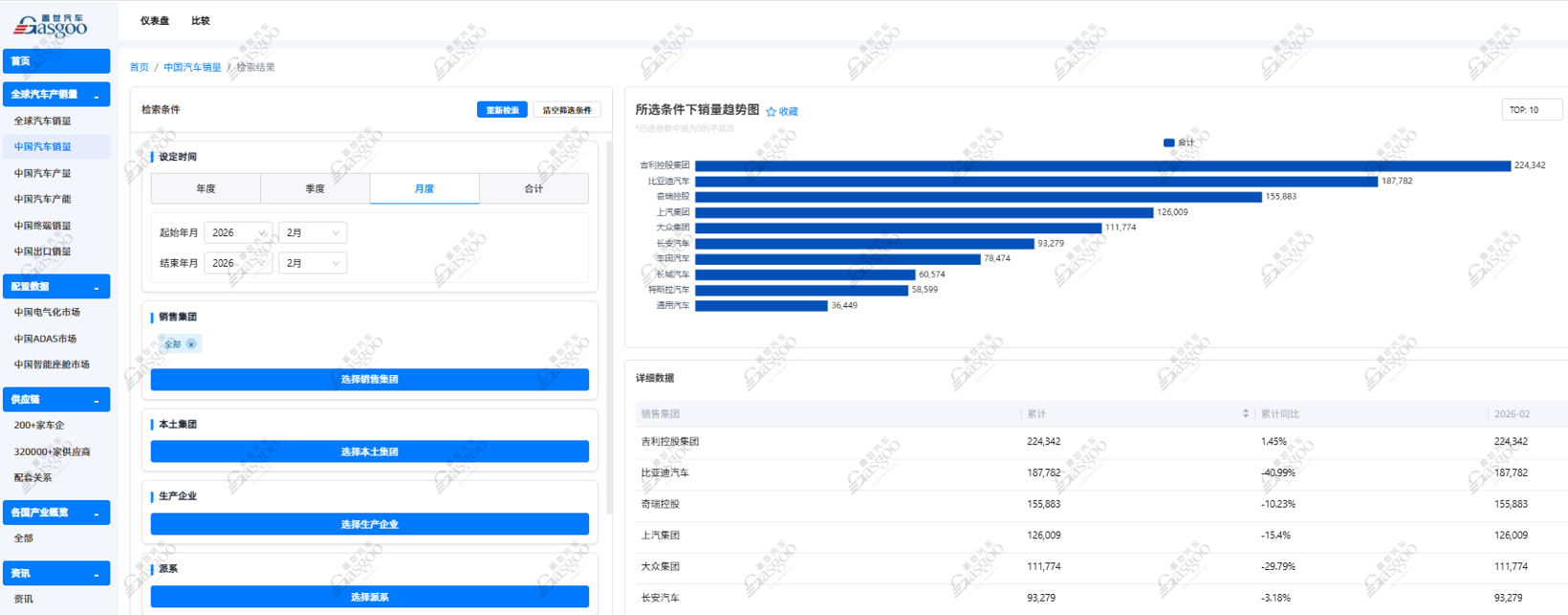
Gasgoo Automotive Institute's detailed rankings and sales figures for the "February 2026 Passenger Vehicle Group Sales Rankings" are as follows:
First: Geely Holding Group, with February sales of 224,342 units
Second: BYD Auto, with February sales of 187,782 units
Third: Chery Holding, with February sales of 155,883 units
Fourth: SAIC Motor, with February sales of 126,009 units
Fifth: Volkswagen Group, with February sales of 111,774 units
Sixth: Changan Automobile, with February sales of 93,279 units
Seventh: Toyota Motor, with February sales of 78,474 units
Eighth: Great Wall Motor, with February sales of 60,574 units
Ninth: Tesla, with February sales of 58,599 units
Tenth: General Motors, with February sales of 36,449 units
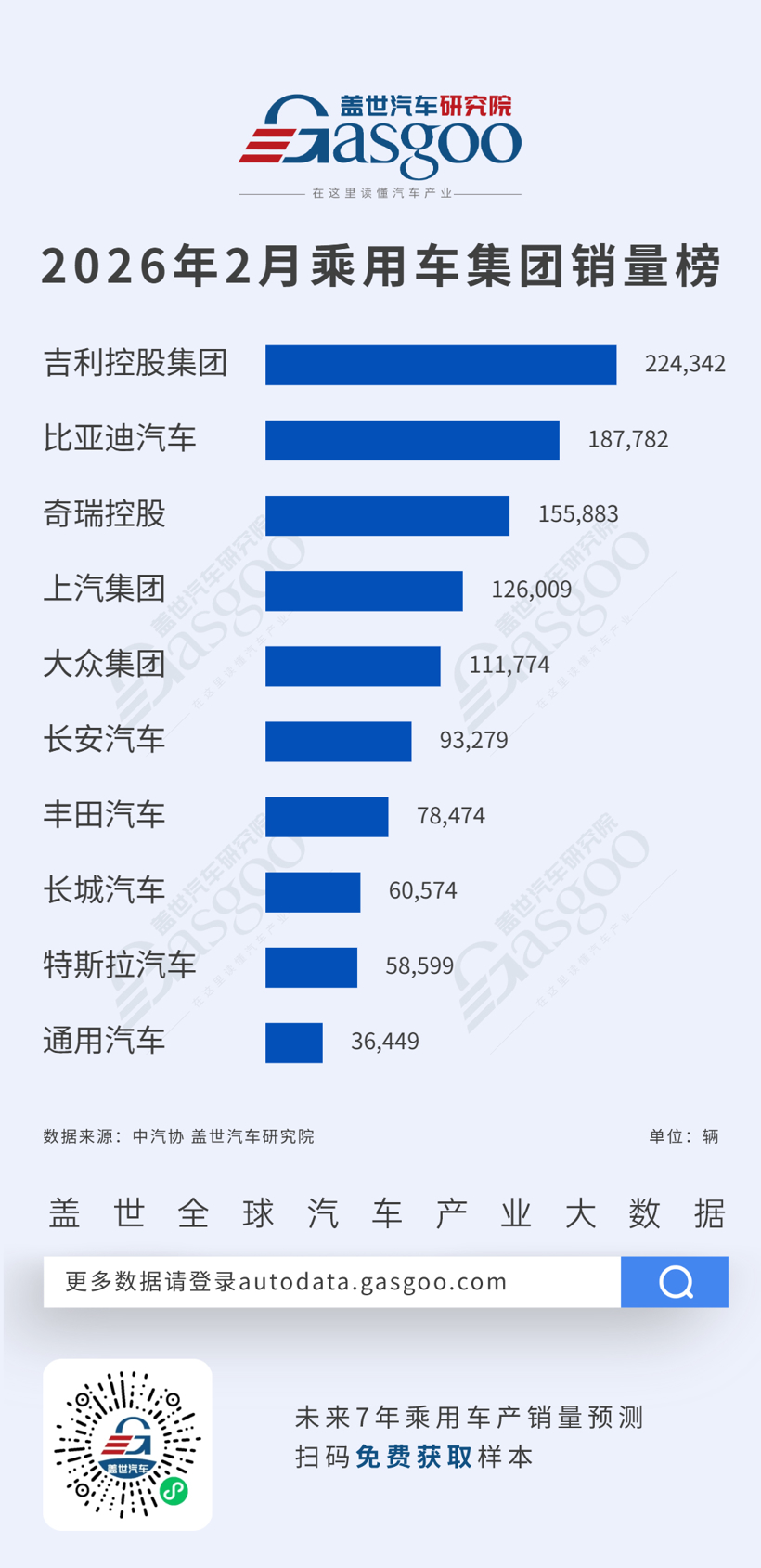
Among the Top 10 in the February 2026 passenger vehicle group sales rankings, the systemic competitive advantages of the leading players continued to shine. Geely Holding Group held firm at the top with 224,342 units. Although the Lunar New Year holiday triggered a roughly 23.7% slide from January's 294,040 units, its overall sales volume kept it ahead of the pack. BYD Auto followed closely with 187,782 units, driven by robust export performance, while Chery Holding took third place with 155,883 units, demonstrating notable resilience. Together, these three groups form the market's current first tier, underpinned by scale advantages and strategic execution.
SAIC Motor, Volkswagen Group, and Changan Automobile comprised the second competitive tier, posting sales of 126,009, 111,774, and 93,279 units, respectively. With relatively narrow gaps separating them, competition among these three was particularly fierce. In the third tier, Toyota Motor, Great Wall Motor, Tesla, and General Motors recorded sales of 78,474, 60,574, 58,599, and 36,449 units. Diverging paces in electrification strategies and product cycles emerged as critical factors influencing these rankings.
From an industry trend perspective, overall passenger vehicle sales in February fluctuated month-on-month due to the Lunar New Year holiday — a typical seasonal adjustment. Even so, new energy vehicles remain the core variable reshaping the market landscape. Domestic automakers are steadily gaining market share, leveraging rapid tech iteration, broad product portfolios, and localized supply chain advantages. Looking ahead, the pace of electrification and systemic operational capabilities will be decisive in determining the competitive standing of major automotive groups.