



Gasgoo Munich- The China Automobile Dealers Association (CADA) released its February 2026 inventory survey results this week. The comprehensive inventory coefficient hit 1.95 — a 31.8% monthly surge and a 21.1% annual jump. That figure far exceeds the industry's warning line of 1.5, signaling a sharp buildup in inventory pressure for dealers.
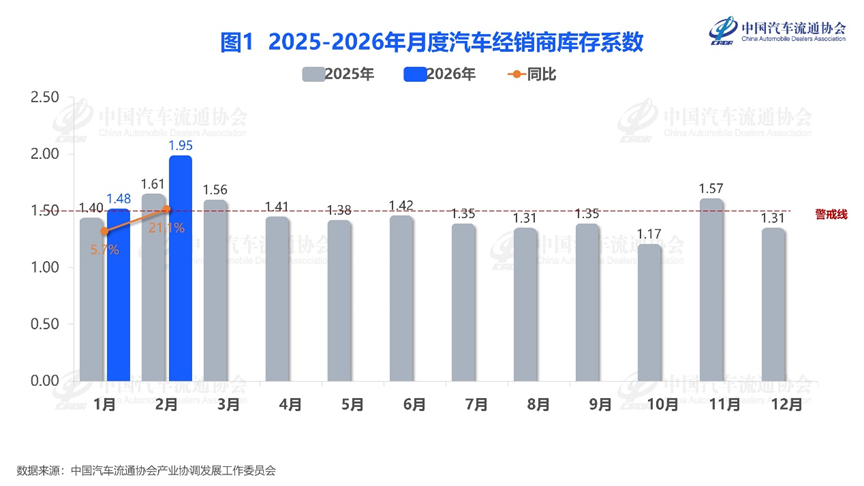
Image Source: China Automobile Dealers Association
Data puts total dealer inventory at the end of February around 2 million units, with inventory coefficients climbing across all brands. Domestic brands posted the highest coefficient at 2.11, up 35.3% from the previous month. Meanwhile, both luxury and imported marques and joint-venture brands sat at 1.72, surging 65.4% and 16.2%, respectively.
The association attributes the spike to a convergence of three pressures. The Lunar New Year holiday slashed effective selling days, driving down showroom traffic and orders. A shift in new-energy vehicle purchase tax policy, combined with consumer expectations for spring auto show discounts, fueled strong wait-and-see sentiment that dampened transactions. Finally, dealers accelerated restocking after the break under pressure to meet quarterly targets. Still, stripping out holiday effects, daily sales on working days actually climbed month-on-month — a sign that underlying demand is staging a mild recovery.
Looking ahead to March, the association expects recovery momentum to build. Mainstream automakers like FAW Toyota, XPENG, and NIO are upgrading promotional strategies, using optimized financing plans and purchase tax subsidies to spur consumption. At the same time, local governments in cities such as Hangzhou, Shenyang, and Changchun have rolled out limited-time purchase incentives, expanding support for new-energy models. Add in spring auto shows, a wave of new model launches, and the "trade-in and scrappage" policies, and terminal demand looks set to unlock.
The association cautions that uncertainties remain. It advises dealers to forecast demand rationally and keep inventory levels in check. The focus should shift to cutting costs, boosting efficiency, and optimizing inventory structures. At the same time, dealers need to ramp up promotion of trade-in and scrappage policies to strengthen operational resilience.
The inventory coefficient measures the ratio of ending stock to current sales. A range of 0.8 to 1.2 is considered healthy, while anything above 2.5 signals bloated inventory and elevated operational risk. This survey covered more than 1,000 4S stores across most provinces, spanning 55 brands, with a focus on the industry's top 100 dealer groups.


